
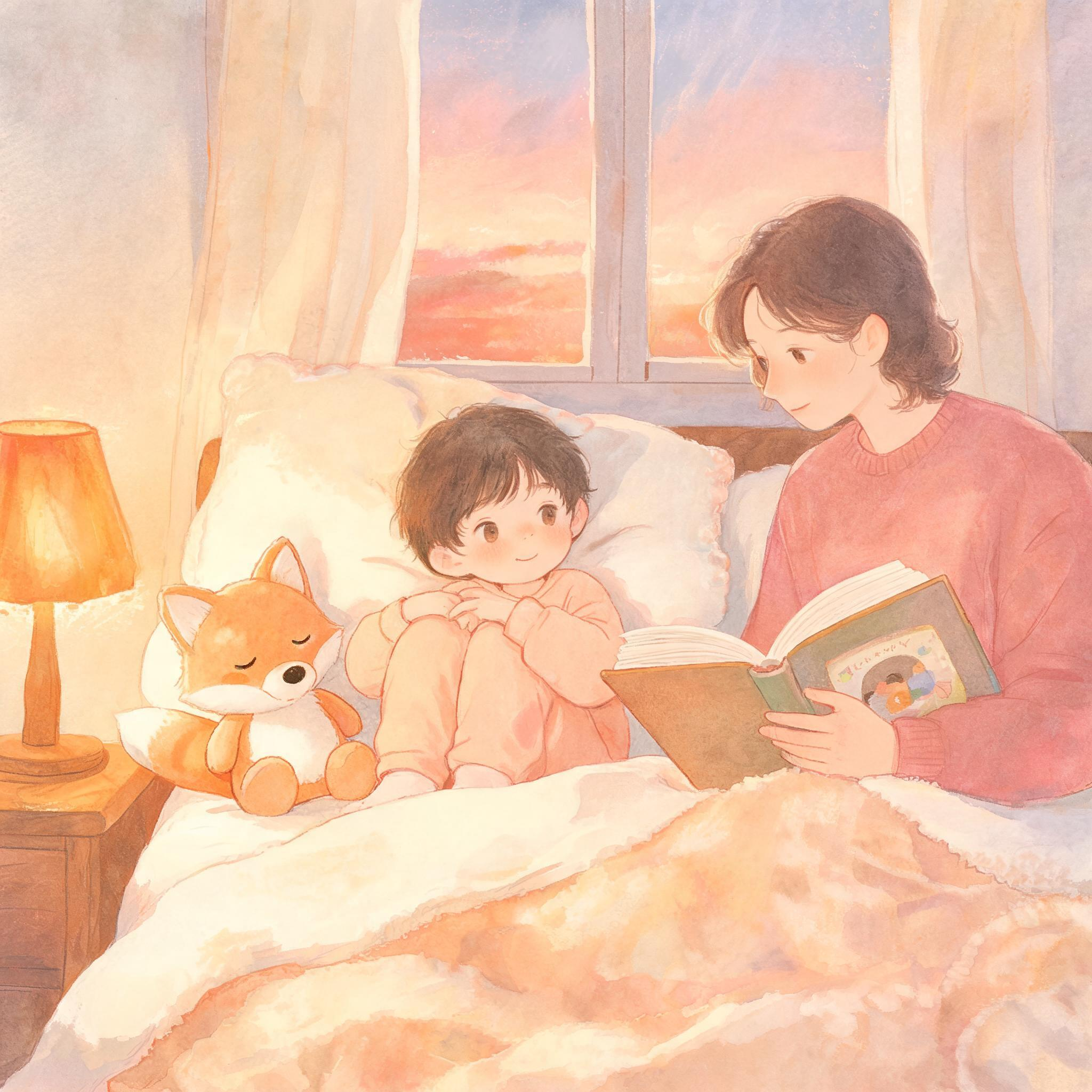
The Best Bedtime Stories for Kids (Ages 3-7): What Actually Works
Most 'best bedtime story' lists are reading lists. This one is about what kind of story actually winds a kid down — pacing, voice, length, ending — based on what works at the side of a real bed.
Quick answer
The best bedtime story for a 3-7 year old is not the most entertaining one — the job of the story is to lower a child's nervous system, so funny, exciting, and suspenseful stories all work against you at bedtime even though they are good stories. This post covers the story shapes that reliably produce sleep, the ones that produce one more glass of water, and how length, voice, and the ending matter more than the title. It is a pattern guide, not another reading list.
The internet is full of "100 best bedtime stories" lists, and they're mostly reading lists — title, author, age range, done. They don't tell you what kind of story actually puts a wound-up four-year-old to sleep, versus what kind cranks them up.
This is the version I wish I'd had two years in. Less curation, more pattern recognition.
The job of a bedtime story isn't to entertain
It's to lower the kid's nervous system. That sounds clinical but it's the actual goal, and once you internalize it, story selection gets easier.
Funny stories, exciting stories, scary-but-resolved stories — all great for other times of day. At bedtime they backfire. The kid laughs, the kid asks questions, the kid sits up. You're now further from sleep than when you started.
The stories that work at bedtime share a few traits:
- Slow pacing. Long sentences, soft consonants, lots of "and then."
- A familiar setting. A bedroom, a forest, a beach, a quiet house. Not a circus.
- Low stakes. Something small gets resolved. No villain, no chase, no peril.
- A descending energy curve. The story should get quieter, not build to a climax.
If a kid asks "and then what?!" with their eyes wide, the story is wrong for bedtime. It might be a great car-ride story.
Story shapes that work
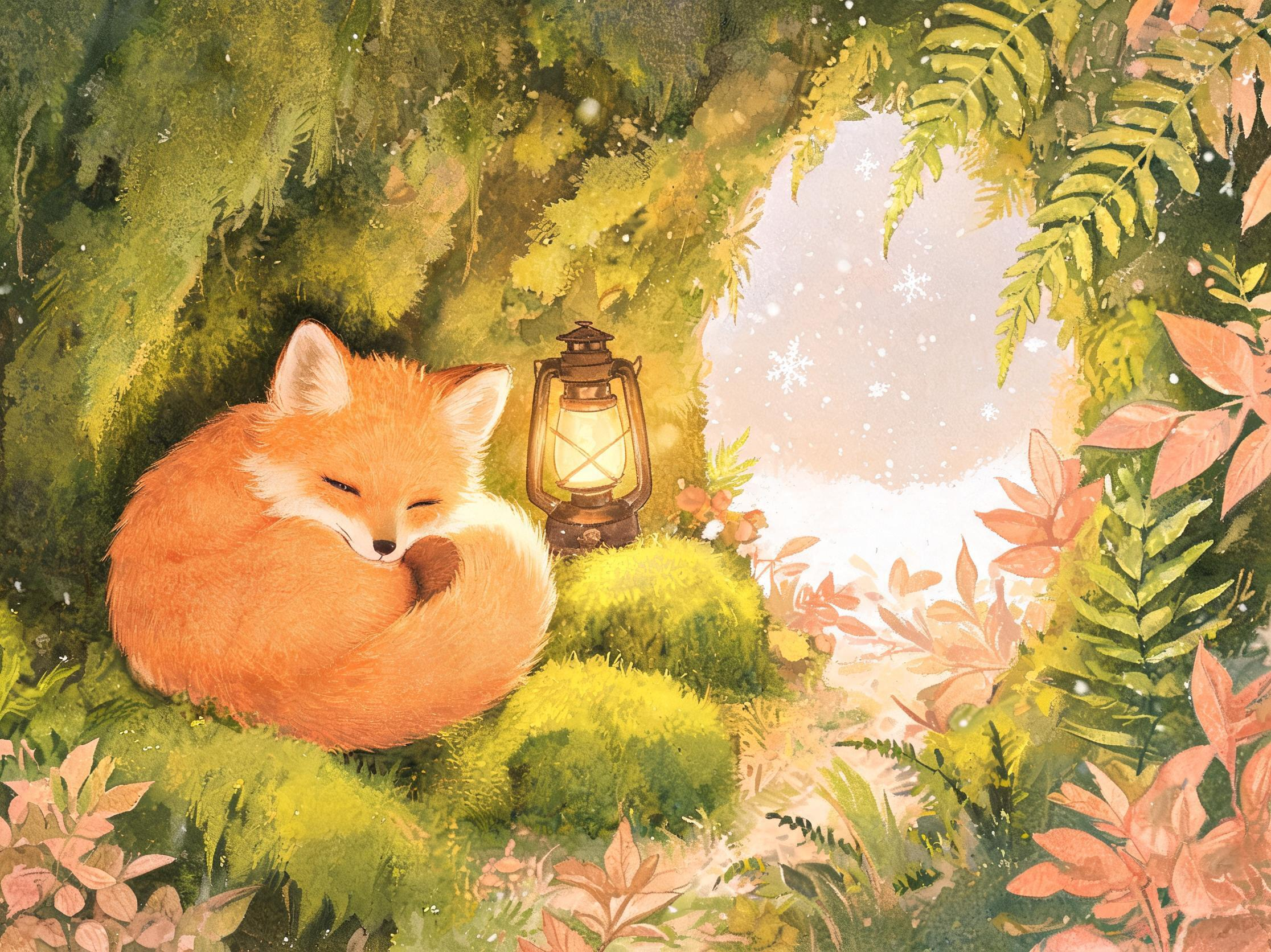
The going-home story. Character is somewhere — a meadow, a beach, a friend's house — and slowly heads home. Each beat is a sensory detail (warm light, the smell of dinner, soft socks). Resolution is "and then they fell asleep." The arc of going home is itself sleep-inducing.
The before-the-world-woke-up story. Set at dawn. A character notices small quiet things — dew on a leaf, a bird, breath in the cold air. Nothing happens. That's the point. Kids find slow-noticing strangely calming.
The visiting-grandma story. Specific old details — a kettle, a quilt, a smell, a familiar window. Comfort objects in story form. Doubles as emotional regulation if a real grandparent isn't around as much as you'd like.
The animal-finding-a-cozy-spot story. Bear finds a cave. Mouse finds a hole. Fox finds a den. Curling-up energy. Predictable structure means the kid relaxes into the rhythm.
Story shapes to avoid
- Anything with a chase scene. Doesn't matter how silly.
- Anything with a missing or worried parent. Bedtime is the wrong moment.
- Anything where the kid has to figure something out. Puzzles activate the brain.
- Anything that ends on a surprise twist. Surprises wake people up.
Length and voice
For ages 3-5, aim for 6-10 minutes read aloud. For 6-7, you can stretch to 15 if the story is gentle.
Read more slowly than you think you should. Every parent reads bedtime stories too fast on the first try. Drop your voice. Add half-second pauses at periods. The voice itself is half the medicine.
If you finish a story and the kid is still wide awake, the next story should be quieter, not different. Same character, same setting, smaller stakes. Many kids do their best sleeping after the second story, not the first.
Personalized stories are an unfair advantage
Generic stories work. Stories where your kid is the protagonist work better. There's a noticeable difference in how a four-year-old listens when they recognize themselves on every page.
You don't need to write them. A bedtime story maker can produce a personalized story with your child's name, look, and current obsession (dinosaurs, mermaids, a stuffed rabbit named Mr. Beans) in about a minute. Drop in a real worry from the day if you want — "Ben was worried about kindergarten" — and the story does emotional work, not just entertainment.
The classics still belong on the shelf. But for the actual bedtime slot, a custom story your kid can identify with often outperforms the canon.
A few format notes
Series beat one-offs. Kids relax faster when they already know the world. A series featuring the same protagonist and setting wins on night three.
Soft endings beat happy endings. "And they slept" beats "and they lived happily ever after." Sleep is the implicit promise of every bedtime story.
Repetition is a feature, not a bug. A four-year-old who asks for the same story for the eleventh night in a row is doing developmentally important work. Read it again.
A starter set
If you want a quick-reference list of ready-to-read prompts, the inspire-me prompts page has 50 starters you can hand to an AI and tweak. Or browse the gallery for what other parents have built — most of the soft, going-home stories there work.
The two-minute test
When the story ends, watch the kid's eyes. If they're heavy, lids drooping, you nailed it. If they're bright and asking questions, the next story needs to be slower, gentler, smaller. Recalibrate. After a week or two of paying attention, you'll know your kid's specific bedtime profile better than any list on the internet can capture.
That's the actual best bedtime story — the one that fits your kid, tonight.
About the author
Andy — Andy is the founder of Doodara and builds the illustration pipeline behind it — the part that has to keep a child's character looking like the same child on every page of a book. Most of that work is character consistency, content safety for material aimed at young children, and the unglamorous business of making a generated book good enough that a family reads it twice.