Are AI Picture Books Good for Early Literacy? What Parents Should Know
AI can make a personalized picture book in a minute. But does that help a child actually learn to read? Here's what early literacy really depends on — and where a custom book genuinely helps.
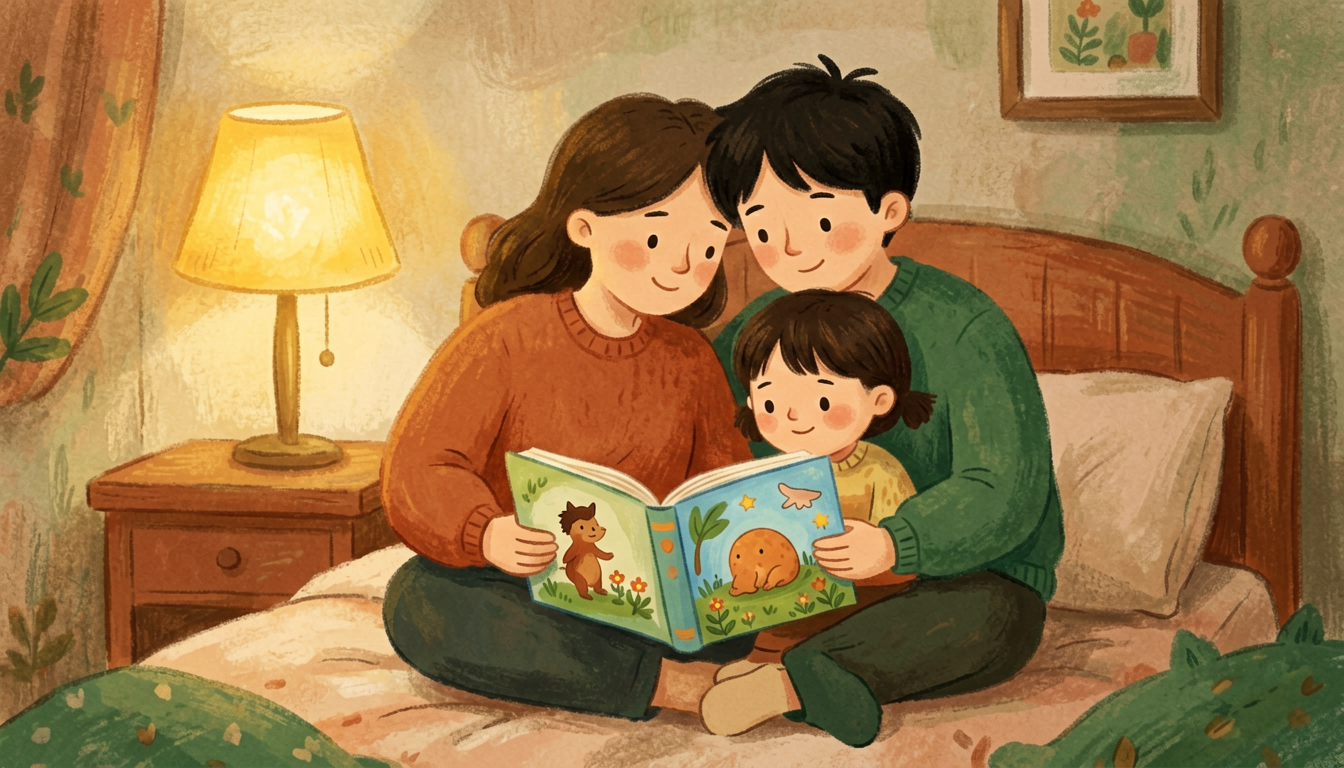
If you've watched a four-year-old ask for the same book nine nights in a row, you already understand most of what matters about early literacy. The repetition, the finger tracing under the words, the "again" — that's the engine. The book is just the thing that keeps them coming back to it.
So when parents ask me whether AI-made picture books are "good for early literacy," I think the honest answer starts by reframing the question. No book teaches a child to read. Reading with a child teaches a child to read. The useful question is narrower and more practical: does this kind of book help you do more of the thing that already works?
Most of the time, I think it does. But it's worth being clear-eyed about why.
What early literacy actually rewards
Strip away the jargon and the research on emergent literacy keeps pointing at a small handful of ordinary things:
- Shared reading time. A child in a lap, an adult's voice, a page turning. Frequency beats fanciness.
- Talk around the page. "What do you think happens next?" "Have you ever felt like that?" The conversation does as much work as the text.
- Print awareness. Following words left-to-right, top-to-bottom; noticing that those marks carry the story. This is why pointing under the words matters.
- Repetition. Re-reading the same book is how kids move from hearing a word to predicting it to recognizing it. Familiarity isn't boredom — it's the mechanism.
- Motivation. A child who wants the book gets more of all of the above. Engagement is upstream of everything.
Notice what's not on that list: novelty, production value, or how the book was made. A beautiful book a child ignores does less than a plain one they beg for.
Where a personalized book genuinely helps
Here's the part AI changes, and it's mostly about that last bullet — motivation.
When a child is the hero of the story — their name, their face, their stuffed rabbit, the fear they had about starting preschool — attention goes up sharply. They lean in. They want it re-read, which is exactly the repetition early literacy depends on. They talk back to the page because the page is about them. A personalized storybook isn't a better book in some abstract sense; it's a book your specific child is more likely to choose, and choosing it is half the battle.
There's a second, quieter benefit: supply. The realistic limit on shared reading is often just having enough material your kid is into this week. Dinosaurs in March, mermaids in April, an oddly specific obsession with garbage trucks in May. When you can make a new book around whatever they're fixated on right now, you keep the reading habit fed without a library run. For a longer walk-through of getting a custom book right, see how to make a personalized children's book with AI.
The honest caveats
I'd be doing you a disservice if I only sold the upside.
A custom book doesn't replace a great published one. The canon of children's literature — the rhythm of Sendak, the restraint of a good bedtime classic — is worth keeping in heavy rotation. Personalized books are a complement, not a substitute. Use both.
Quality varies, and you're the editor. A model can produce a flat sentence or a plot that wanders. Read it before you read it to them. If a line is clunky, change it. You don't need to accept the first draft any more than you'd accept the first thing you typed in a text message.
Watch the vocabulary level. For a toddler you want simple, repeated, sing-song language. For a five- or six-year-old, a few "stretch" words they don't quite know yet are good — that's how vocabulary grows — as long as the story carries them. You can ask for either when you create the book.
Mind the format. The literacy benefit lives in reading together, not in a device full of taps and sound effects. A calm full-screen reader is fine; an "interactive" app that turns the story into a game is a different activity. If in doubt, print the book — paper makes the screen question disappear and kids treat a real book as more real.
How to actually use one well
A few habits turn a custom book from a novelty into a literacy tool:
- Re-read it. Don't generate a new book every night. Make one your child loves and read it until they can "read" it back to you from memory. That memory-reading is a real developmental step.
- Point under the words. Especially with kids who are starting to notice letters. Let your finger do the left-to-right work.
- Pause and ask. Stop before a page turn: "What do you think she'll do?" Prediction is comprehension in training.
- Put their name and their world in it. The closer the book is to your child's actual life, the more they engage. Tips for getting that right are in our prompt ideas.
- Keep bedtime calm. If you're reading at night, you want soft pacing and a gentle ending, not a cliffhanger. We wrote a whole piece on what makes a bedtime story actually work.
So — good for early literacy or not?
A personalized AI picture book is good for early literacy in exactly the way a well-chosen library book is good for it: it gives you and your child more reasons to sit down together, more often, with a story you'll both want to revisit. The technology doesn't teach reading. It lowers the friction on the thing that does.
If you want to try it, you can make a first book free — put your child in it, keep the language simple, and read it three nights running. Or browse the gallery to see what other parents have built before you make your own. Either way, the best measure isn't how impressive the book looks. It's whether your kid says "again."
Frequently asked questions
Do AI picture books help my child learn to read?
Not by themselves — no book does. What builds early literacy is shared reading: a child sitting with an adult, hearing words, following a finger across a page, and talking about the story. An AI picture book helps when it gets your child to want that time more often, and personalized books reliably do that because the child is in the story.
What age are personalized AI picture books best for?
Roughly ages 2 to 7. Toddlers benefit from hearing language and pointing at familiar things (their own name, their pet). Preschool and early-elementary kids start recognizing letters and predicting words, which a familiar, re-read book supports well.
Is screen time a concern with AI picture books?
Read them the way you'd read any book — together, out loud, ideally on paper or a calm full-screen reader rather than an interactive app full of taps and sounds. The literacy benefit comes from the conversation around the book, not the device. Printing the book sidesteps the screen question entirely.
Will a custom story still teach good language if I write the prompt?
Yes. You're choosing the characters and the situation; the model handles sentence rhythm and vocabulary. You can ask for simpler words for a toddler or a few stretch words for an older child, and re-read the same book so those words become familiar.