Personalized vs. Generic Kids' Books: Does It Change How Kids Engage?
Put your child's name on the page and suddenly they're leaning in, asking "Is that me?" Here's an honest look at what personalization really does — where the effect is real, and where it's oversold.
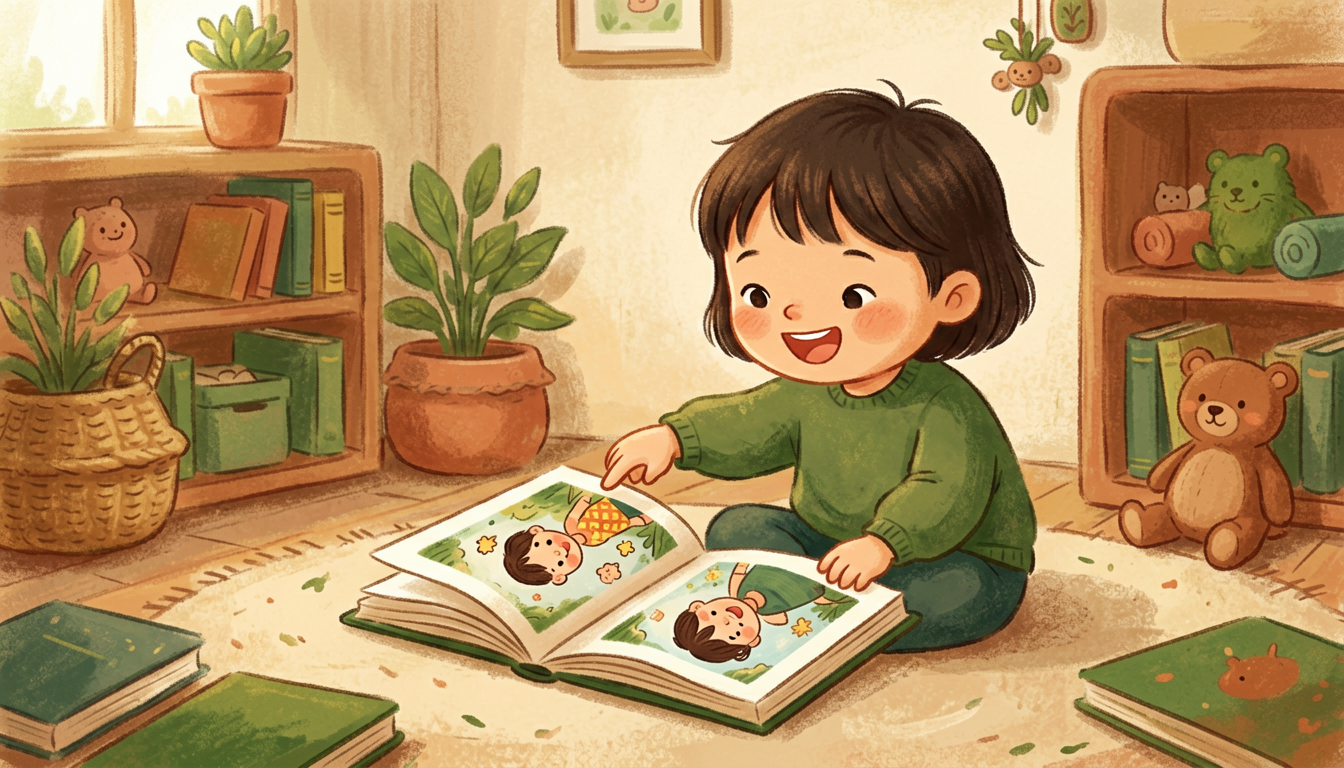
You've probably noticed it: hand a child a book about a generic bunny and they're mildly interested. Put their own name on the page, give the character their haircut and their favorite color, and suddenly they're leaning in, pointing, asking "Is that me?"
Most parents sense that personalization does something. But what, exactly — and is it worth choosing a personalized book over a beautiful generic one? Here's a grounded look at what changes when a child sees themselves in the story, where the effect is real, and where it's oversold.
Why a child's own name grabs attention
There's a well-known quirk of human attention: we're wired to notice our own name. Even young children orient toward it the way adults do at a noisy party — it cuts through. So when a story uses your child's name on every page, you've built in a small, repeated attention hook.
That hook is part of why personalized books often hold a young child's focus a little longer. The book isn't about some other kid; it's about them, and that personal relevance gives a toddler or preschooler an immediate reason to care what happens next.
This matters because, in early childhood, engagement is most of the game. A book a child wants to revisit gets read more often, and frequency of positive reading experiences is one of the things that genuinely supports early language and literacy.
"That's me!" — seeing yourself as the hero
Beyond the name, there's the picture. When a child recognizes the character as themselves — same skin tone, same curly hair, same dinosaur obsession — something shifts emotionally. The story stops being a window into someone else's life and becomes a mirror.
For a young child, that mirror can do a few useful things:
- It boosts buy-in. A child is more invested in a hero they identify with, which can stretch attention and encourage re-reading.
- It supports a sense of self. Seeing yourself portrayed as brave, kind, or capable in a story is a gentle, age-appropriate confidence builder.
- It opens conversation. "Look, that's you being brave at the doctor" is a natural bridge to talking about real feelings and experiences.
None of this is magic, and it's not a substitute for good writing or warm reading-aloud. But the identification effect is real, and parents observe it constantly.
Where generic books still win
Personalization isn't automatically "better." Plenty of generic books are wonderful precisely because they're not about your child:
- Classics build shared culture. The same beloved stories that you read, and your parents read, create a sense of belonging to something bigger.
- Distance can help with big feelings. Sometimes a child processes fear or jealousy more easily through a character who isn't them — the slight remove makes a scary topic safer to explore.
- Variety matters. Children benefit from meeting many kinds of characters, places, and lives. A library of only-about-me books would be a narrow diet.
The healthiest bookshelf is mixed. Personalized books are a powerful tool for engagement and connection; generic books bring range, shared culture, and emotional distance. You want both.
When personalization is most worth it
If you're deciding where personalization actually pays off, it tends to shine in specific situations:
- A reluctant or wiggly reader who needs an extra reason to sit down. Their own name and face is often that reason. (If this is your situation, our guide on reading to a toddler who won't sit still pairs well with a personalized book.)
- Milestones and transitions — a new sibling, starting daycare, a first dentist visit — where seeing themselves handle the situation in a story can be reassuring.
- Gifts that feel special, where the "that's me!" moment is part of the magic.
- Early name and letter recognition, since seeing their own name in print repeatedly is a natural, motivating first step into letters.
For everyday variety and bedtime favorites, a great generic book is perfectly good. Save personalization for where its strengths line up with your child's needs.
How to make a personalized book actually engaging
Personalization alone won't save a flat story. To get the engagement benefit, the rest still has to be good:
- Keep the language age-appropriate — short, rhythmic, with repetition young kids can join in on.
- Match the personalization to the child — not just the name, but interests, and an illustration that genuinely resembles them. A vague resemblance breaks the "that's me" effect.
- Read it with them, asking questions and connecting the story to real life, rather than just reading at them.
Tools that create personalized storybooks now make it easy to get a character that actually looks and is named like your child, with the story built around their interests. If you want to test the engagement effect yourself, the simplest experiment is to make one book starring your child and watch their face on the first read. Most parents know within thirty seconds whether it landed.
The honest bottom line
Does personalization change how kids engage? Yes — usually for the better, mostly through stronger attention, identification, and willingness to re-read. Is it always the right choice? No. It's a high-impact tool for specific jobs, not a wholesale replacement for the rich variety of generic and classic books every child should grow up with.
Use personalized books to pull a child in. Use the rest of the library to show them the world. The combination is what builds a reader.
Frequently asked questions
Are personalized books actually better for my child, or is it a gimmick?
They're genuinely effective at boosting engagement and a child's sense of being seen, largely because kids notice their own name and identify with a hero who looks like them. They're not better than all generic books, though — variety still matters. Think of personalization as a strong tool for specific moments.
At what age does personalization make the biggest difference?
The "that's me!" effect tends to be strongest in toddlers and preschoolers, roughly ages two to six, when name recognition and self-identification are developing and personal relevance strongly drives attention.
Will my child only want books about themselves?
Unlikely. Most kids enjoy a personalized book and love stories about other characters. Keeping a varied bookshelf naturally prevents any narrowing, and the engagement habits a personalized book builds often carry over to other books.