Stories About Anger for Kids
A complete original picture book about big angry feelings you can read tonight — plus a simple calm-down tool and age-by-age tips that help your child handle anger without hurting.
ByAndyFounder of Doodara
Quick answer
The children's books that actually help an angry preschooler treat anger as normal and then show a body-level way to cool it — they don't ask a child to simply be good. This page has a complete original picture book, Rocky Cools His Fire, free to read tonight, plus discussion questions and age-by-age guidance for ages 3-7. The practical move: after reading, pick one cooling-down action from the story and practise it together while your child is calm, so it is already familiar the next time the fire comes.
Few things rattle a parent like a child in the grip of rage — the screaming, the hitting, the thrown toy, the pure fury in such a small body. If your child erupts over a broken biscuit or a lost game, take heart: anger is a normal, healthy emotion, and learning to handle it is one of the hardest, most important jobs of early childhood. Your child isn't bad. They're overwhelmed.
Anger itself is not the problem — it's a natural signal that something feels unfair, frustrating, or out of a child's control. The trouble is that young children feel anger at full volume and don't yet have the brakes to manage it. The part of the brain that calms big feelings is still years from being fully built, so anger comes roaring out as hitting, screaming, or meltdown before a child can think.
The goal isn't to stop your child feeling angry — it's to help them handle the feeling without hurting themselves, others, or things. That's a skill, and it's teachable. When a child learns to notice anger rising and has a tool to cool it down, the storms get shorter and the hitting fades. Stories help enormously: they let a child see a character feel furious and find a way through, all from the safe distance of the page.
Why stories help
A story lets a child meet anger safely. When a character feels the same hot, roaring fury your child knows so well — and then finds a way to cool it — your child learns that anger is normal, and that there's a way through it that isn't hitting.
Children copy characters they love. A little dragon who learns to breathe out his fire is a live demonstration of self-control, far more useful than 'calm down' shouted mid-meltdown. It gives your child a hero — and a tool — to imitate.
And a story teaches the crucial two-part lesson gently: that the feeling is allowed, but the hurting is not. 'It's okay to feel angry; it's not okay to hit' lands far better wrapped in a story your child loves than as a rule in the heat of the moment.
How a story becomes a habit
Rocky Cools His Fire
An original picture book about anger — free to read aloud tonight.
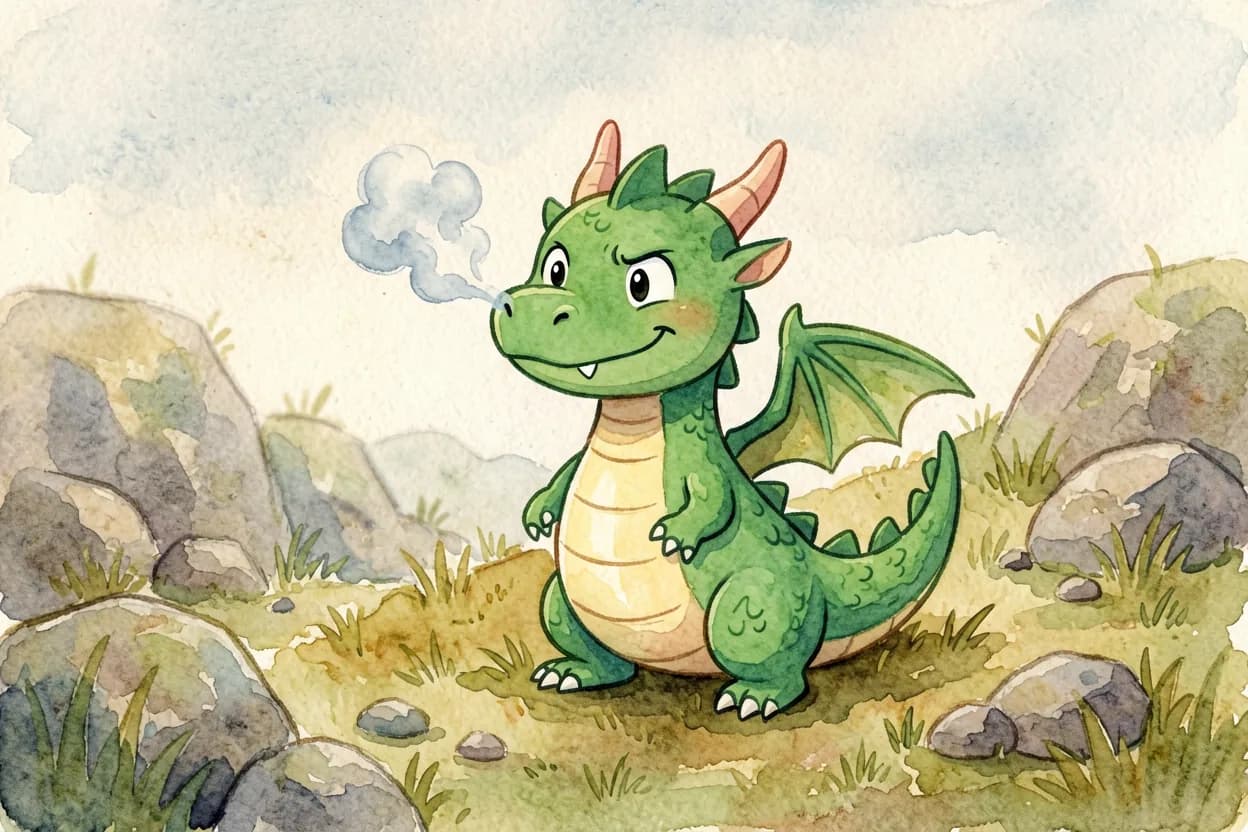
Rocky was a little dragon with a big heart — and, sometimes, a very hot temper. When he felt angry, real smoke puffed out of his nose. Puff! Puff! And if he got REALLY angry... whoosh — little flames!
One morning, Rocky built a tall tower of stones, higher than his head. He was so proud. But then his tail swished — CRASH — and the whole tower tumbled down.
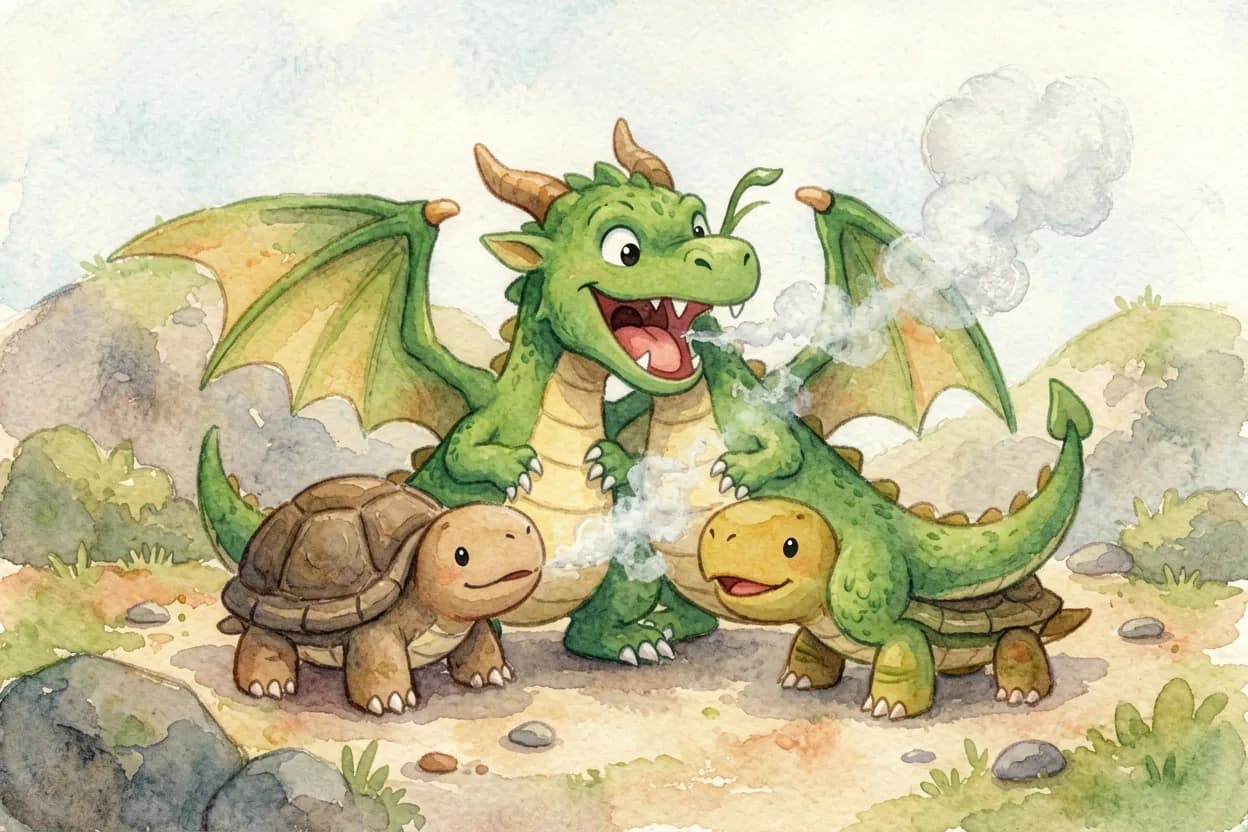
The anger came fast and hot. Rocky's face went red. Smoke poured out. "GRRRR!" he roared, and he stomped, and he flung a stone, and it nearly hit his friend Pebble the tortoise. "Rocky!" cried Pebble, ducking.
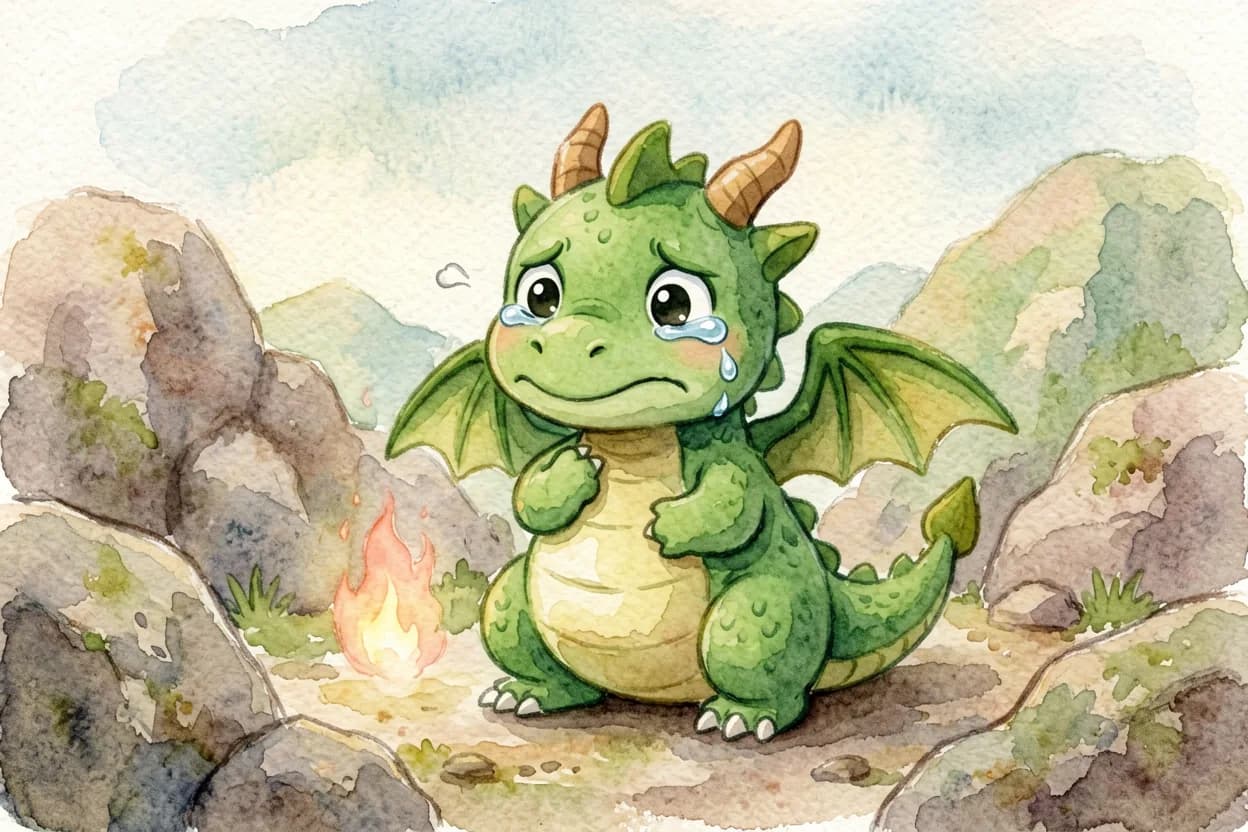
Rocky froze. He hadn't meant to nearly hurt his friend. The angry fire still roared inside him, but now he felt bad too. "I'm so cross I could burst," he said, tears sparkling. "I don't know what to do with it."
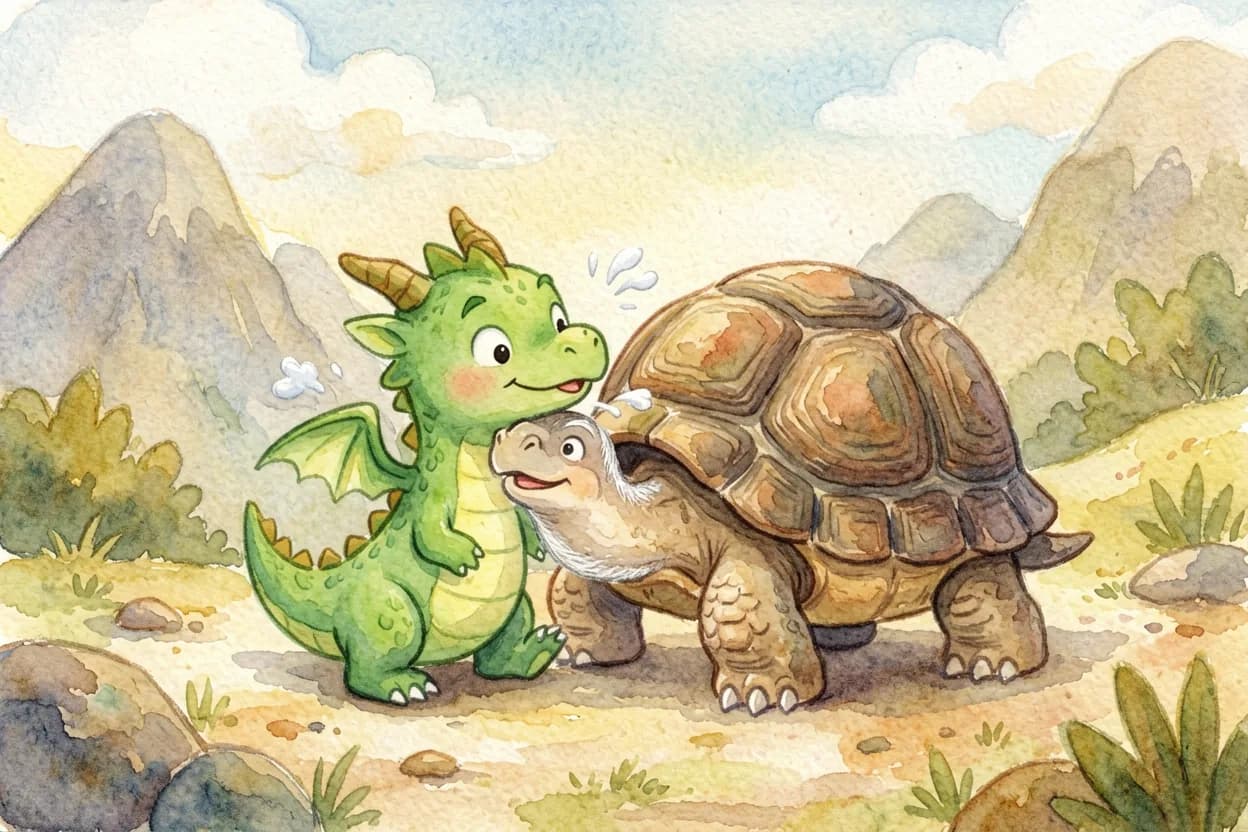
Wise old Pebble came close. "Anger is like your fire," she said gently. "It's not bad — but we mustn't let it burn anyone. When you feel it roar, you can cool it. Watch. Breathe in the cool air... and blow the fire out, slow and long."
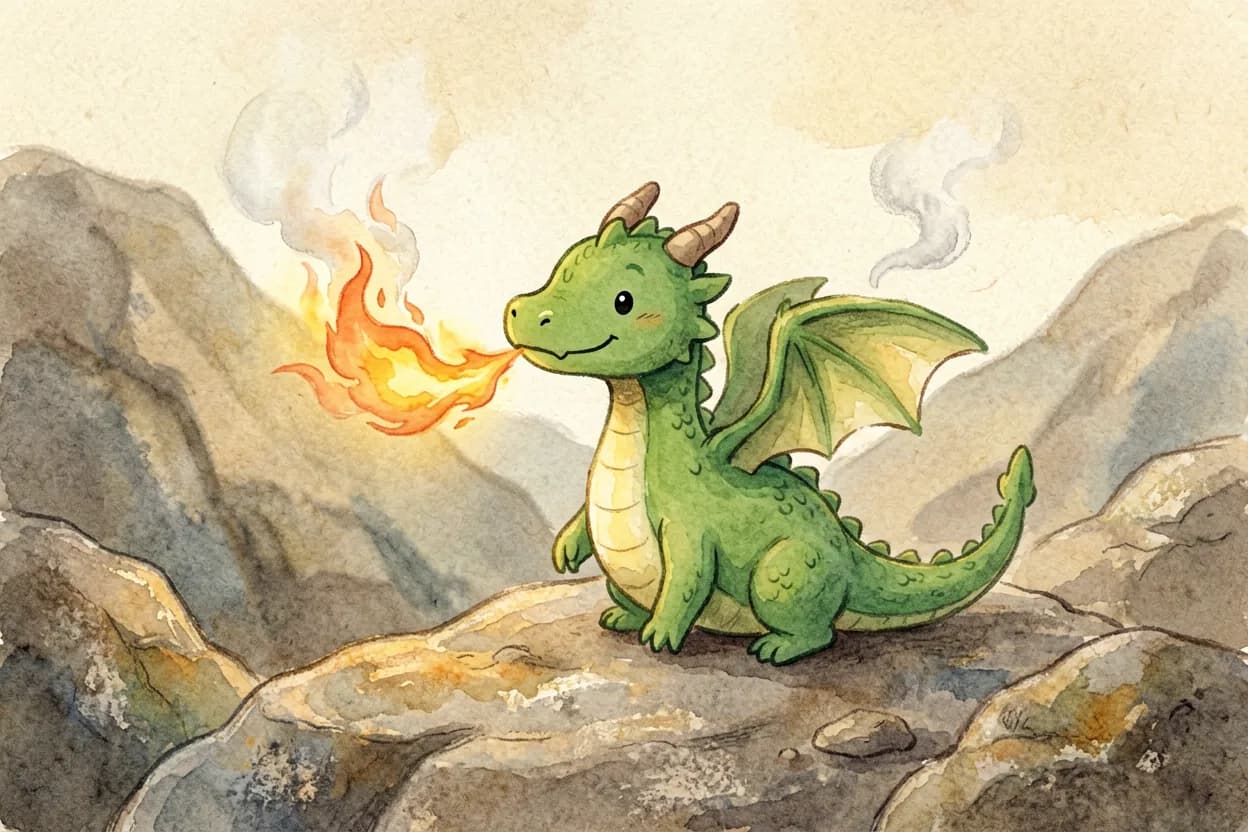
So Rocky tried. He breathed in the cool morning air, deep and slow. Then he blew out, long and steady — whoooosh — like blowing out birthday candles. The flames flickered... and shrank... and softened to a thin wisp of smoke.
He did it again. Breathe in the cool... blow out the fire. And little by little, the roaring inside grew quiet. Rocky felt the anger cool right down to a warm, calm glow.
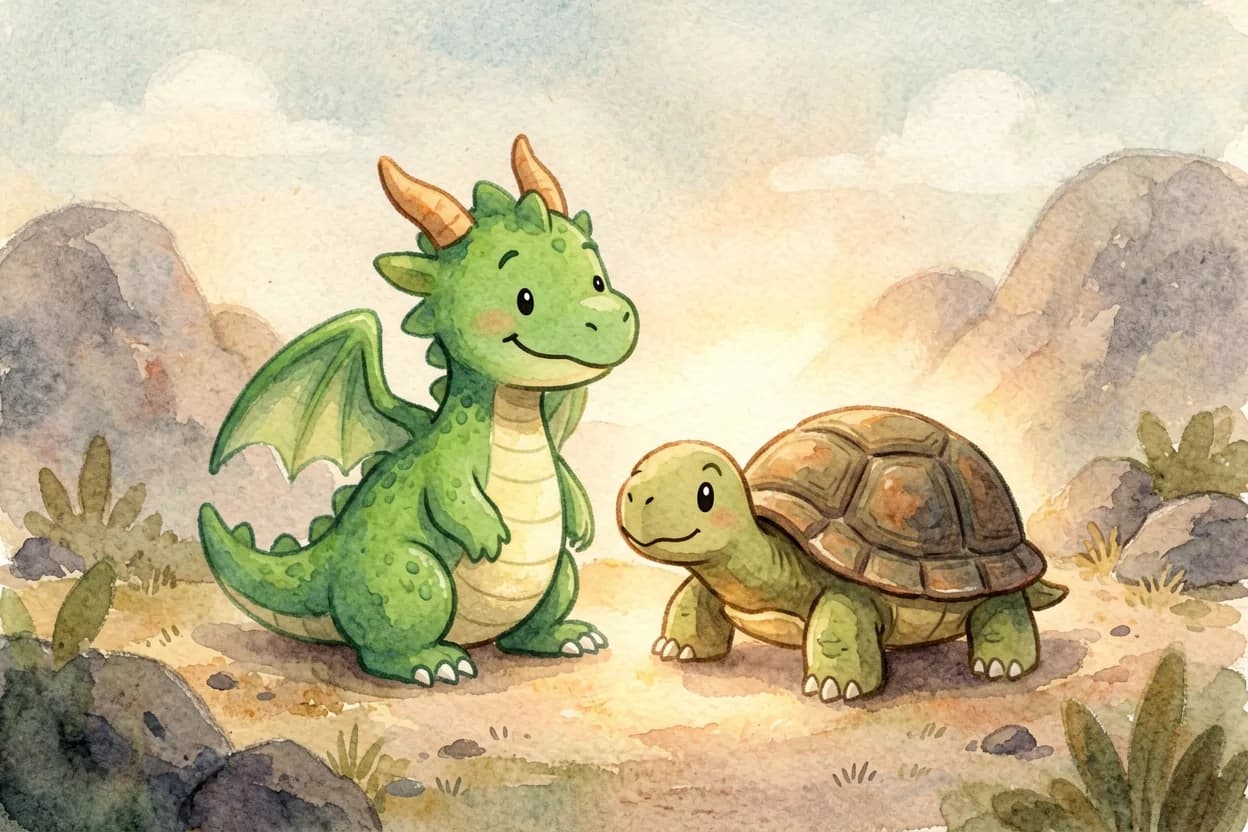
"I cooled my fire!" said Rocky, amazed. "I'm sorry I nearly hit you, Pebble." "You did wonderfully," said Pebble. "You'll still feel angry sometimes — everyone does. But now you know how to cool it."
And after that, whenever Rocky felt the fire roar, he took a big cool breath and blew it slow — and the fire always, always cooled.
It's okay to feel angry. Everybody does. What matters is learning to cool the fire before it burns.
Questions to ask after reading
- 1What happened to Rocky's body when he got angry? (Smoke and fire!)
- 2What did Rocky do that he felt bad about afterwards?
- 3What did Pebble teach Rocky to do when the anger roared?
- 4What happened to the fire when Rocky breathed out slowly?
- 5What could you do to cool YOUR fire when you feel angry?
Try it together: tools to cool big anger
Managing anger is a skill, best practised when calm — long before the next storm. These tools give your child something to reach for.
- Cool the fire breathing. Practise Rocky's breath: breathe in the cool air, blow out slow like candles. Rehearse it in calm moments so it's ready when anger roars.
- Name the anger's size. Talk about anger having sizes — a small spark, a big fire. Naming 'I'm getting fiery' helps a child catch the feeling before it explodes.
- A calm-down spot. Make a cosy corner with soft things where your child can go to cool down. Frame it as a helpful retreat, never a punishment or 'naughty step.'
- Safe ways to let it out. Offer harmless outlets — stomping like a dinosaur, squeezing a cushion, tearing scrap paper. Anger has energy; giving it a safe channel beats bottling or hitting.
- Catch calm-downs and praise them. When your child manages anger even a little, notice it: 'You were so cross and you took a big breath — that was strong.' What we praise grows.
How to use the story at each age
Toddlers (2-3)
At this age anger comes out physically and can't yet be reasoned with. Keep everyone safe, stay calm, and name the feeling for them: 'You're so angry the tower fell.' Your steady presence is the main tool — they borrow calm from you. Don't expect them to 'use their words' mid-storm.
Preschoolers (3-5)
Now you can teach a calm-down tool like Rocky's breathing and practise it when calm. Set the clear two-part limit — feelings are okay, hurting is not — and offer safe outlets for the energy. Talk it through afterwards, never during the peak.
Older children (5-7)
Children this age can start spotting anger rising early and choosing a strategy — a breath, a break, asking for help. Talk about what set the anger off and problem-solve together for next time. Keep modelling your own calm; they're watching how you handle frustration.
Common mistakes (and what to do instead)
- Punishing the feeling, not the behaviour. Punishing a child for feeling angry teaches shame and suppression. Guide the behaviour instead: 'It's okay to be angry; it's not okay to hit. Let's cool the fire.'
- Trying to teach mid-meltdown. A child at full fury can't learn or reason. Keep them safe and offer calm first; save the talking and problem-solving for afterwards.
- Meeting anger with your own anger. Shouting at an angry child pours fuel on the fire. Your calm is contagious — lower your voice and slow your breath, and theirs will follow.
- Telling them to 'calm down'. Ordering calm rarely produces it. Give them a concrete tool instead — a breath, a squeeze, a calm-down spot — that they can actually use.
- Bottling anger up as 'being good'. Teaching children that anger is bad drives it underground. Anger is healthy; the aim is to handle it safely, not to never feel it.
Using the lesson in everyday moments
The story plants the tool; daily life is where it gets practised. Here's where anger shows up.
- In the heat of a meltdown. Keep everyone safe, get low and calm, and name the feeling. Once the peak passes, gently guide a cooling breath together.
- When frustration builds. Catch it early — hunger and tiredness are anger's fuel. Head off the hardest moments with a snack, a rest, or a change of scene.
- After the storm. Reconnect first, then talk: what happened, and what could help next time. Repair matters more than any lecture.
- In your own moments. Model it out loud: 'I'm feeling frustrated, so I'm going to take a cool breath.' Your example is the most powerful lesson of all.
A simple checklist to follow
- Read the story together, unhurried, with time for the pictures
- Practise 'cool the fire' breathing together when calm
- Set the limit clearly: feelings are okay, hurting is not
- Offer safe ways to let anger's energy out
- In a real storm, keep safe and calm first, then talk later
- Model cooling your own fire out loud
Make the story about your child
A dragon named Rocky is a fiery, friendly guide. But children pay closest attention when the one learning to cool their anger is someone they know from the inside — themselves.
When your child is the hero whose anger roars up and who learns to breathe it cool, the story stops being about a dragon and becomes a picture of what they can do with their own big mad feelings. Their name, their fire, their calm breath — the tool they'll reach for when the real anger hits.
A generic story
A little dragon learns to breathe out and cool his fiery anger.
Your child's story
Max feels his anger roar up when his tower falls, and learns to take a big cool breath to calm it — with Max as the hero on every page.
Parents also ask
Is it normal for young children to have angry outbursts?
Completely normal. Anger is a healthy emotion, and young children feel it at full volume without yet having the brain development to manage it — so it comes out as hitting, screaming, or meltdowns. It's not a sign of a bad child, but of a developing one. The outbursts shorten as children learn to notice and cool the feeling.
How do I teach my child to manage their anger?
Give them a concrete calm-down tool (like slow 'cool the fire' breathing) and practise it when they're calm, not mid-storm. Set the clear two-part limit — feelings are okay, hurting is not — offer safe outlets for the energy, and model handling your own frustration. Talk through what happened afterwards, once everyone is settled.
What should I do when my child is hitting or throwing things in anger?
Keep everyone safe first, stay calm, and hold the limit gently but firmly: 'I won't let you hit.' Don't try to teach or reason at the peak — a furious child can't take it in. Once the storm passes, reconnect, then talk about what happened and practise a calming tool for next time.
Should I punish my child for getting angry?
Punish neither the feeling nor confuse it with the behaviour. Punishing anger itself teaches shame and drives it underground. Instead, allow the feeling, set clear limits on hurtful behaviour, and coach a better way to handle it. Consequences for hurting can be fair, but the anger itself isn't the crime.
My child bottles up anger. Is that a problem?
It can be. Teaching children that anger is 'bad' can lead them to suppress it, which isn't healthy. Anger is a normal signal that something feels wrong. Help your child name and express it safely rather than hide it — the goal is handling anger well, not never feeling it.
How can I stay calm when my child is raging?
Remember that your calm is contagious — and so is your anger. Lower your voice, slow your own breathing, and get down to their level. It helps to see the meltdown as a feeling too big for them to manage rather than as defiance aimed at you. Looking after your own reserves (rest, support) makes staying calm far easier.
Are personalized stories helpful for anger?
For many children, yes. A story where they are the hero who feels furious and learns to cool it makes the lesson vivid and gives them a self-image as someone who can handle big feelings. It's a supportive tool alongside a calm-down plan and your steady, patient coaching.
More free stories for kids
About the author
Andy — Andy is the founder of Doodara and builds the illustration pipeline behind it — the part that has to keep a child's character looking like the same child on every page of a book. Most of that work is character consistency, content safety for material aimed at young children, and the unglamorous business of making a generated book good enough that a family reads it twice.