
Stories About Patience for Kids
A complete original picture book about waiting you can read tonight — plus the discussion questions, activities, and age-by-age tips that help your child learn that good things take time.
ByAndyFounder of Doodara
Quick answer
Waiting is genuinely hard for a young child because the future barely feels real to them, so the books that help make the waiting visible — something growing, something counting down. This page has a complete original picture book, Wren and the Sunflower Seed, free to read tonight, plus discussion questions and age-by-age guidance for ages 3-7. The practical move: after reading, start one slow thing together — a seed, a paper chain — so your child has a running example of waiting that pays off.
"Are we there yet?" "Is it ready NOW?" For a young child, waiting can feel almost unbearable — because to a small child, the future is a foggy, faraway place and the only thing that feels real is now. If your little one crumbles when they can't have something this instant, they're not being difficult. They simply haven't yet built the skill of waiting.
Patience depends on parts of the brain that develop slowly through childhood — the ability to hold a goal in mind, to tolerate the discomfort of wanting, and to trust that good things really will come. That's a tall order for a three-year-old whose sense of time is still forming. Waiting five minutes can genuinely feel like forever.
The encouraging part is that patience grows with practice and with trust. When a child learns, again and again, that waiting actually pays off — that the seed does sprout, that their turn does come — waiting slowly becomes bearable, then even hopeful. Stories help enormously: they let a child experience the whole arc of waiting and reward in the time it takes to read a book, so they can feel that good things really are worth waiting for.
Why stories help
Waiting is invisible and slow — but a story makes it visible and gives it a happy ending you can see. When your child watches a character wait for a seed to bloom and then cheer at the flower, they feel the whole payoff of patience in a few short pages.
Children copy characters they love. A little bird who learns to wait for her sunflower is far more convincing than a parent saying 'be patient.' The story shows what waiting looks like, and how good the reward feels.
And because a story compresses a long wait into a short read, it teaches the core lesson of patience — good things take time, and time passes — in a way a young child can actually grasp. Read it enough, and 'wait and see' starts to feel like a promise rather than a punishment.
How a story becomes a habit
Wren and the Sunflower Seed
An original picture book about patience — free to read aloud tonight.
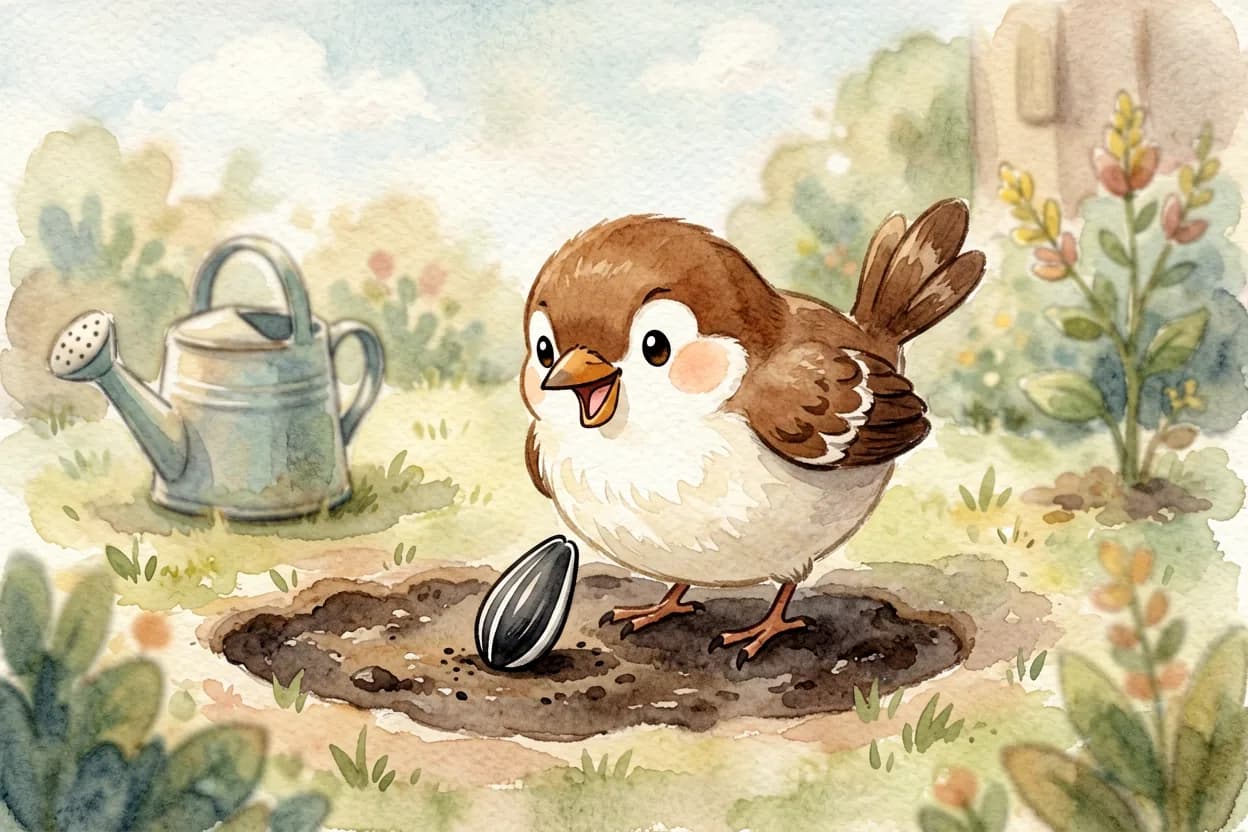
One bright spring morning, Wren the tiny bird planted a single sunflower seed in a small patch of earth. She patted the soil, gave it a drink, and clapped her wings. "There! Now I'll have the tallest sunflower in the garden!"
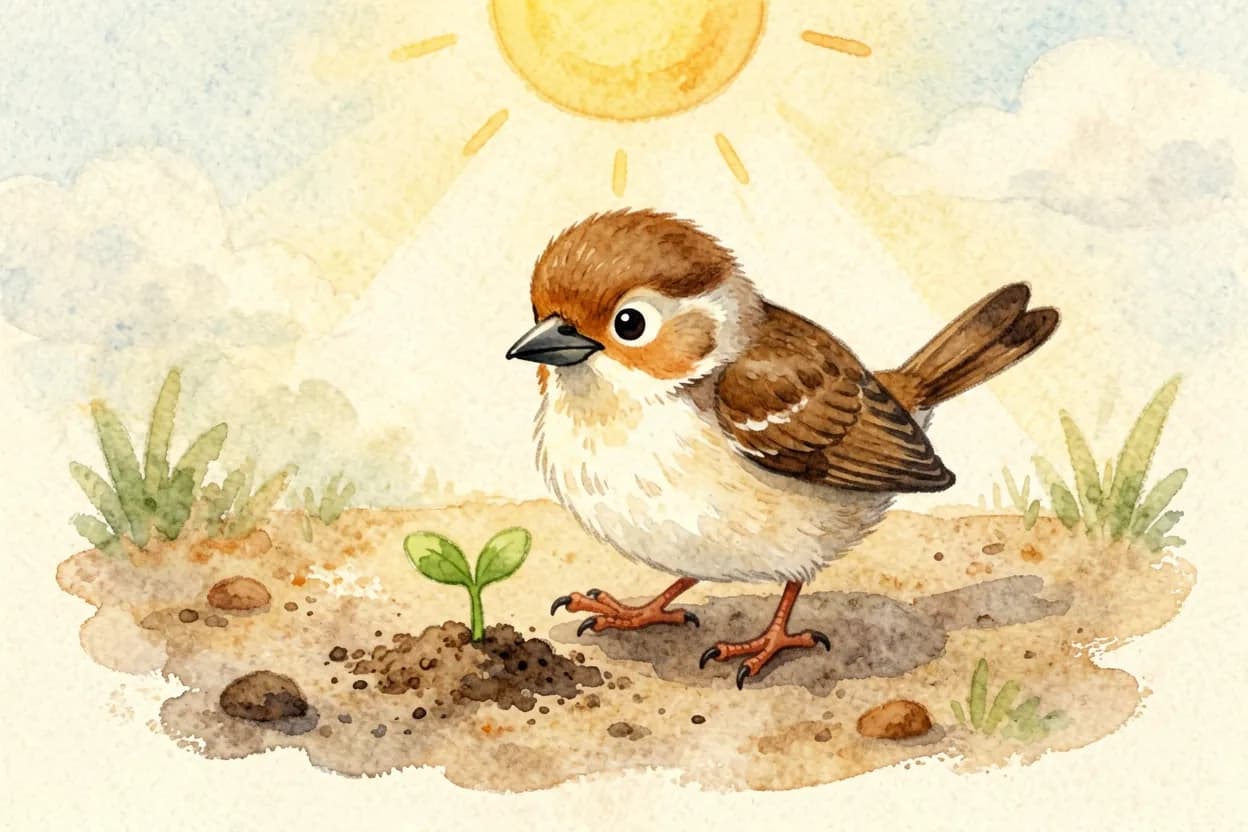
Wren waited. She stared at the soil. She waited some more. But the earth just sat there, brown and bare. "Grow!" she chirped. "Grow NOW!"
Nothing happened. Wren tapped her little foot. She huffed. "This is taking forever," she grumbled. "Maybe it's a broken seed."
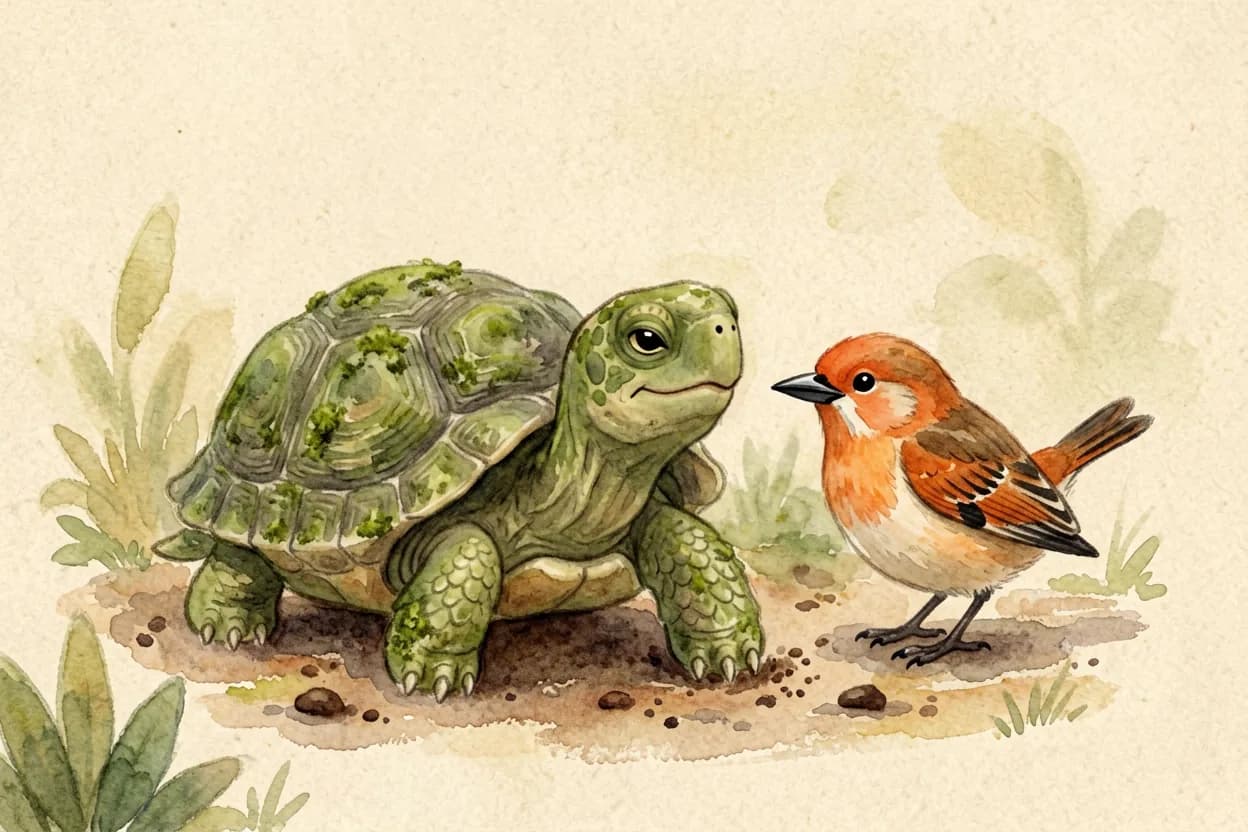
Just then, Old Tuck the tortoise came plodding by, slow and calm as always. "Ah, Wren," he said with a gentle smile. "A sunflower can't be hurried. It grows in its own good time. Your job is just to tend it — and to wait."
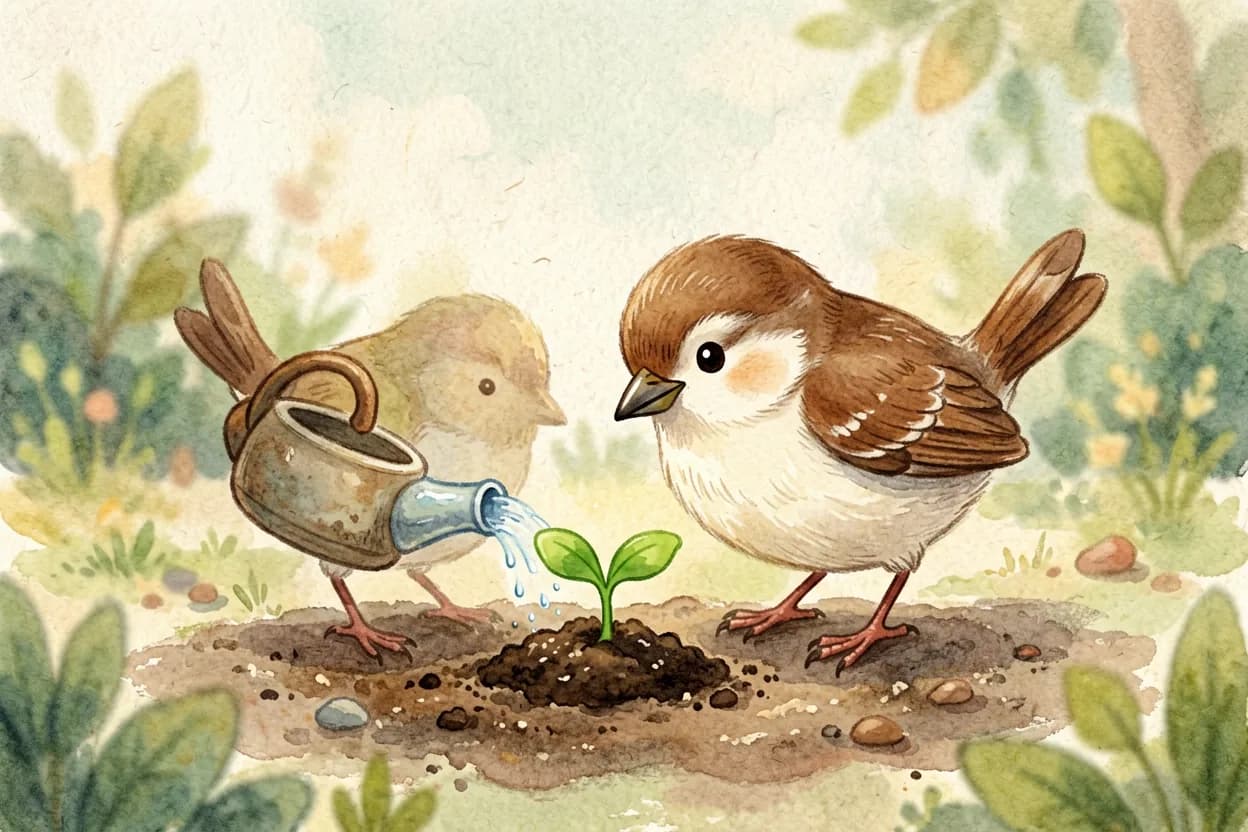
So Wren decided to try. Each morning she gave the soil a little water. Each day she checked, gently, and let it be. And one morning — there it was! A tiny green sprout, poking through the earth.
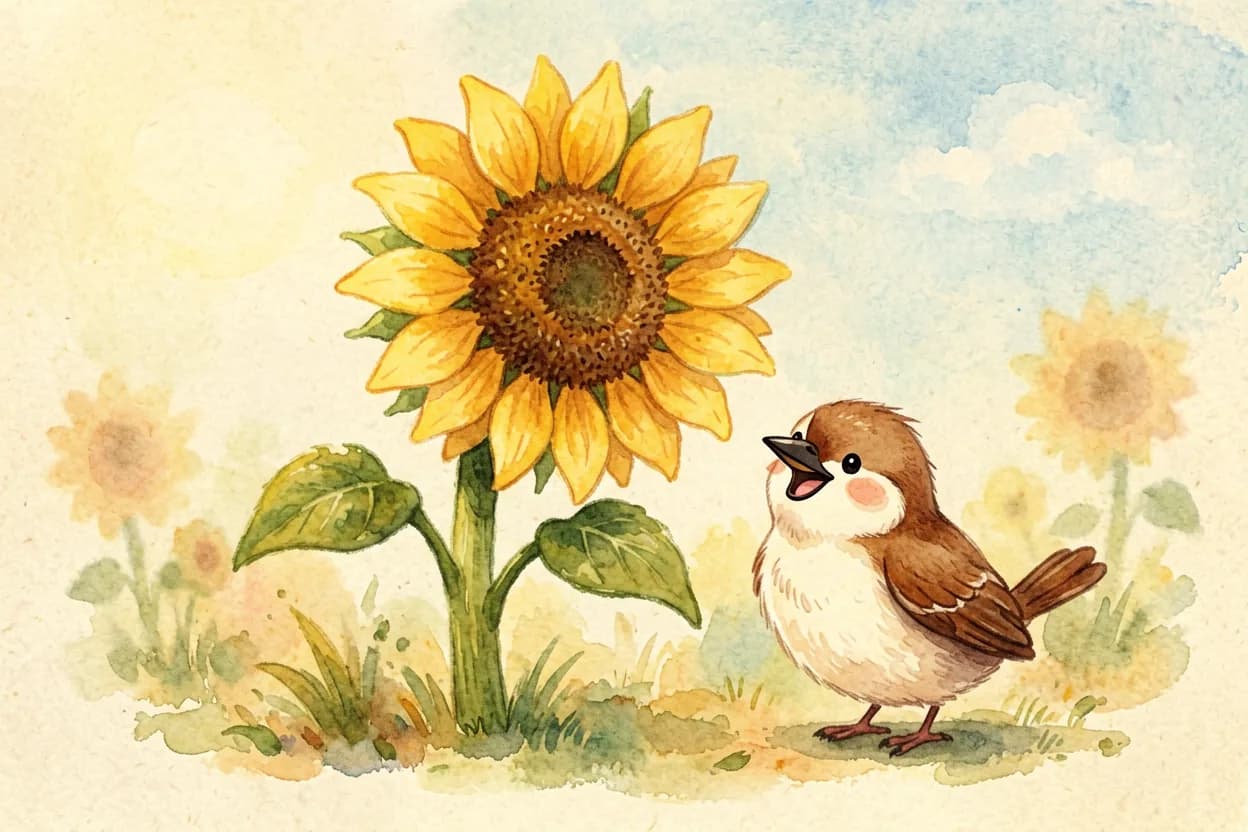
Wren gasped with joy. Now that she could see it growing, waiting felt different — hopeful instead of hard. Day by day the little plant reached higher... and higher... and higher.
Until at last, one golden morning, it opened: a huge, sunny sunflower, taller than Wren herself, its bright face turned up to the light.
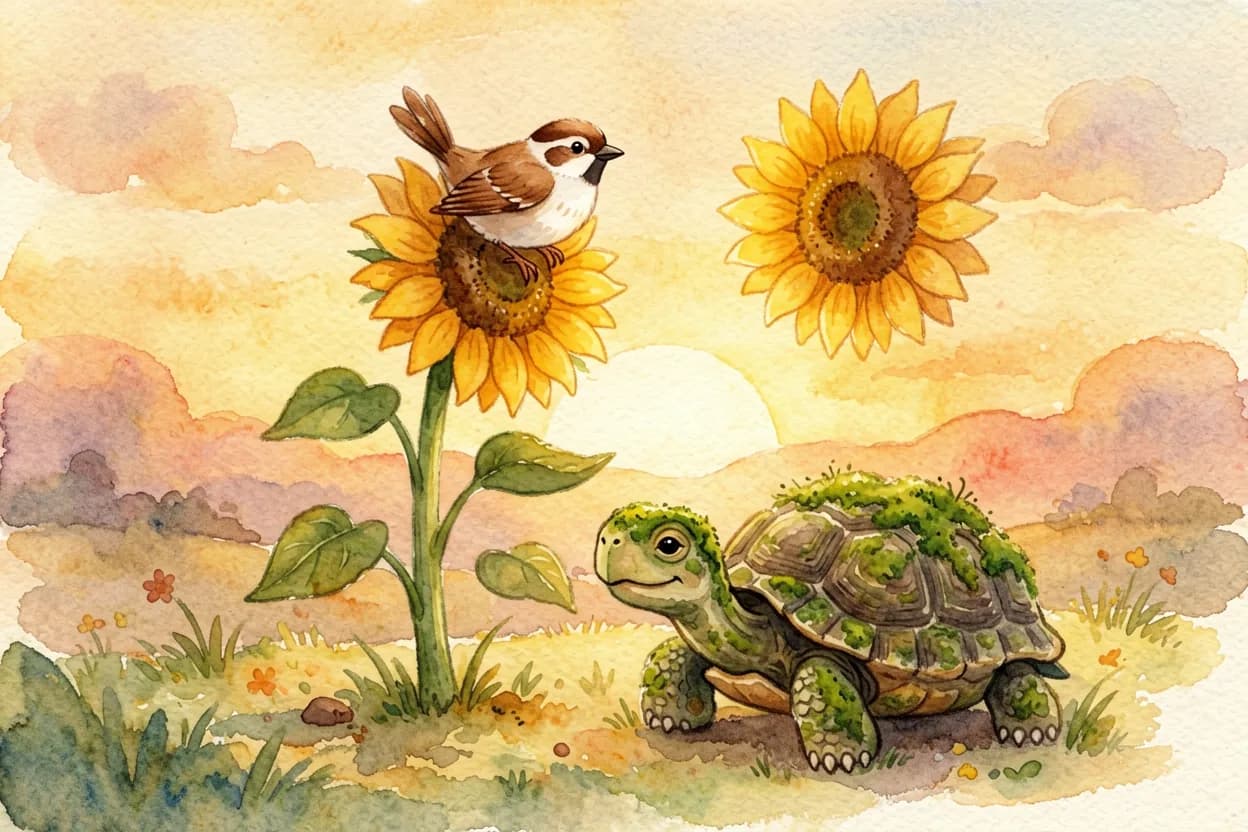
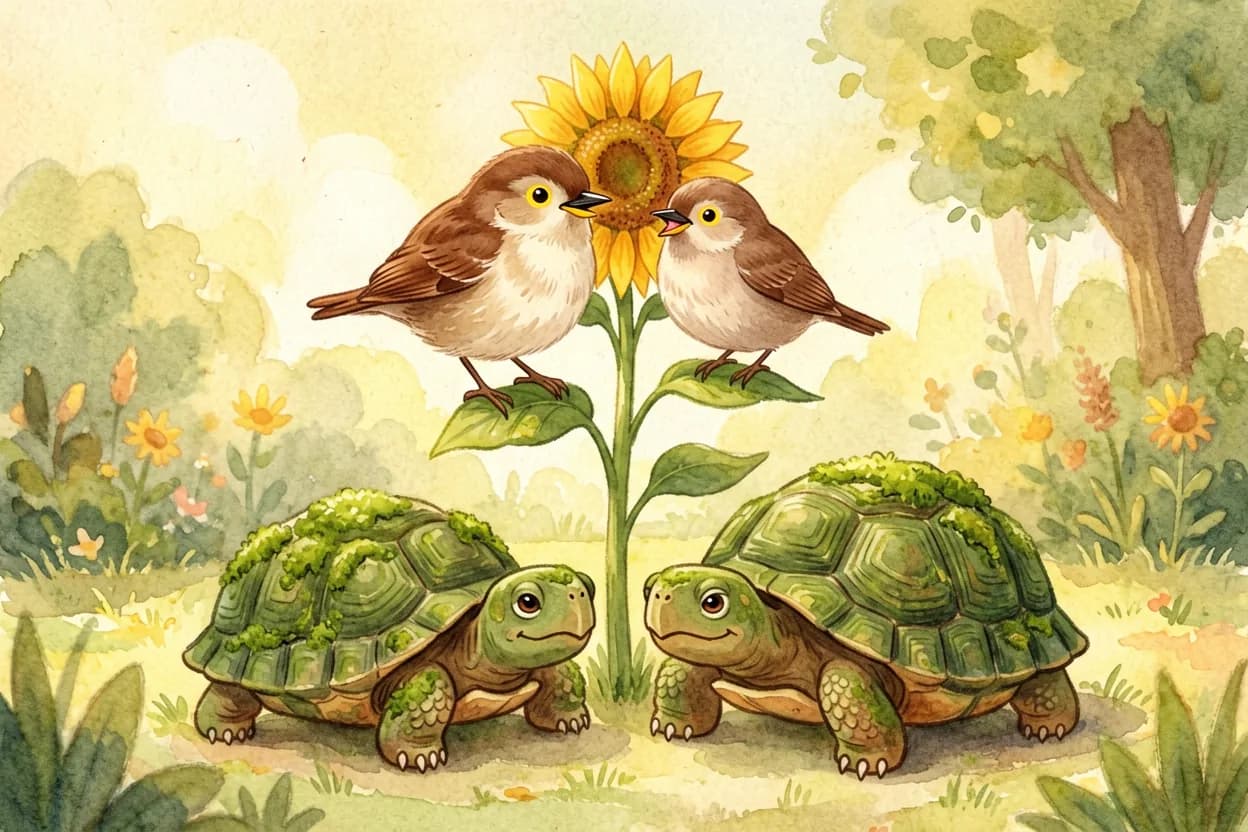
Wren fluttered right to the very top and perched there, proud as could be. Old Tuck plodded up and smiled. "You see?" he said. "The best things are worth the wait."
And Wren, looking out over the whole golden garden from her tall, tall flower, knew that he was exactly right.
The best things grow slowly. Patience isn't just waiting — it's trusting that something wonderful is on its way.
Questions to ask after reading
- 1How did Wren feel while she was waiting for the seed to grow?
- 2What did Old Tuck tell her about sunflowers?
- 3What did Wren do each day while she waited?
- 4Why did waiting feel different once the sprout appeared?
- 5What is something you have to wait for? What could you do while you wait?
Try it together: activities that build patience
Patience grows with practice and with proof that waiting pays off. These activities make waiting visible, active, and even fun.
- Grow something together. Plant a fast-sprouting seed — sunflower, cress, or beans — and check it daily, just like Wren. Watching something grow is the perfect slow lesson in patience with a real reward at the end.
- Make a visual timer. Use a sand timer or a simple countdown so a wait has a visible, shrinking end. When a child can see the wait getting smaller, it feels far more bearable.
- The waiting game. Play games that reward waiting — 'red light, green light,' or hiding a treat and counting slowly before finding it. Practising short, playful waits builds the muscle for real ones.
- A 'while we wait' box. Keep a small box of quiet activities for waiting times — a doctor's office, a queue, dinner cooking. Having something to do turns dead waiting into busy waiting.
- Count the sleeps. For a big event, mark off the days on a calendar. Seeing time pass — and pass reliably — teaches that waiting really does end, and good things really do arrive.
How to use the story at each age
Ages 2-3
Keep waits tiny and concrete. 'Later' means almost nothing at this age, so use very short, visible waits and lots of distraction. Celebrate any moment of waiting, however brief, and expect frequent frustration — it's completely normal.
Ages 4-5
Pause when Wren gets impatient: 'What could she do while she waits?' Children this age can start to hold a goal in mind and tolerate a short wait, especially with a visible timer or a job to do (like tending the seed). Point out real payoffs when they come: 'You waited, and here it is!'
Ages 6-7
Talk about the bigger idea: some of the best things — growing, learning, getting good at something — only come with time and practice. Older children can begin to wait for larger goals and understand that effort now brings a reward later, the way Wren's daily watering brought the flower.
Common mistakes (and what to do instead)
- Vague, open-ended waits. 'In a minute' with no clear end is agony for a young child. Give a concrete, visible marker — a timer, 'when the sand runs out,' 'after this song' — so the wait has a shape.
- Caving the moment they fuss. Giving in as soon as a child complains teaches that fussing ends the wait. Kindly and calmly, let the wait play out as promised, so your child learns that waiting truly works.
- Removing every wait. Smoothing away all waiting robs children of the practice they need. Small, everyday waits — for a turn, for dinner, for the weekend — are exactly how patience grows.
- Expecting patience beyond their age. A toddler who can't wait five minutes isn't spoiled; their brain simply isn't there yet. Match the wait to the age, and treat frustration as normal, not naughty.
- Forgetting to deliver. If you promise the reward is coming, make sure it reliably arrives. Patience is built on trust — a child who learns that good things really do come will wait far more willingly.
Using the lesson in everyday moments
The story shows the reward of waiting; daily life is where patience gets its practice. Here's where it shows up.
- Waiting for a turn. At the swing or in a game, a visible countdown ('two more, then your go') turns an unbearable wait into a bearable one.
- In a queue or waiting room. Reach for the 'while we wait' box, or play a quiet game. Giving a child something to do makes patience possible.
- For a special day. Count the sleeps on a calendar for a birthday or trip. Watching time pass reliably teaches that waiting always ends.
- Learning a new skill. Riding a bike, tying shoes, reading — all come slowly. Praise the practising, not just the mastering: 'You're getting better every day.'
A simple checklist to follow
- Read the story together, unhurried, with time for the pictures
- Pause when Wren gets impatient and ask what she could do
- Ask one or two of the discussion questions — don't quiz
- Plant a seed or start a slow project to wait for together
- Use a visible timer to give everyday waits a clear end
- Always deliver the promised reward, so waiting stays worth it
Make the story about your child
A bird named Wren is a lovely guide. But children pay closest attention when the one learning to wait is someone they know by heart — themselves.
When your child is the hero who plants the seed, feels the itch to hurry it, and learns to tend and trust and wait, the lesson stops being about a bird and starts being about them. Their name, their sunflower, their proud moment at the top — the version they'll ask you to read again and again.
A generic story
A little bird learns to patiently wait for her sunflower seed to grow and bloom.
Your child's story
Sofia plants a sunflower in her own garden and learns to wait patiently for it to bloom — with Sofia as the hero on every page.
Parents also ask
Why is it so hard for young children to be patient?
Patience relies on brain skills — holding a goal in mind, tolerating the discomfort of wanting, and trusting that good things will come — that develop slowly through childhood. For a young child, the future feels far away and only 'now' feels real, so even a short wait can feel unbearable. It isn't defiance; it's a normal stage that eases with age and practice.
At what age do children learn patience?
Very young children (under three) can manage only tiny, supported waits. Across the preschool years, children get better at waiting when the wait is short, visible, and paired with something to do. Patience for larger goals keeps developing well into the school years and beyond.
How can I help my impatient child learn to wait?
Make waits concrete and visible (a sand timer, 'after this song'), give your child something to do while waiting, and always deliver the promised reward so they learn that waiting pays off. Growing a plant or counting sleeps on a calendar are great ways to practise patience with a real payoff.
Should I give in when my child can't wait?
It's best not to cave the moment they fuss, because that teaches that complaining ends the wait. Stay calm and kind, and let the wait play out as promised. Over time, your child learns that waiting genuinely works — which is what makes it bearable.
Isn't it easier to just avoid making my child wait?
Removing every wait actually robs children of the practice they need to build patience. Small everyday waits — for a turn, for dinner, for the weekend — are exactly how the skill grows, as long as they're age-appropriate and the payoff reliably comes.
Can reading stories really help with patience?
Yes. A story compresses a long wait into a short read with a visible, happy ending, so a young child can feel that good things are worth waiting for. Learning from a character they love, and rereading the same reassuring arc, genuinely helps the lesson sink in.
Are personalized stories more effective for teaching patience?
For many children, yes. A story where they are the hero who plants, tends, and waits — and is rewarded — makes the lesson vivid and personal, and gives them a self-image as someone who can wait for good things. It's not a replacement for real-life practice, but as a nudge it can be powerful.
More free stories for kids
About the author
Andy — Andy is the founder of Doodara and builds the illustration pipeline behind it — the part that has to keep a child's character looking like the same child on every page of a book. Most of that work is character consistency, content safety for material aimed at young children, and the unglamorous business of making a generated book good enough that a family reads it twice.