Stories About Taking Turns for Kids
A complete original picture book about taking turns you can read tonight — plus the discussion questions, activities, and age-by-age tips that make waiting so much easier.
ByAndyFounder of Doodara
Quick answer
Taking turns is a smaller ask than sharing and a better place to start, so the books that help show the back-and-forth rhythm making the game more fun rather than less. This page has a complete original picture book, The Two Otters and the See-Saw, free to read tonight, plus discussion questions and age-by-age guidance for ages 3-7. The practical move: after reading, play one deliberately turn-based game together and say the turns out loud — "my turn, your turn" — so the rhythm becomes familiar before it is needed.
"It's MY turn!" If those words echo around your home, take heart: waiting for a turn is one of the hardest things we ask a small child to do. Taking turns means wanting something badly and choosing to wait anyway — and the part of the brain that manages that kind of patience is still very much under construction in the early years.
For a toddler, 'later' barely exists; there is only now. So when your child grabs the swing or won't hand over the toy car, they're not being greedy — they genuinely find the waiting painful. Turn-taking usually gets noticeably easier across the preschool years as children learn that a turn given up always comes back around.
The most powerful thing you can do is make waiting feel safe and predictable, and give lots of low-stakes practice. Turn-taking games, a visible timer, and stories where a character discovers that some fun is even better when it's shared — all of these teach the lesson far better than 'just wait your turn.' A good picture book lets your child feel the reward of taking turns before they have to do it for real.
Why stories help
A story lets a child feel the whole arc of taking turns — the grabby impatience, the squabble, and then the surprise that sharing the fun feels better than hogging it. Lived on the page, that lesson lands in a way a reminder never could.
Children copy characters they care about. Two friends who discover that a game only works when they take turns are far more persuasive than a parent repeating 'wait your turn.' The story shows the payoff, not just the rule.
And because you can read it again and again, the message repeats without nagging. Each reading rehearses the same happy ending — until one day, at the slide, your child steps back and says 'you go first,' and you realise the story got there before you did.
How a story becomes a habit
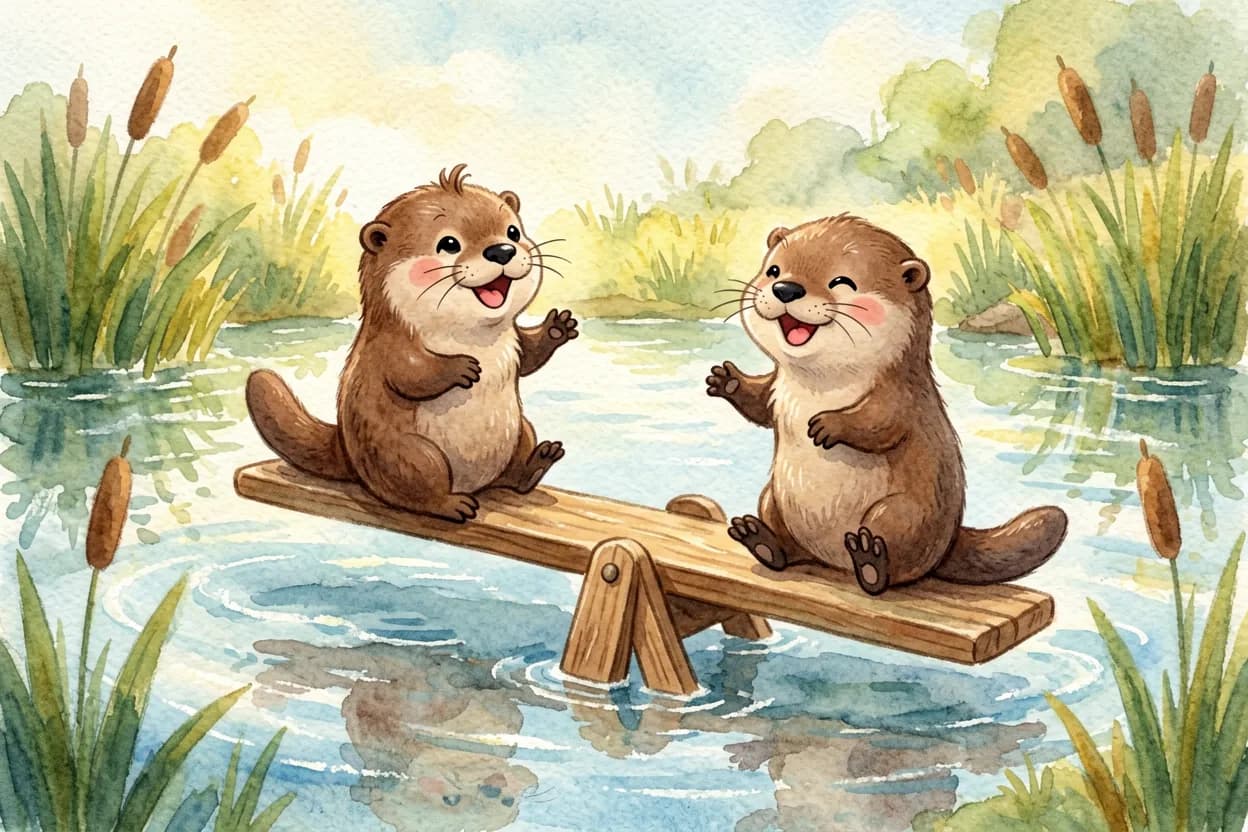
The Two Otters and the See-Saw
An original picture book about taking turns — free to read aloud tonight.
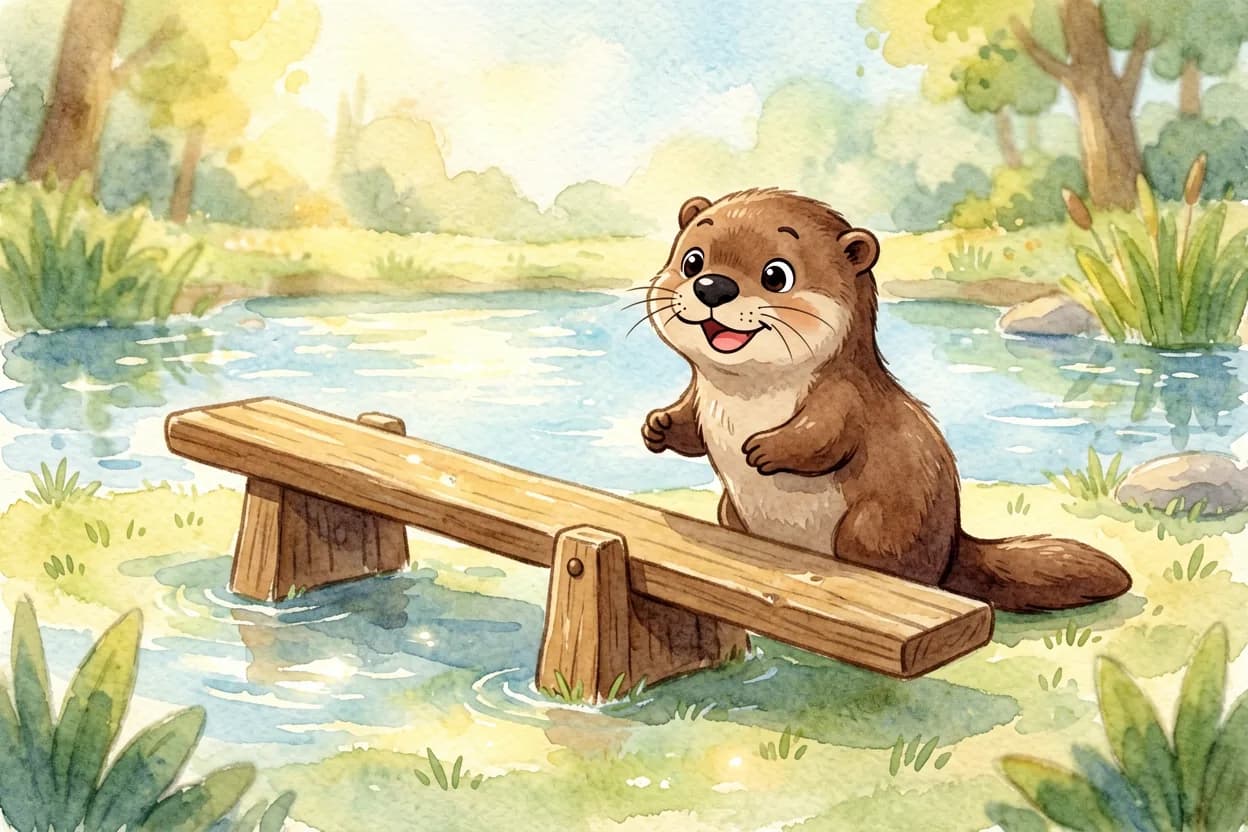
By the sparkling pond, Ola the little otter found something wonderful: a shiny wooden see-saw. "Ooh!" she gasped, her eyes going wide. She scampered straight for it.
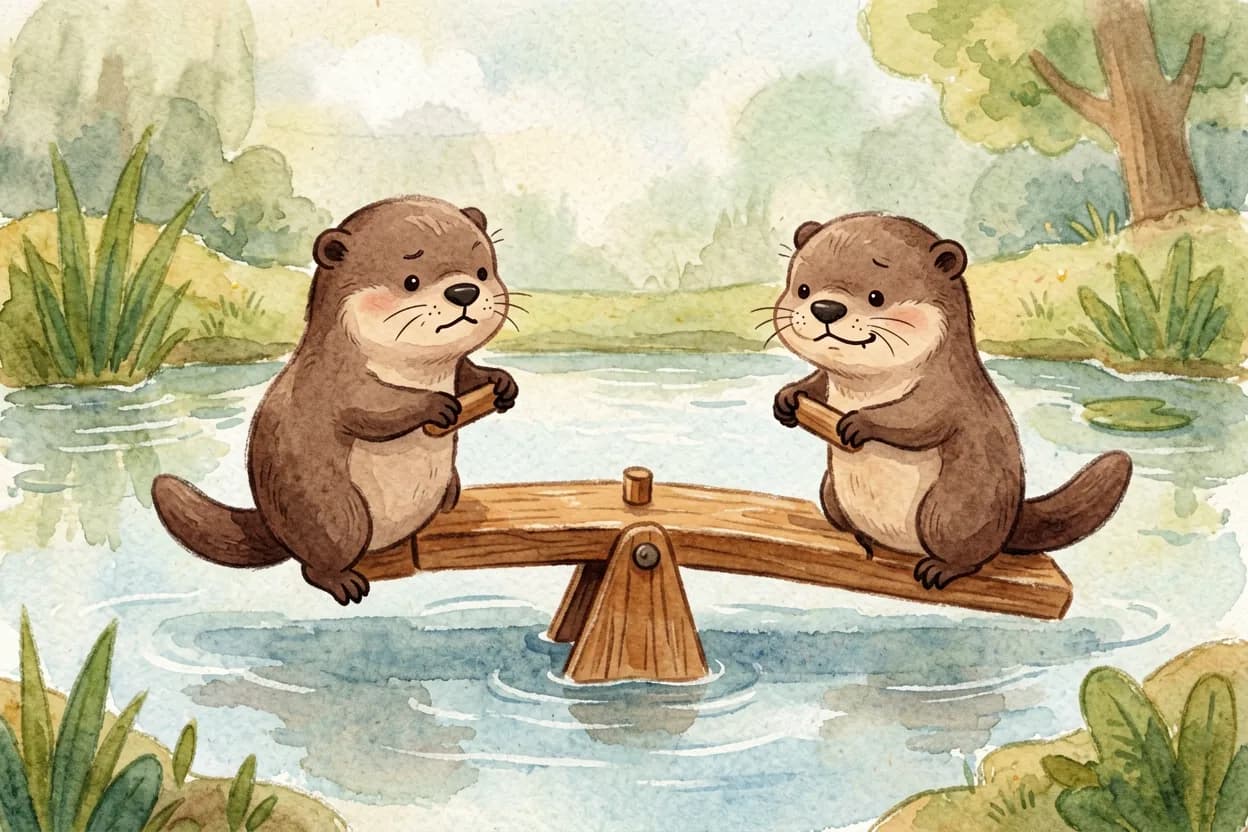
But her friend Uma had spotted it too. They reached it at the very same moment. "I'm first!" "No, I'm first!" And they both grabbed on and pulled.
They tugged and huffed and frowned. But no matter how hard each one pushed, the see-saw wouldn't budge. It just stayed stubbornly still.
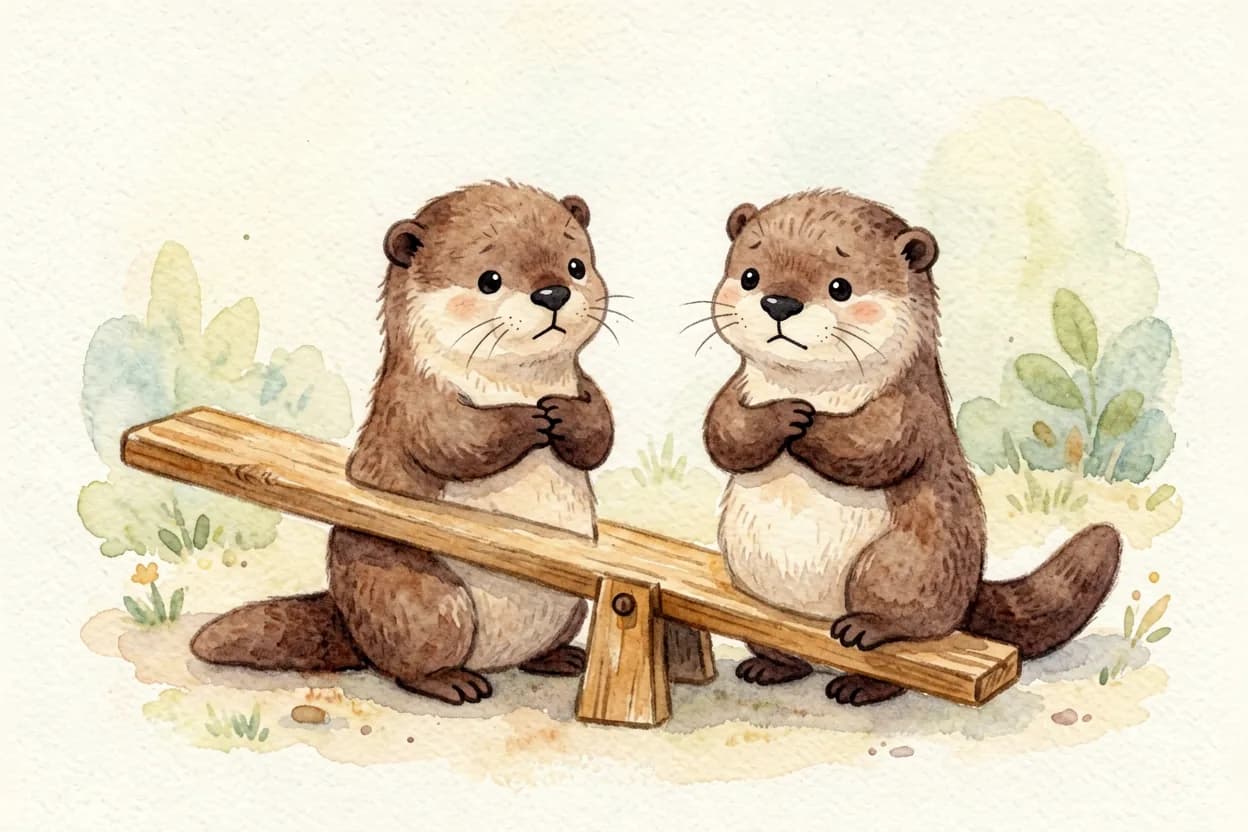
So they gave up and sat down — backs to each other, arms crossed, both grumpy. The see-saw sat still between them, and nobody was having any fun at all.
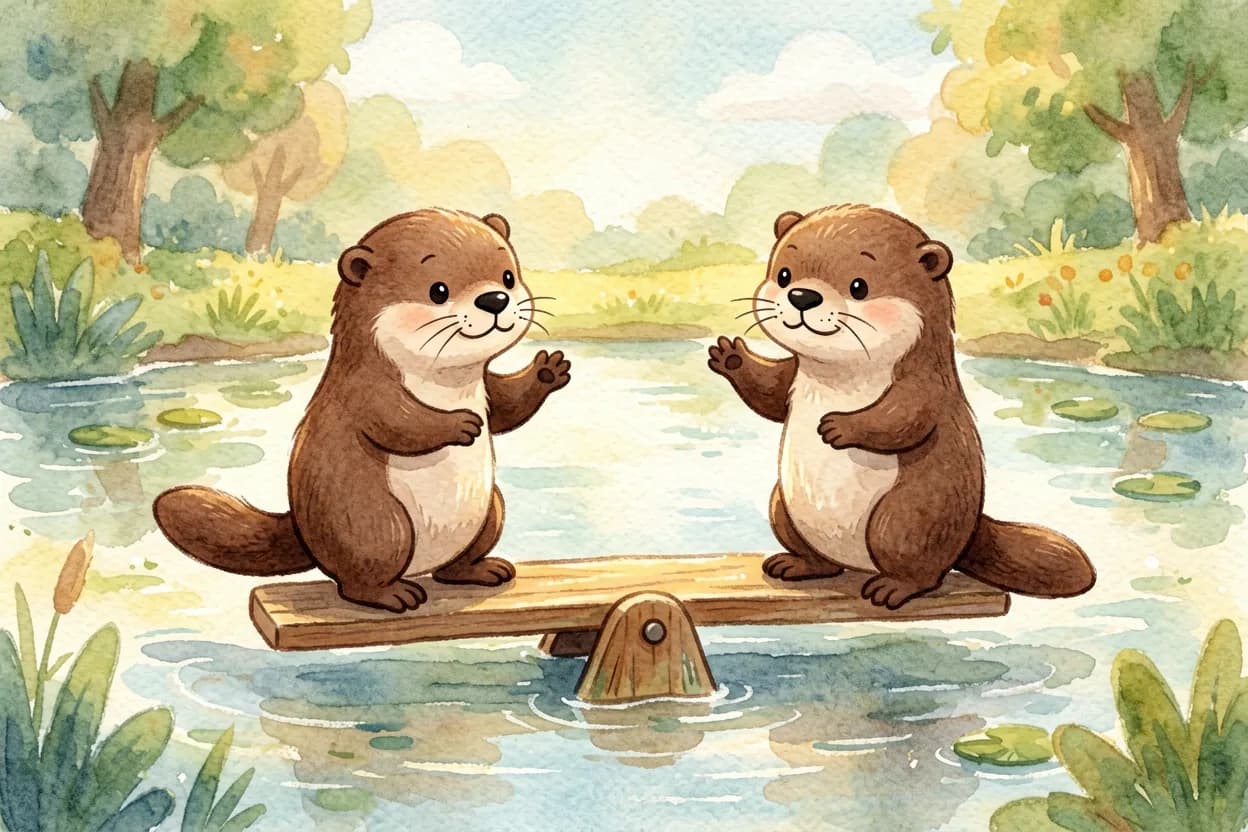
After a while, Ola peeked over her shoulder. She looked at the see-saw — one seat up, one seat down — and suddenly she understood. "Uma!" she said. "It needs TWO of us. One up, one down!"
Uma's eyes lit up. "You go up first," she said, "then it's my turn to go up!" She climbed onto one seat. Ola climbed onto the other.
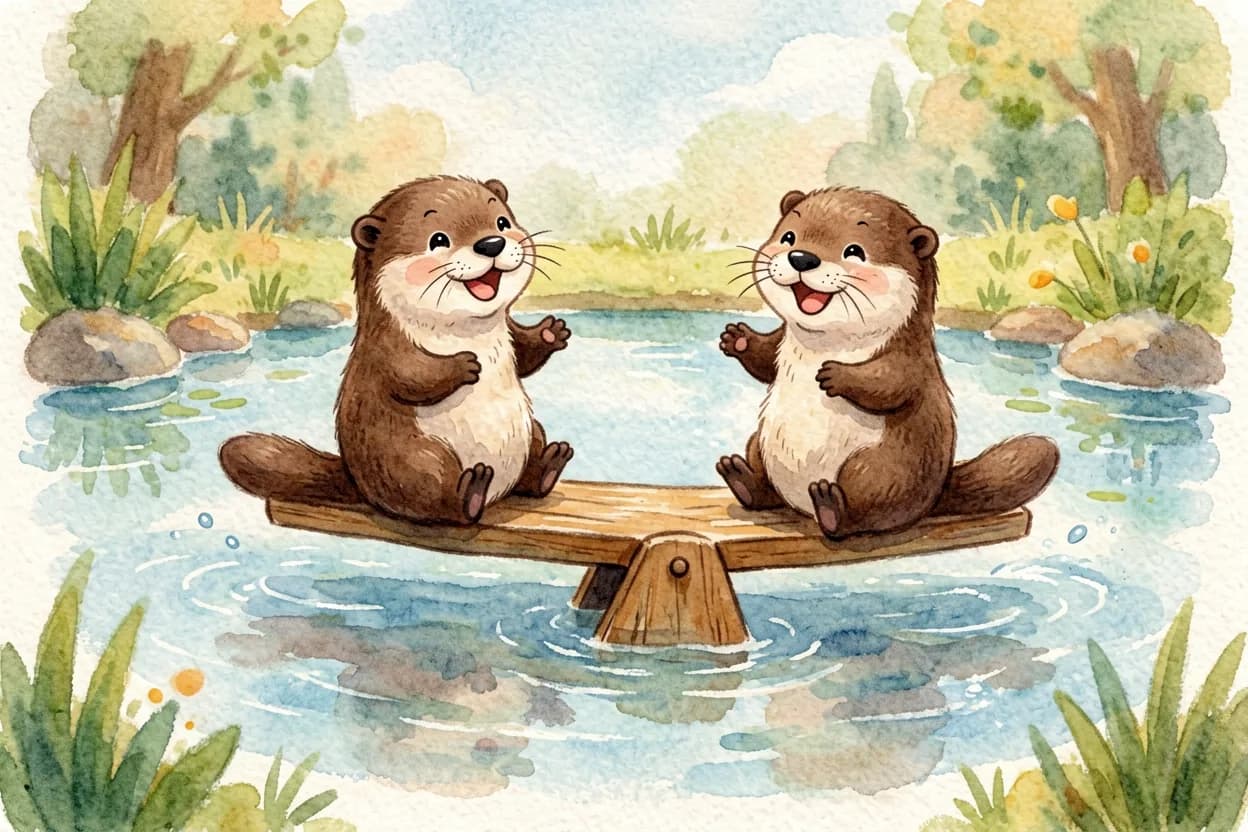
Whoosh — UP went Ola! Whoosh — DOWN and UP went Uma! Up and down, down and up, taking turns, they bounced and giggled and squealed with delight.
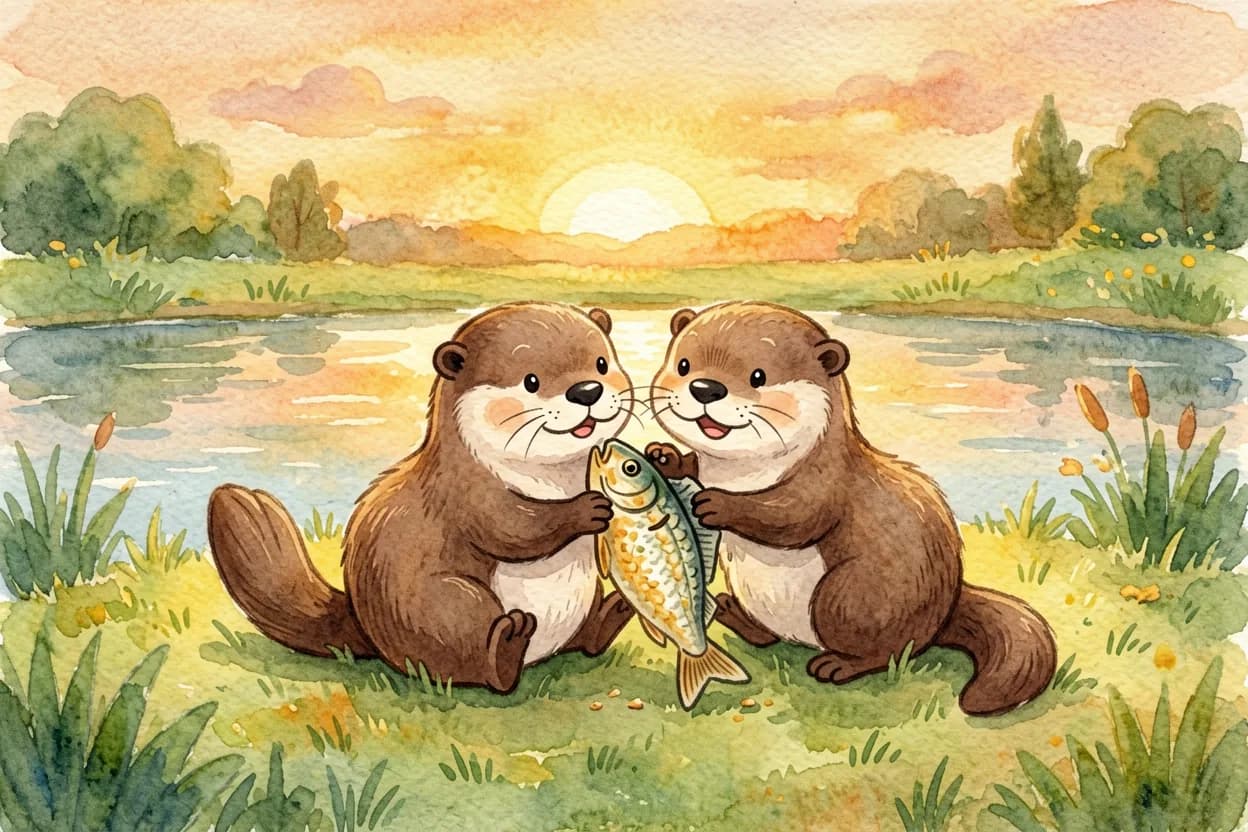
It was ten times more fun than pulling and pushing had ever been. When the sun turned golden, they flopped on the grass and shared a little fish snack.
"Taking turns is the best," said Ola, happily full. "Because then," said Uma, "we both get a turn to fly."
Some of the best fun in the world only works when we take turns — you go up, I go down, and round it comes again.
Questions to ask after reading
- 1Why couldn't the see-saw move when both otters tried to go first?
- 2How did the otters feel when they were sitting with their backs to each other?
- 3What did Ola figure out about the see-saw?
- 4Why was taking turns more fun than pushing and pulling?
- 5What is something you and a friend could take turns with?
Try it together: activities that build turn-taking
Taking turns is a skill that grows with gentle practice. These games make waiting feel like part of the fun, not a punishment.
- The turn-taking timer. Use a sand timer for a favourite toy: when the sand runs out, it's the next person's turn. The timer holds the boundary, so you don't have to — and your child learns that waiting always ends.
- Roll-a-ball. Sit facing each other and roll a ball back and forth. Simple back-and-forth games teach the rhythm of 'my turn, your turn' in the easiest possible way.
- Board games and card games. Simple turn-based games are turn-taking practice in disguise. Cheer the waiting: 'You waited so patiently for your go!'
- Cooking together. Take turns stirring, pouring, sprinkling. Turn-taking on something fun and shared feels like teamwork rather than sacrifice.
- Two-person play. Set up things that need two — a see-saw, a rolling game, building a tower together. When the fun only works with a partner, taking turns starts to feel obviously worth it.
How to use the story at each age
Ages 2-3
Keep turns very short and use a visible cue like a timer, because 'later' means little at this age. Celebrate every wait, however brief, and expect to referee a lot — that's completely normal for toddlers, whose sense of time is only forming.
Ages 4-5
This is the sweet spot for turn-taking games. Pause when the otters squabble: 'What could they do so they both get a turn?' Children this age can begin to hold the idea that a turn given up comes back, especially with a predictable system to lean on.
Ages 6-7
Turn-taking widens into fairness and cooperation — sharing time, ideas, and attention, not just objects. Talk about what makes something fair, and how it feels to be the one always waiting. Older children can help invent the rules, which makes them far more likely to keep them.
Common mistakes (and what to do instead)
- Grabbing the toy to enforce a turn. Snatching a toy to 'make' a child share teaches that the biggest person wins. Coach the wait instead: 'Sam's having a turn, and then it's yours' — and mean it.
- Vague, endless turns. 'In a minute' with no clear end makes waiting unbearable. Use a timer or a countable marker ('three more pushes') so the child can see the turn will actually come.
- Forgetting to hand the turn back. If you promise a turn is coming, make sure it arrives — reliably. A child who learns that waiting really does pay off will wait far more willingly next time.
- Expecting toddlers to share on demand. Genuine turn-taking is beyond most under-threes. Keep expectations gentle, use short turns, and treat refereeing as normal rather than a sign of failure.
- Only noticing the grabs. We tend to comment when turn-taking breaks down and stay quiet when it works. Flip it: 'You let her go first — that was so fair,' and you'll get more of it.
Using the lesson in everyday moments
The story shows the payoff; everyday life is where turn-taking gets its reps. Here's where it shows up.
- At the playground. The swing, the slide, the one special bucket — playgrounds run on turns. Narrate it kindly: 'Two more slides, then it's the other child's turn.'
- With siblings. Screen time, the front seat, who picks the story — home is full of turns. A visible rota or timer takes the heat out of 'it's not fair.'
- In conversation. Taking turns to talk (and to listen) is turn-taking too. Gently model waiting for someone to finish before you speak.
- During games. Any board or card game is live practice. Praise the patient waiting as warmly as the winning move.
A simple checklist to follow
- Read the story together, unhurried, with time for the pictures
- Pause at the squabble and ask how both otters could get a turn
- Ask one or two of the discussion questions — don't quiz
- Play one turn-taking game with a timer this week
- Catch and praise a real moment of patient waiting
- Always hand the promised turn back, so waiting pays off
Make the story about your child
Two otters at a pond make a delightful start. But a child pays closest attention when the one who learns to take turns is someone they know by heart — themselves.
When your child is the hero who stops squabbling over the swing and discovers that taking turns means everyone gets to fly, the lesson stops being about otters and starts being about them. Their name, their friend, their real playground — the version they'll ask you to read again and again.
A generic story
Two otters learn to take turns on a see-saw by the pond.
Your child's story
Leo and his sister learn to take turns on the swing at their own park — with Leo as the hero who figures it out on every page.
Parents also ask
Why do young children find taking turns so hard?
Taking turns means wanting something and choosing to wait anyway — and the brain's ability to manage that kind of patience is still developing in the early years. For a toddler, 'later' barely exists, so waiting genuinely feels hard. It isn't greed; it's a normal stage that eases with age and practice.
At what age can children take turns?
With lots of support and short turns, children start managing turn-taking around ages three to four. It becomes more reliable and independent by five to six. Before three, expect to referee frequently — that's completely typical.
How can I help my child wait for their turn?
Make the wait visible and predictable: use a sand timer or a countable marker ('three more goes'), and always hand the promised turn back so your child learns that waiting pays off. Turn-taking games at home give low-stakes practice, and praising patient waiting encourages more of it.
Should I make my child give up a toy so another child can have a turn?
Rather than grabbing it away, coach the wait: let your child finish their turn, then help them hand it over. Forcing an immediate handover teaches that the biggest person wins. It's also fine to let a child keep one truly special item to themselves.
What's the difference between sharing and taking turns?
They overlap, but taking turns is specifically about one thing being used by one person at a time, in sequence — the swing, the see-saw, the special toy. It's often easier for young children than dividing something up, because everyone still gets a full go.
Can stories really help with turn-taking?
Yes, as one tool among many. A story lets a child feel the reward of taking turns safely, learn from a character they love, and hear the message repeated every reading. Paired with turn-taking games and gentle real-life coaching, a good book genuinely helps.
Are personalized stories more effective for teaching turn-taking?
For many children, yes. A story where they are the hero who learns to take turns, with their own friend or sibling, makes the lesson vivid and personal. It's not a replacement for real practice, but as a nudge toward patience it can be powerful.
More free stories for kids
About the author
Andy — Andy is the founder of Doodara and builds the illustration pipeline behind it — the part that has to keep a child's character looking like the same child on every page of a book. Most of that work is character consistency, content safety for material aimed at young children, and the unglamorous business of making a generated book good enough that a family reads it twice.