
Stories About Making Friends for Kids
A complete original picture book about making a friend you can read tonight — plus the discussion questions, activities, and age-by-age tips to help a shy child find their people.
ByAndyFounder of Doodara
Quick answer
The books that help a shy child make friends are the ones that show the awkward first moment — walking over, saying hello, risking a no — rather than starting with friends already made. This page has a complete original picture book, Bo Finds a Friend, free to read tonight, plus discussion questions and age-by-age guidance for ages 3-7. The practical move: after reading, rehearse one opening line your child can actually use at the playground, and agree it is fine if the answer is no.
Making friends looks effortless when it works — two children fall into a game and it's decided. But for many little ones it's daunting: walking up to a stranger, saying the first word, risking a no. If your child hovers at the edge of the group, or comes home saying "nobody played with me," you know how much a small friendship can matter to a small heart.
The truth is that friendship is a skill made of smaller skills — saying hello, joining in, taking turns, handling a squabble, making up again. Toddlers mostly play side by side; real give-and-take friendships take shape across the preschool and early-school years. A child who's slow to warm up isn't behind — they're doing something genuinely brave at their own pace.
You can't manufacture a best friend for your child, but you can hand them the tools: the words to open a game, the confidence that a wobble won't end things, and stories where a shy character takes the leap and finds it was worth it. A good picture book lets them rehearse that first hello where it's safe.
Why stories help
For a child who finds friendship scary, a story is a safe rehearsal. When the shy hero hangs back, unsure, your child recognises the feeling instantly — and gets to watch him try anyway, and see it turn out okay.
Children borrow courage from characters they love. A little bear who's nervous but says hello is far more encouraging than a parent saying "just go and play." The story shows how, not just that.
Stories also teach that friendship survives the bumpy bits — a misunderstanding, a turn missed, a cross word — and that you can always make up. Learning that early takes the fear out of the small falls that friendship always brings.
How a story becomes a habit
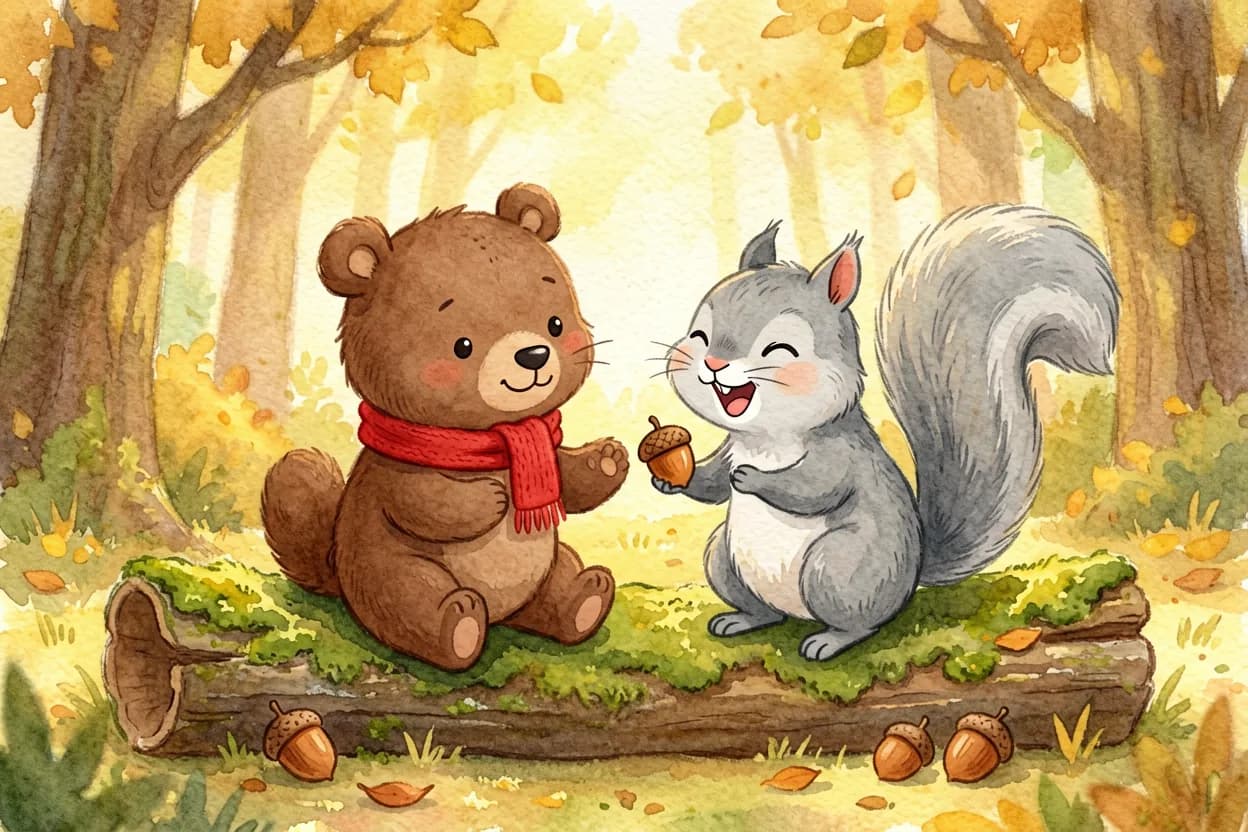
Bo Finds a Friend
An original picture book about making friends — free to read aloud tonight.
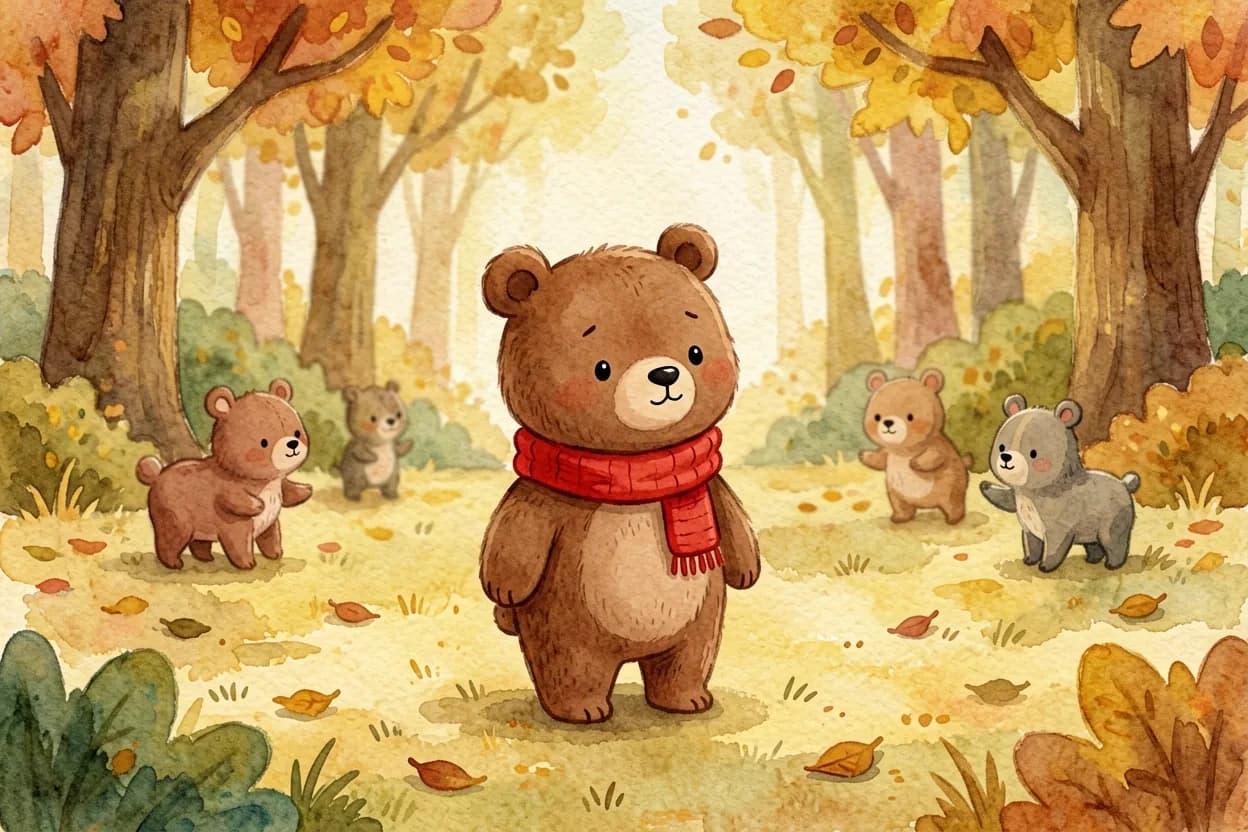
Bo the little bear had just moved to the big autumn forest. Everything smelled of fallen leaves, and everywhere he looked, animals were laughing and playing. Everyone, it seemed, except Bo.
He wanted to join in more than anything. But his tummy went all fluttery whenever he thought about it. What if they said no? So he stayed at the edge, hugging his red scarf.
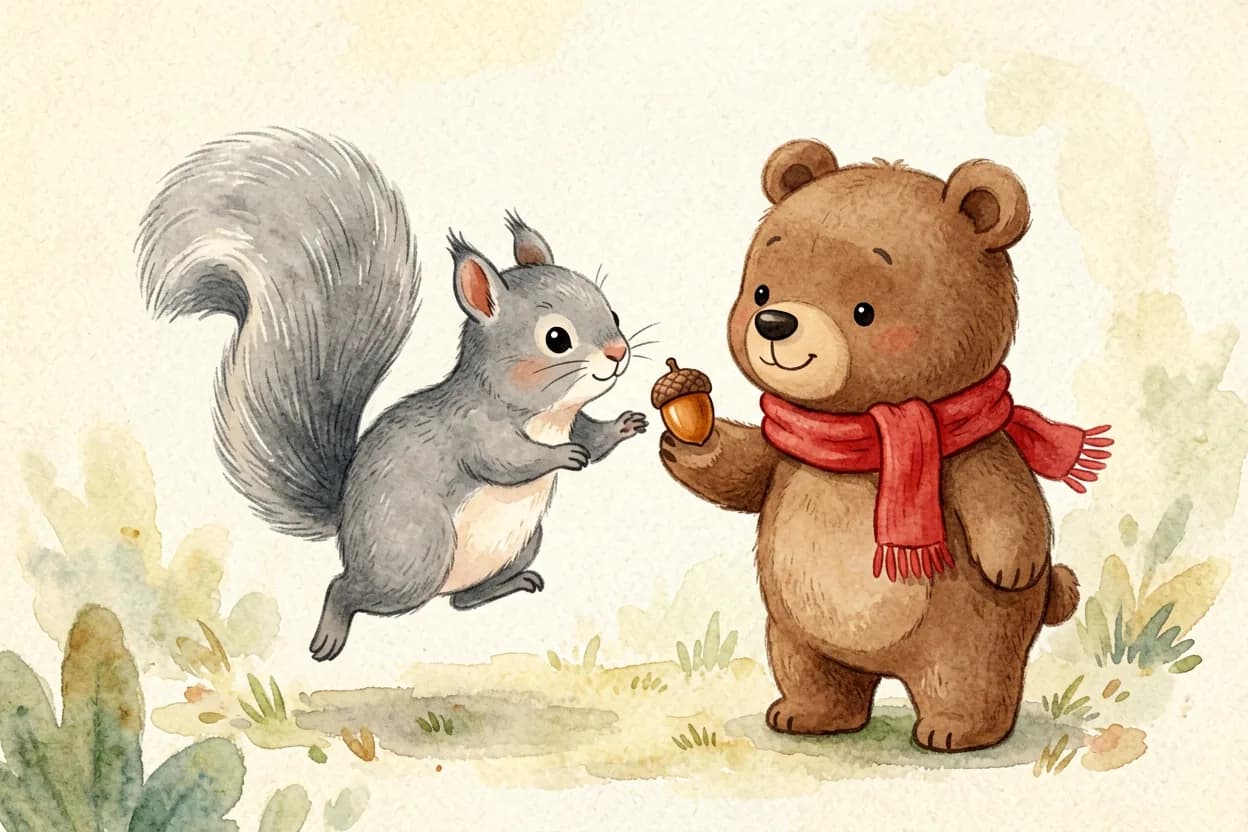
Then a bright voice called out. "Hello there! You're new!" It was Tilly the squirrel, her bushy tail bouncing. She held out a shiny acorn. "Want one?"
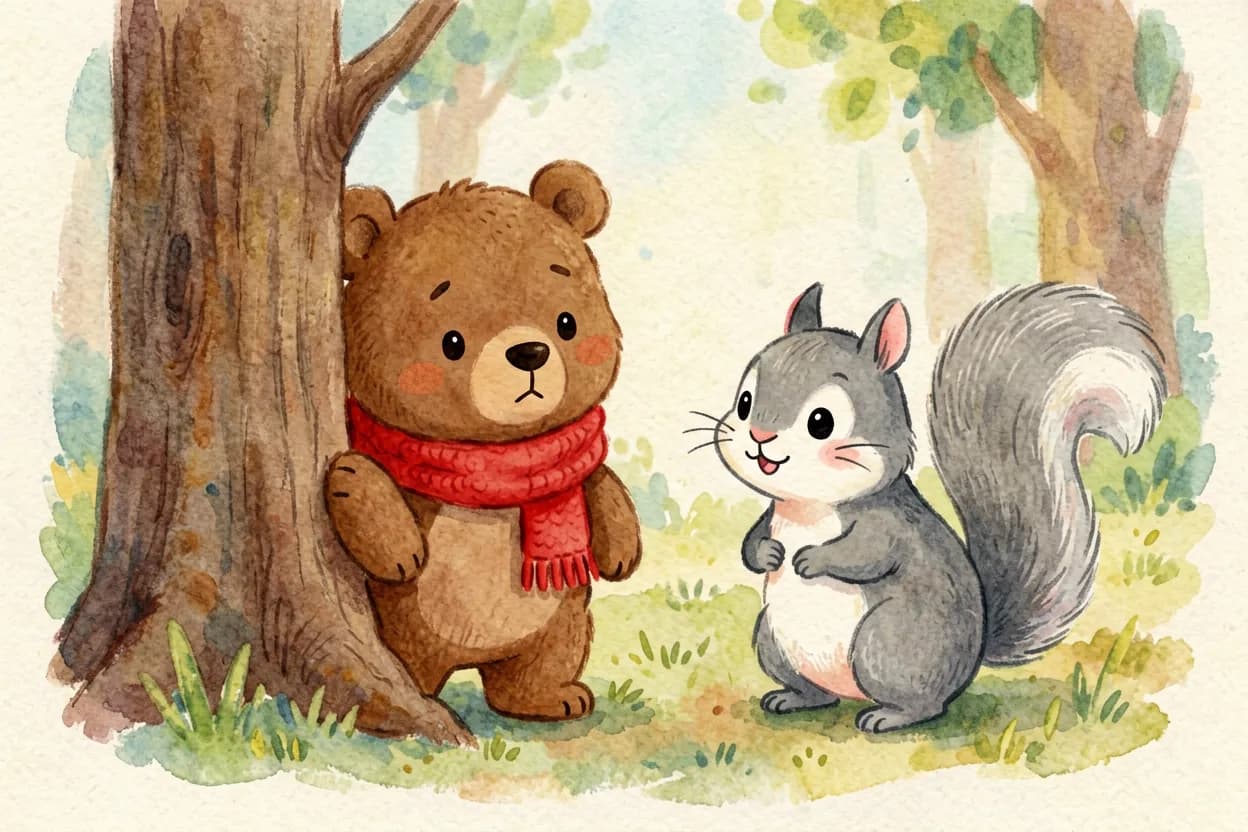
Bo's heart thumped. He wanted to say yes — but the word got stuck. He gave a tiny nod and shuffled half behind a tree, peeking out.
Tilly didn't mind at all. "That's okay," she said gently. "Sometimes I feel shy too. Want to help me build something?" And she began stacking acorns into a little tower.
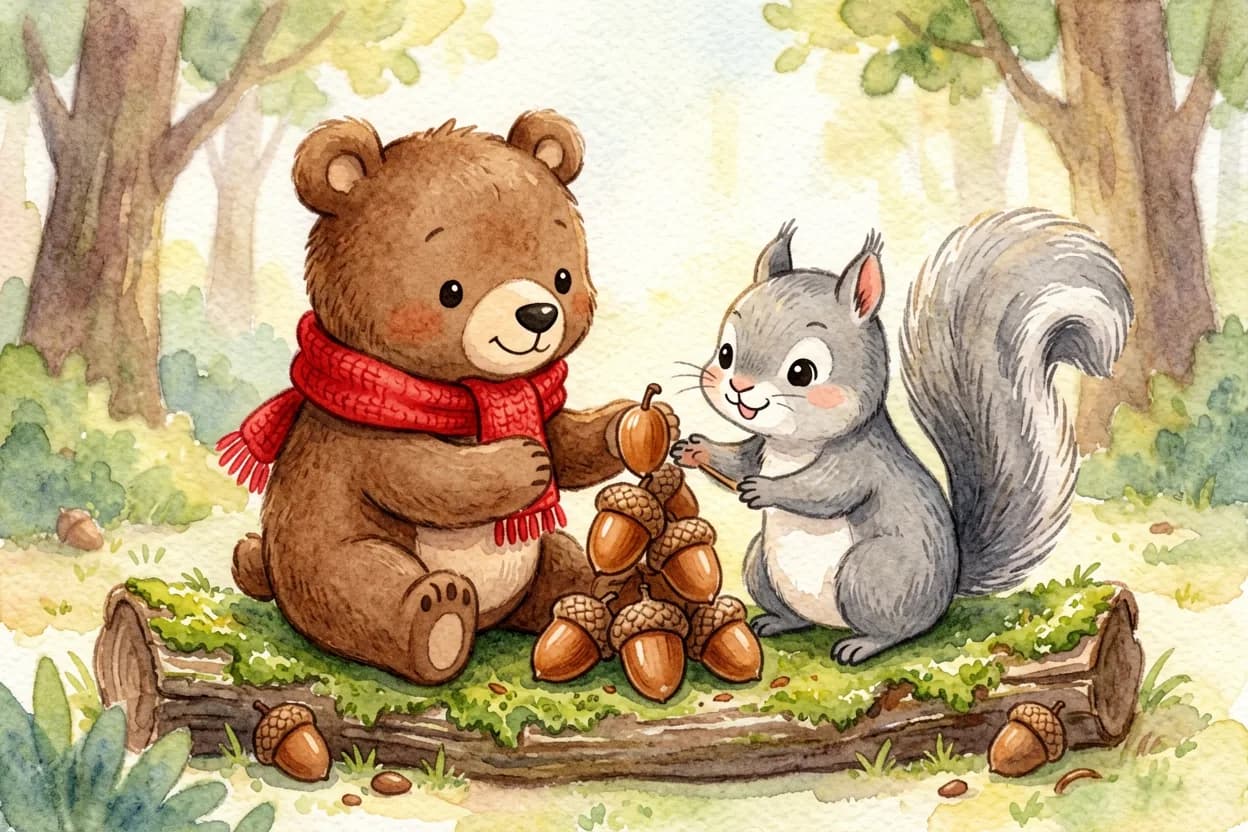
Bo took one small step. Then another. Carefully, he placed an acorn right on top. It balanced! A tiny smile crept onto his face.
The tower grew and grew — until a gust of wind knocked it over. Acorns rolled everywhere! And instead of being sad, Bo laughed. A real, big, rumbly bear laugh.
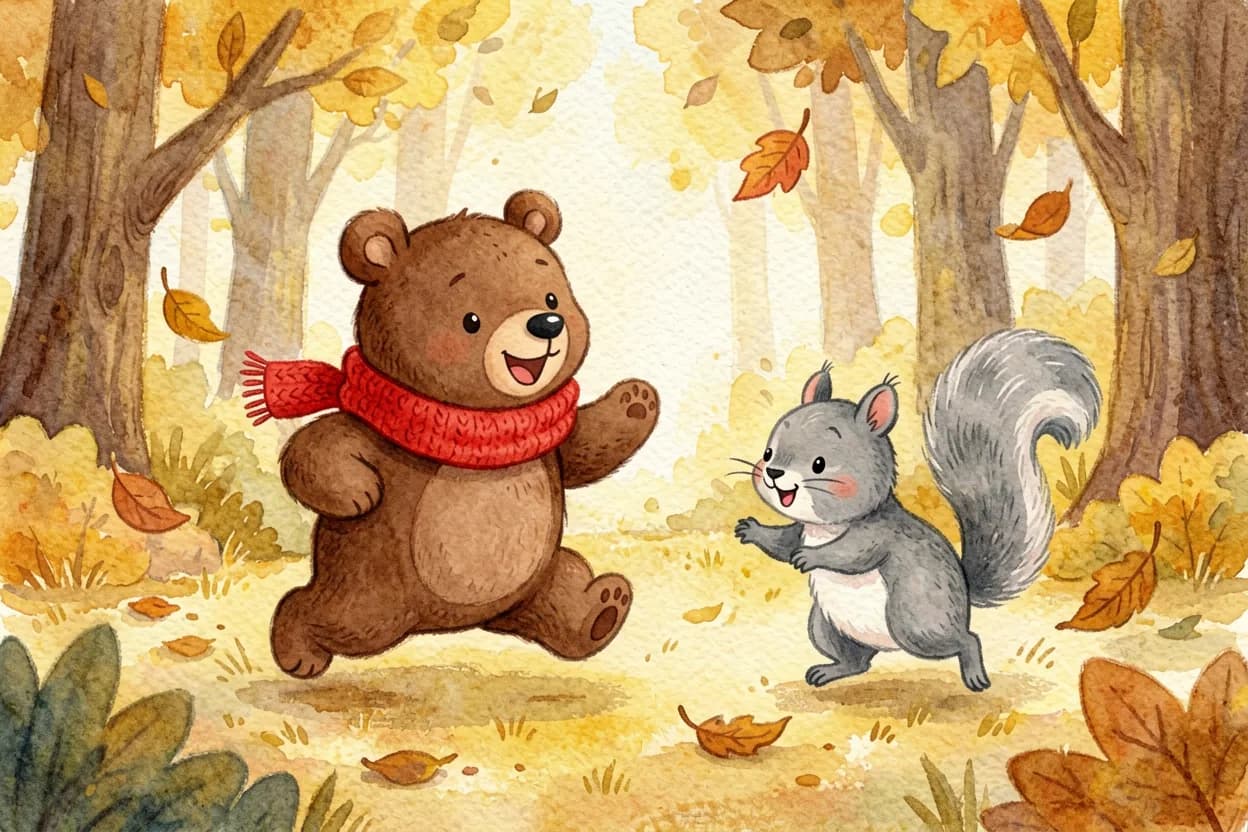
After that, everything was easy. Bo and Tilly chased tumbling leaves, rolled down the mossy hill, and hid in the rustling piles until the sun turned golden.
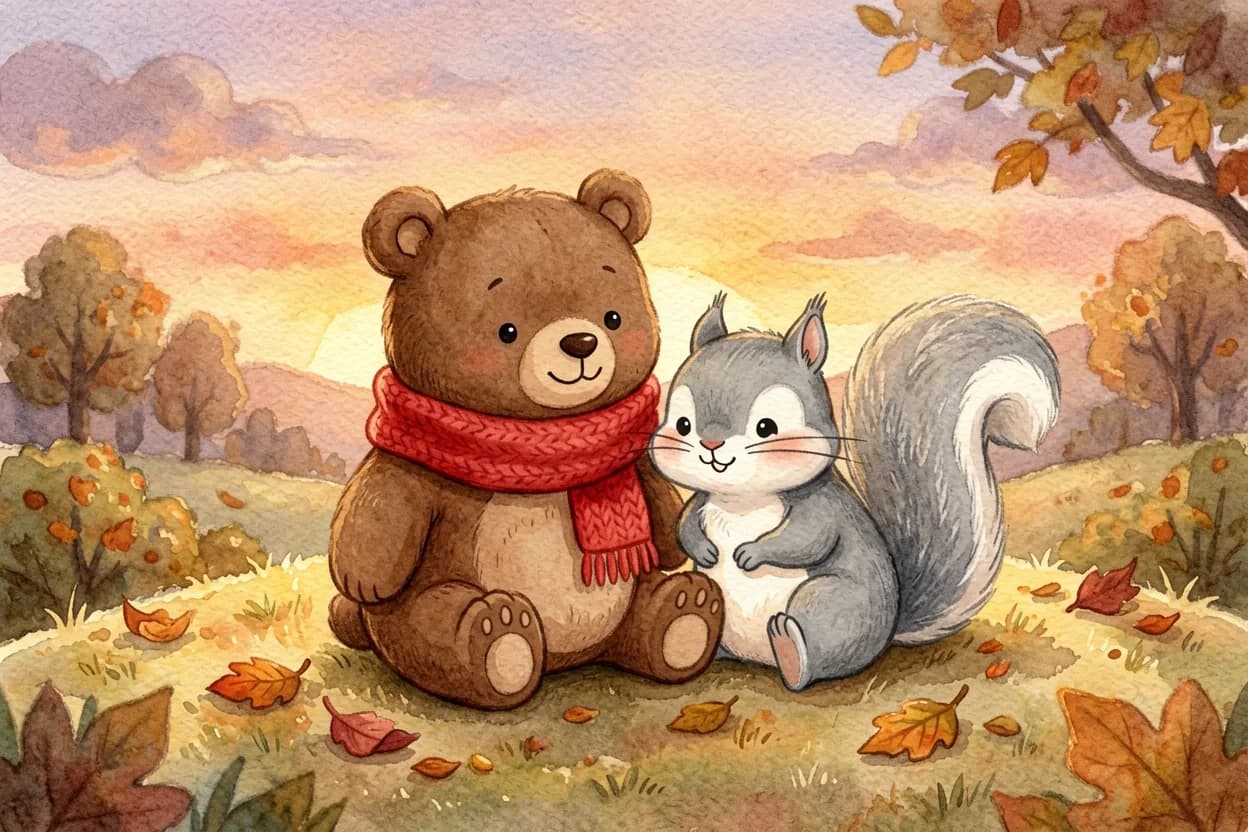
As evening came, they sat together on the hill, tired and happy. "I'm glad you said hello," said Bo. "Me too," said Tilly. "That's how every friendship starts."
The bravest thing isn't never being shy. It's saying hello anyway — and a friend is worth it.
Questions to ask after reading
- 1Why do you think Bo felt shy at the edge of the forest?
- 2What did Tilly do to help Bo feel welcome?
- 3How do you think Bo felt when the acorn tower fell — and why did he laugh?
- 4What is one way you could say hello to someone new?
- 5What makes someone a good friend?
Try it together: activities that build friendship skills
Friendship is a set of skills, and every one of them can be practised gently at home before the real playground moment.
- Practise the hello. Role-play walking up and saying 'Hi, can I play?' Take turns being the new friend. Rehearsing the first words takes the fear out of the real thing.
- The join-in game. Act out how to join a game already in progress — watch first, then ask. Knowing how to enter play is a skill many kids find harder than starting one.
- Make-up practice. Play out a small squabble and then a repair: 'I'm sorry, let's try again.' Learning that friendships survive bumps makes children braver about having them.
- Draw your friends. Ask your child to draw the people they like playing with, and why. Naming what they enjoy about a friend helps them seek more of it.
- Host one friend. A single playdate is easier to navigate than a crowd. One-on-one time lets a shy child build a real bond without the noise of a big group.
How to use the story at each age
Ages 2-3
Expect parallel play — children this age mostly play near each other, not with each other, and that's exactly right. Celebrate any friendly gesture, model waving and saying hi, and keep playdates short and low-pressure.
Ages 4-5
This is when real friendships bloom — and when squabbles do too. Pause at the moment Bo feels shy: 'What could he say?' Coach the words for joining in and making up, and reassure your child that falling out and making up is a normal part of being friends.
Ages 6-7
Friendships get more complex — best friends, feeling left out, loyalty. Talk about what makes a good friend and how it feels to be included or excluded. Older children can handle that friends won't always agree, and that kindness matters even when they don't.
Common mistakes (and what to do instead)
- Pushing 'go and play' too hard. Ordering a hesitant child into the group can raise the fear, not lower it. Offer a smaller step instead: 'Shall we watch for a minute, then say hi together?'
- Labelling your child 'shy' out loud. Repeating 'he's shy' in front of a child can make it feel fixed. Try 'he likes to warm up first' — it's true, and it leaves room to grow.
- Fixing every squabble instantly. Jumping in to solve every fall-out robs kids of the chance to practise repair. Give them a moment and a few words to try it themselves first.
- Over-scheduling friendships. A wall-to-wall social calendar can overwhelm a child who needs time to warm up. Fewer, calmer, one-on-one times often build deeper bonds.
- Dismissing friendship worries. 'You'll be fine' can feel like not being heard. Name the feeling first — 'it's hard when you want to join in' — before offering a next step.
Using the lesson in everyday moments
The story shows the first hello; everyday life is where friendship skills get their practice. Here's where they show up.
- At the playground. Coach from the sidelines: 'You could ask if you can have a turn next.' A small script gives a hovering child a way in.
- Starting at a new place. New preschool or class? Rehearse one friendly opener in advance, and point out that other children feel nervous too — they're not the only one.
- After a fall-out. When a friendship wobbles, resist fixing it. Help your child name what happened and think of one thing they could say to make up.
- At home with a sibling. Siblings are a child's first friendship lab. Turn-taking, making up, and playing fair at home all transfer to friendships outside it.
A simple checklist to follow
- Read the story together, unhurried, with time for the pictures
- Pause when Bo feels shy and ask what he could do
- Ask one or two of the discussion questions — don't quiz
- Practise one friendly hello together this week
- Notice and name your child's friendship moments warmly
- Reassure your child that shy feelings are normal and pass
Make the story about your child
A bear named Bo is a gentle place to start. But a child pays closest attention when the brave new-friend hero is someone they recognise instantly — themselves.
When your child is the one who feels shy on their first day and finds the courage to say hello, the story stops being about a bear and starts being about them. Their name, their nervous tummy, their brave step — the version they'll want again and again, especially the night before something new.
A generic story
A shy bear cub makes his first friend in a new forest.
Your child's story
Mia feels shy on her first day at a new school and finds the courage to say hello — with Mia as the brave hero on every page.
Parents also ask
How can I help my shy child make friends?
Give them the tools rather than a push. Rehearse simple openers at home ('Hi, can I play?'), keep early meet-ups small and one-on-one, and reassure them that feeling shy is normal and passes. Avoid labelling them 'shy' out loud, and celebrate small brave steps rather than expecting instant confidence.
At what age do children start making real friends?
Toddlers mostly play side by side rather than together, which is completely normal. Genuine give-and-take friendships usually take shape from around ages three to five, growing more complex (best friends, feeling left out) into the early-school years.
My child says nobody plays with them. What should I do?
Start by listening and naming the feeling — 'it's hard when you want to join in.' Then quietly coach one small skill: how to watch a game and ask to join, or one friendly opener. Talk to their teacher too; they can gently pair children and see what's happening during play.
Is it normal for young children to fall out with friends?
Completely. Squabbles and quick make-ups are how children learn to handle disagreement and repair. Rather than fixing every fall-out, help your child name what happened and try one thing to make up — that's the skill that keeps friendships going.
Can stories really help with friendship skills?
Yes, as one tool among many. Stories let a child rehearse a scary moment safely, borrow courage from a character they love, and learn that friendships survive bumps. Paired with real practice — playdates, role-play, gentle coaching — a good book genuinely helps.
How many friends should my child have?
Quality matters more than number. Many children are happiest with one or two close friends rather than a big group, and that's perfectly healthy. Follow your child's temperament rather than a target.
Are personalized stories more effective for a shy child?
For many children, yes. A story where they are the one who bravely makes a friend, in their own world, can be a reassuring rehearsal before a real first day. It's not a replacement for real social practice, but as a confidence nudge it can be powerful.
More free stories for kids
About the author
Andy — Andy is the founder of Doodara and builds the illustration pipeline behind it — the part that has to keep a child's character looking like the same child on every page of a book. Most of that work is character consistency, content safety for material aimed at young children, and the unglamorous business of making a generated book good enough that a family reads it twice.