
Stories About Worry and Anxiety for Kids
A complete original picture book about worries you can read tonight — plus calming tools and age-by-age tips that help an anxious child feel safe and untangle their big feelings.
ByAndyFounder of Doodara
Quick answer
A worry a child keeps to themselves grows, so the books that help are the ones that get the worry said out loud and show it shrinking — not the ones that promise there is nothing to worry about. This page has a complete original picture book, Olive's Tangled Worries, free to read tonight, plus discussion questions and age-by-age guidance for ages 3-7. The practical move: after reading, set a short daily worry time so the worries have a place to go instead of surfacing at bedtime.
Every child worries sometimes — about the dark, about a new place, about a parent leaving, about the endless 'what ifs' a big imagination can dream up. A little worry is completely normal and even useful; it's the mind's way of watching out for us. But when worry grows too big, it can tie a child in knots, steal their sleep, and turn everyday things into mountains. If your child is anxious, they need comfort and tools, not 'there's nothing to worry about.'
Young children feel worry intensely and can't always explain it. A worry might show up as a tummy ache, a clingy phase, trouble sleeping, or endless questions, rather than the words 'I'm anxious.' Their world is still new and full of unknowns, and they don't yet have the experience to know that most worries never come true, or the skills to calm a racing mind. That all comes with time and gentle help.
The most powerful thing you can do is take worries seriously while showing your child that feelings can be handled. When a child learns to name a worry, share it, and shrink it with simple tools, the knots loosen. Stories help beautifully: they let a child meet worry in a character they love, watch it get untangled, and learn — from the safe distance of the page — that they can face their own worries too.
Why stories help
Worry can feel huge and shapeless to a child. A story gives it a shape — a tangle, a cloud, a worry monster — that a child can see, talk about, and imagine shrinking. A worry with a shape is far easier to handle than a nameless dread.
Children learn from characters they love. Watching a beloved hero feel worried and then find calm shows your child, in a way they truly feel, that worry passes and that there are things you can do to help it along.
And a story teaches the single most powerful worry-shrinker of all: sharing it. When a character tells someone their worry and feels it get smaller, your child learns that worries kept secret grow, but worries spoken out loud shrink — the heart of helping an anxious child.
How a story becomes a habit
Olive's Tangled Worries
An original picture book about worry — free to read aloud tonight.
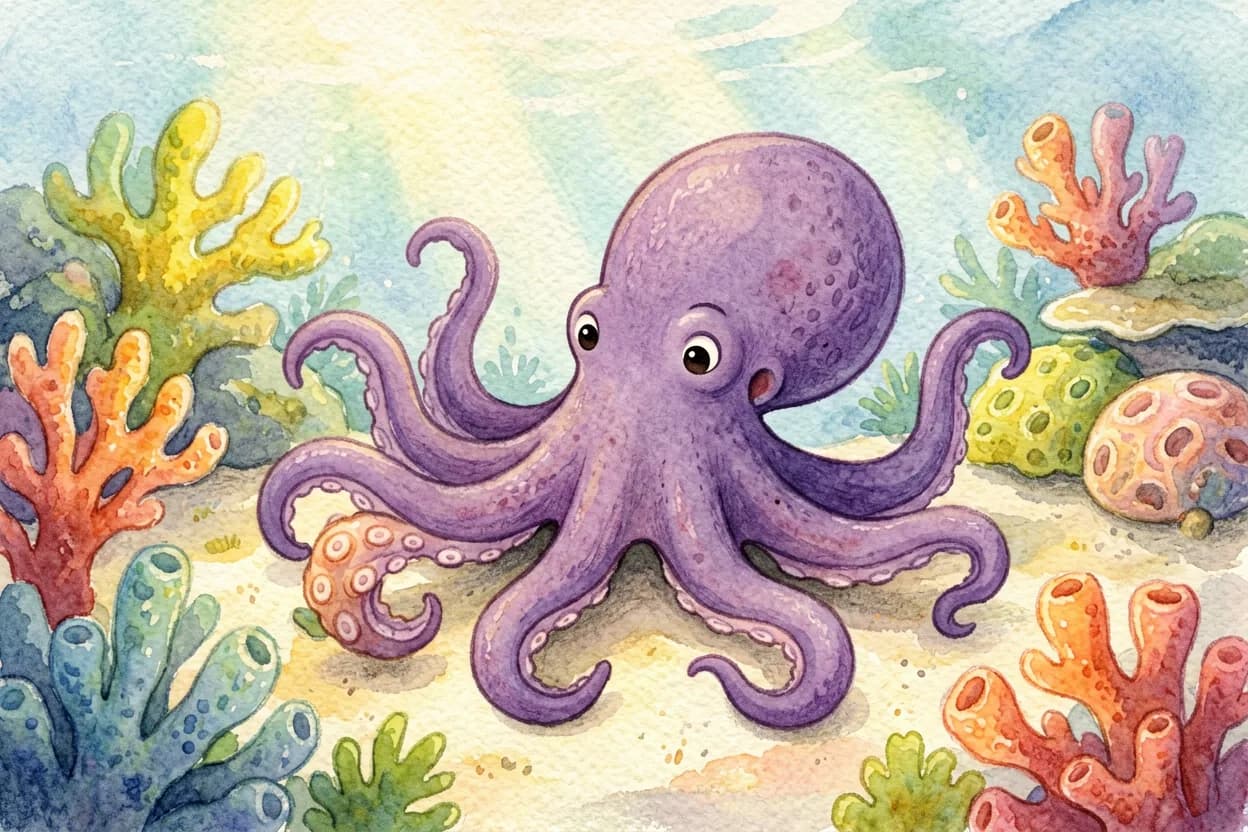
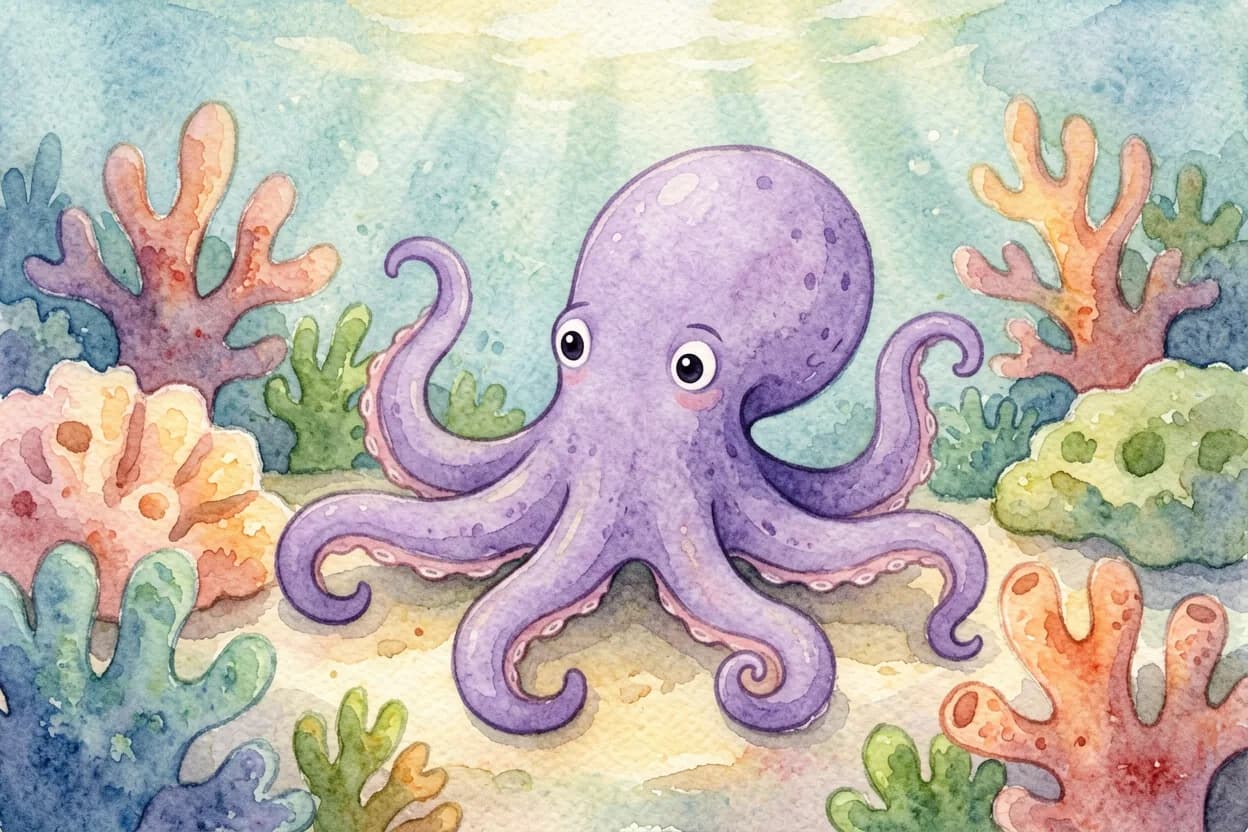
Deep in a bright coral reef lived Olive, a gentle little octopus with eight wavy arms. Olive loved to explore. But Olive was also a worrier. And when she worried, something strange happened: her arms began to tangle.

Tomorrow was Olive's first day at the reef school. "What if I get lost?" she thought. One arm tied itself in a knot. "What if nobody plays with me?" Another arm tangled. "What if I do everything wrong?" Knot, knot, knot.
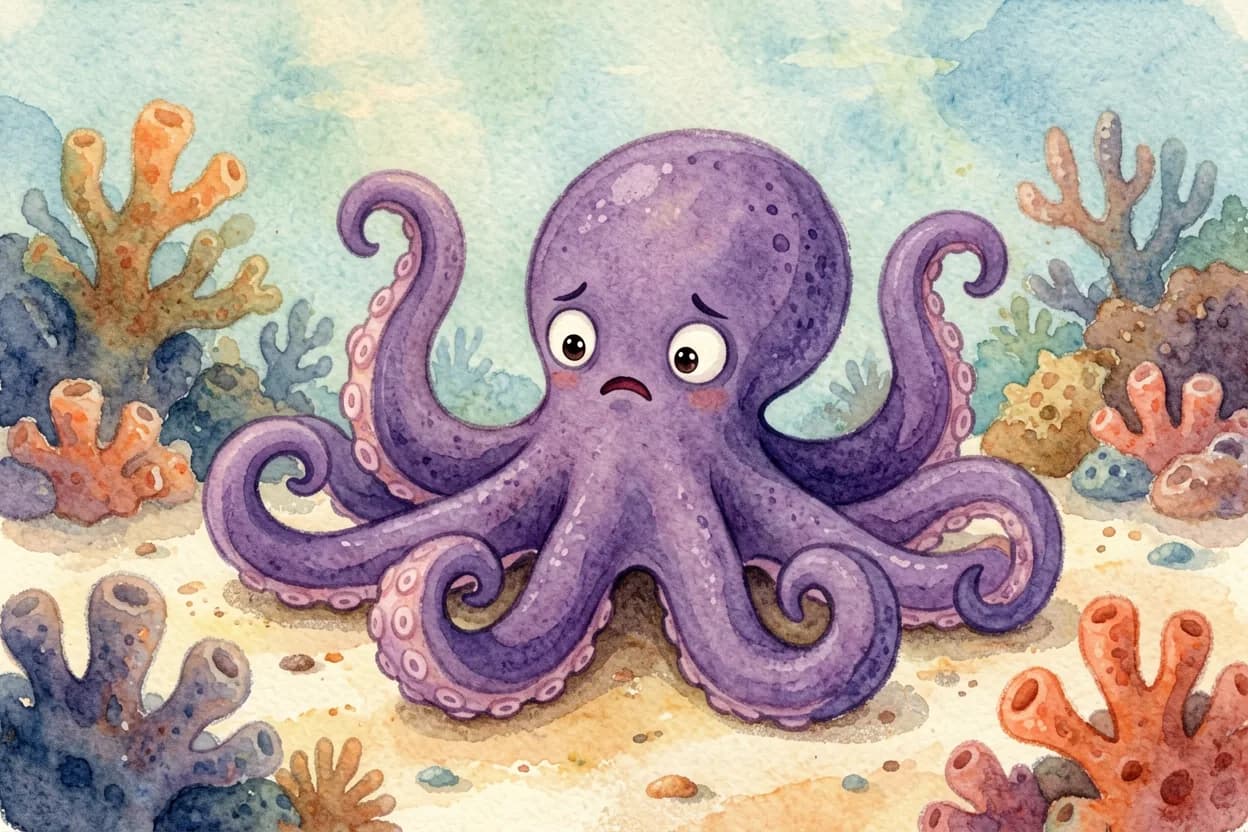
By bedtime, all eight of Olive's arms were tangled up in a great big worried knot. She could barely swim. She felt tight and tired and stuck. But she didn't tell anyone. She kept all the worries locked inside.
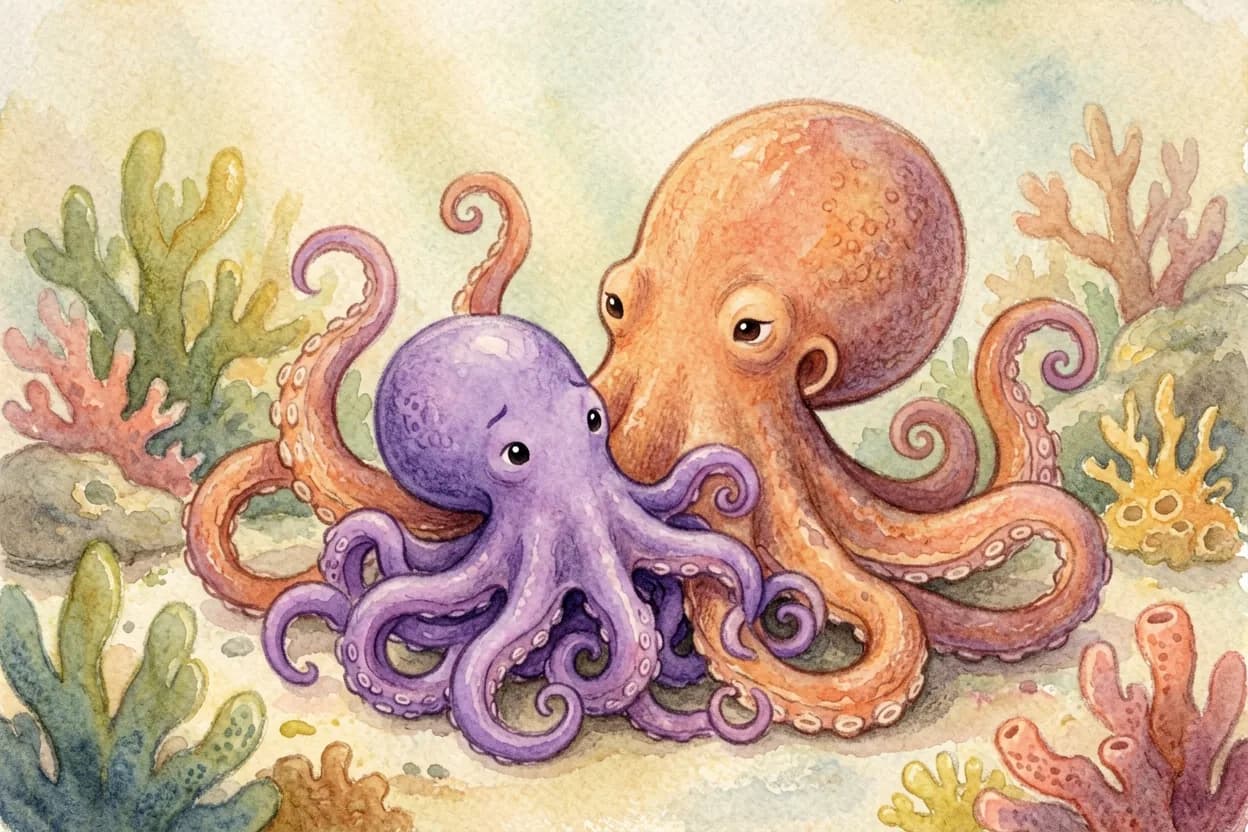
Her mama found her all tangled up. "Oh, Olive," she said softly, wrapping her close. "You're full of worries, aren't you? Let's let them out, one at a time. Tell me the first one."
"What if I get lost at school?" Olive whispered. And as she said it out loud... the first arm slowly untangled. "We'll walk the way together first, so you'll know it," said Mama. Another knot came loose.
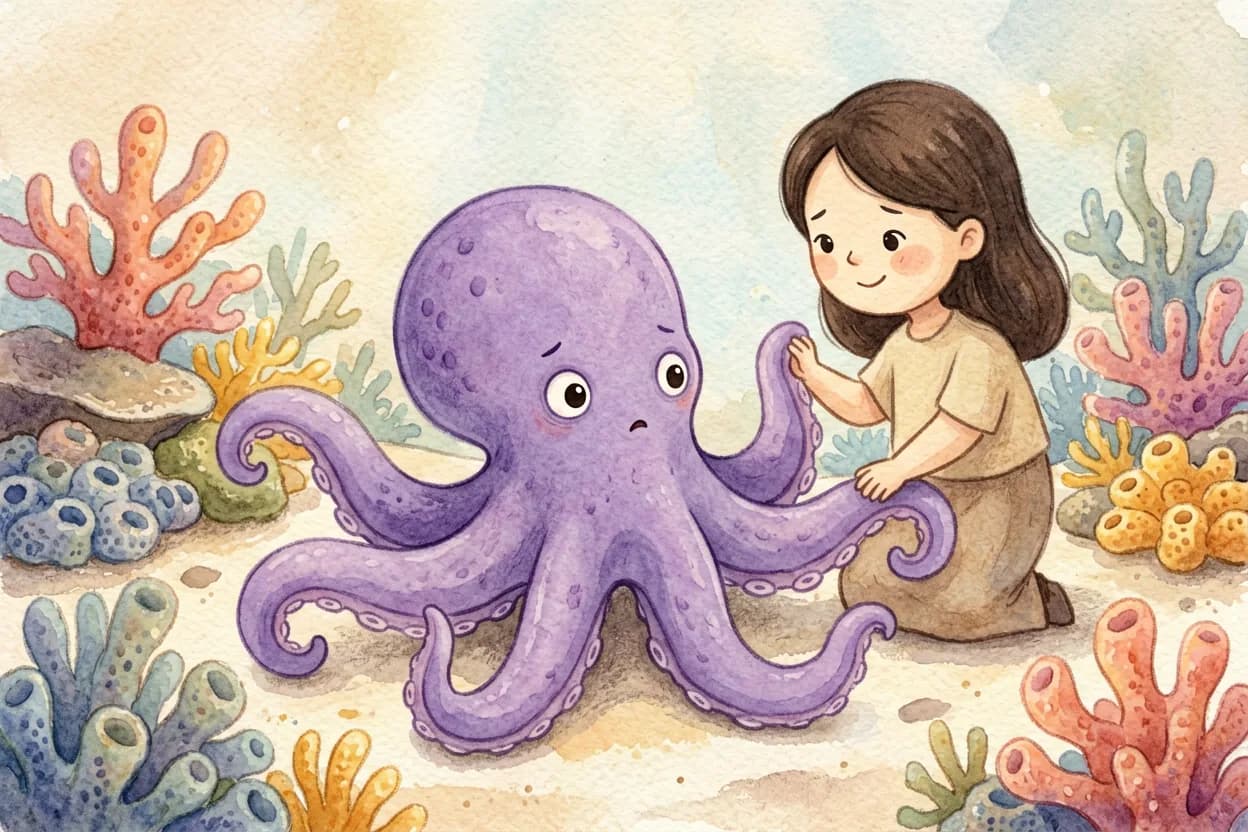
One by one, Olive let her worries out. "What if nobody plays with me?" — untangle. "There are lots of friendly fish; I'll bet one says hello." "What if I get it wrong?" — untangle. "Everyone's learning. Getting it wrong is just how we learn."
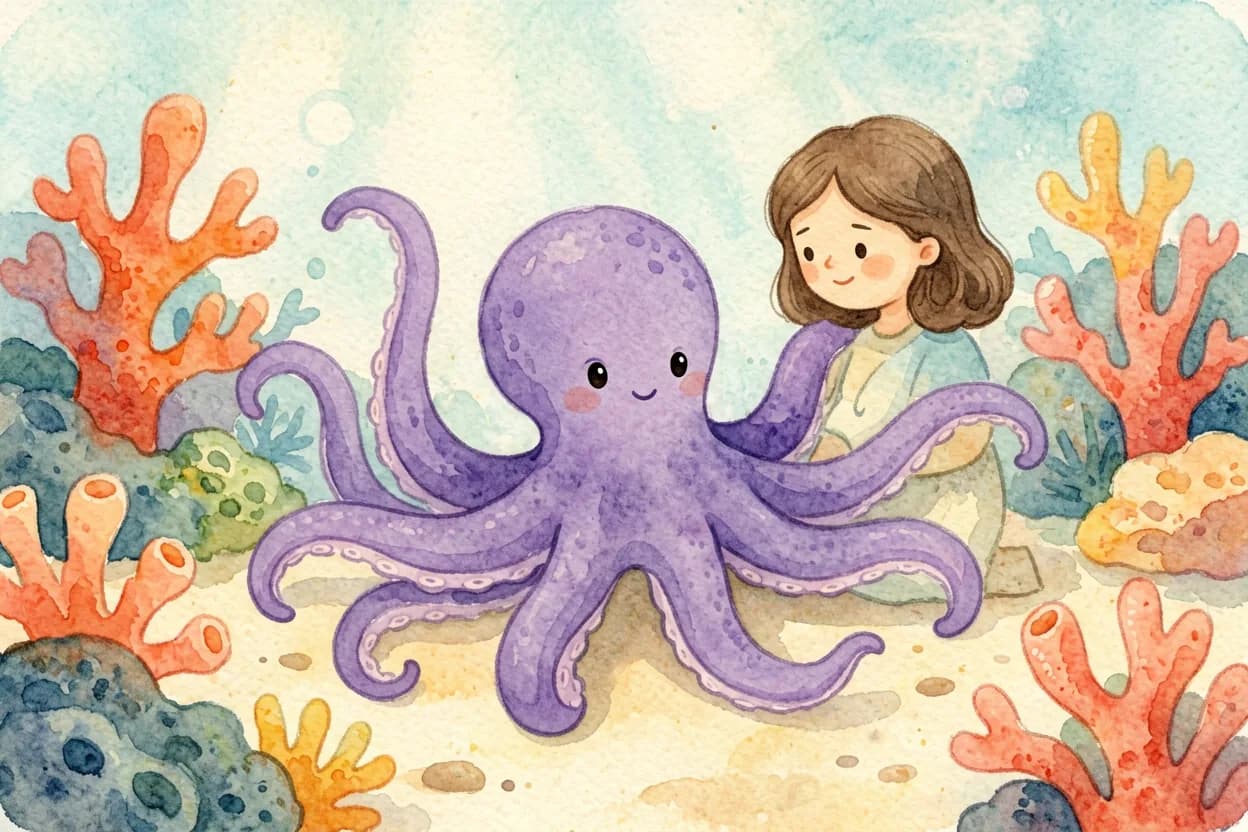
Soon all eight of Olive's arms were loose and wavy again. She felt light and free. "The worries got smaller when I said them out loud," she said, amazed. "They always do," smiled Mama. "That's the magic of sharing them."
The next day, Olive swam to school with loose, happy arms. And whenever a worry tried to tangle her up, she remembered: say it out loud, and it gets smaller.
A worry kept secret grows and tangles. But a worry shared out loud gets smaller — every single time.
Questions to ask after reading
- 1What happened to Olive's arms when she worried?
- 2What kinds of worries did Olive have about school?
- 3Why do you think keeping the worries secret made them worse?
- 4What happened to each worry when Olive said it out loud?
- 5Who could you tell if YOU had a worry that was tangling you up?
Try it together: tools to shrink worries
Worry loosens its grip when a child can name it, share it, and calm their body. These gentle tools help.
- Say-it-out-loud time. Have a regular calm moment — bath, bedtime — to share any worries, just like Olive. A worry spoken to someone who listens gets smaller.
- Draw the worry. Give the worry a face or shape on paper, then decide together how to shrink it, scribble it small, or fold it away. Externalising a worry makes it manageable.
- A worry box or worry monster. Post worries into a special box (or feed them to a soft 'worry monster') to 'keep' them, so a child's mind can let go until you talk them through together.
- Slow, calm breathing. Practise slow belly breaths — smell the flower, blow the candle — to settle an anxious body. Calming the body calms the mind.
- Plan for the 'what if'. When a worry has a real answer, make a small plan together (like walking the route first). A plan turns helpless worry into 'I know what to do.'
How to use the story at each age
Toddlers (2-3)
Worry at this age is mostly about separation and the unknown, and shows through behaviour more than words — clinginess, sleep wobbles, tummy aches. Offer lots of reassurance and closeness, keep routines predictable, and name simple feelings for them. Your calm, steady presence is the main comfort.
Preschoolers (3-5)
Big imaginations bring big worries now. Take them seriously without over-reassuring, help your child name and share worries (like Olive), and teach a simple calming breath. Avoid saying 'don't worry' — instead, 'tell me about it' and 'let's make a plan.'
Older children (5-7)
Children this age worry about real things — school, friendships, getting things right, and the wider world. Listen fully, help them tell worry from fact, and problem-solve together. Teach that some worry is normal, and give them their own tools (worry time, breathing, sharing) to use.
Common mistakes (and what to do instead)
- Saying 'there's nothing to worry about'. This dismisses a real feeling and teaches a child to hide it. Acknowledge it — 'that sounds worrying, tell me more' — before helping it shrink.
- Over-reassuring. Answering the same worry again and again can actually feed anxiety. Reassure once, warmly, then coach a coping tool rather than endless 'you'll be fine's.
- Removing everything that worries them. Always avoiding the scary thing tells a child it really is dangerous. Gently support them to face worries in small, doable steps instead.
- Passing on your own anxiety. Children absorb our worry and our calm. Model handling your own worries out loud and steadily, and mind how much adult worry they overhear.
- Only tackling worries at bedtime. Bedtime worries balloon in the dark. Create a calm worry-sharing time earlier in the day so the mind is settled before sleep.
Using the lesson in everyday moments
The story gives worry a shape and a fix; daily life is where anxious moments arise. Here's where they show up.
- Before something new. New places and events spark 'what ifs.' Talk them through, make a small plan, and remind your child of times they were brave before.
- At bedtime. Worries loom large in the dark. A calm wind-down, a worry chat earlier in the day, and a nightlight all help a worried child settle.
- With tummy aches and clinginess. Physical symptoms and clinginess can be worry in disguise. Gently wonder aloud what might be on their mind, and listen.
- When you feel it too. Model naming and handling your own worries: 'I felt nervous, so I took a big breath and made a plan.' Your example teaches most.
A simple checklist to follow
- Read the story together, unhurried, with time for the pictures
- Make a calm daily time to share worries out loud
- Take worries seriously without over-reassuring
- Teach a simple calming breath and a 'make a plan' habit
- Support facing worries in small steps, not avoiding them
- Model handling your own worries calmly
Make the story about your child
An octopus named Olive is a gentle guide. But children pay closest attention when the worrier learning to untangle is someone they know from the inside — themselves.
When your child is the hero who ties up in worried knots and then shares each worry until they loosen, the story stops being about an octopus and becomes a tool they can use on their own real worries. Their name, their worries, their relief at letting them out — exactly the reassurance an anxious child needs.
A generic story
A little octopus untangles her worries by sharing them out loud one by one.
Your child's story
Sana feels tangled up with worries about her first swimming lesson, and untangles them by telling mum one by one — with Sana as the hero on every page.
Parents also ask
Is it normal for young children to worry?
Yes. A little worry is normal and even useful — it's the mind watching out for us. Children commonly worry about the dark, separation, new places, and 'what ifs' their big imaginations conjure up. Worry often shows through behaviour (clinginess, tummy aches, sleep trouble) rather than words. It becomes a concern only when it's frequent, intense, and gets in the way of everyday life.
How can I help my anxious child?
Take worries seriously rather than dismissing them, help your child name and share each worry (a worry spoken out loud shrinks), teach a simple calming breath, and make small plans for real 'what ifs.' Support them to face worries in gentle steps rather than avoiding everything scary, and model handling your own worries calmly.
Why does telling me the worry make my child feel better?
Worries kept secret tend to grow and tangle, while worries spoken to a calm, listening adult get smaller — the mind feels less alone with them and can start to problem-solve. Making a regular, unhurried time to share worries (like Olive does) is one of the most effective things you can do for an anxious child.
Should I just tell my child 'there's nothing to worry about'?
It's better not to. That dismisses a real feeling and can teach a child to hide worries rather than share them. Instead, acknowledge the worry ('that sounds worrying — tell me more'), then help it shrink through sharing, a calming breath, or a small plan. Reassure once, warmly, rather than repeating 'you'll be fine' over and over.
My child's worry shows up as tummy aches. Is that normal?
Yes, very. Young children often feel worry in their bodies — tummy aches, headaches, trouble sleeping, clinginess — because they can't always put anxiety into words. Once you've ruled out physical causes, gently wonder aloud what might be on their mind and give them space to share. The physical symptoms often ease as the worry is talked through.
When should I be concerned about my child's anxiety?
Occasional worry is normal. Consider seeking support from your doctor or health visitor if anxiety is frequent and intense, stops your child doing everyday things (school, play, sleep, friendships), lasts for weeks, or causes real distress. Early help is effective, and there's no need to wait it out alone.
Are personalized stories helpful for worry and anxiety?
For many children, yes. A story where they are the hero who names and shares their worries until they shrink makes the coping skill vivid and personal, and gives them a reassuring picture of facing worries and feeling better. It's a supportive tool alongside a calm, listening presence and simple calming techniques.
More free stories for kids
About the author
Andy — Andy is the founder of Doodara and builds the illustration pipeline behind it — the part that has to keep a child's character looking like the same child on every page of a book. Most of that work is character consistency, content safety for material aimed at young children, and the unglamorous business of making a generated book good enough that a family reads it twice.