
Stories for Kids Who Are Afraid of the Dark
A complete original picture book about being brave in the dark you can read at bedtime — plus the calming tools and age-by-age tips that help a frightened child feel safe.
ByAndyFounder of Doodara
Quick answer
For fear of the dark, the books that work reframe the dark itself as ordinary and safe rather than promising that nothing is there — a promise a frightened child will not believe. This page has a complete original picture book, Toby and the Friendly Dark, free to read tonight, plus discussion questions and age-by-age guidance for ages 3-7. The practical move: read it with the lights already low, so the room your child is afraid of becomes the room where the comforting story happens.
The dark is one of childhood's most common fears — and one of the most heart-tugging. Just as you're longing for the day to end, your child is calling out, sure that something is lurking in the shadows. If bedtime has become a nightly negotiation with monsters under the bed, you're in very familiar company. Fear of the dark is a normal part of growing up, not a sign that anything is wrong.
This fear usually blooms in the preschool years, right alongside a child's blossoming imagination. That same wonderful imagination that builds castles and dreams up games can also fill a dark room with shadows and 'what ifs.' Young children can't yet tell the difference between a real threat and an imagined one, and the dark — where you can't see what's there — is the perfect stage for a worried mind. Their fear feels completely real, and it deserves to be met with comfort, not dismissal.
The aim isn't to force a child to 'not be scared,' but to help them feel safe enough to face the dark and discover it isn't so frightening after all. When a child learns that the dark is just the day resting, that they have tools to feel brave, and that they're safe and loved, the fear softens. Stories help wonderfully: they let a child meet the dark alongside a character they love and find it cosy rather than scary.
Why stories help
Fear of the dark is fear of the unknown — of what might be hiding where you can't see. A story lights it up: when a character explores the dark and finds it cosy and friendly, your child learns that the shadows hold far less than their imagination feared.
Children borrow courage from characters they love. A little mole who's scared and then brave gives your child a hero to copy, far more reassuring than 'there's nothing there' — which a frightened child rarely believes.
And a bedtime story about being brave in the dark works right where the fear lives: at lights-out. Sharing it in that cosy, safe moment gently rewrites the dark as a calm, gentle place rather than a scary one.
How a story becomes a habit
Toby and the Friendly Dark
An original picture book about fear of the dark — free to read aloud at bedtime.
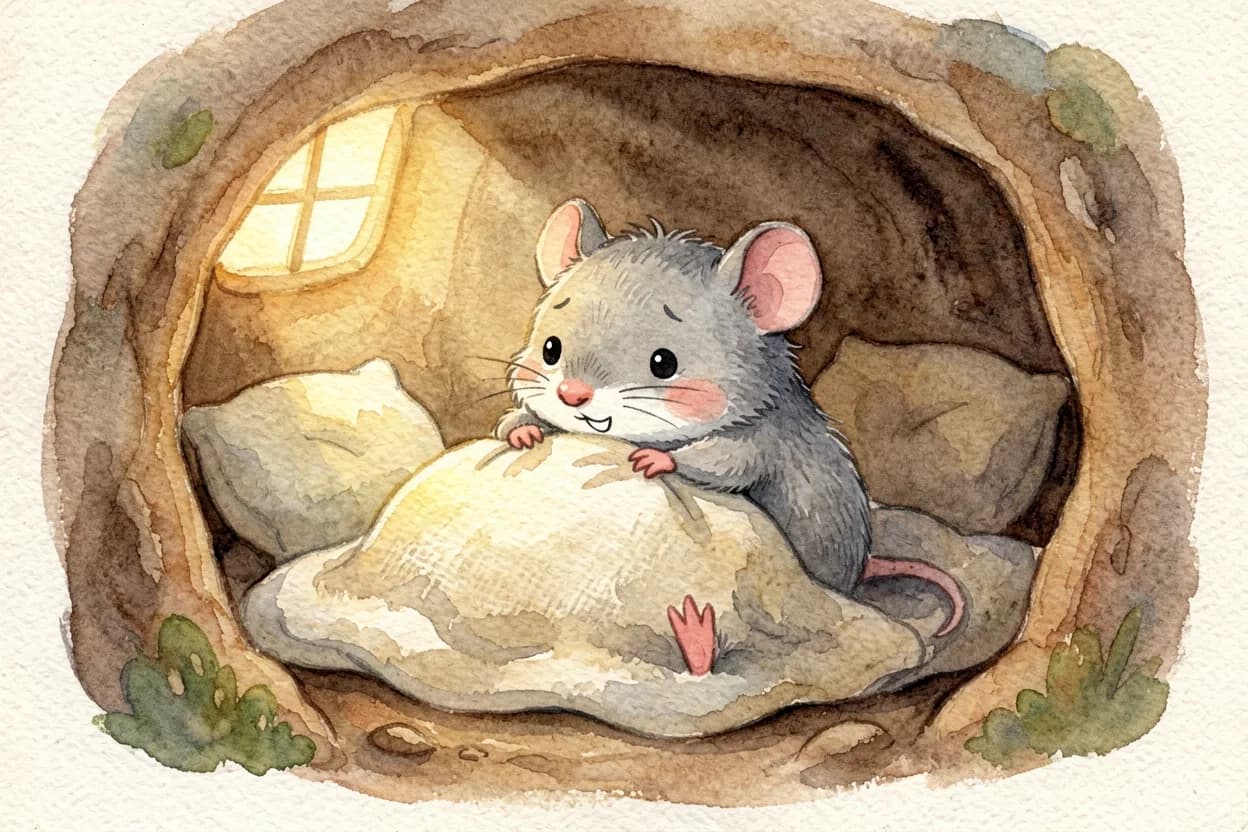
Toby was a little mole who lived in a cosy burrow underground. Moles are made for the dark — but Toby didn't like it one bit. Every night, when the light went out, his tummy went tight. "What's hiding in the dark?" he worried.
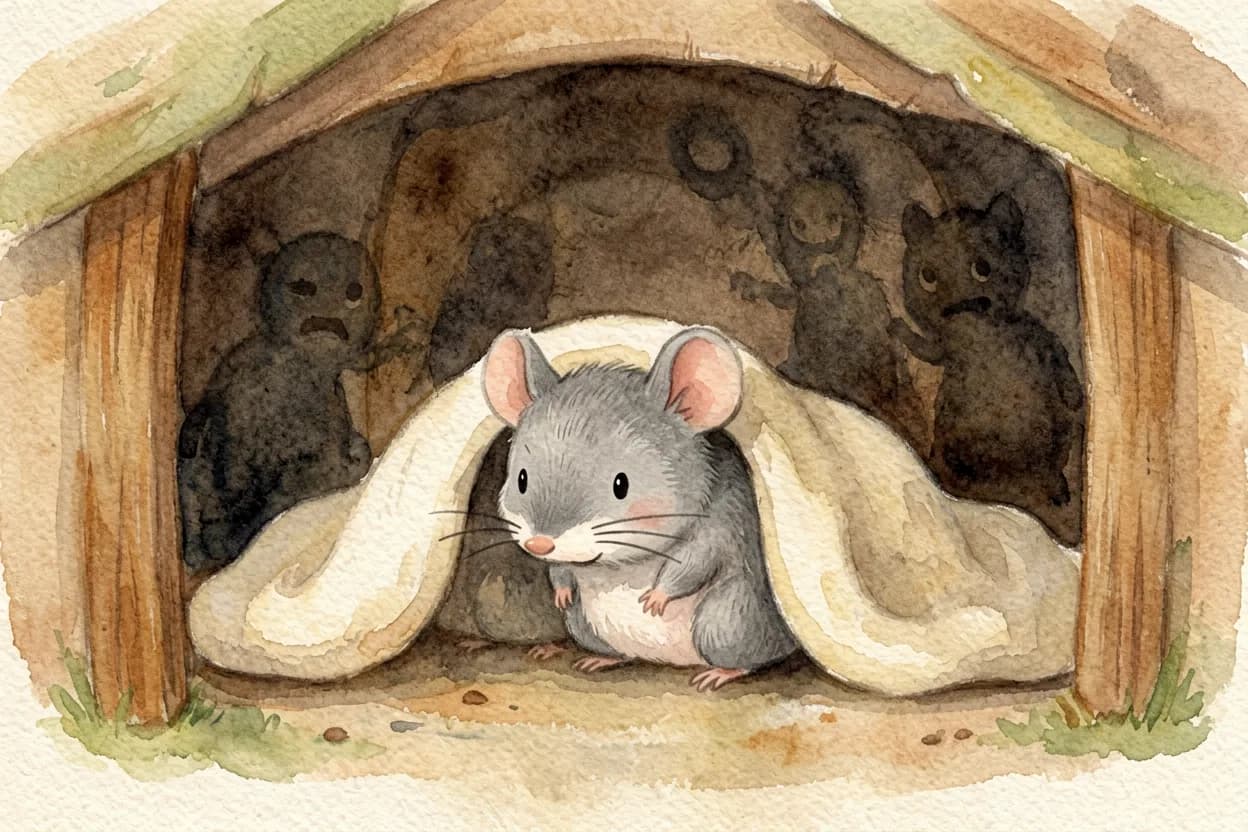
He was sure he could see shapes in the shadows. A wobbly monster in the corner! A long spooky arm by the door! Toby pulled his blanket right up to his nose and squeezed his eyes shut tight.
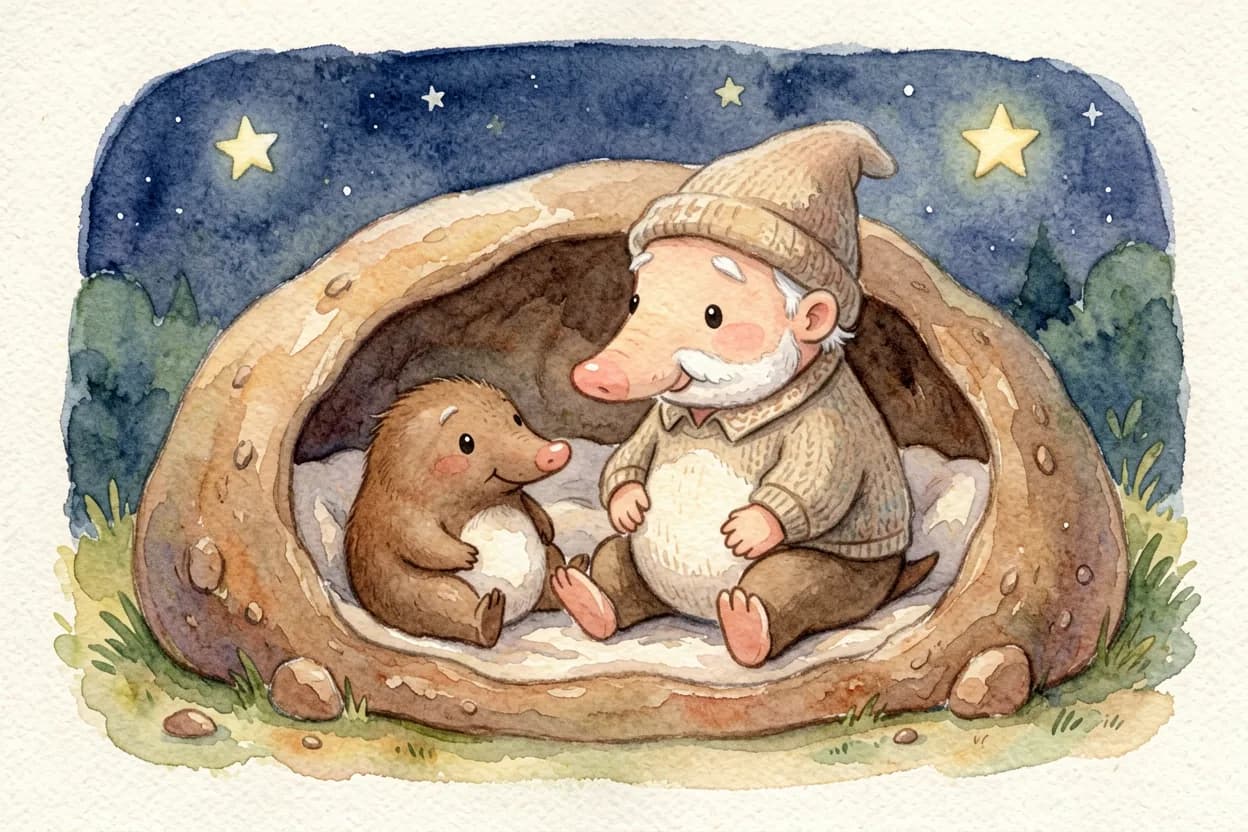
His grandpa, a wise old mole, peeked in. "Can't sleep, little one?" "The dark is scary, Grandpa," Toby whispered. "There are monsters." Grandpa sat on the edge of the bed. "Shall we take a look together? I'll be right beside you."
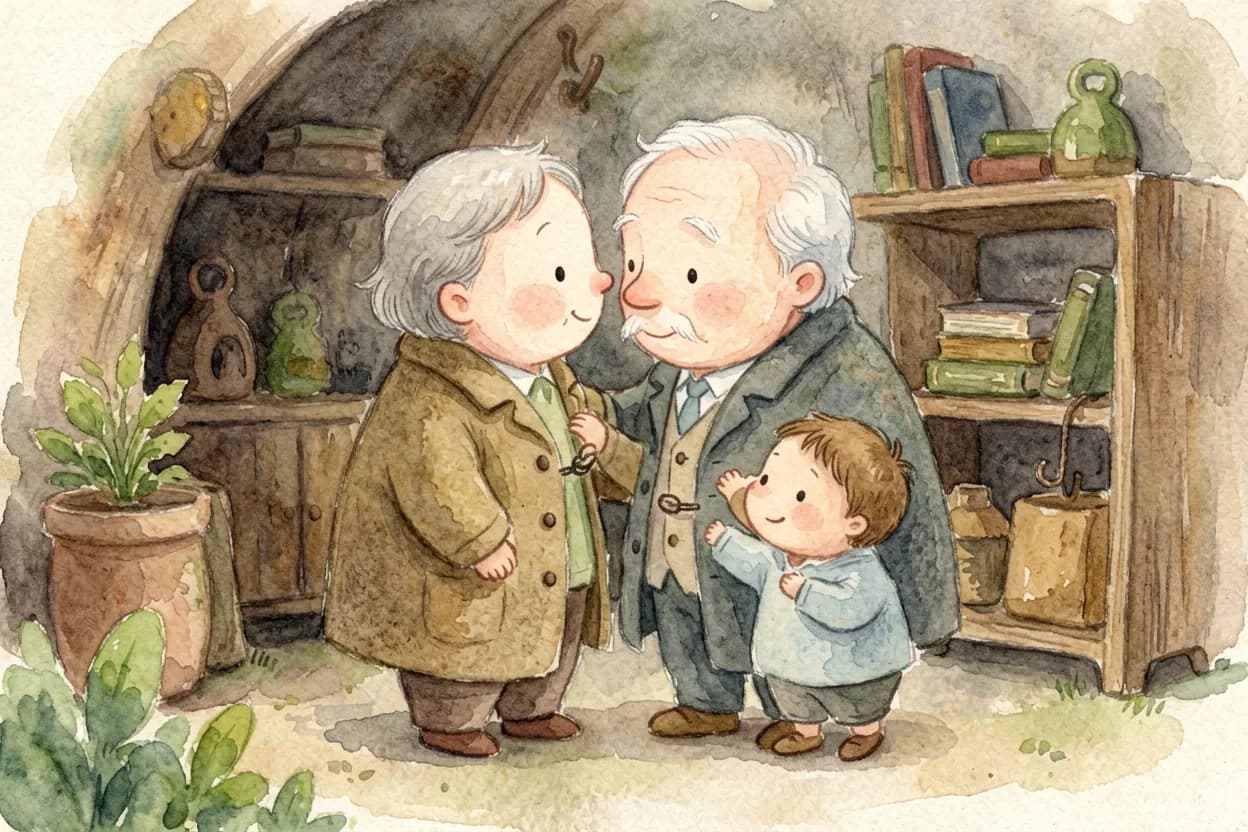
Holding Grandpa's paw, Toby looked at the wobbly monster in the corner. Grandpa gently touched it. It was just Toby's coat, hanging on a hook! The long spooky arm by the door? Only the branch of his little root-shelf. Toby let out a big breath.
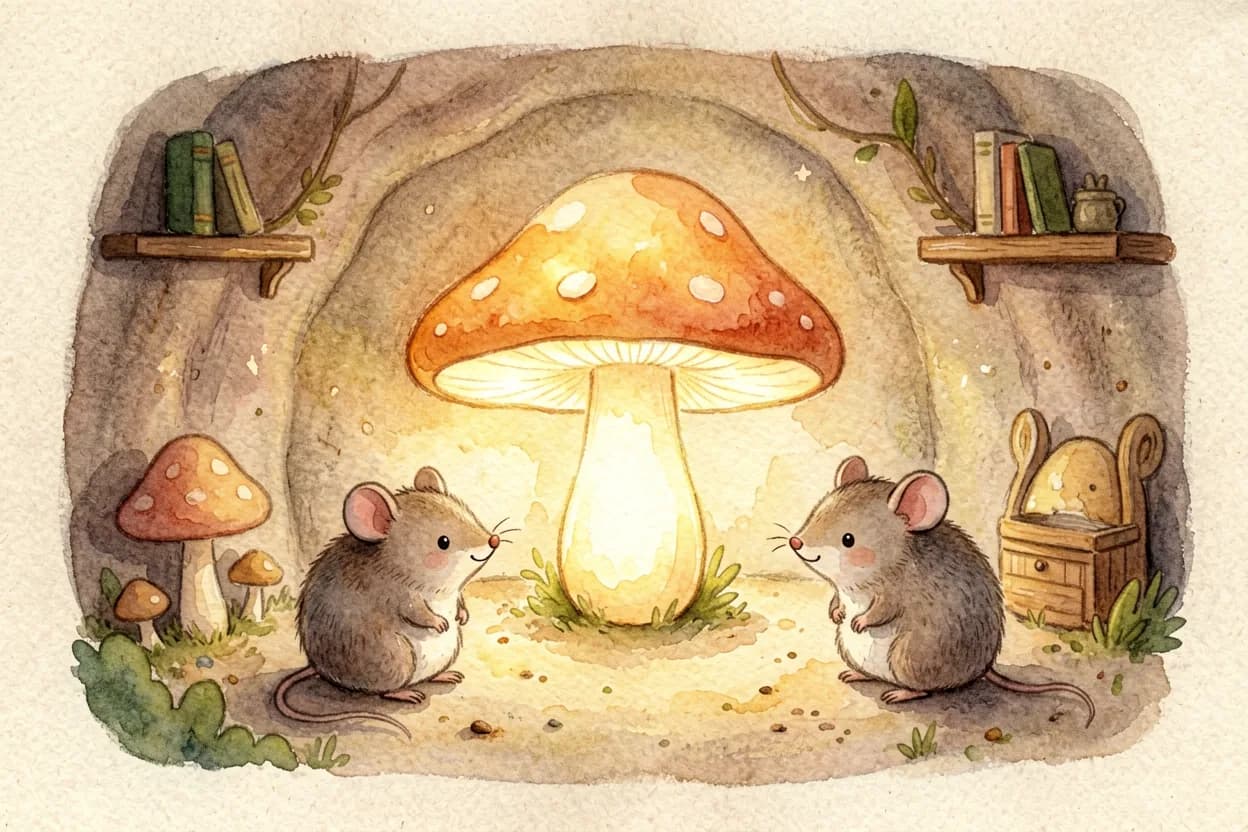
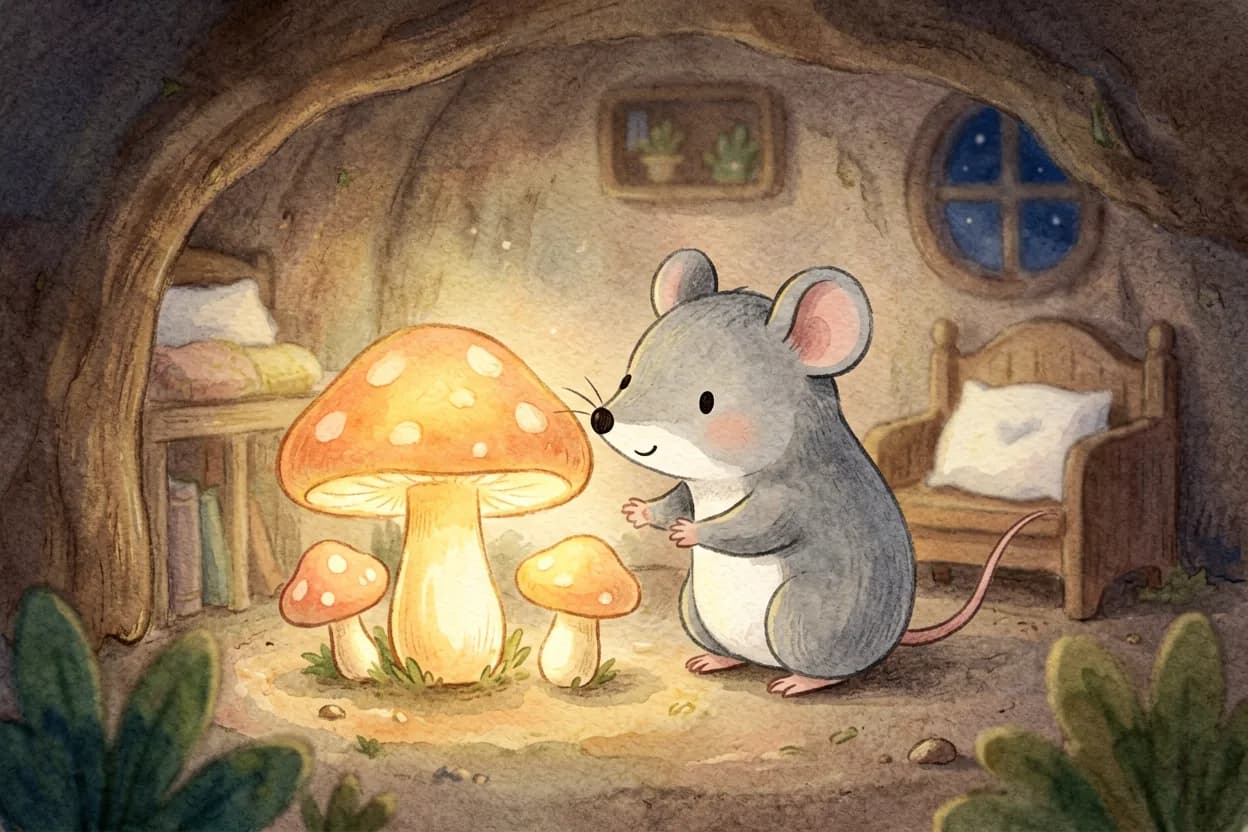
"The dark plays tricks," said Grandpa kindly. "But it isn't scary. It's just the day, having a rest." Then he showed Toby something wonderful: a little glow-mushroom by the bed, giving off the softest, warmest light, like a tiny moon.
In its gentle glow, the burrow looked cosy, not creepy. The shadows were soft and friendly. "When the dark feels big," said Grandpa, "remember: you are safe, you are home, and you are loved. And I'm always near."
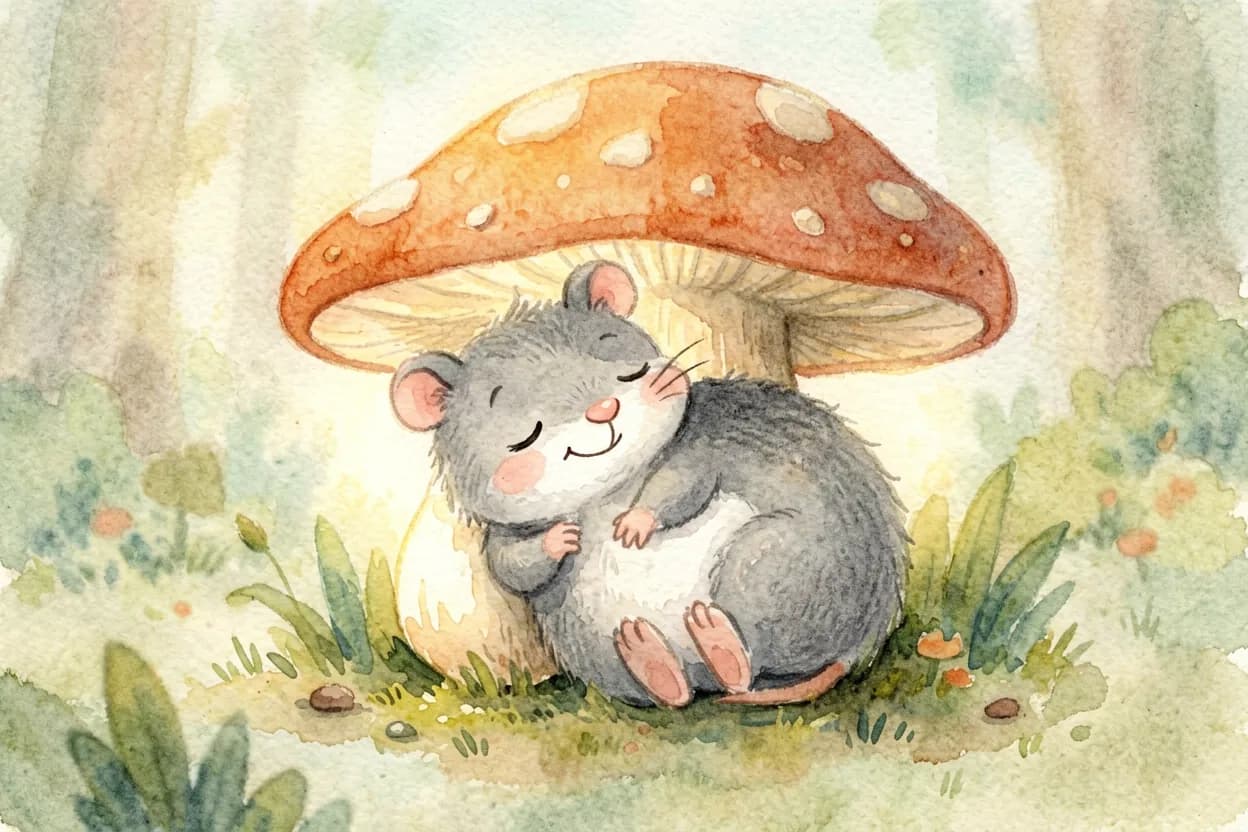
Toby snuggled down. The dark wrapped around him like a soft, warm blanket. It wasn't scary at all — it was cosy. "Goodnight, friendly dark," he whispered. And for the first time, he wasn't afraid.
The dark isn't scary — it's just the day having a rest. And even in the dark, you are safe, and you are loved.
Questions to ask after reading
- 1What scary things did Toby think he saw in the dark?
- 2What did the wobbly monster and the spooky arm turn out to be?
- 3What did Grandpa say the dark really is?
- 4How did the little glow-mushroom change how the burrow felt?
- 5What helps YOU feel brave and cosy in the dark?
Try it together: feeling brave in the dark
Fear of the dark softens when a child feels safe and in control. These gentle activities turn the dark from scary to cosy.
- Shadow detective. In daylight, look together at what makes the night-time shapes — the coat on the hook, the toy on the shelf. Knowing what's really there disarms the imagination after dark.
- A cosy nightlight. Let your child choose a soft nightlight or 'glow-mushroom.' A gentle light and a sense of control make the dark feel friendly, not frightening.
- Torch adventures. Play games in a dark-ish room with a torch — shadow puppets, hide the toy. Making the dark fun rewrites it as a place of play, not fear.
- A brave phrase. Practise Grandpa's words: 'I am safe, I am home, I am loved.' A calm phrase to repeat gives a child something steadying to hold onto.
- Read the story at bedtime. Share Toby's story right where the fear lives — at lights-out. Talk about how the dark is just the day resting, and how brave Toby was.
How to use the story at each age
Toddlers (2-3)
Younger children can't yet separate real from imagined, so reassurance and routine matter most. A nightlight, a comfort object, and a calm, consistent bedtime help them feel safe. Keep responses warm and brief; long discussions of monsters can make the fear bigger.
Preschoolers (3-5)
This is the peak of dark-fear as imaginations soar. Take the fear seriously, then gently show what the shadows really are (like Grandpa). Give tools and control — a nightlight, a torch, a brave phrase — and read the story at bedtime. Avoid dismissing it or making monsters a joke they can't share.
Older children (5-7)
Children this age can understand more — that the dark is simply the absence of light, and that their mind plays tricks. Talk it through logically but kindly, keep bedtime calm and screen-free (scary images stick), and let them keep whatever comforts still help. Never shame a lingering fear.
Common mistakes (and what to do instead)
- Dismissing the fear. 'Don't be silly, there's nothing there' leaves a child alone with a fear that feels utterly real. Acknowledge it, then explore and reassure together.
- Over-hunting for monsters. Elaborate monster-spray rituals and long searches can accidentally confirm that monsters are real. Calmly show what the shapes truly are instead.
- Scary screens before bed. Even mildly scary shows or images linger in a dark room. Keep the evening gentle and screen-free so nothing feeds the shadows.
- Removing all comfort too soon. Whisking away the nightlight to 'toughen them up' backfires. Let comforts stay as long as they're needed; the fear fades on its own timeline.
- Losing patience at bedtime. Frustration makes a frightened child feel more alone. Stay warm and steady — your calm presence is the biggest comfort of all.
Using the lesson in everyday moments
The story rewrites the dark as cosy; bedtime is where the fear lives. Here's where it shows up.
- At lights-out. A nightlight, the door ajar, and the same calm goodnight give a sense of safety. Predictable comfort helps a child settle into the dark.
- During night wakings. Keep reassurance calm and brief — a quiet word, a hand on the back — so your child learns the dark is safe and they can resettle.
- In the daytime. Talk about the fear and play torch games when it's not bedtime. Building bravery in the light makes the dark easier at night.
- Around scary content. Mind the shows, books, and overheard talk during the day. Frightening images have a way of returning after dark.
A simple checklist to follow
- Read the story together at bedtime
- Take the fear seriously, then show what the shapes really are
- Offer a cosy nightlight and let your child feel in control
- Practise a calm brave phrase together
- Keep evenings gentle and screen-free
- Stay warm and patient; let comforts stay as long as needed
Make the story about your child
A mole named Toby is a cosy, brave guide. But children pay closest attention when the one facing the dark is someone they know from the inside — themselves.
When your child is the hero who's scared, discovers the shadows are only ordinary things, and finds the dark cosy, the story stops being about a mole and becomes a picture of their own bravery at bedtime. Their name, their room, their peaceful goodnight — exactly the reassurance a frightened child needs as the light goes out.
A generic story
A little mole is scared of the dark and discovers it's cosy and friendly after all.
Your child's story
Kai is scared of the dark in his own bedroom, discovers the scary shapes are just his toys, and feels cosy and brave — with Kai as the hero on every page.
Parents also ask
Why is my child suddenly scared of the dark?
Fear of the dark usually appears in the preschool years alongside a child's growing imagination — the same imagination that invents wonderful games can also fill a dark room with shadows and 'what ifs.' Young children can't yet tell a real threat from an imagined one, and the dark, where they can't see, is the perfect stage for a worried mind. It's a normal developmental phase, not a sign that anything is wrong.
How can I help my child feel less scared of the dark?
Take the fear seriously, then gently show what the night-time shapes really are (the coat on the hook, the toy on the shelf). Offer a soft nightlight and let your child feel some control, keep bedtime calm and screen-free, teach a brave phrase, and read a reassuring story at lights-out. Reframe the dark as simply the day resting.
Should I check for monsters or use 'monster spray'?
It's usually better not to. Elaborate monster hunts or sprays can accidentally reinforce the idea that monsters are real and need defending against. A calmer approach is to show your child, matter-of-factly, that the scary shapes are ordinary objects, and that the dark is safe — which teaches there was never anything to fear.
Is it okay to use a nightlight?
Yes, absolutely. A soft nightlight is a healthy comfort that helps many children feel safe, and letting your child choose it gives them a reassuring sense of control. There's no need to rush to remove it — the fear fades on its own timeline, and comforts can stay as long as they're needed.
My child's fear of the dark is disrupting everyone's sleep. What can I do?
Keep a calm, consistent bedtime routine, use a nightlight and leave the door ajar, and address the fear in the daytime with torch games and shadow-detective play. During night wakings, keep reassurance calm and brief so your child learns to feel safe and resettle. If the fear is severe, lasting, and exhausting for the whole family, your doctor or health visitor can help.
Will scary TV shows or stories make it worse?
They can. Even mildly scary shows, books, or overheard talk during the day have a way of returning after dark, when a young child can't easily separate imagination from reality. Keeping the evening gentle and screen-free, and being mindful of frightening content, helps stop the shadows being fed.
Are personalized stories helpful for fear of the dark?
For many children, yes. A bedtime story where they are the brave hero who discovers the dark is cosy works right where the fear lives, and gives them a picture of their own courage. Reading it at lights-out gently rewrites the dark as a calm, friendly place. It's a lovely tool alongside a nightlight and a reassuring routine.
More free stories for kids
About the author
Andy — Andy is the founder of Doodara and builds the illustration pipeline behind it — the part that has to keep a child's character looking like the same child on every page of a book. Most of that work is character consistency, content safety for material aimed at young children, and the unglamorous business of making a generated book good enough that a family reads it twice.