
Stories About Confidence for Kids
A complete original picture book about believing in yourself you can read tonight — plus the discussion questions, activities, and age-by-age tips that help your child grow confident.
ByAndyFounder of Doodara
Quick answer
The books that help a child who says "I can't" are the ones where the character is genuinely small or slow or new at something and succeeds anyway — not the ones that just insist everyone is special. This page has a complete original picture book, Ivy Believes, free to read tonight, plus discussion questions and age-by-age guidance for ages 3-7. The practical move: after reading, help your child add the word "yet" to their own "I can't", and name one thing they could not do a year ago.
"I can't do it." "I'm no good at this." Few things ache more than hearing your child count themselves out before they've even tried. Confidence — the quiet belief that 'I can have a go, and I'll be okay even if it's hard' — is one of the greatest gifts of childhood. And the wonderful news is that it isn't something children are simply born with or without. It's built, day by day, largely by how the people around them respond.
Young children are still forming a sense of who they are and what they can do. When something is hard, or when they compare themselves to bigger, faster, cleverer others, it's easy for a little one to decide they're 'no good' — especially if they believe they should be able to do everything already. A dip in confidence isn't a fixed trait; it's a normal wobble that the right encouragement can turn around.
The most powerful thing you can do is help your child see that ability isn't fixed — that 'I can't' is really 'I can't yet.' When children learn that effort and practice grow their skills, that mistakes are part of learning, and that they are loved and capable exactly as they are, confidence takes root. Stories help beautifully: they let a child watch a character doubt themselves and discover their own strength, and feel that they can too.
Why stories help
A story lets a child feel the journey from 'I can't' to 'I can.' When a character doubts themselves, keeps trying, and discovers their own strength, your child experiences that shift from the inside — and starts to believe it's possible for them.
Children absorb the beliefs of characters they love. A tiny hero who thinks they're too small and then finds they're capable teaches self-belief far more powerfully than 'you can do anything' said in passing.
And a story gently plants the growth mindset that underpins all confidence: that abilities grow with practice, that 'yet' is a magic word, and that being small or slow now doesn't mean forever. That lesson, felt through a beloved character, becomes part of how a child sees themselves.
How a story becomes a habit
Ivy Believes
An original picture book about confidence — free to read aloud tonight.
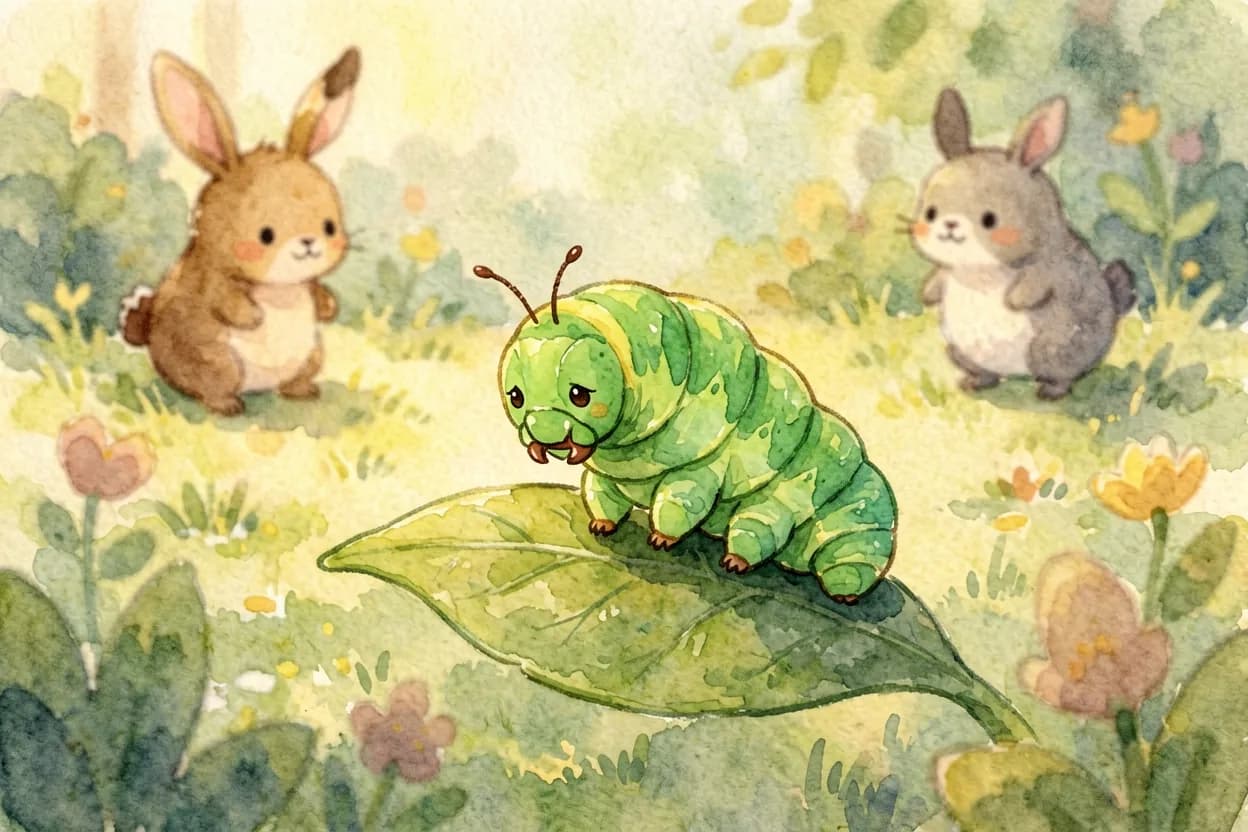
Ivy was the smallest inchworm in the whole garden. While the other creatures buzzed and hopped and flew, Ivy could only inch along — slowly, slowly, one little loop at a time. "I'm too small," she sighed. "I can't do anything special."
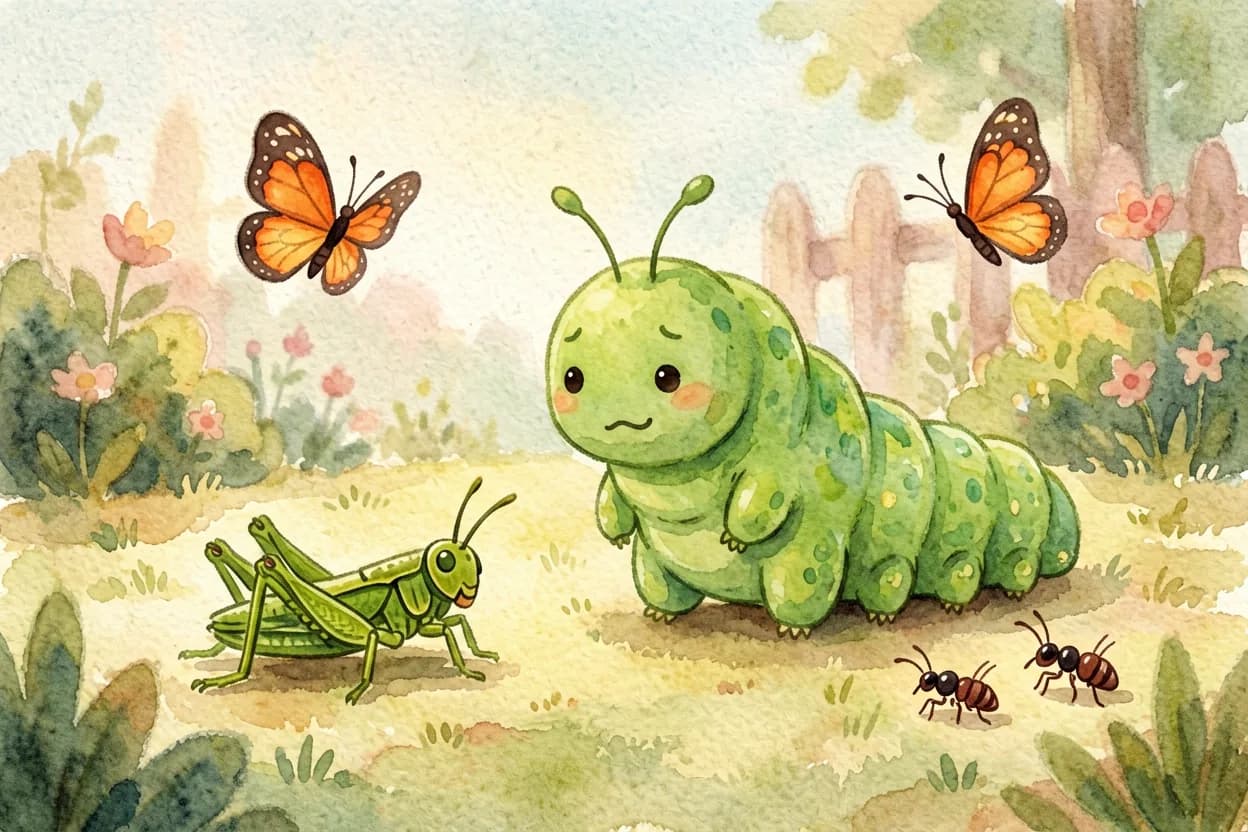
The grasshoppers leapt high. The butterflies soared. The ants carried crumbs ten times their size. Ivy watched them all and felt smaller and smaller. "I can't jump. I can't fly. I can't carry big things. I'm no good at anything," she said, and drooped.
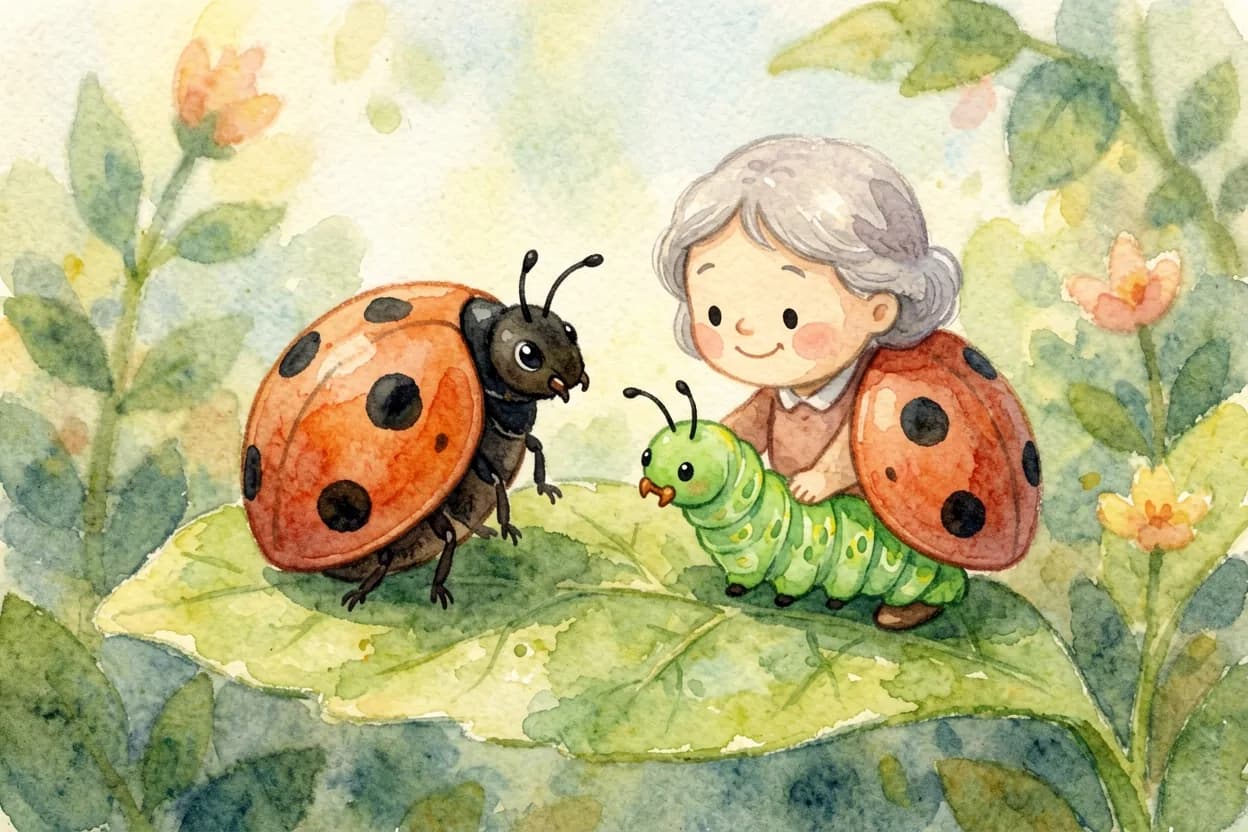
A gentle old ladybird landed beside her. "Why so glum, little one?" "I can't do any of the things they can do," said Ivy. The ladybird smiled. "Can't do them... yet. That's a very important word. And I think you can do something none of them can. Shall we find out?"
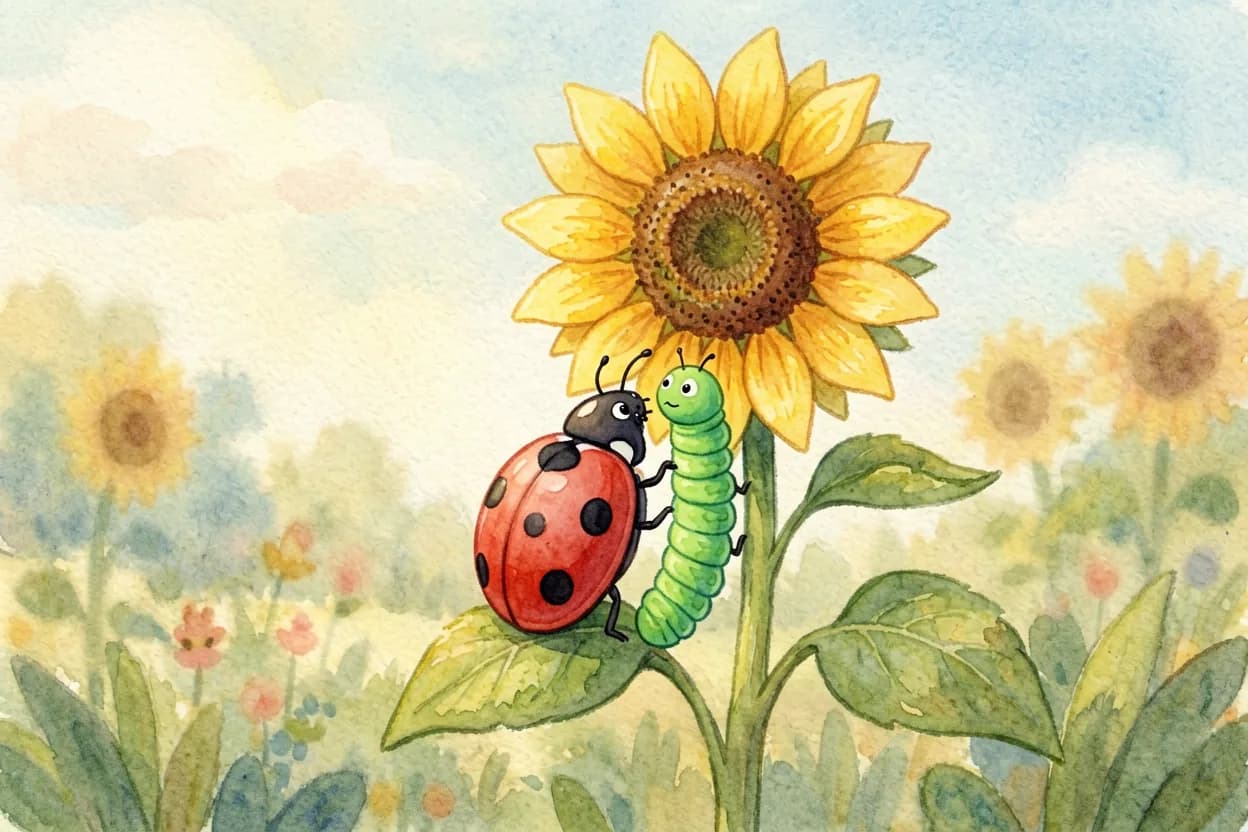
"Do you see that tall sunflower?" said the ladybird. "The grasshoppers can't climb it. The ants give up halfway. But an inchworm... an inchworm can measure her way right to the very top, one steady inch at a time." Ivy looked up. The sunflower was SO tall. "I don't think I can," she said.
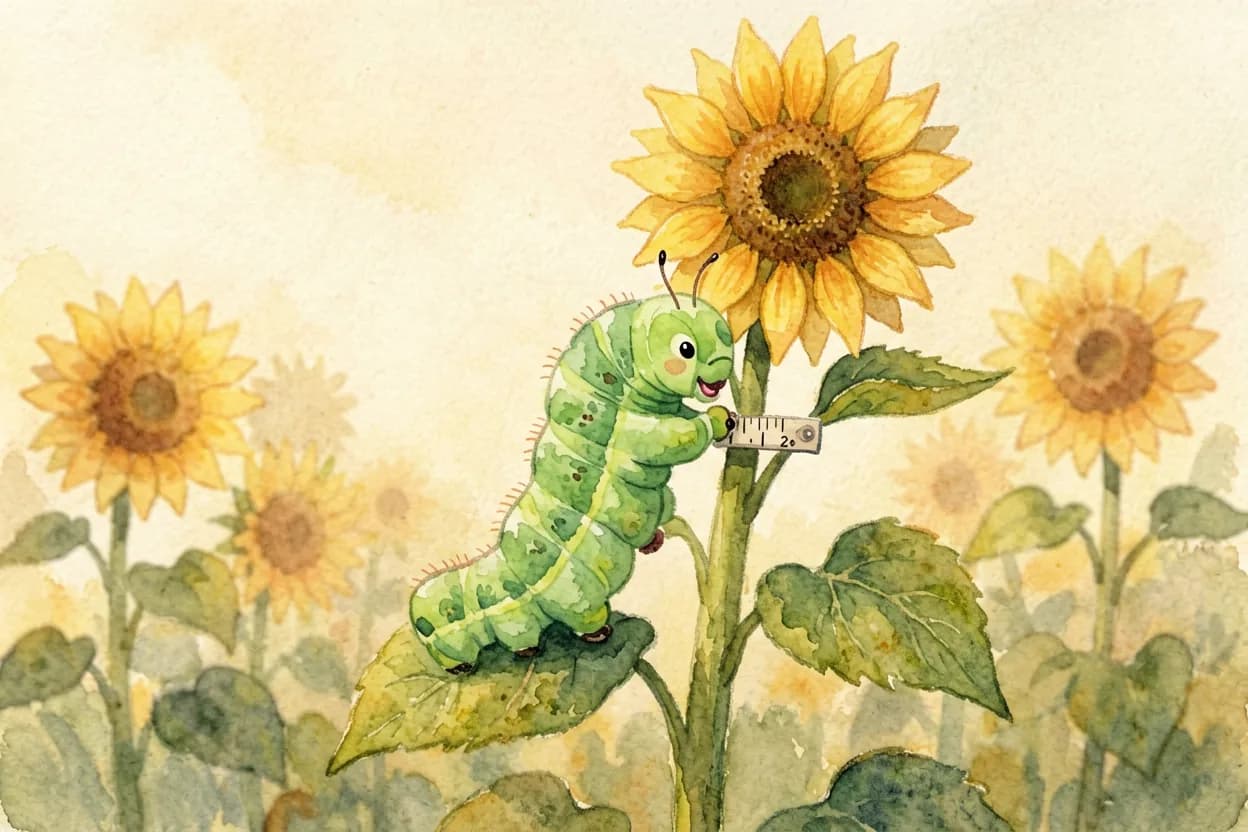
"Not yet," said the ladybird kindly. "But one inch at a time, you might." So Ivy began. Inch. Inch. Inch. It was slow. It was hard. Sometimes she slipped. But each little loop took her higher than before, and she kept on going.
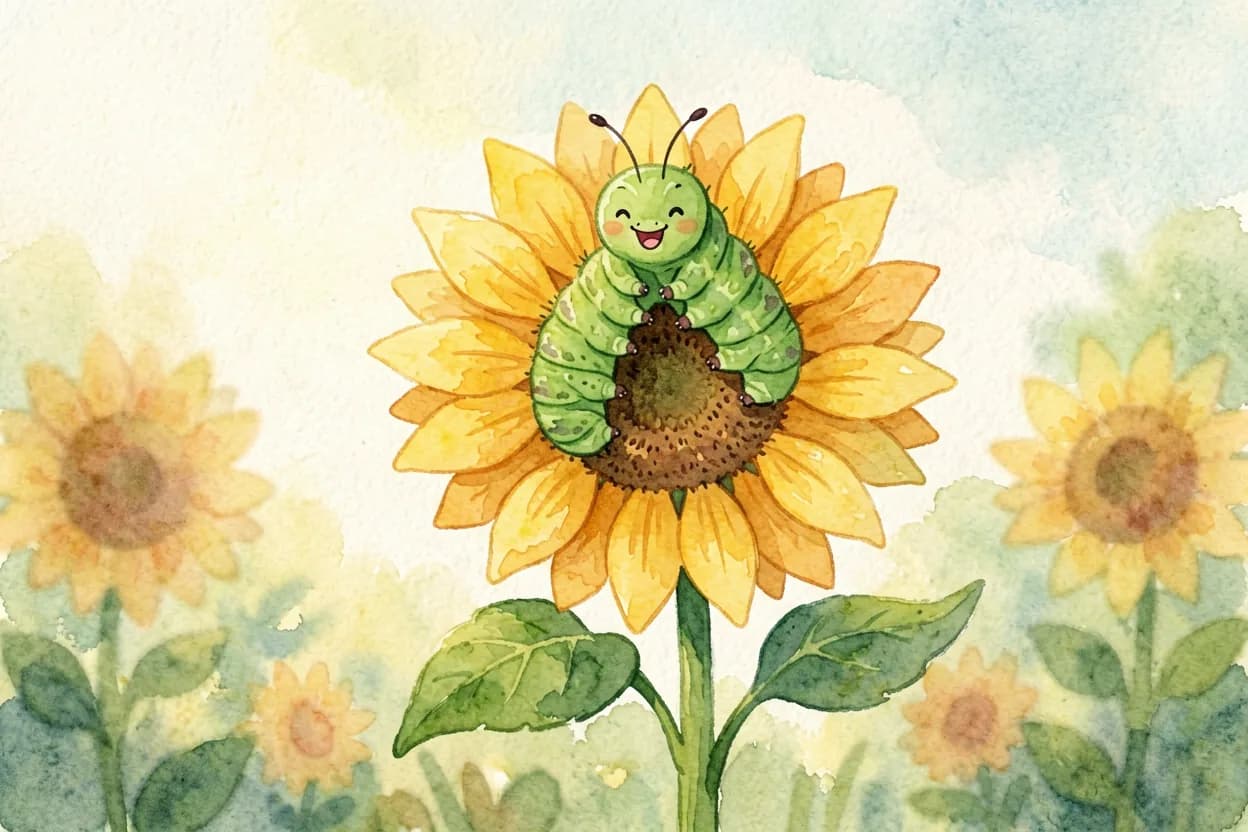
Up and up she inched, past the leaves, past the bees, higher than the grasshoppers could jump, higher than the ants had ever climbed — until at last she reached the very top and stood upon the great golden flower, the whole garden spread out below her.
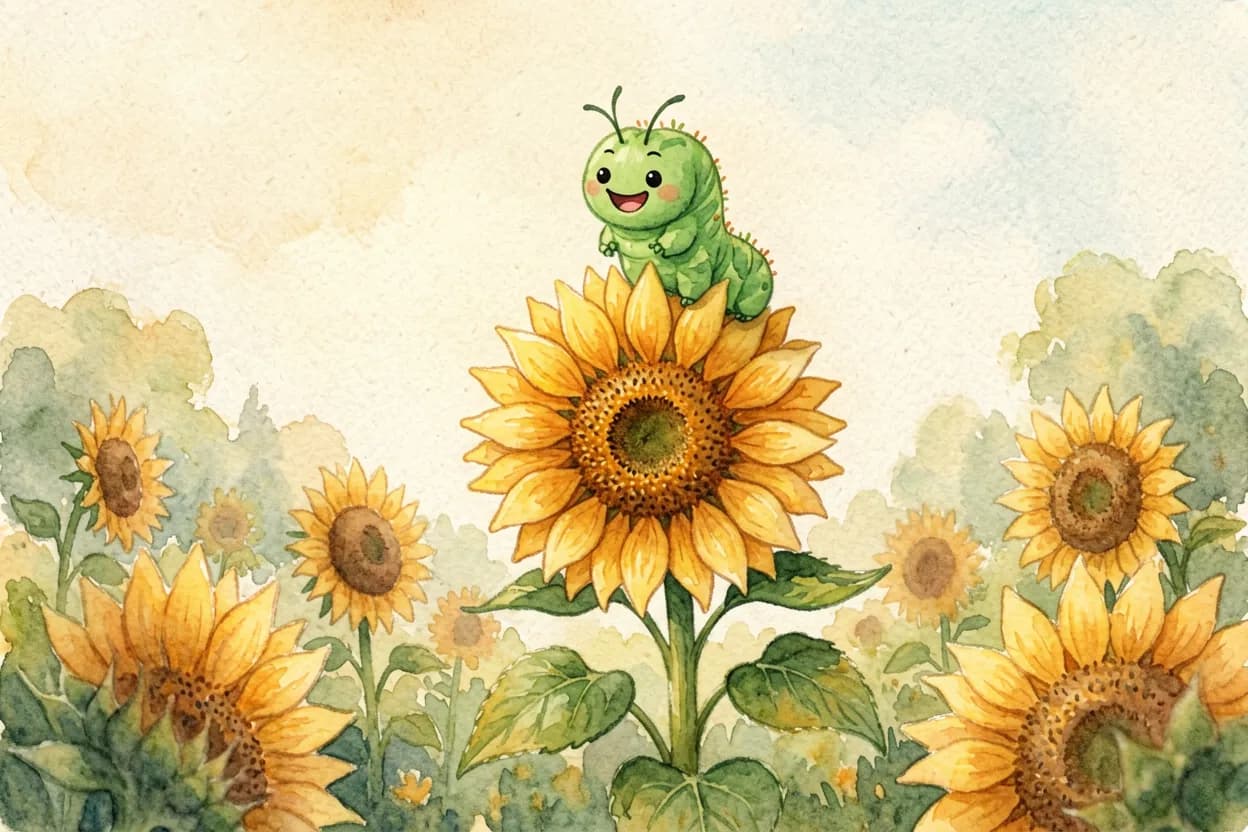
"I DID it!" cried Ivy, beaming. "I really did it!" "You did," said the ladybird, fluttering up beside her. "Being small and steady turned out to be your special something. You just had to believe — and add the word 'yet.'"
You don't have to be big or fast to be wonderful. And 'I can't' is really just 'I can't — yet.'
Questions to ask after reading
- 1Why did Ivy feel like she was no good at anything?
- 2What important word did the ladybird add to 'I can't'?
- 3What special thing could Ivy do that the others couldn't?
- 4What happened when Ivy kept trying, one inch at a time?
- 5What is something you can't do YET, but could learn with practice?
Try it together: building confidence
Confidence is built through effort, encouragement, and feeling valued. These activities help it grow.
- Add the magic word 'yet'. When your child says 'I can't', gently add 'yet.' 'I can't tie my shoes... yet.' This one small word turns a dead end into a path forward.
- Praise effort, not just talent. Notice how hard they tried, not just how clever they are: 'You kept practising and worked it out!' Praising effort builds a can-do, keep-going mindset.
- Celebrate their 'special something'. Help your child discover what makes them them — their kindness, their imagination, their steady patience. Knowing their own strengths anchors confidence.
- Let them do it themselves. Resist jumping in. Let your child struggle a little and succeed on their own — nothing builds confidence like an 'I did it!' they truly earned.
- Share your own 'yets'. Talk about things you're still learning. Seeing that grown-ups keep growing too makes 'not being good yet' feel normal and hopeful.
How to use the story at each age
Toddlers (2-3)
Confidence grows through safe exploration and your delight in them. Let them try (and make a mess), cheer their attempts, and offer just enough help. Avoid doing everything for them; a toddler who's allowed to try builds an early sense of 'I can.'
Preschoolers (3-5)
Introduce the power of 'yet' and praise effort over talent. Pause at Ivy's doubt: 'What could help her? What's her special thing?' Help your child name their own strengths, let them earn their own successes, and treat mistakes as part of learning, not failure.
Older children (5-7)
Comparison and self-criticism grow now. Nurture a growth mindset (skills improve with practice), talk about how everyone has different strengths, and help them set small, achievable goals. Notice and name their character strengths, not just achievements, so their confidence rests on who they are, not just what they do.
Common mistakes (and what to do instead)
- Doing too much for them. Jumping in to fix or finish things teaches a child they can't. Let them struggle and succeed — earned confidence is the real kind.
- Praising only cleverness. 'You're so smart' can make children afraid to fail and look un-smart. Praise effort and strategy instead: 'You worked so hard at that.'
- Empty over-praise. 'Everything you do is amazing!' rings hollow and stops meaning anything. Specific, genuine praise for real effort builds solid confidence.
- Comparing to others. 'Why can't you be like...' chips away at self-belief. Compare a child only to their own growth: 'Look how much you've learned since last month.'
- Treating mistakes as failures. If mistakes bring disappointment or fixing, children fear trying. Frame them as normal and useful: 'Mistakes are how we learn.'
Using the lesson in everyday moments
The story models self-belief; daily life is where confidence is built. Here's where it shows up.
- When they say 'I can't'. Add 'yet', and break the task into a small first step. Turning 'I can't' into 'I can't yet, but let's try one bit' keeps the door open.
- Learning new skills. Dressing, drawing, riding a bike — let them do as much themselves as they can, and praise the effort. Earned skills are confidence in action.
- After a mistake or setback. Model treating it as normal: 'That didn't work — what could we try next?' A calm response to failure builds a child brave enough to try again.
- In everyday praise. Notice effort, kindness, and persistence, not just results. A child valued for who they are, not only what they achieve, carries confidence for life.
A simple checklist to follow
- Read the story together, unhurried, with time for the pictures
- Add the word 'yet' whenever your child says 'I can't'
- Praise effort and persistence, not just talent or results
- Let your child earn their own successes
- Help them name their own special strengths
- Treat mistakes as a normal, useful part of learning
Make the story about your child
An inchworm named Ivy is an inspiring guide. But children pay closest attention when the one learning to believe in themselves is someone they know from the inside — themselves.
When your child is the hero who feels 'too small' and then discovers their own special something, one steady step at a time, the story stops being about an inchworm and becomes a picture of their own growing confidence. Their name, their strength, their 'I did it!' — exactly the belief you want to plant in them.
A generic story
A tiny inchworm feels too small to matter, then discovers she can do something special.
Your child's story
Priya feels she's not good at anything, then discovers her own special strength and climbs to the top — with Priya as the hero on every page.
Parents also ask
How can I build my child's confidence?
Confidence is built, not born. Praise effort and persistence rather than just talent, let your child earn their own successes instead of doing everything for them, help them name their own strengths, and treat mistakes as a normal part of learning. Adding the word 'yet' to 'I can't' fosters the growth mindset that underpins lasting confidence.
My child says 'I can't do it' and gives up. What should I do?
Gently add the magic word 'yet' — 'you can't do it yet' — and break the task into a small, achievable first step so success feels reachable. Praise the trying, resist rushing in to fix it, and celebrate small wins along the way. Over time, this turns 'I can't' into 'I can't yet, but I'll keep going.'
Is it bad to tell my child they're smart?
Praising cleverness ('you're so smart') can backfire — children may become afraid to try hard things in case they fail and look un-smart. It's more effective to praise effort, strategy, and persistence: 'You worked really hard and figured that out.' This builds a mindset where challenge and mistakes feel safe.
What is a growth mindset, and why does it matter for confidence?
A growth mindset is the understanding that abilities grow with effort and practice, rather than being fixed. It matters because a child who believes they can improve is willing to try, persist, and learn from mistakes — the foundation of real confidence. Teaching that 'I can't' really means 'I can't yet' is a simple, powerful way to nurture it.
Can too much praise be a problem?
Yes — constant, empty over-praise ('everything you do is amazing!') loses meaning and can make children anxious about living up to it. Specific, genuine praise for real effort and character ('you were so patient and kept trying') builds far more solid confidence than sweeping, hollow compliments.
How do I help a child who compares themselves negatively to others?
Acknowledge the feeling, then gently redirect the comparison to their own growth: 'Look how much you've learned since last month.' Point out that everyone has different strengths and grows at their own pace, and notice your child's own character and effort, so their confidence rests on who they are rather than on beating others.
Are personalized stories helpful for building confidence?
For many children, yes. A story where they are the hero who doubts themselves and then discovers their own strength makes self-belief vivid and personal, and gives them a picture of themselves as capable. It's a supportive tool alongside effort-based praise and letting your child earn real successes.
More free stories for kids
About the author
Andy — Andy is the founder of Doodara and builds the illustration pipeline behind it — the part that has to keep a child's character looking like the same child on every page of a book. Most of that work is character consistency, content safety for material aimed at young children, and the unglamorous business of making a generated book good enough that a family reads it twice.