Stories About Making Mistakes for Kids
A complete original picture book about mistakes you can read tonight — plus the discussion questions, activities, and age-by-age tips that help your child see mistakes as how we learn.
ByAndyFounder of Doodara
Quick answer
For a little perfectionist, the books that help are the ones where the mistake stays a mistake and something good comes of it anyway — not the ones where it turns out to be fine all along. This page has a complete original picture book, Nutmeg's Happy Accident, free to read tonight, plus discussion questions and age-by-age guidance for ages 3-7. The practical move: after reading, tell your child about a mistake you made this week and what you did next — children calibrate their own standard from yours.
Some children fall apart at the smallest mistake — a wobbly letter, a spilled drink, a tower that topples. They rip up the drawing, refuse to try again, or melt down in frustration. If your child is a little perfectionist who'd rather not try than risk getting it wrong, take heart: how children come to see mistakes shapes how willing they'll be to learn, take chances, and grow for the rest of their lives. And that view can be gently reshaped.
A fear of mistakes is completely understandable. Young children are still figuring out what they can do, they compare themselves to others, and they often believe they should be able to do everything perfectly, right away. A mistake can feel like proof that they're 'no good' rather than simply a normal step in learning. Add a big desire to please, and getting something wrong can feel genuinely upsetting.
The most freeing thing you can teach your child is that mistakes aren't failures — they're how everybody learns. When children discover that mistakes can be fixed, turned into something new, or simply tried again, the fear loosens and their courage to try grows. Stories help beautifully: they let a child watch a character make a mistake, feel the wobble, and discover that it wasn't the end of the world — it was the start of something.
Why stories help
A story lets a child meet a mistake safely. When a character gets something wrong, feels the sting, and then discovers it's okay — even useful — your child learns from the inside that a mistake isn't the disaster it feels like.
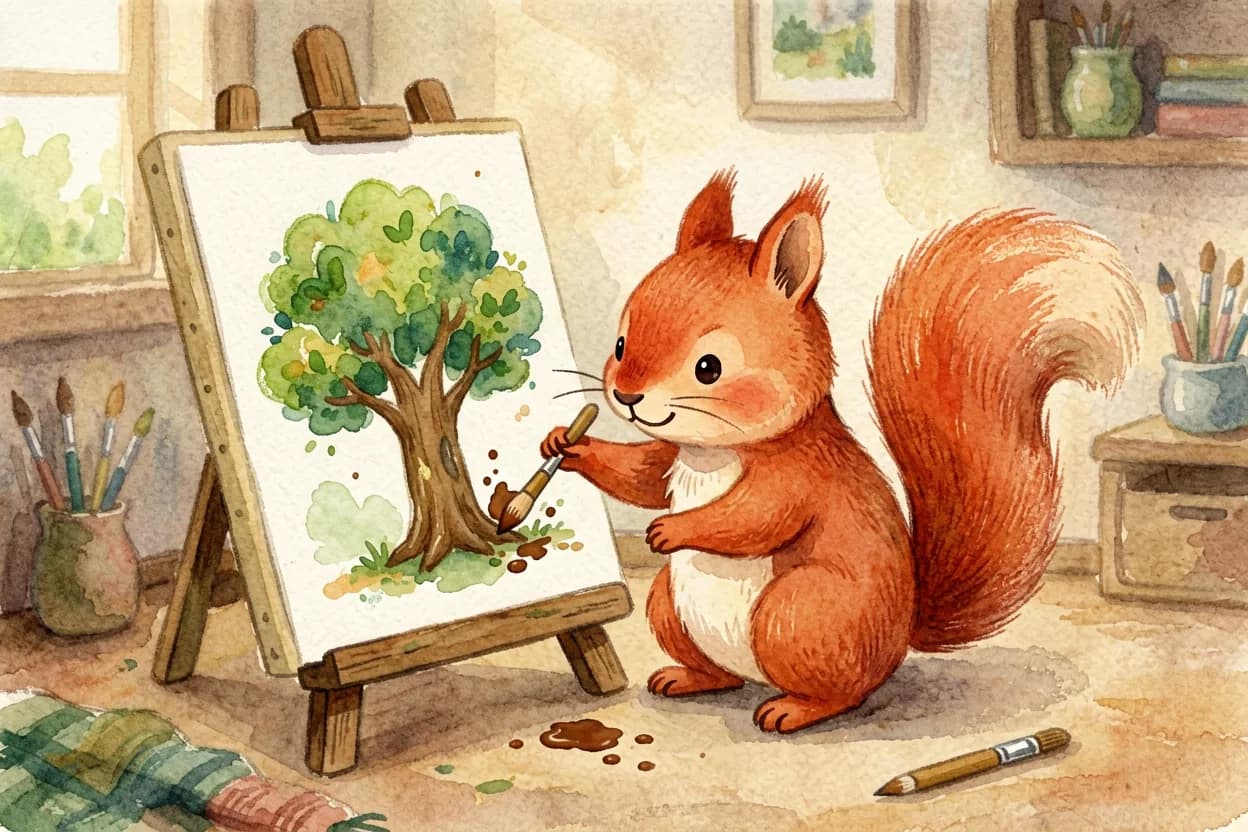
Children absorb the attitudes of characters they love. A little squirrel who turns a paint splodge into art models a mistake-friendly mindset far better than 'it doesn't matter, try again' said in passing.
And a story plants the growth-minded truth that transforms anxious perfectionists: that mistakes can be fixed, reframed, and learned from, and that trying and getting it wrong is far braver than not trying at all. Felt through a beloved hero, that lesson sets a child free to have a go.
How a story becomes a habit
Nutmeg's Happy Accident
An original picture book about making mistakes — free to read aloud tonight.
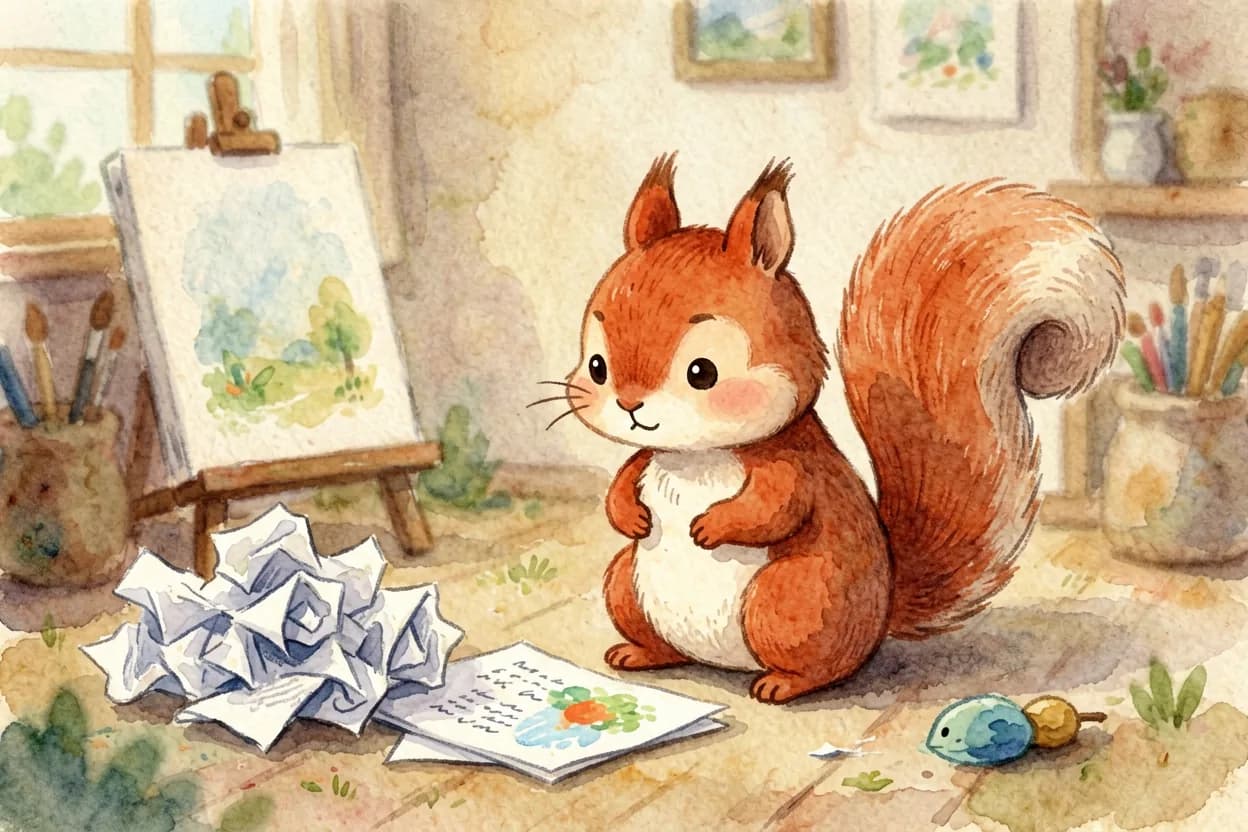
Nutmeg the little squirrel loved to paint. But she wanted every painting to be PERFECT. If a line went wobbly, or a colour smudged, she'd scrunch up the paper and start all over again. "It has to be perfect," she'd say, frowning hard.
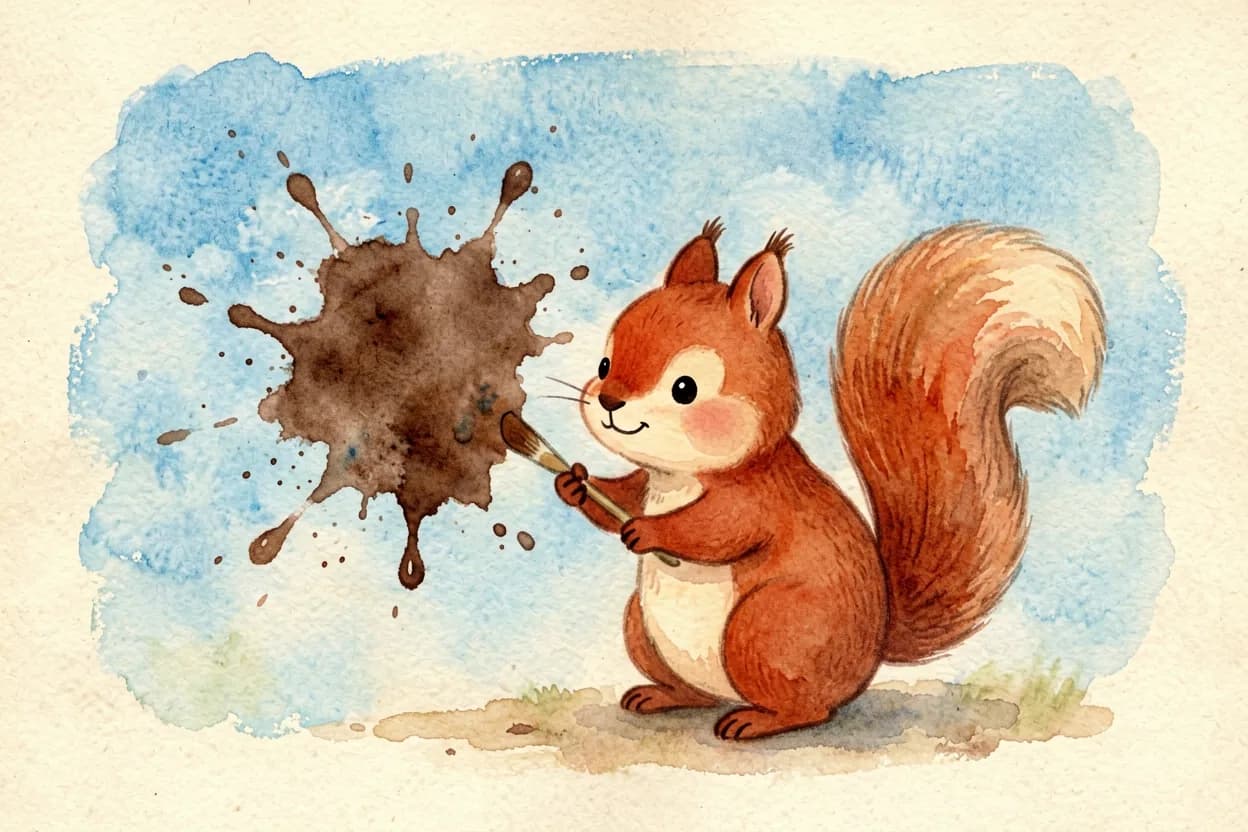
Today, Nutmeg was painting her very best picture yet — a beautiful blue sky over the forest. She was nearly finished, holding her breath, when — oops! Her paintbrush slipped, and a big blob of brown paint splattered right in the middle of her lovely sky. SPLODGE.
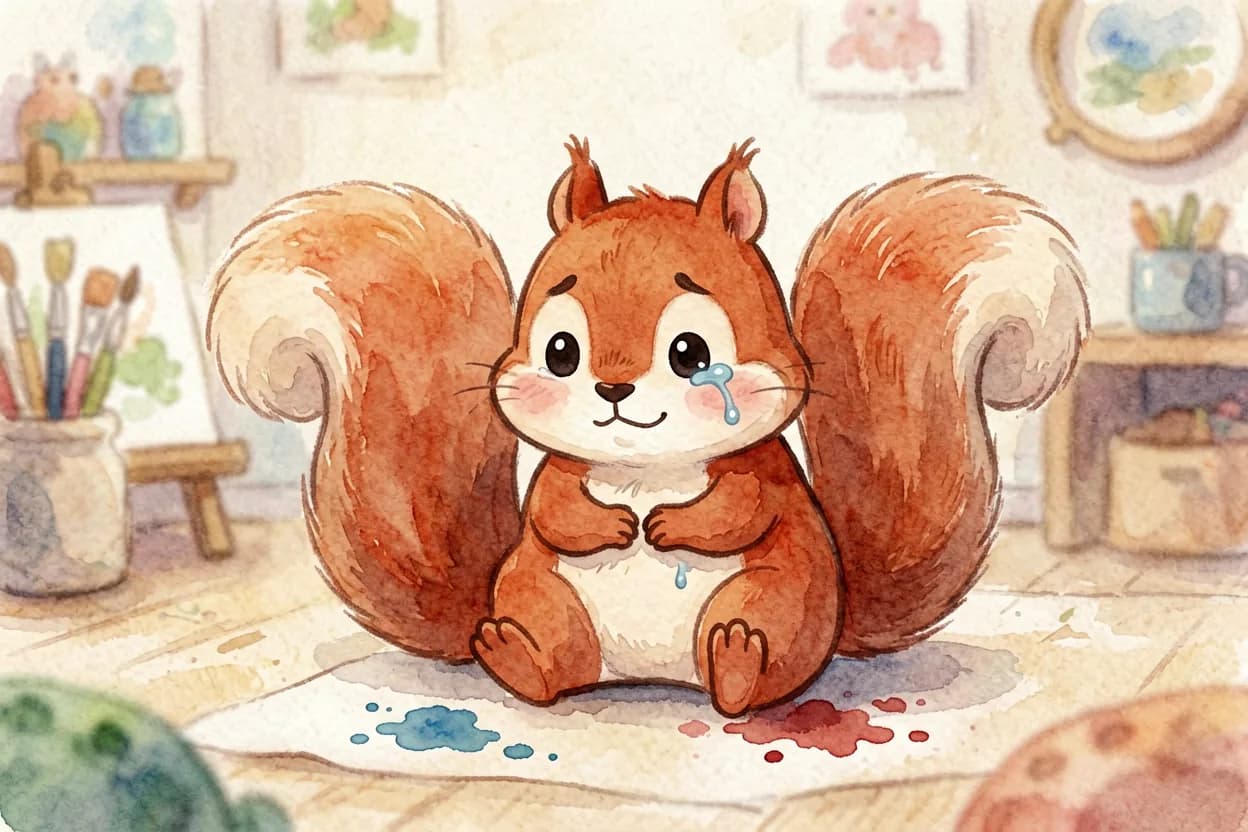
"NO!" cried Nutmeg. "It's RUINED!" Her eyes filled with tears. She reached to scrunch it all up and throw it away, just like always. "All that work, spoiled by one silly mistake!"
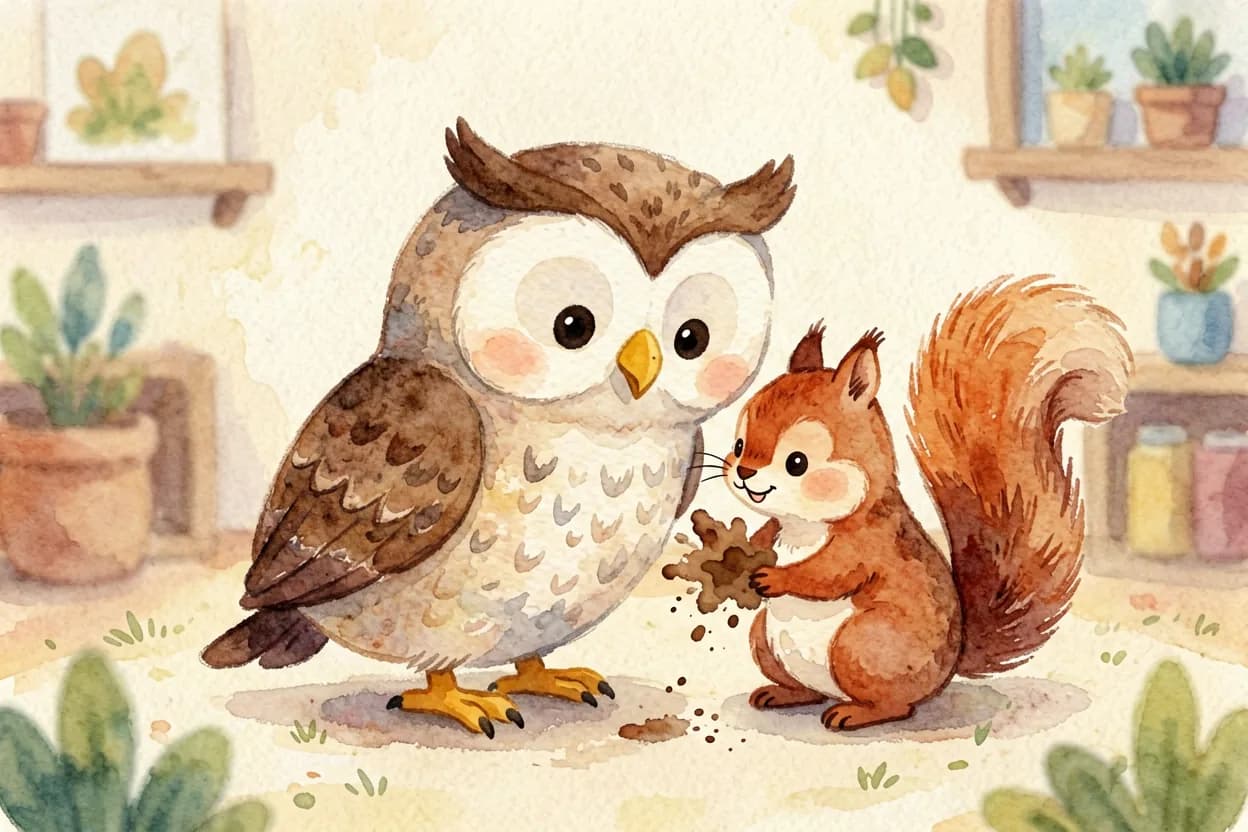
But her friend Willow the owl gently stopped her paw. "Wait," said Willow. "Before you throw it away — what if the mistake isn't the end? What if it's the beginning of something new? Look closely. What could that brown blob become?"
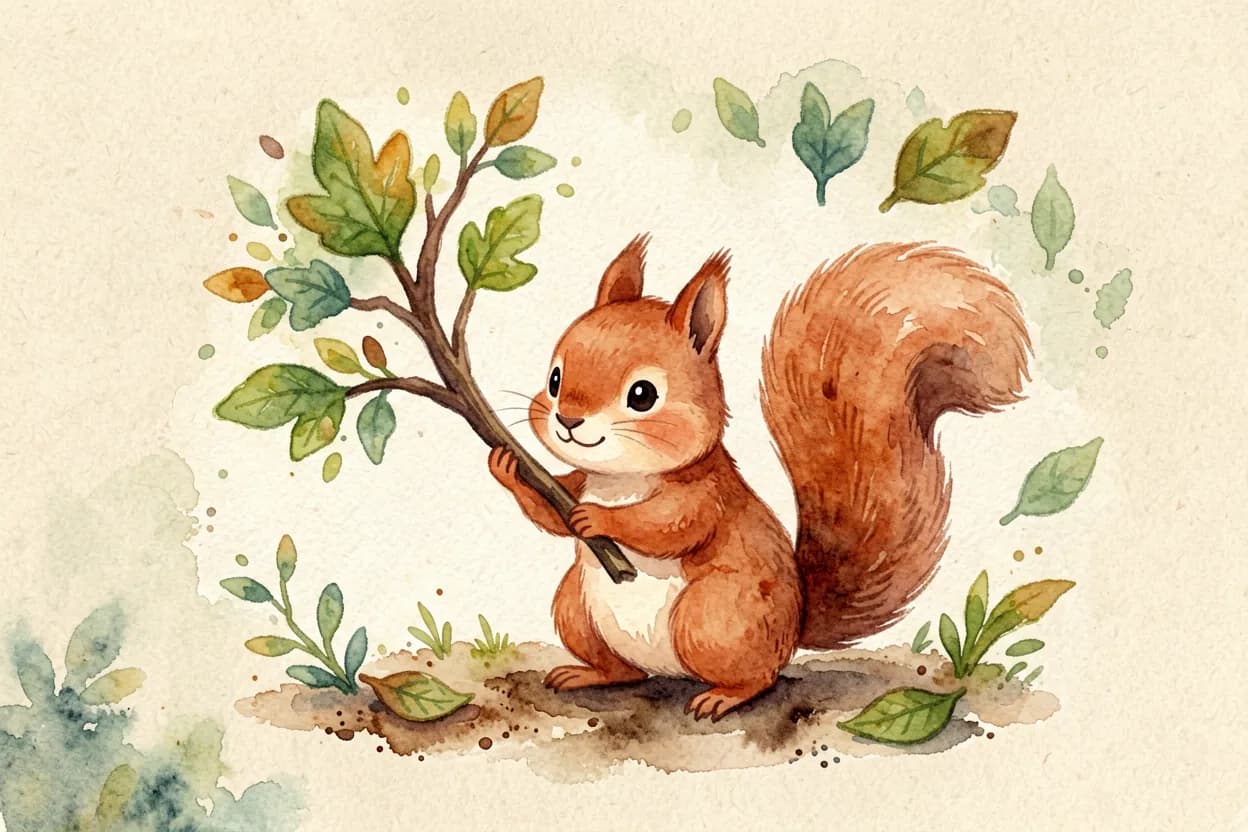
Nutmeg wiped her eyes and looked — really looked — at the blob. She tilted her head. Hmm. It was round, and brown, and... "A tree!" she gasped. "It could be a big strong tree trunk!" She added branches, and leaves, and little green loops.
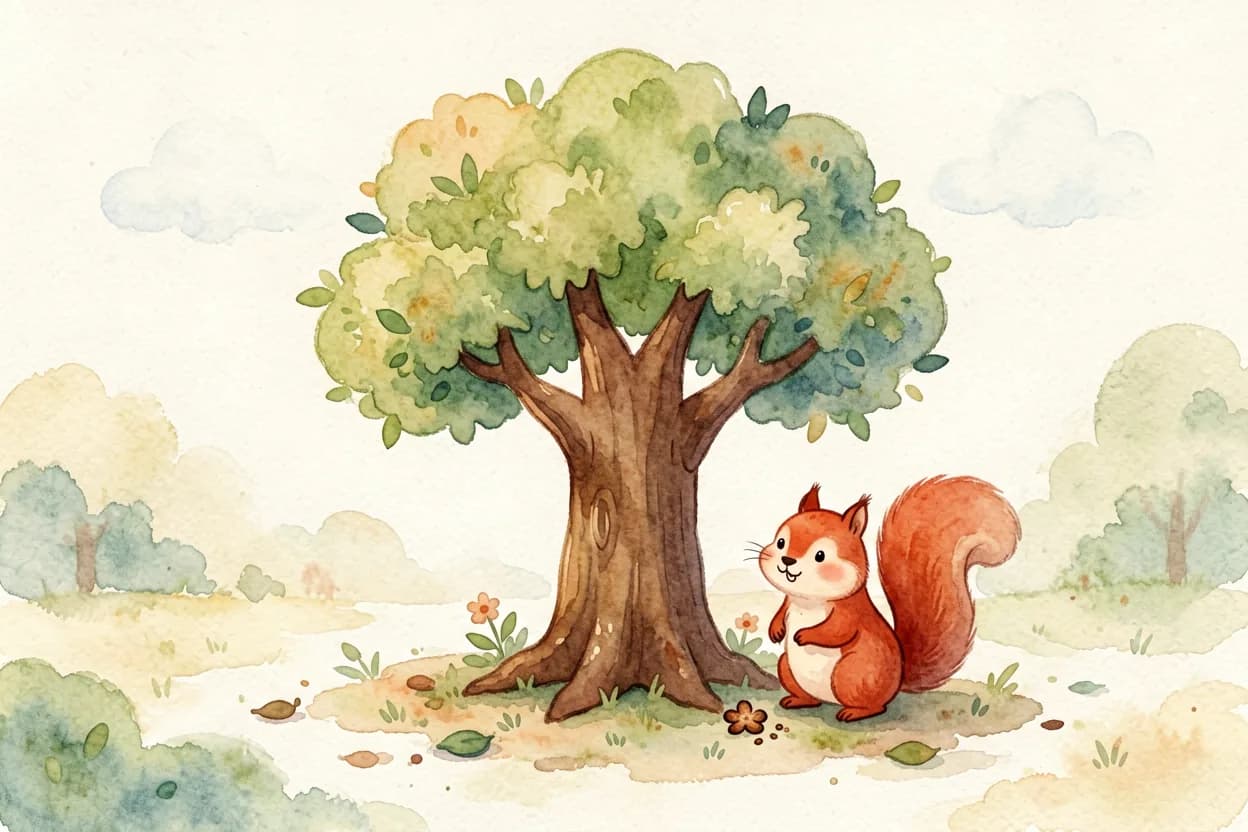
And where there had been an ugly splodge, there was now a magnificent tree, the loveliest part of the whole painting. "I would never have painted such a wonderful tree," said Nutmeg, amazed, "if I hadn't made that mistake!"
After that, Nutmeg didn't scrunch up her mistakes anymore. She looked at them, and wondered, and often turned them into something new. "Mistakes," she decided, "are just happy accidents waiting to happen."
Everybody makes mistakes — that's how we learn. And sometimes a mistake turns into the best part of all.
Questions to ask after reading
- 1What did Nutmeg do when her paintings weren't perfect at first?
- 2How did Nutmeg feel when the paint splodged on her sky?
- 3What did Willow ask her to do instead of scrunching it up?
- 4What did the brown splodge become?
- 5Can you think of a time a mistake turned into something good — or something you learned?
Try it together: making friends with mistakes
A child who isn't afraid of mistakes is free to learn and try. These activities help reframe getting it wrong.
- Turn a scribble into art. Make a random blob or scribble and take turns turning it into a picture, like Nutmeg's tree. It shows, playfully, that a 'mistake' can become something wonderful.
- Share your own mistakes. Talk about mistakes you made today and what you learned. When children see grown-ups make and shrug off mistakes, their fear shrinks.
- Celebrate 'the best mistake'. At dinner, share a mistake and what it taught you. Making mistakes a normal, even valued, topic takes away their sting.
- Praise the try, not the perfect. Notice effort and courage over flawless results: 'You had a go at a hard thing — that's what matters.' It frees a child to attempt and to err.
- Fix-it thinking. When something goes wrong, ask 'what could we try now?' rather than dwelling on the mistake. Modelling problem-solving turns errors into next steps.
How to use the story at each age
Toddlers (2-3)
Keep your reactions calm and light when things spill or break — your response teaches them how big a deal a mistake is. Model an easy 'oops, let's clean it up' rather than dismay, so mistakes feel manageable from the very start.
Preschoolers (3-5)
Perfectionism and mistake-frustration often peak now. Read Nutmeg's story and talk about turning mistakes into something new. Praise effort over perfect results, share your own mistakes, and gently resist fixing everything so they learn errors are survivable and useful.
Older children (5-7)
Children this age can understand that mistakes are how the brain learns and grows. Talk explicitly about this, celebrate 'good tries', and help them reflect ('what did that teach us?') rather than dwell on getting it wrong. Watch for perfectionism, and keep modelling a relaxed relationship with your own mistakes.
Common mistakes (and what to do instead)
- Reacting strongly to spills and errors. Big dismay over a mistake teaches a child that mistakes are catastrophes. Keep it light — 'oops, no problem, let's sort it' — so errors feel survivable.
- Fixing everything for them. Jumping in to correct or redo teaches a child their mistakes are unacceptable. Let them try, err, and fix, so they learn mistakes are part of doing.
- Praising perfection. Cheering only flawless results makes children fear imperfection. Praise effort and brave tries so getting it wrong doesn't feel like failing.
- Hiding your own mistakes. If children never see us err and recover, perfection seems expected. Model making and shrugging off mistakes out loud.
- Shaming or over-correcting. 'How could you do that?' adds shame to an already hard moment. Focus on the fix and the lesson, not the blame.
Using the lesson in everyday moments
The story reframes mistakes as beginnings; daily life is full of chances to practise. Here's where it shows up.
- When something spills or breaks. Model calm: 'Oops — accidents happen. Let's clean it up together.' Your relaxed response shapes how big a deal mistakes feel.
- During learning. Drawing, writing, building — praise the effort and the trying, and treat wobbles and errors as normal steps on the way to getting it.
- After a real mistake. Focus forward: 'What could we do now?' or 'What did that teach us?' rather than dwelling on the error. Fixing beats blaming.
- In your own life. Let them see you make mistakes and handle them lightly: 'Whoops, I got that wrong — I'll try again.' Your example is the strongest lesson.
A simple checklist to follow
- Read the story together, unhurried, with time for the pictures
- React to spills and errors calmly and lightly
- Praise effort and brave tries, not perfect results
- Share and shrug off your own mistakes out loud
- Ask 'what could we try now?' instead of dwelling on the error
- Play at turning 'mistakes' (scribbles, blobs) into something new
Make the story about your child
A squirrel named Nutmeg is a delightful guide. But children pay closest attention when the one learning to embrace mistakes is someone they know from the inside — themselves.
When your child is the hero who makes a mistake, feels the wobble, and turns it into something wonderful, the story stops being about a squirrel and becomes a picture of the brave, mistake-friendly mindset you hope to nurture. Their name, their happy accident, their delight — a gentle nudge to keep trying without fear.
A generic story
A little squirrel learns that a paint splodge — a mistake — can become something beautiful.
Your child's story
Elena is upset when she makes a mistake in her drawing, then turns it into something beautiful — with Elena as the hero on every page.
Parents also ask
Why does my child get so upset over small mistakes?
Many young children are little perfectionists — still learning what they can do, comparing themselves to others, and often believing they should get everything right the first time. A mistake can feel like proof they're 'no good' rather than a normal step in learning. It's a common, understandable stage, and how we respond helps reshape their view of mistakes.
How can I help my child not fear making mistakes?
Teach, through words and example, that mistakes are how everyone learns. React calmly to spills and errors, praise effort and brave tries over perfect results, share your own mistakes lightly, and focus on fixing and learning rather than blaming. Playful activities — like turning a scribble into art — show that a mistake can even become something wonderful.
My child is a perfectionist and won't try things they might get wrong. What can I do?
Focus praise on effort and courage rather than flawless results, so trying feels safe. Model making and shrugging off your own mistakes, celebrate 'good tries', and gently resist fixing everything for them. Talk about how mistakes help the brain grow. Over time, this loosens the fear and frees a perfectionist child to have a go.
Should I let my child make mistakes, or step in to prevent them?
Within safe limits, let them make and fix their own mistakes — it's how they learn that errors are survivable and useful. Constantly stepping in to prevent or correct teaches that mistakes are unacceptable. Your calm support while they figure things out, rather than rescue, builds both resilience and a healthy relationship with getting things wrong.
How should I react when my child makes a mistake?
Keep it light and forward-looking: 'Oops — accidents happen. Let's sort it out,' or 'What could we try now?' Avoid strong dismay, shame, or over-correction, which teach a child that mistakes are catastrophes. Your calm, matter-of-fact response shapes how big a deal mistakes feel for years to come.
How do mistakes actually help children learn?
Mistakes show a child what doesn't work and prompt them to try another way — that's the core of learning and problem-solving. Getting something wrong, noticing, and adjusting is how skills develop and how the brain grows. A child who isn't afraid of mistakes is free to experiment, persist, and learn far more than one who avoids anything they might get wrong.
Are personalized stories helpful for children who fear mistakes?
For many children, yes. A story where they are the hero who makes a mistake and discovers it's okay — even the start of something good — makes the lesson vivid and personal, and gives them a picture of themselves coping and growing. It's a supportive tool alongside a calm, effort-praising response to real-life mistakes.
More free stories for kids
About the author
Andy — Andy is the founder of Doodara and builds the illustration pipeline behind it — the part that has to keep a child's character looking like the same child on every page of a book. Most of that work is character consistency, content safety for material aimed at young children, and the unglamorous business of making a generated book good enough that a family reads it twice.