Stories About Honesty for Kids
A complete original picture book about telling the truth you can read tonight — plus the discussion questions, activities, and age-by-age tips that help your child value honesty.
ByAndyFounder of Doodara
Quick answer
A preschooler who lies is not showing bad character, and the books that help show what owning up actually feels like — heavy first, lighter afterwards — instead of threatening punishment. This page has a complete original picture book, Gus and the Broken Pot, free to read tonight, plus discussion questions and age-by-age guidance for ages 3-7. The practical move: after reading, make one promise out loud — that telling the truth always makes the trouble smaller in your house — and then keep it the next time something breaks.
The first time your child looks you in the eye and tells a whopping fib — 'I didn't touch the cake' with chocolate all over their face — it can be startling. But a young child stretching the truth isn't a sign of a dishonest character. It's a normal, even healthy, part of development: a sign that their imagination and their understanding of other minds are growing. Learning to value honesty is a journey, and it's one you can guide with patience rather than alarm.
Little children lie for reasons that make sense from the inside: to avoid getting in trouble, to get something they want, to make a story more exciting, or simply because the line between wish and reality is still blurry. A three-year-old who insists the dog spilled the juice may half-believe it. As children grow, they come to understand what honesty means and why it matters — but that understanding is built slowly, through how we respond.
The goal isn't to catch and punish every fib, but to make honesty feel safe and worthwhile. When a child learns that telling the truth — even about a mistake — brings relief and trust rather than only punishment, honesty takes root. Stories help beautifully: they let a child watch a character wrestle with a lie, choose the truth, and feel how much better honesty feels.
Why stories help
Honesty is an abstract idea, and a story makes it concrete. When a character tells a lie, feels the heavy weight of it, and then feels the relief of telling the truth, your child understands honesty as a feeling, not just a rule.
Children learn from characters they love. A little goat who owns up to a mistake and is met with warmth models exactly the courage you want, far more powerfully than 'always tell the truth' repeated at the dinner table.
And a story shows the safe, trusting outcome of honesty — the thing a frightened child most needs to believe. Watching truth-telling lead to relief and closeness, rather than only trouble, makes your own child more likely to choose it.
How a story becomes a habit
Gus and the Broken Pot
An original picture book about honesty — free to read aloud tonight.
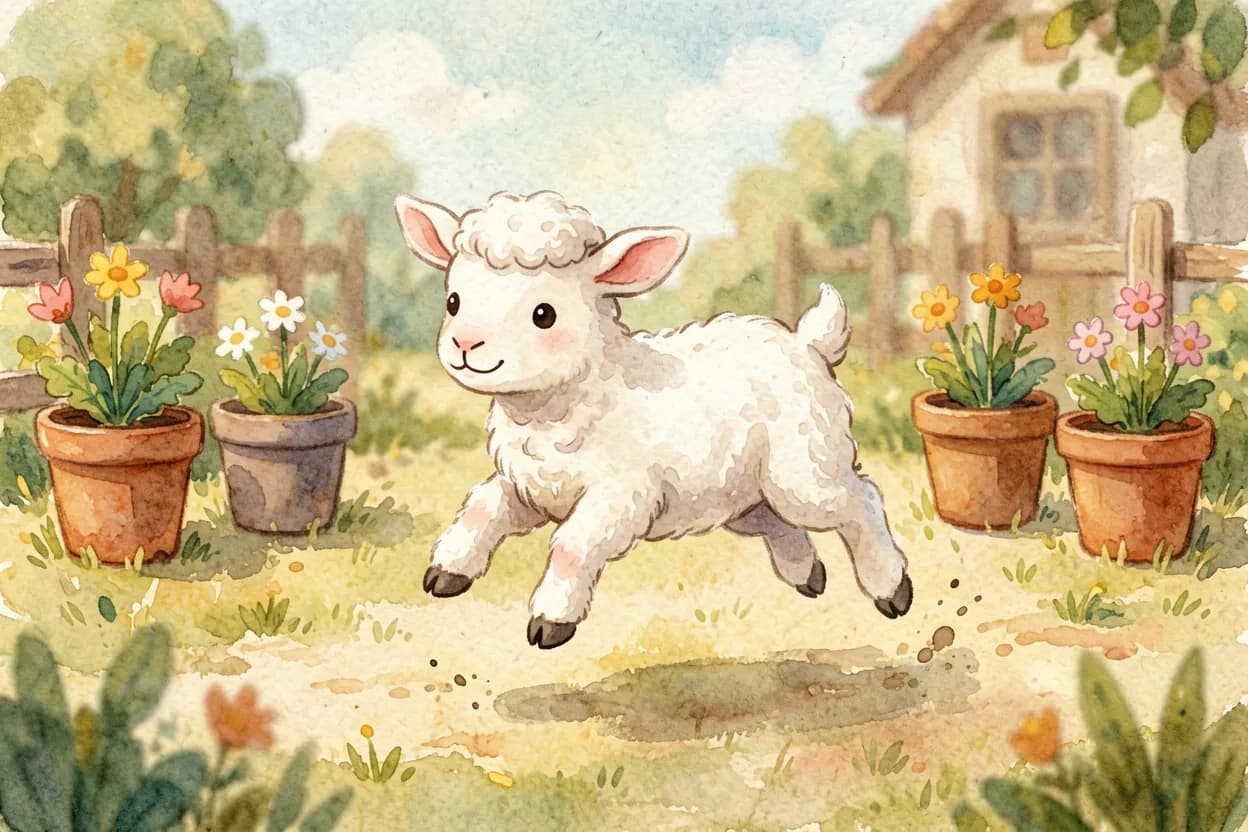
Gus the little goat loved to leap. He leapt over logs, he leapt over streams, he leapt just for the fun of it. "Careful of my flower pots!" Mama always said. And Gus always meant to be.
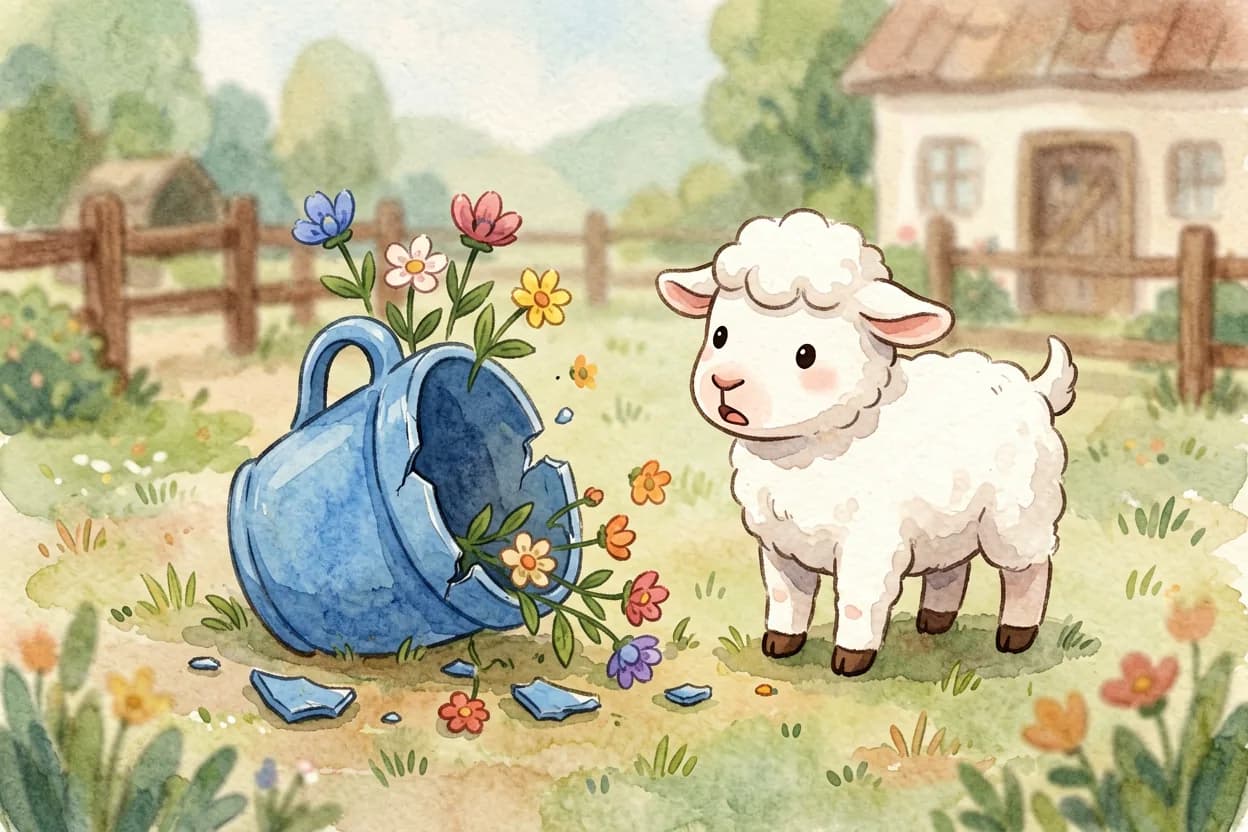
But one morning, mid-leap, Gus's hoof caught the edge of Mama's favourite blue flower pot. CRASH. It tumbled off the wall and broke into pieces, the flowers spilling across the ground.
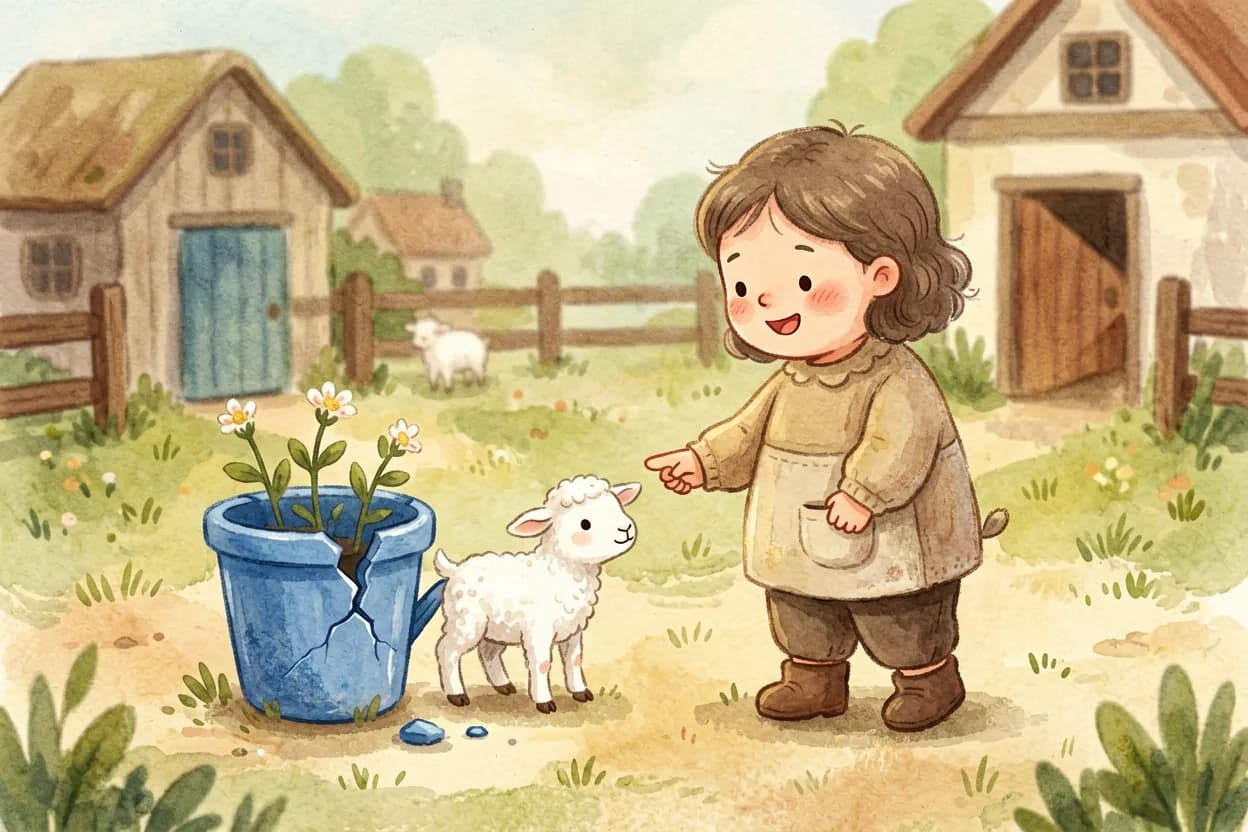
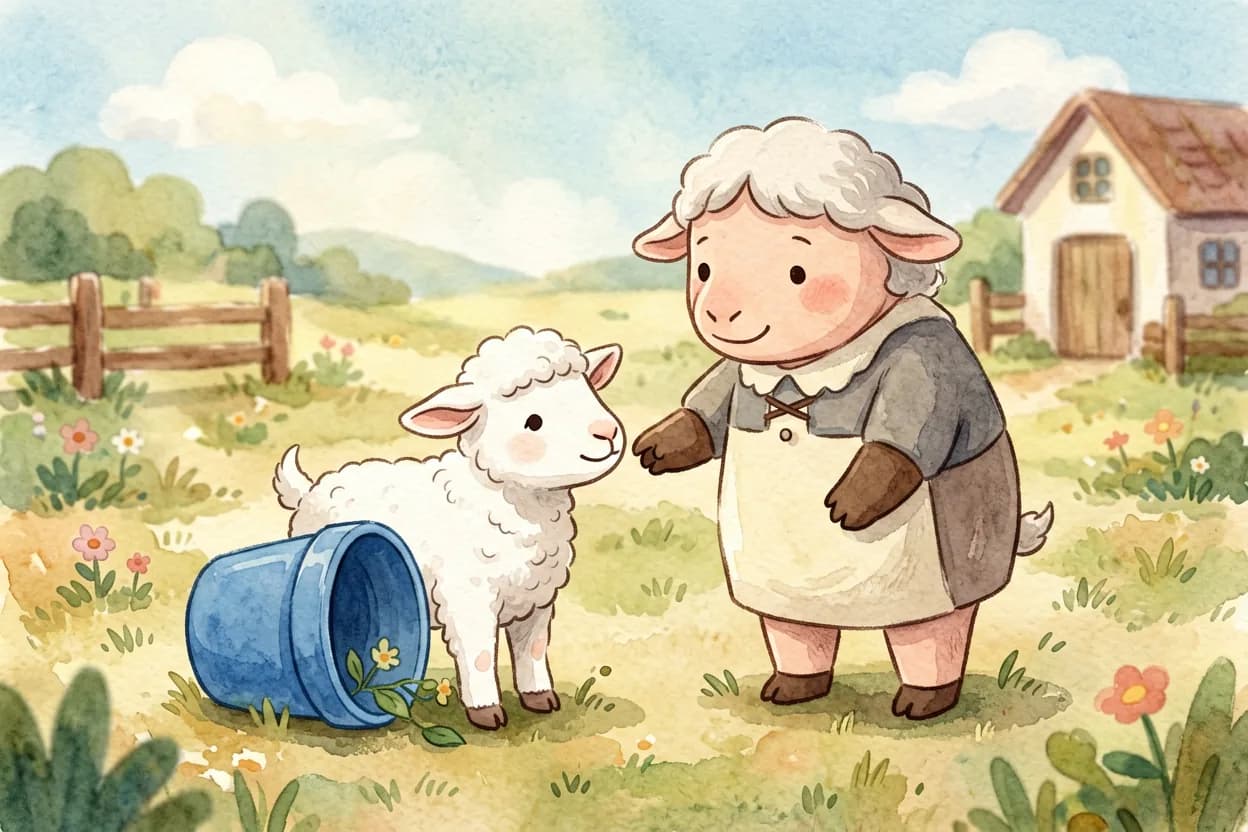
Gus's tummy dropped. That was Mama's favourite pot. He looked around — nobody had seen. A little voice whispered, "Just say you didn't do it." So when Mama came out and gasped, Gus heard himself say: "It wasn't me. I think the wind blew it over."

But the lie didn't feel good. It sat in Gus's tummy like a cold, heavy stone. All morning he couldn't play. He couldn't leap. Every time he looked at Mama, the stone grew heavier. "The wind didn't really do it," his heart kept whispering.
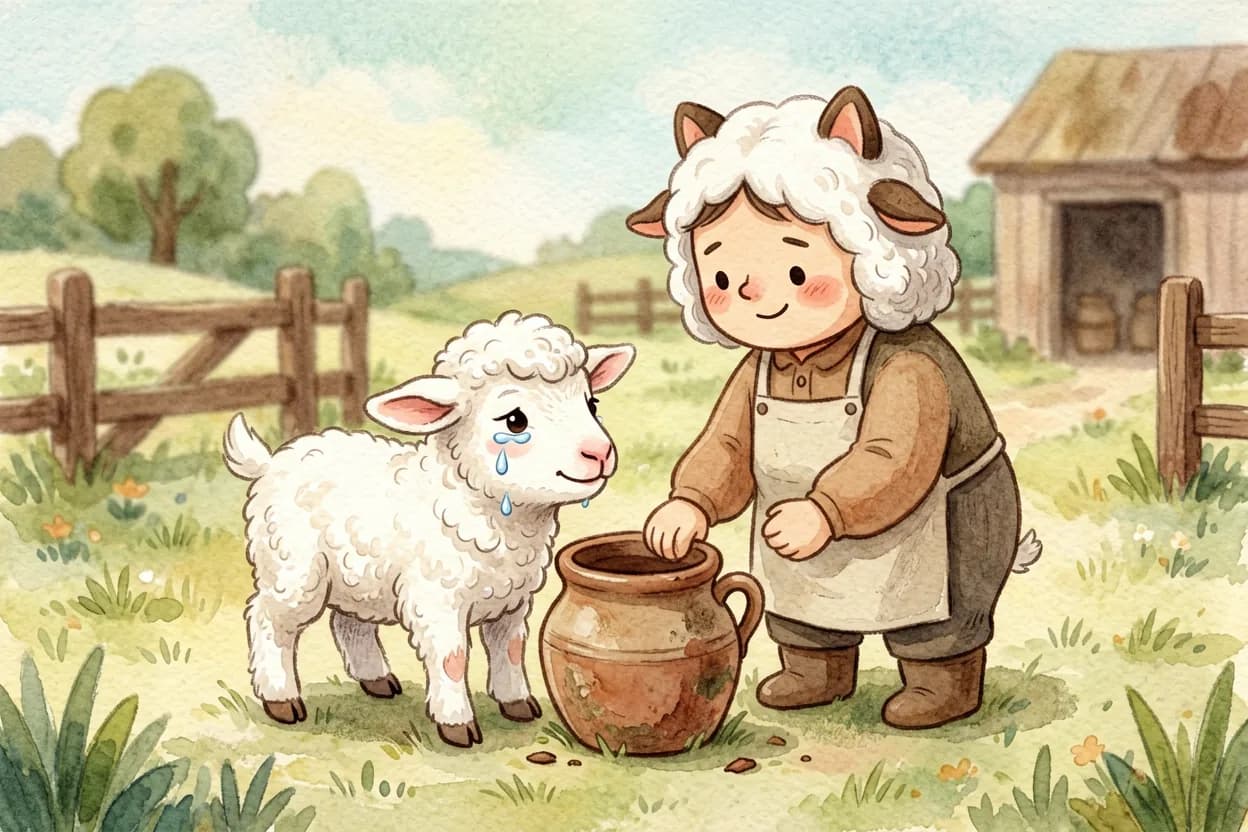
At last, Gus couldn't carry it any longer. He found Mama and took a big, brave breath. "Mama," he said, his voice small. "The wind didn't break your pot. It was me. I was leaping, and I broke it, and I told a lie. I'm so sorry."
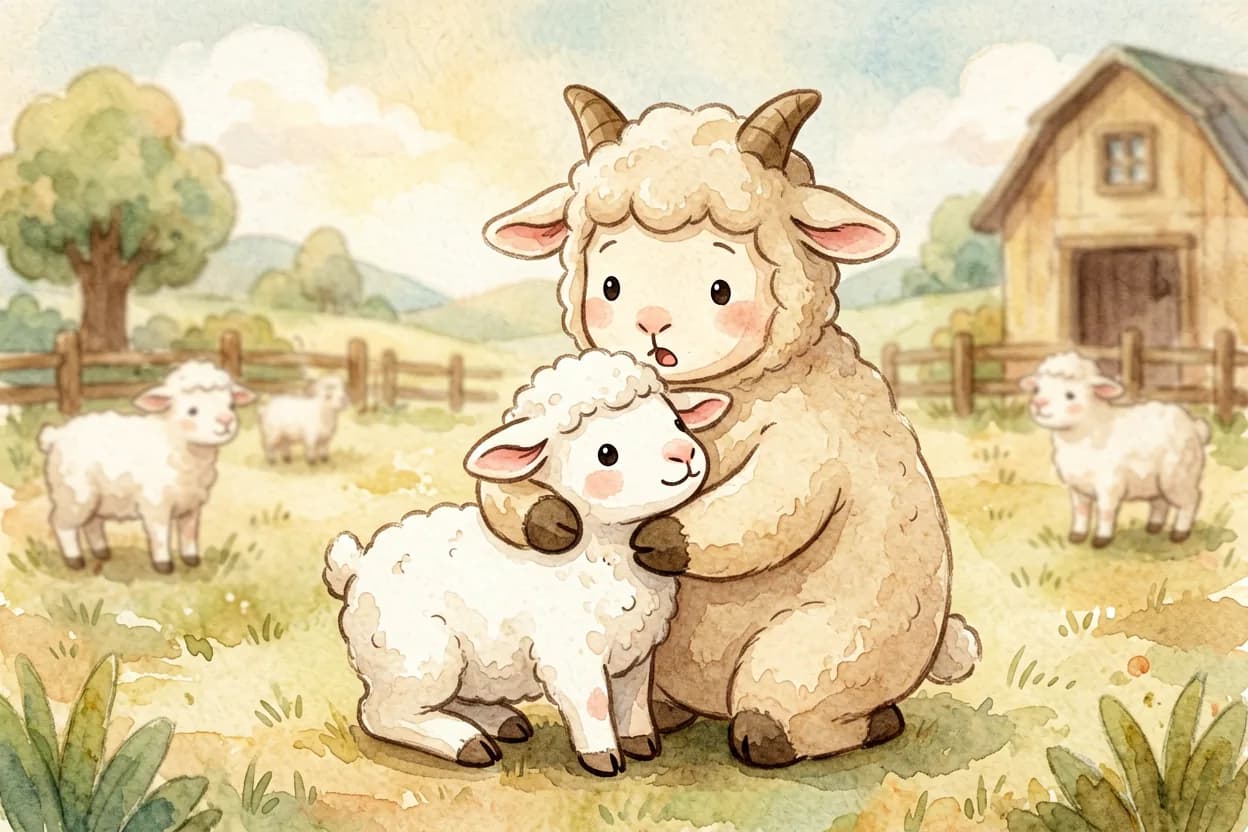
Mama knelt down and hugged him tight. "Thank you for telling me the truth," she said gently. "I'm sad about the pot — but pots can be mended, and telling the truth was very brave. That matters much more to me."
And just like that, the heavy stone lifted right out of Gus's tummy. He felt light and free again. Together they swept up the pieces and planted the flowers in a new pot — and Gus never forgot how much lighter the truth felt.
Telling the truth can feel hard, but a lie is a heavy thing to carry. Honesty always feels lighter in the end.
Questions to ask after reading
- 1What did Gus do when he broke the pot and nobody saw?
- 2How did telling the lie make Gus feel inside?
- 3What made Gus finally decide to tell the truth?
- 4How did Mama react when Gus told her the truth?
- 5Why do you think the truth felt lighter than the lie?
Try it together: nurturing honesty
Honesty grows when telling the truth feels safe and valued. These gentle activities help.
- Praise the truth, every time. When your child owns up to something, thank them for their honesty first — even as you deal with the mistake. Rewarding truth-telling makes it more likely next time.
- Tell truth-and-tale stories. Play a game of 'true or made-up?' with silly stories, celebrating imagination while naming the difference between a fun story and a real fact.
- Model honesty out loud. Let your child hear you tell the truth even when it's a little awkward, and admit your own mistakes. Your example is the strongest lesson of all.
- Talk about the 'tummy stone'. Give the yucky feeling of a lie a name, like Gus's heavy stone, and the relief of truth another. Naming the feelings helps a child choose honesty.
- Make repair part of it. After an honest confession, fix the problem together (like planting the flowers in a new pot). Honesty plus repair teaches responsibility without shame.
How to use the story at each age
Toddlers (2-3)
At this age the line between imagination and reality is genuinely blurry, and 'lies' are often wishful thinking, not deception. Avoid harsh labels; gently state what really happened, and don't set traps ('did you do this?' when you know they did). Model honesty and keep it low-key.
Preschoolers (3-5)
Children now start to lie to avoid trouble, which is a normal developmental step. Make honesty safe: react calmly to the truth and praise the telling. Read Gus's story and talk about how a lie feels heavy and the truth feels light. Deal with the mistake gently, separate from the honesty.
Older children (5-7)
Children this age understand honesty more fully and can grasp why it matters — trust. Talk about how trust is built and how lies chip away at it, discuss white lies and kindness, and keep praising honesty even when the truth is hard. Consistent, calm responses keep them telling you the truth.
Common mistakes (and what to do instead)
- Punishing the truth harshly. If owning up brings a big punishment, children learn to lie better next time. Thank them for the truth, and keep any consequence for the mistake fair and calm.
- Setting truth traps. Asking 'did you do this?' when you already know invites a lie. State what you see instead: 'The pot is broken. Let's sort it out together.'
- Labelling your child a liar. 'You're such a liar' becomes a self-image a child lives up to. Address the behaviour, not the character: 'That wasn't the truth. Let's try again.'
- Overreacting to imaginative fibs. Treating a toddler's wishful story as a moral crime confuses them. Distinguish playful imagination from deliberate deception, gently.
- Modelling little lies yourself. Children notice when we fib ('tell them I'm not home'). Modelling honesty, even when inconvenient, teaches far more than any rule.
Using the lesson in everyday moments
The story shows honesty's relief; daily life is where it's tested. Here's where it shows up.
- After a mistake or mishap. React to the truth with calm and thanks before addressing the mess. A child who isn't scared of your reaction will keep telling you things.
- When you catch a fib. Skip the trap and the shame. Gently name reality and invite the truth: 'I think something different happened. You can tell me.'
- In your own honesty. Let them see you tell awkward truths and admit mistakes. 'I got that wrong, I'm sorry' models honesty powerfully.
- Around imagination. Celebrate storytelling and make-believe while naming it as such, so children learn the joyful difference between a tale and a truth.
A simple checklist to follow
- Read the story together, unhurried, with time for the pictures
- Thank your child for the truth before dealing with the mistake
- Avoid truth traps and 'liar' labels
- Name the heavy feeling of a lie and the relief of truth
- Repair mistakes together, calmly, after an honest confession
- Model honesty in your own everyday choices
Make the story about your child
A goat named Gus is a relatable guide. But children pay closest attention when the one choosing honesty is someone they know from the inside — themselves.
When your child is the hero who tells a fib, feels its heavy weight, and then finds the courage and relief of the truth, the story stops being about a goat and becomes a picture of the honesty you hope to nurture in them. Their name, their mistake, their brave truth — a gentle model to carry into real life.
A generic story
A little goat breaks a pot, tells a lie, and discovers how much lighter the truth feels.
Your child's story
Oscar accidentally breaks something, tells a fib, and then bravely tells the truth to mum — discovering how much better honesty feels, with Oscar as the hero on every page.
Parents also ask
Why does my young child lie?
Young children lie for understandable reasons: to avoid trouble, to get something they want, to make a story more exciting, or simply because the line between imagination and reality is still blurry. It's a normal part of development — even a sign of a growing mind — not evidence of a dishonest character. How we respond shapes whether honesty takes root.
How do I teach my child to be honest?
Make honesty feel safe and worthwhile. React calmly to the truth and thank your child for telling it — even as you address the mistake separately and gently. Model honesty yourself, avoid truth traps and 'liar' labels, and use stories to show how a lie feels heavy while the truth feels light. Honesty grows when telling the truth brings relief and trust, not just punishment.
Should I punish my child for lying?
Be careful here. If owning up leads to a big punishment, children simply learn to lie better. It's more effective to thank them for the truth, keep any consequence for the underlying mistake fair and calm, and separate the two. The aim is to make honesty the safe, rewarded choice.
What should I do when I catch my child in a lie?
Avoid setting a trap or shaming them. Instead of 'did you do this?' (when you know they did), calmly state what you see and invite the truth: 'I think something different happened — you can tell me.' Then thank them warmly if they come clean. Labelling a child a 'liar' tends to backfire.
Is it normal for a three-year-old to make up stories?
Completely. At this age the boundary between wish, imagination, and reality is genuinely blurry, so 'lies' are often wishful thinking rather than deliberate deception. Celebrate imagination while gently naming the difference between a fun made-up story and what really happened. Harsh reactions aren't needed and can confuse them.
How do I explain white lies and kindness?
For older preschoolers and school-age children, you can talk about how honesty matters and also how we can be truthful kindly — praising a gift we like, being gentle with our words. It's a nuanced topic; the key foundation is that they can trust you with the truth, and that you value it.
Are personalized stories helpful for teaching honesty?
For many children, yes. A story where they are the hero who wrestles with a lie and chooses the truth makes the lesson vivid and personal, and lets them feel honesty's relief from the inside. It's a supportive tool alongside a calm, trust-building response to real-life truth-telling.
More free stories for kids
About the author
Andy — Andy is the founder of Doodara and builds the illustration pipeline behind it — the part that has to keep a child's character looking like the same child on every page of a book. Most of that work is character consistency, content safety for material aimed at young children, and the unglamorous business of making a generated book good enough that a family reads it twice.