Stories About Saying Sorry for Kids
A complete original picture book about a real apology you can read tonight — plus the discussion questions, activities, and age-by-age tips that help your child say a meaningful sorry and make things right.
ByAndyFounder of Doodara
Quick answer
A forced apology teaches a child to say a word, not to repair anything, so the books that help show all three parts: noticing the hurt, meaning it, and putting it right. This page has a complete original picture book, Bramble Makes It Right, free to read tonight, plus discussion questions and age-by-age guidance for ages 3-7. The practical move: stop demanding "say sorry" and ask "how can you make it better?" instead — the repairing action is what makes the apology real.
"Say sorry." We've all said it — and watched a child mumble a hollow 'sorry' while looking anywhere but at the person they hurt. A forced apology is easy to demand and almost meaningless. A real one — the kind that comes with understanding and makes things right — is a genuine skill, and one of the most important social lessons we can teach. If your child struggles to apologize, they're not being stubborn. They're learning something genuinely hard.
A meaningful sorry asks a lot of a young child: to notice they've hurt someone, to imagine how that person feels, to set aside their own defensiveness, and to want to make it better. Those abilities grow slowly, hand in hand with empathy, across the early years. A forced 'sorry' skips all of that — it teaches a magic word, not a change of heart. The real thing takes time, patience, and modelling.
The goal isn't to squeeze the word out of your child, but to help them understand why sorry matters and how to make a genuine repair. When children learn to notice the effect of their actions, feel real remorse, and put things right, apologizing becomes meaningful rather than a hoop to jump through. Stories help beautifully: they let a child watch a character hurt someone, feel it, and discover how a true sorry heals things.
Why stories help
A real apology begins with noticing how someone else feels — and a story is a machine for that. When a character sees the hurt they've caused, your child practises the empathy that makes a sorry mean something.
Children copy characters they love. A little badger who gives a genuine sorry and helps put things right models real repair far better than 'say you're sorry' demanded in the heat of the moment.
And a story shows the whole shape of a true apology — noticing, feeling, saying, and making it better — and how it mends a friendship. That, felt through a beloved hero, teaches far more than the single word ever could.
How a story becomes a habit
Bramble Makes It Right
An original picture book about saying sorry — free to read aloud tonight.
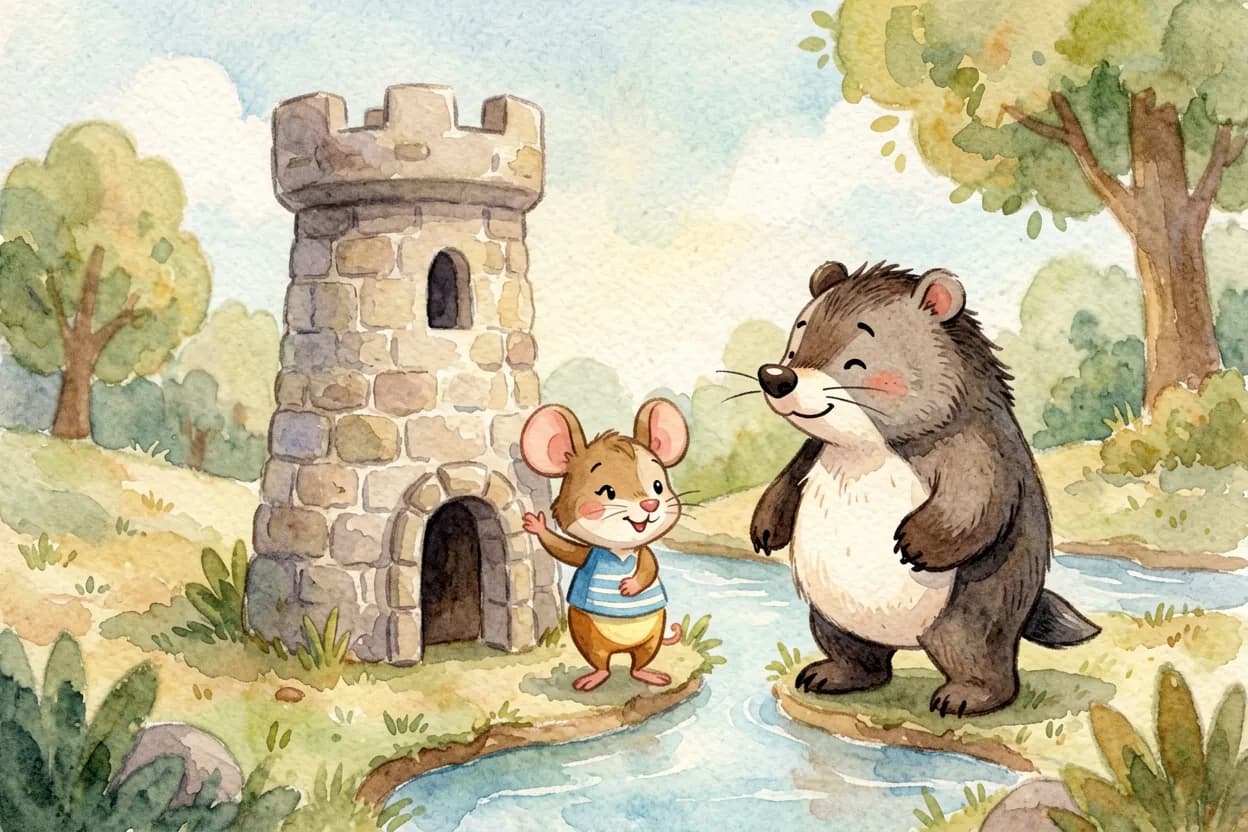
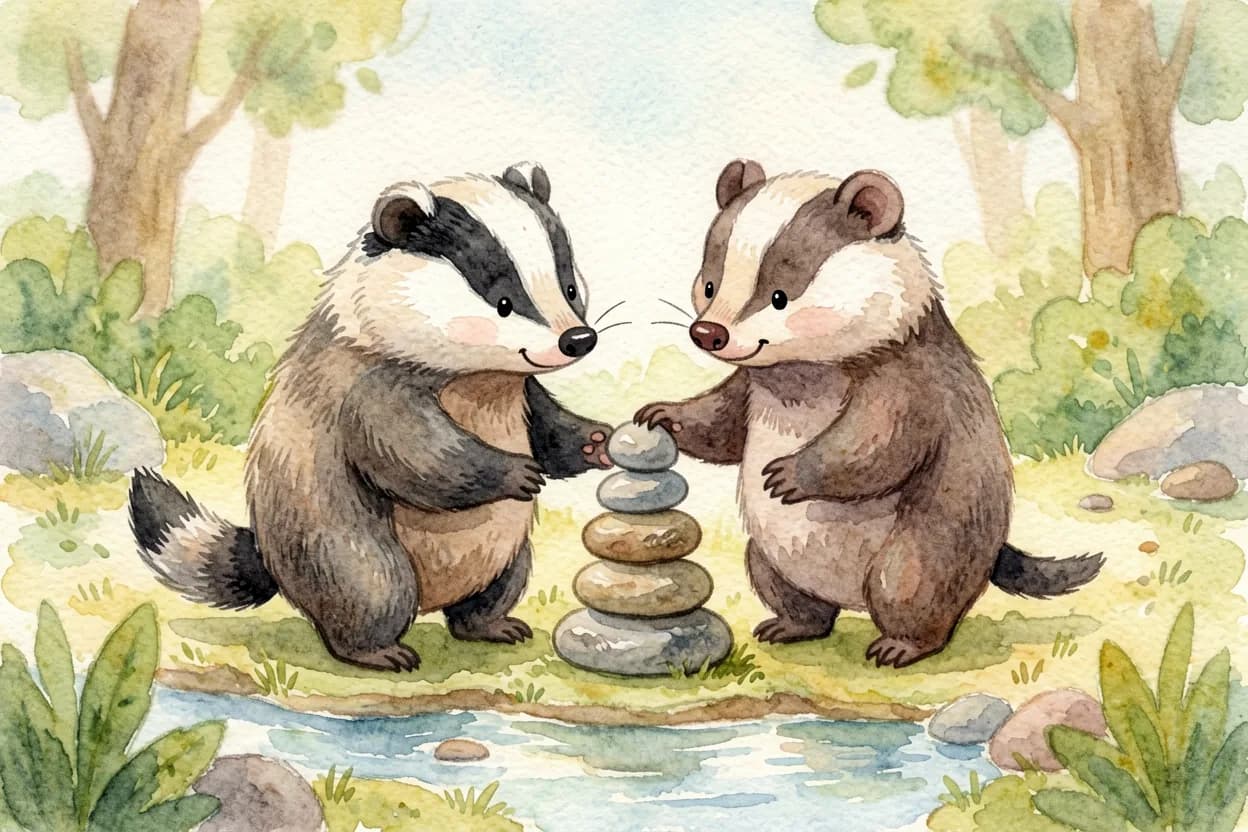
Bramble the little badger and his friend Pip the mouse were playing near the stream. Pip had spent all morning building a magnificent tower of smooth stones, taller than himself. "Look what I made!" said Pip proudly.
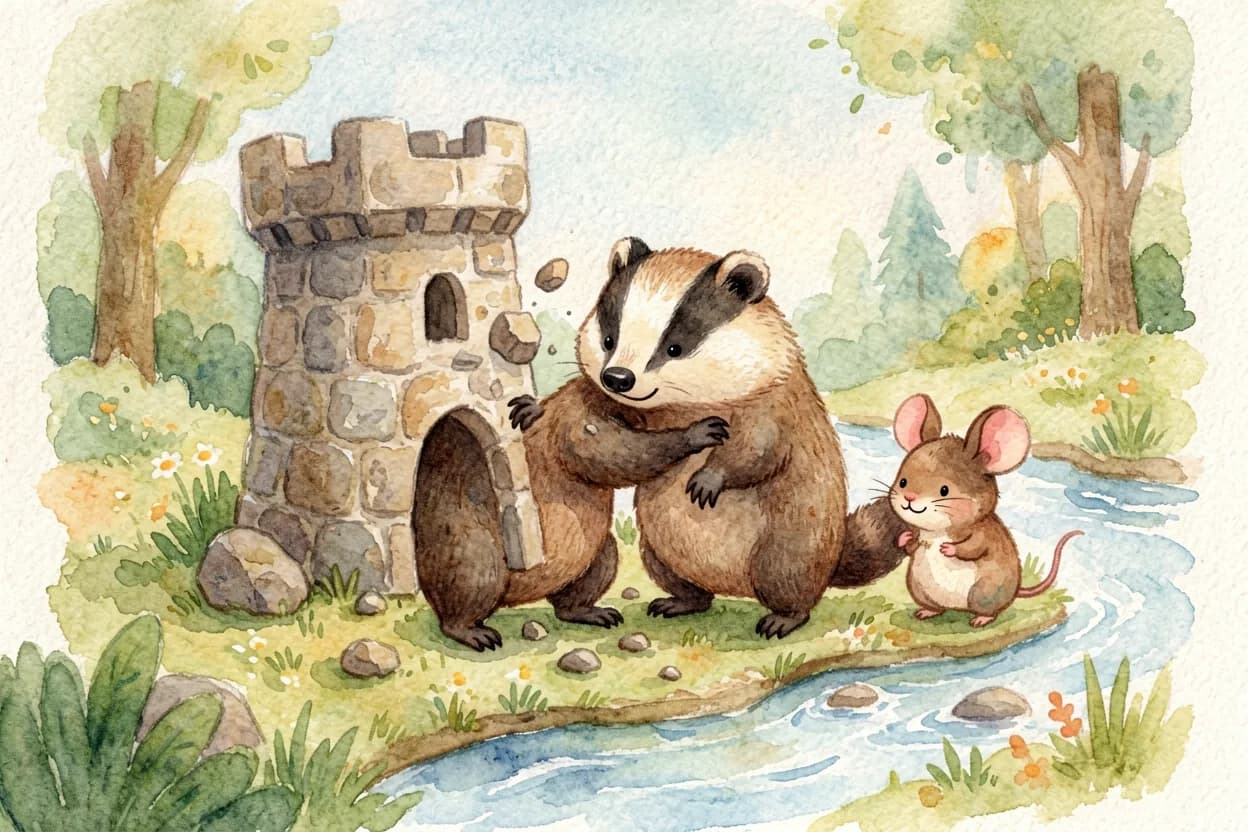
"I can build a HIGHER one," said Bramble, who didn't like anyone doing better than him. He grabbed some stones — but he grabbed too fast and too rough, and CRASH — he knocked Pip's beautiful tower flying. Stones scattered everywhere.
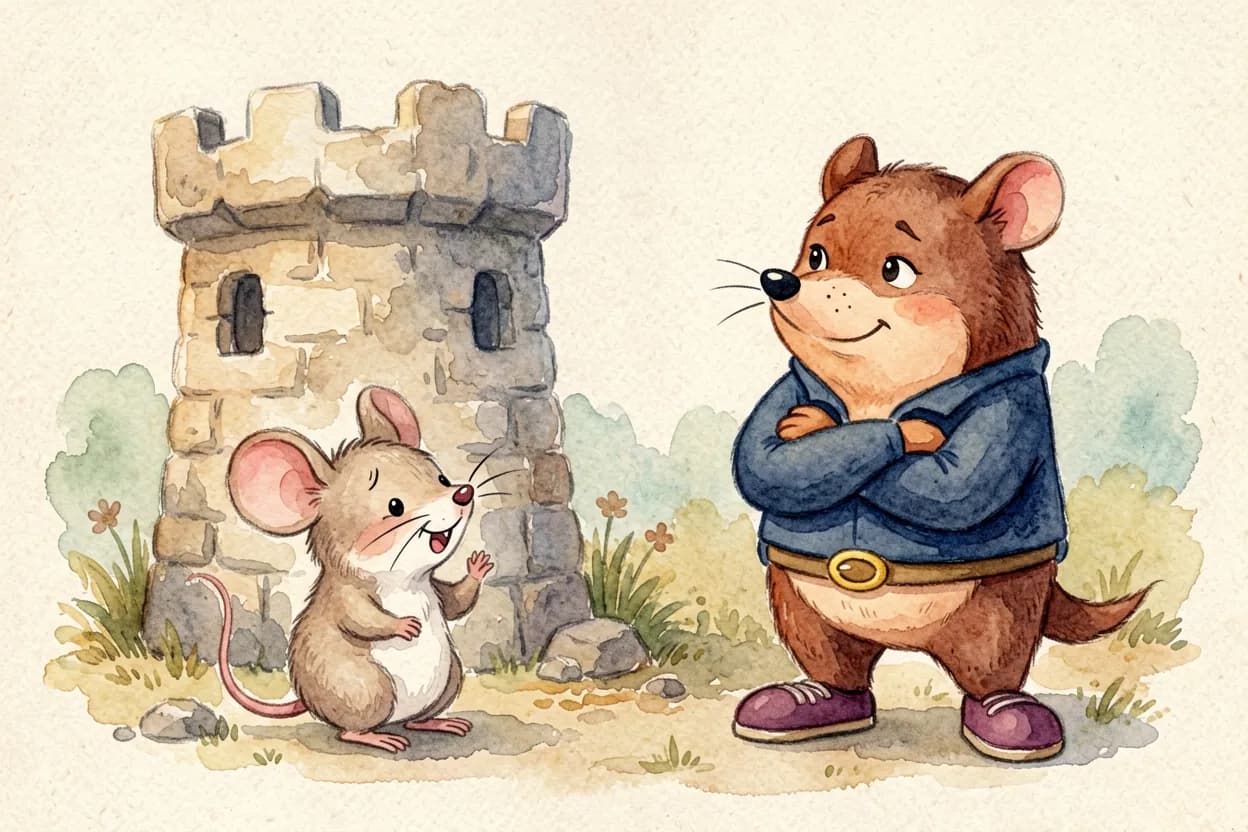
Pip's face crumpled. His wonderful tower, all his hard work, gone in a moment. "You knocked it down!" he cried, tears welling up. But Bramble, feeling embarrassed, folded his arms. "It was an accident. It's just some silly stones," he snapped, and turned away.
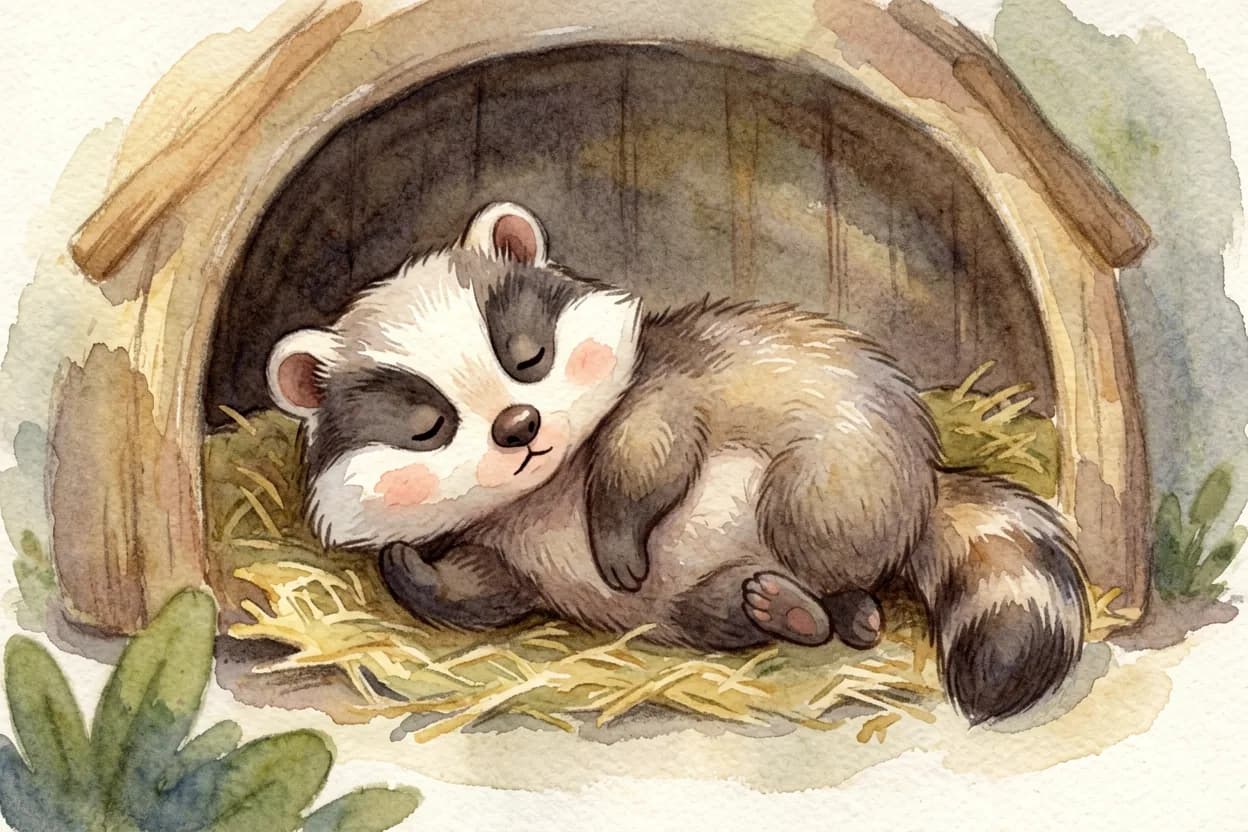
Bramble marched off — but he didn't feel good. He kept picturing Pip's crumpled face. That night, the picture wouldn't go away. "Pip looked so sad," he thought. "And I made him feel that way. Saying 'it's just some silly stones' didn't help at all."
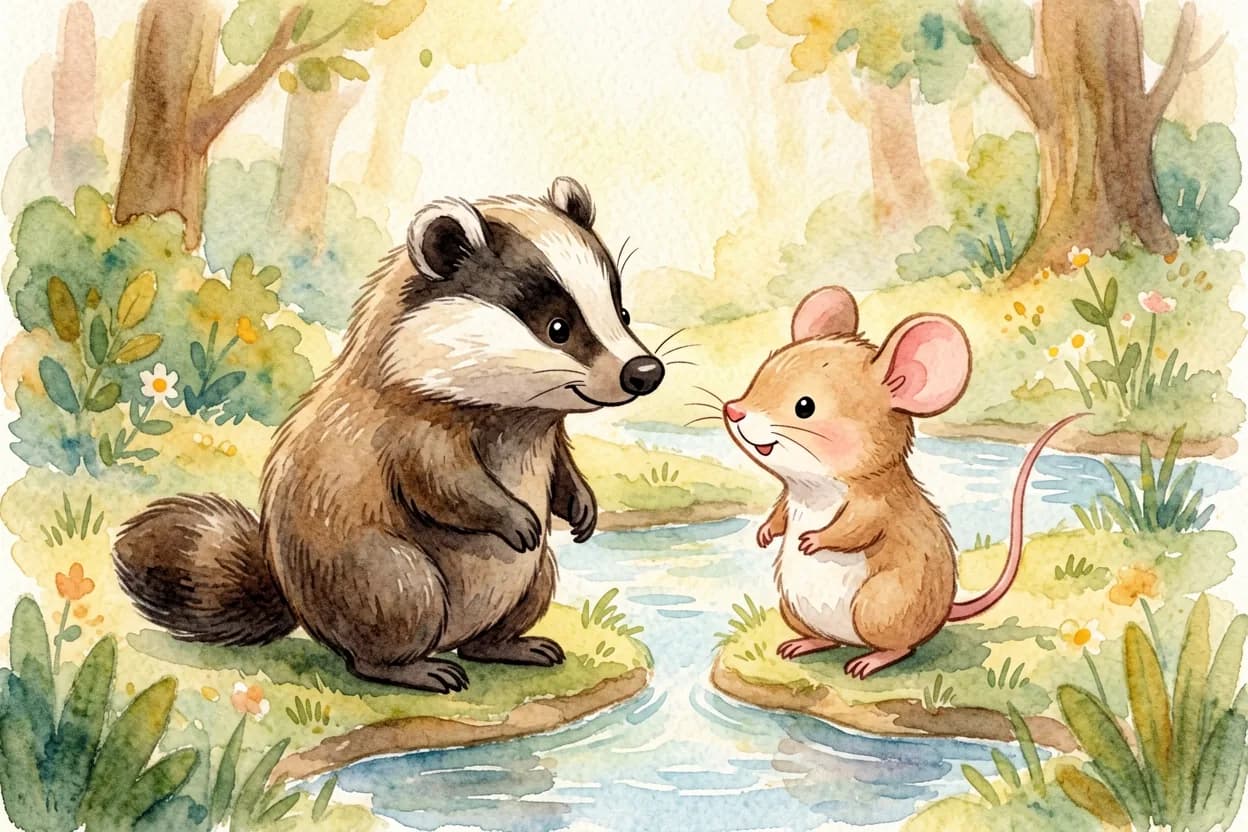
The next morning, Bramble went to find Pip. His tummy felt fluttery, but he knew what he had to do. He looked Pip right in the eyes. "Pip," he said, "I'm sorry I knocked over your tower. I was being show-offy, and I hurt your feelings. I feel really bad about it."
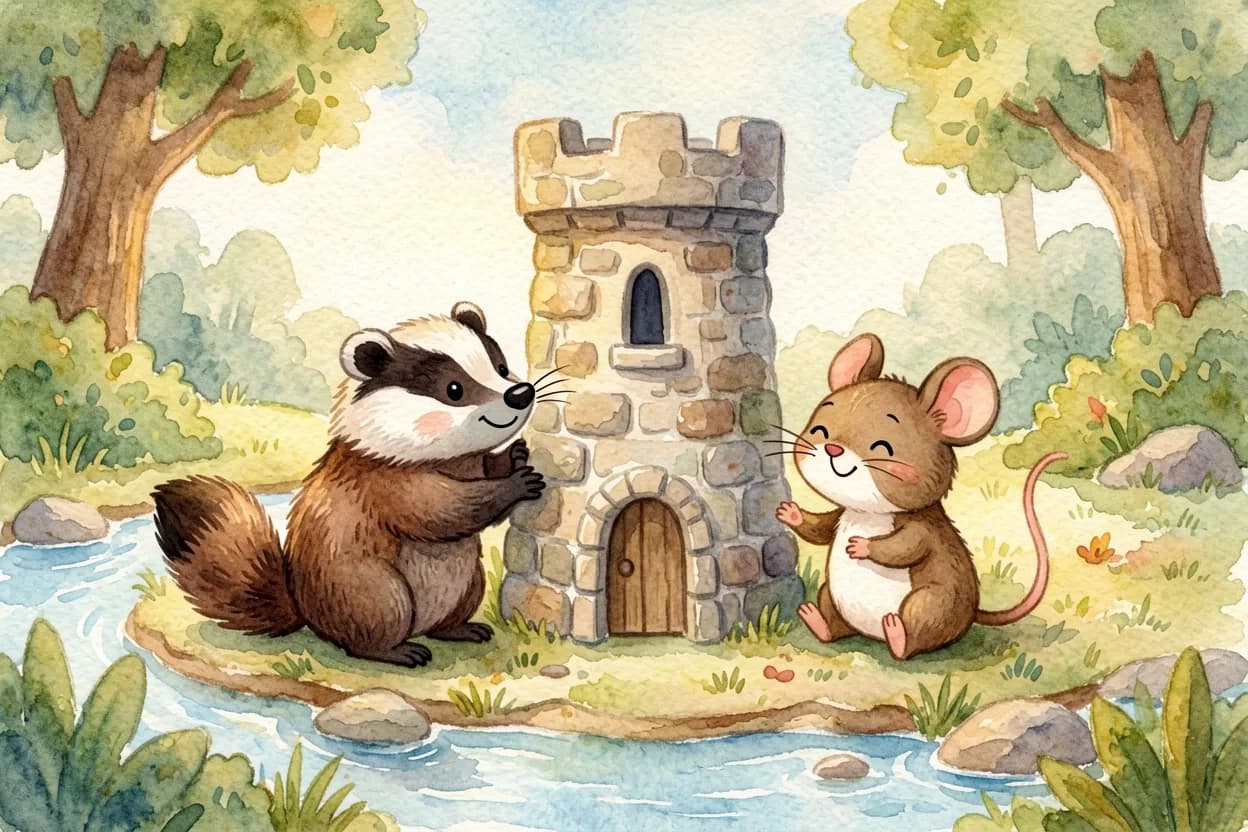
Pip's face softened. "Thank you for saying sorry," he said. "That means a lot." But Bramble wasn't finished. "And," he added, "I'd like to help you build it again — even better than before, if you'll let me." Pip's eyes lit up. "Really? Yes!"
So together they built a new tower — the tallest, sturdiest one yet. And as they worked side by side, Bramble learned that a real sorry has two parts: meaning it, and making it right. And that a friendship mended can be even stronger than before.
A real sorry isn't just a word. It's noticing you've hurt someone, meaning it, and helping to make things right.
Questions to ask after reading
- 1What did Bramble do to Pip's tower, and why?
- 2Why didn't Bramble's first words ('it's just silly stones') help?
- 3What made Bramble decide to say a real sorry?
- 4What were the two parts of Bramble's apology?
- 5If you hurt a friend, what could you say and do to make it right?
Try it together: learning a real sorry
A meaningful apology is a skill built on empathy and repair. These gentle activities help.
- Name the feeling first. Instead of demanding 'say sorry', help your child notice the impact: 'Look, your friend is sad.' Empathy is what makes a sorry real, and it comes before the word.
- Teach the two parts. Practise apologies with both halves: 'I'm sorry for ___' and 'How can I make it better?' Repairing, not just saying, is the heart of a true sorry.
- Role-play with toys. Act out a toy hurting another's feelings and making a genuine apology and repair. Rehearsing when calm makes the real moment easier.
- Model your own apologies. When you snap or get it wrong, apologize to your child properly: 'I'm sorry I was cross. That wasn't fair. Let's start again.' Your example teaches most of all.
- Give it time. Don't force an instant sorry mid-upset. A little space, then a genuine apology, is worth far more than a rushed, hollow one.
How to use the story at each age
Toddlers (2-3)
True apology is beyond most toddlers — they can't yet reliably imagine another's feelings. Model sorry yourself, name the impact simply ('teddy is sad'), and help them make a kind gesture (a pat, handing back a toy) rather than insisting on the word. The understanding comes later.
Preschoolers (3-5)
Now you can teach the real thing: notice the hurt, feel it, say sorry, and make it right. Avoid forcing hollow apologies; instead coach empathy first ('how does she feel?') and offer a repair. Read Bramble's story and talk about the two parts of a true sorry. Give a little time when needed.
Older children (5-7)
Children this age can give genuine, specific apologies and understand repairing relationships. Talk about what makes a sorry meaningful (naming what you did, why it hurt, and how you'll make it better), and about forgiveness. Keep modelling real apologies, including to them, so the standard stays high.
Common mistakes (and what to do instead)
- Forcing an instant 'sorry'. A demanded, hollow sorry teaches the word without the meaning. Coach empathy first and allow a genuine apology, even if it takes a little time.
- Skipping the repair. Sorry without making it right is only half an apology. Help your child do something to mend it — rebuild, fix, offer comfort.
- Accepting a sarcastic or thrown 'sorry'. A resentful 'sorrrry!' isn't a real apology. Gently guide toward a genuine one: 'Let's say it so your friend knows you mean it.'
- Never apologizing yourself. If children never see us say sorry, the word feels like a punishment for them alone. Model real apologies, including to your child.
- Shaming the wrongdoer. Piling on shame makes a child defensive, not sorry. Focus on the other person's feelings and on repair, which invites genuine remorse.
Using the lesson in everyday moments
The story shows a true apology in action; daily life is full of chances to practise. Here's where it shows up.
- After hurting a friend or sibling. Coach empathy first ('look how she feels'), then a genuine sorry and a repair. The repair — a rebuild, a comfort — is what heals things.
- When you get it wrong. Apologize to your child properly when you snap or slip. A parent who repairs teaches real apology more powerfully than any lesson.
- During conflicts. Help each child see the other's side before any sorry. Understanding the hurt is what makes the apology genuine.
- Around forgiveness. Talk about accepting apologies too, and that saying sorry — and being forgiven — can make a friendship even stronger.
A simple checklist to follow
- Read the story together, unhurried, with time for the pictures
- Help your child notice the other person's feelings first
- Teach both parts: meaning it, and making it right
- Allow a genuine sorry rather than forcing an instant one
- Model real apologies, including to your child
- Focus on repair and empathy, not shame
Make the story about your child
A badger named Bramble is a relatable guide. But children pay closest attention when the one learning to say a real sorry is someone they know from the inside — themselves.
When your child is the hero who hurts a friend, feels it, and makes a genuine apology and repair, the story stops being about a badger and becomes a picture of the empathy and courage a true sorry takes. Their name, their friend, their moment of making things right — a gentle model to carry into real life.
A generic story
A little badger learns to give a real sorry and help rebuild what he knocked down.
Your child's story
Dev knocks over his friend's blocks, then gives a real sorry and helps rebuild them even better — with Dev as the hero on every page.
Parents also ask
Should I make my child say sorry?
Forcing an instant, hollow 'sorry' teaches the word without the meaning — a child says it while looking away, feeling nothing. It's far more effective to coach empathy first ('look how sad your friend is'), then guide a genuine apology and a repair. Real remorse, and a sorry that means something, tends to follow once a child understands the impact of what they did.
How do I teach my child to give a meaningful apology?
Teach the two parts: meaning it and making it right. Help your child notice the other person's feelings, name specifically what they did and why it hurt, and do something to repair it — rebuild, fix, or comfort. Model real apologies yourself (including to your child), role-play with toys, and allow a little time rather than forcing an instant sorry.
Why won't my child say sorry?
A genuine apology asks a lot: noticing they've hurt someone, imagining how that person feels, setting aside defensiveness, and wanting to make it better — abilities that develop slowly with empathy. Refusing often comes from embarrassment or feeling defensive, not stubbornness. Coaching empathy gently, rather than demanding the word, helps a real sorry emerge.
At what age can children genuinely apologize?
Toddlers generally can't give a true apology, as they can't yet reliably imagine another's feelings — model sorry for them and encourage a kind gesture instead. Preschoolers can start to manage genuine, coached apologies, and by five to seven many children can apologize meaningfully and understand repairing a relationship. It develops alongside empathy over the early years.
What should I do if my child gives a sarcastic or fake 'sorry'?
A resentful 'sorrrry!' isn't a real apology and is best not accepted as one. Gently guide toward a genuine version: 'Let's say it so your friend really knows you mean it,' and focus on the other person's feelings and a repair. Sometimes a little time to cool off first helps a sincere apology come more naturally.
Why does modelling my own apologies matter?
If children never see adults say sorry, the word can feel like a punishment reserved for them. When you apologize genuinely to your child — 'I'm sorry I was cross, that wasn't fair' — you show that everyone makes mistakes and that a real sorry mends things. It's one of the most powerful ways to teach meaningful apology.
Are personalized stories helpful for teaching apology?
For many children, yes. A story where they are the hero who hurts a friend, feels it, and makes a genuine sorry and repair makes the lesson vivid and personal, and models the empathy and courage a true apology takes. It's a supportive tool alongside coaching empathy and repair in everyday conflicts.
More free stories for kids
About the author
Andy — Andy is the founder of Doodara and builds the illustration pipeline behind it — the part that has to keep a child's character looking like the same child on every page of a book. Most of that work is character consistency, content safety for material aimed at young children, and the unglamorous business of making a generated book good enough that a family reads it twice.