Stories About Being Brave for Kids
A complete original picture book about being brave you can read tonight — plus the discussion questions, activities, and age-by-age tips that help your child face fears and try new things.
ByAndyFounder of Doodara
Quick answer
The most useful books about courage show a character who is still frightened and goes ahead anyway — because telling a child "don't be scared" asks for something impossible. This page has a complete original picture book, Pax Takes the Leap, free to read tonight, plus discussion questions and age-by-age guidance for ages 3-7. The practical move: after reading, name the scary thing your child is facing this week and agree on one small first step towards it, the way the character takes theirs.
Every child faces moments that feel enormous to them: the big slide, the deep end, the first day, speaking up in a group. When your child hangs back, frozen at the edge of something new, it's tempting to say 'don't be scared' — but courage isn't the absence of fear. It's feeling afraid and choosing to try anyway. Helping your child discover that is one of the greatest gifts you can give them.
Fear of new and challenging things is completely normal and, in fact, wise — it's how children stay safe while they learn what they can handle. A cautious child isn't a cowardly one; they're weighing up a genuine unknown. The trouble comes only when fear keeps a child from things that would delight them. What they need isn't a push, but the encouragement and small steps that let their own courage grow.
Real courage is built, not born, one small brave step at a time. Each time a child faces something scary and discovers they can do it, their confidence grows and the next challenge feels smaller. The most powerful help you can give is to believe in them, celebrate their brave tries (not just their successes), and share stories where a character feels afraid and finds their courage — so your child learns that being brave is something they can do too.
Why stories help
A story lets a child rehearse courage safely. When a character stands frozen at the top of something scary and then finds the nerve to try, your child feels the whole arc — the wobble, the brave breath, the triumph — from the safety of the page.
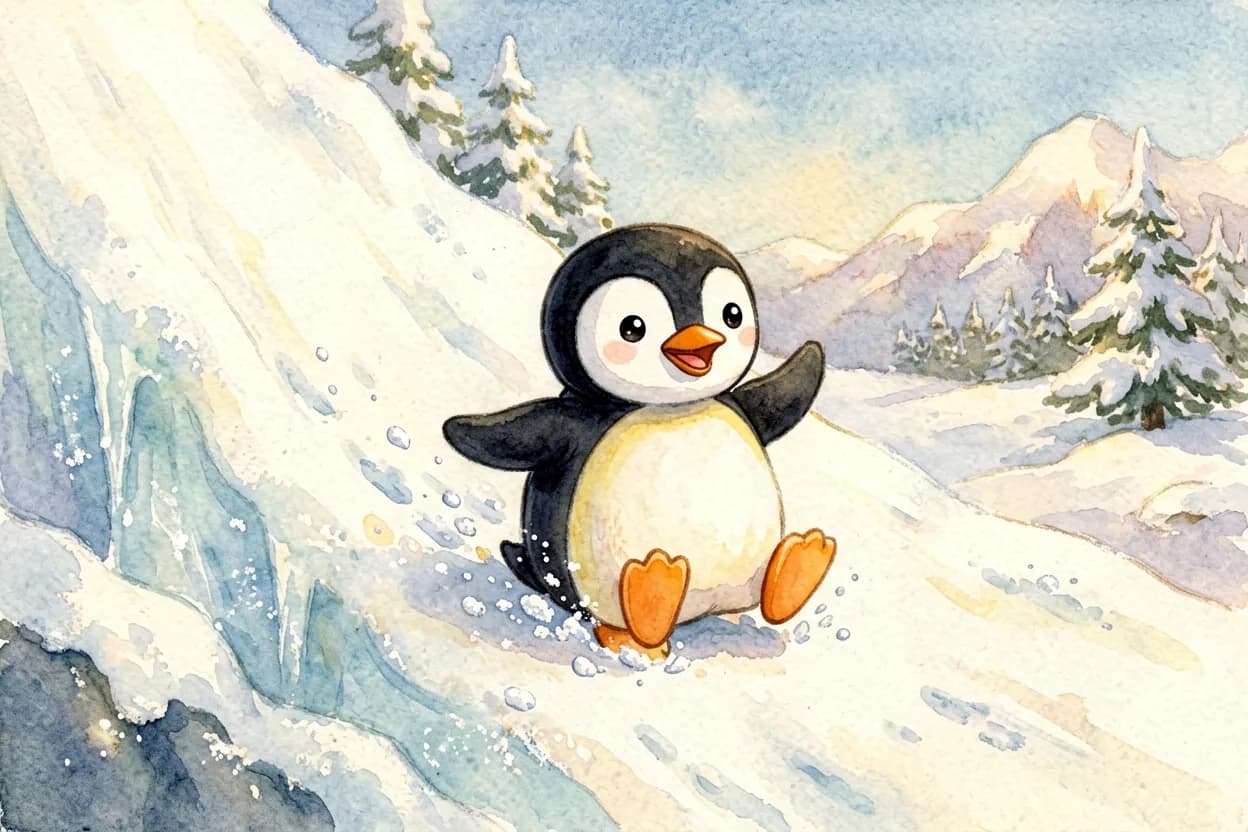
Children borrow bravery from characters they love. A little penguin who's terrified and slides anyway is far more inspiring than 'just be brave.' The story shows how courage works: not fearlessness, but trying despite the fear.
And a story teaches the truth that transforms timid children: that the scary thing is often wonderful once you try it, and that being brave once makes the next time easier. That lesson, felt through a beloved hero, gives a child the heart to take their own brave step.
How a story becomes a habit
Pax Takes the Leap
An original picture book about courage — free to read aloud tonight.
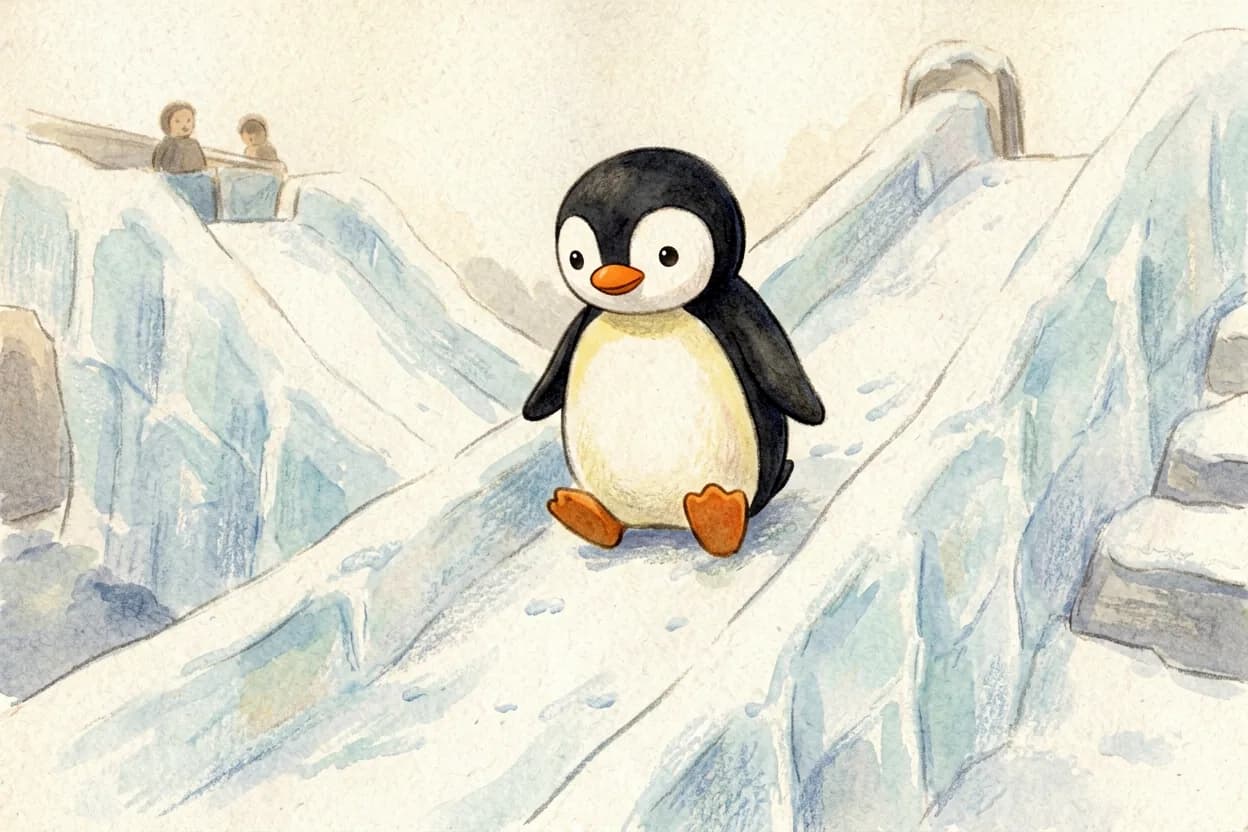
All the little penguins loved the great big ice slide. Whoosh! Down they zoomed, one after another, squealing with joy — all except Pax. Pax stood at the top, looked down the long, steep, slippery slope, and felt his flippers go wobbly.
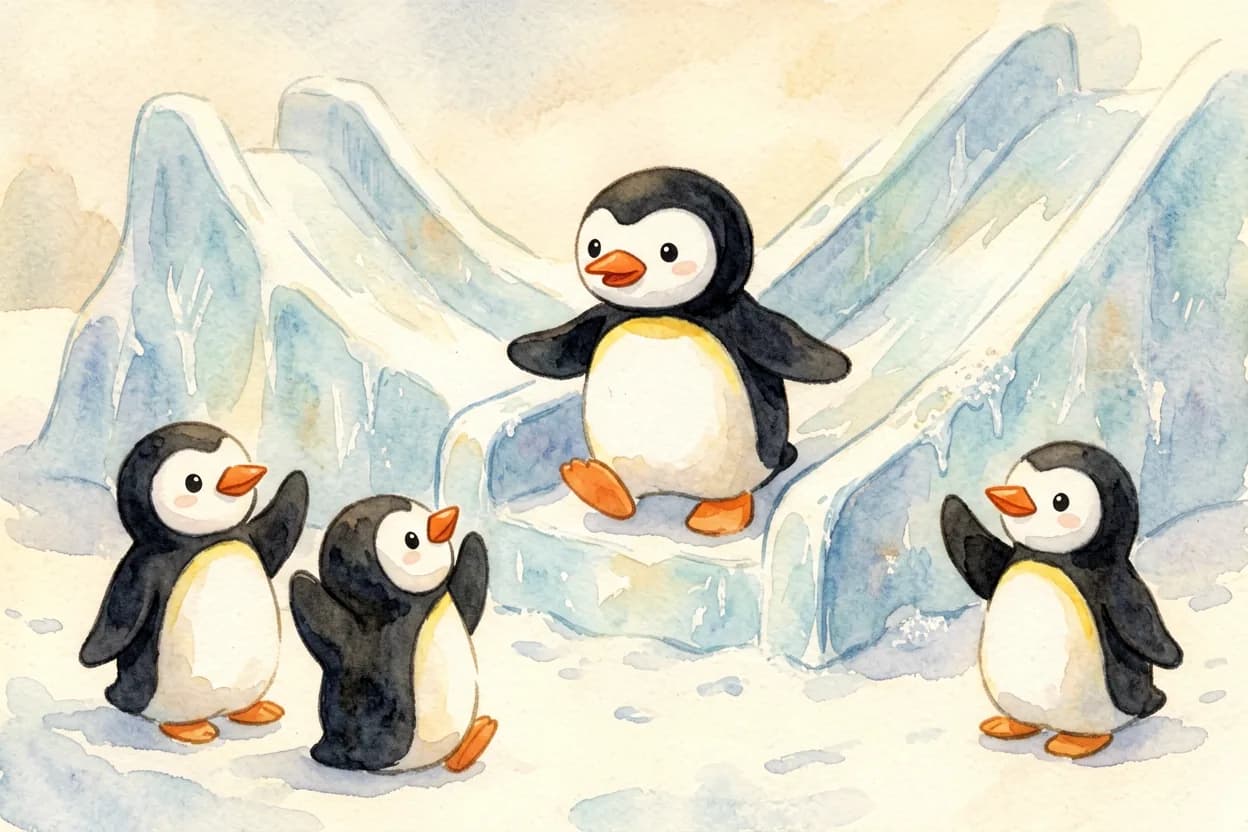
"Come on, Pax!" called his friends from the bottom. "It's SO much fun!" But Pax couldn't move. The slide looked enormous. "What if I go too fast? What if I fall? What if I can't do it?" His tummy flip-flopped, and he stepped back from the edge.
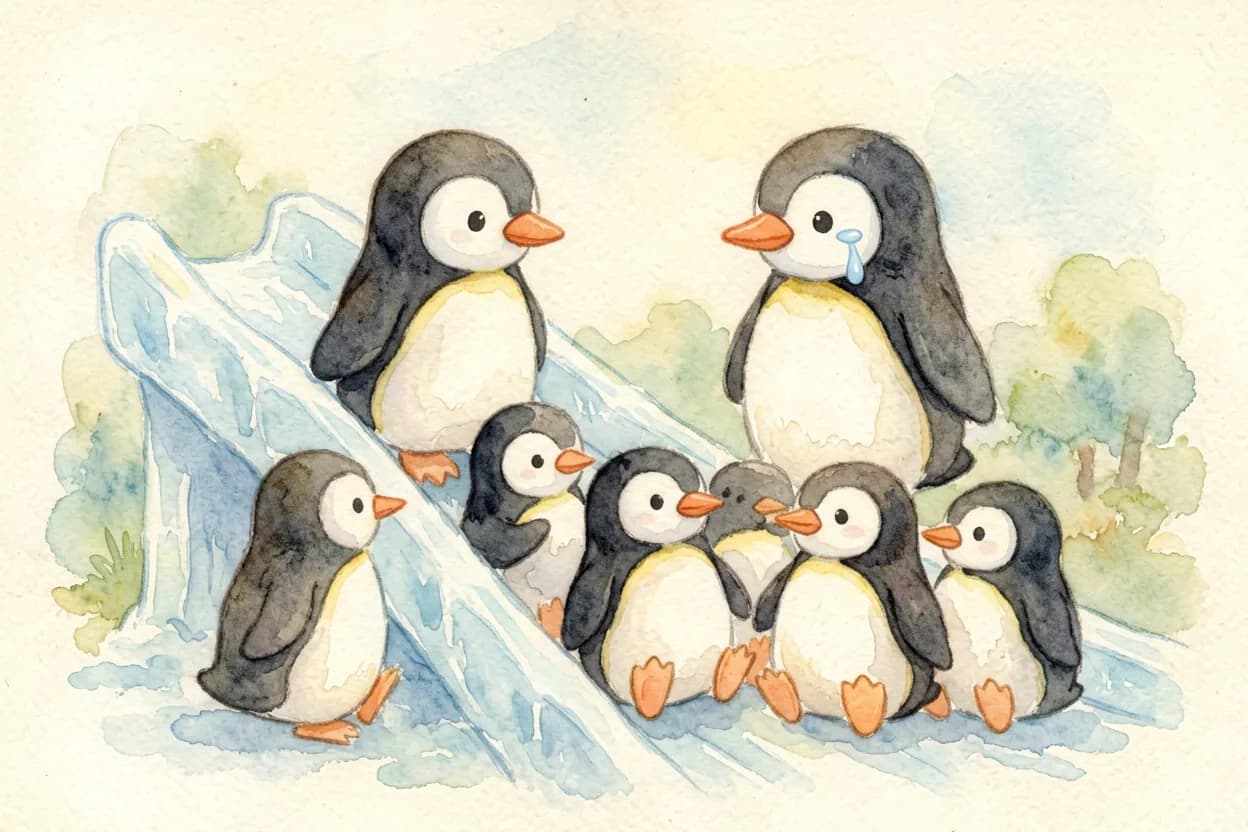
Pax watched the others slide again and again. He wanted to join them so badly. But every time he looked down the slope, the fear grabbed him tight. A big tear rolled down his beak. "I'm too scared," he whispered. "I'll never be brave enough."
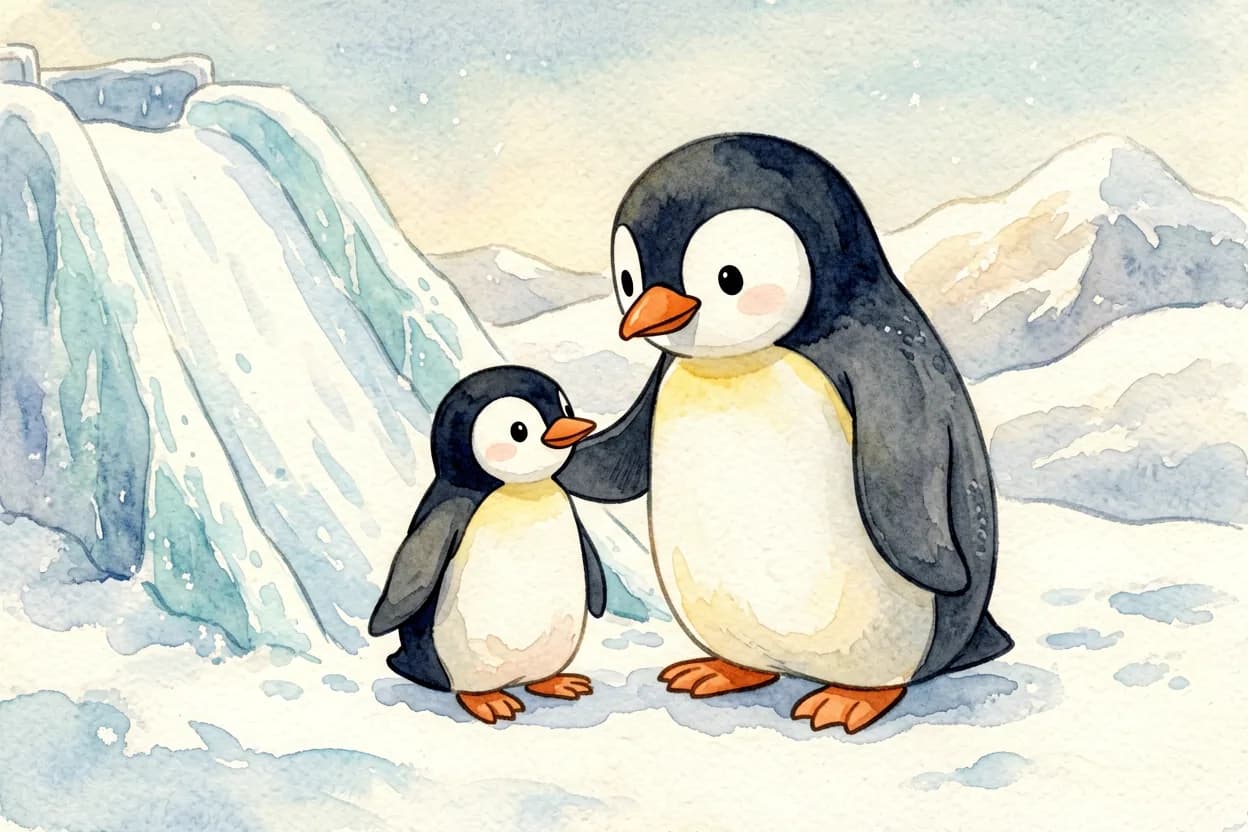
His big sister Nell waddled over. "Being brave doesn't mean you're not scared," she said gently. "It means you try even though you are. You don't have to do it all at once. What if we start small?"
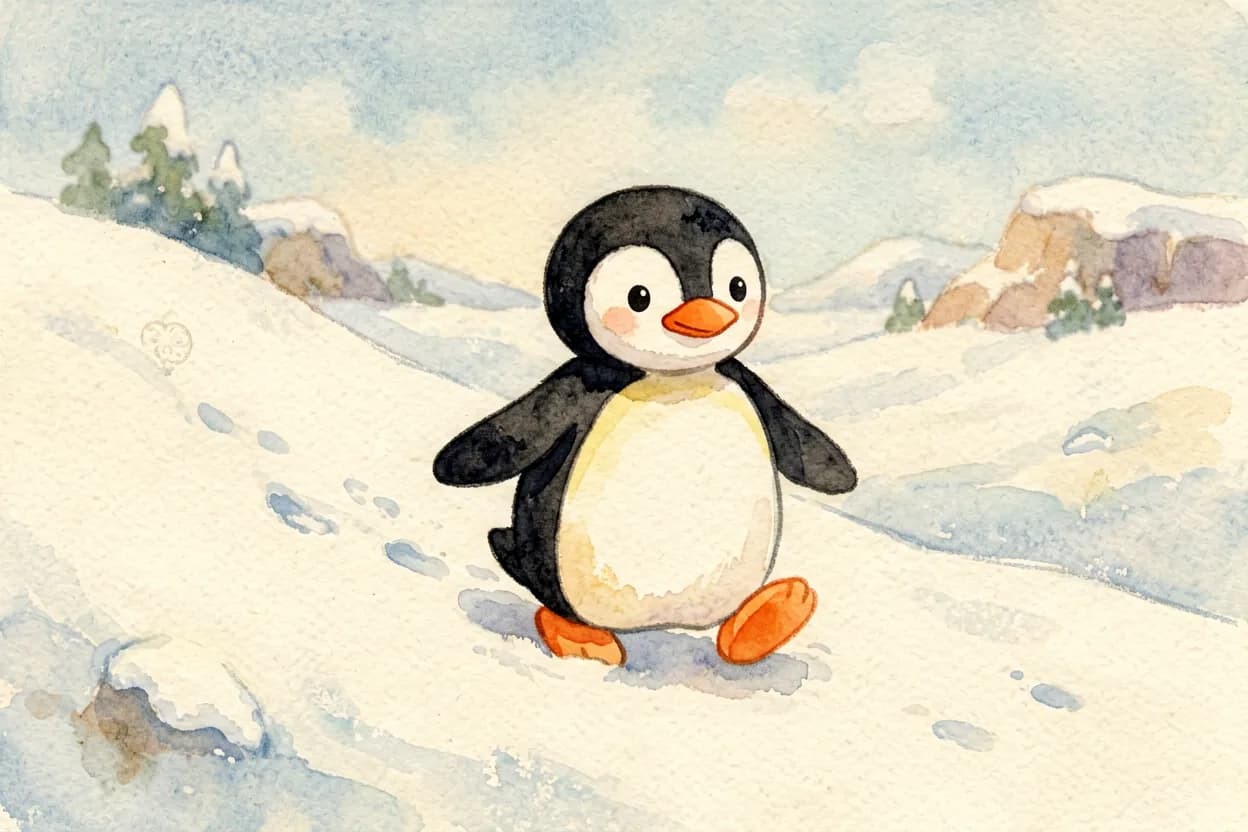
So they did. First, Pax just sat at the very top, feeling the ice. Then he slid down a tiny bit and stopped. Then a little further. Each small step was scary — but each one showed him: I can do this. His flippers felt a bit steadier.
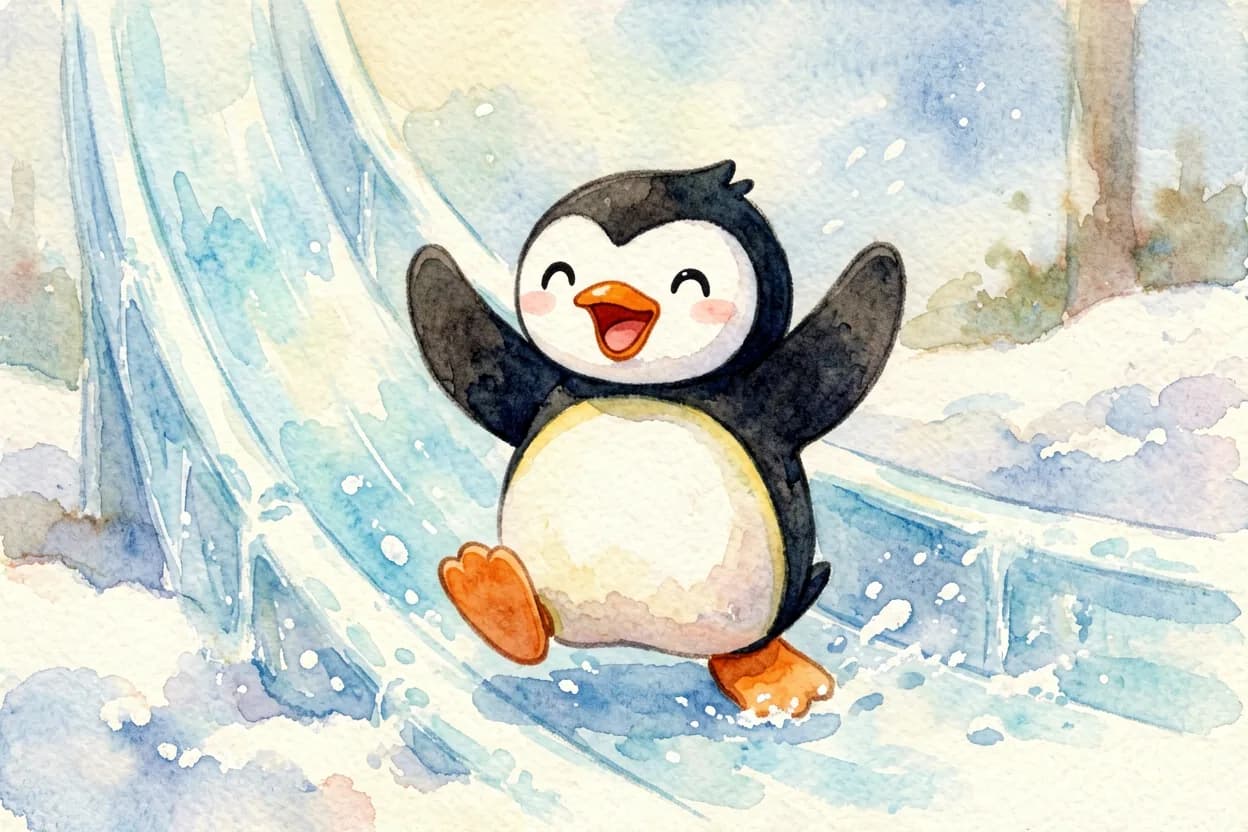
At last, Pax sat at the very top, took the biggest, bravest breath of his life, and... let go. WHOOSH! Down, down, down he zoomed — the wind in his face, his heart pounding — and it wasn't scary at all. It was WONDERFUL. "WHEEEE!" he cried.
Pax landed at the bottom in a happy heap, his friends cheering all around him. "I did it! I was brave!" he laughed. And you know what? He climbed straight back up to do it all over again.
Being brave doesn't mean you're not scared. It means you take a deep breath and try anyway — and often, the scary thing turns out to be the best thing.
Questions to ask after reading
- 1Why was Pax too scared to go down the slide at first?
- 2What did Nell say being brave really means?
- 3How did starting with small steps help Pax?
- 4How did Pax feel once he finally slid all the way down?
- 5Is there something that feels scary to you that you'd like to be brave enough to try?
Try it together: building courage
Courage grows one small brave step at a time. These activities help your child face fears at their own pace.
- Break it into small steps. Like Pax on the slide, break a scary thing into tiny, doable stages. Each small success builds the courage for the next — far better than one big leap.
- Name what being brave means. Talk about how brave people feel scared too and try anyway. Redefining courage as 'trying despite fear' takes the pressure off feeling fearless.
- Make a 'brave tries' jar. Celebrate every brave attempt — not just successes — with a note or a token in a jar. Rewarding the trying grows a child willing to try.
- Tell your own brave stories. Share times you felt scared and did it anyway. Knowing that grown-ups feel fear too, and are brave anyway, is deeply reassuring.
- Let them lead the pace. Encourage, but don't push or force. A child who faces a fear in their own time owns the victory; one who's shoved learns the world is unsafe.
How to use the story at each age
Toddlers (2-3)
Keep challenges small and safe, and offer lots of encouragement and a hand to hold. Celebrate tiny brave moments — trying the swing, meeting a friendly dog — and never force. At this age, your reassuring presence is what makes a new thing feel possible.
Preschoolers (3-5)
Now you can name what courage means and use the 'small steps' approach (like Pax). Praise brave tries rather than only successes, and resist the urge to rescue too quickly — let them discover 'I can do it.' Read the story and talk about facing fears at their own pace.
Older children (5-7)
Children this age can set little brave goals and reflect on them. Talk about courage in bigger forms too — speaking up, doing the right thing, standing up for a friend. Help them see setbacks as part of being brave, and celebrate persistence as much as success.
Common mistakes (and what to do instead)
- Saying 'don't be scared'. This can make a child feel their fear is wrong. Acknowledge it instead — 'it does look scary; being brave means trying anyway' — which honours the feeling and points the way.
- Pushing or forcing. Shoving a frightened child into the deep end can deepen the fear and break trust. Support small steps at their pace; the courage they build themselves lasts.
- Only praising success. If we cheer only when they succeed, children fear trying and failing. Praise the brave attempt itself, so they keep daring to try.
- Rescuing too fast. Swooping in the moment something's hard robs a child of the chance to discover 'I can.' Hold back a little and let them find their courage.
- Calling a child 'shy' or 'timid'. Labels can become fixed self-images. Say 'you like to warm up first' — true, and full of room to grow braver.
Using the lesson in everyday moments
The story shows courage in action; daily life offers endless small chances to practise. Here's where it shows up.
- At the playground. The big slide, the climbing frame, the wobbly bridge — playgrounds are courage gyms. Encourage small steps and cheer every brave try.
- Trying new things. New food, a new class, a new skill. Frame each as a brave adventure, and celebrate the attempt regardless of how it goes.
- In social moments. Saying hello, joining a game, speaking up. These take real courage for many children; a gentle nudge and warm praise help them grow.
- When something's hard. Resist fixing it instantly. 'This is tricky, and you're being so brave to keep trying' helps a child push through and feel capable.
A simple checklist to follow
- Read the story together, unhurried, with time for the pictures
- Define courage as feeling scared and trying anyway
- Break scary things into small, doable steps
- Praise brave tries, not just successes
- Encourage at their pace — never push or force
- Share your own stories of being brave
Make the story about your child
A penguin named Pax is a plucky guide. But children pay closest attention when the one finding their courage is someone they know from the inside — themselves.
When your child is the hero who feels afraid, takes small brave steps, and finally leaps, the story stops being about a penguin and becomes a picture of their own courage growing. Their name, their fear, their triumphant moment — exactly the encouragement they need to try the thing that scares them.
A generic story
A little penguin is scared of the big slide but finds the courage to try, and loves it.
Your child's story
Finn is scared to go down the big slide, takes small brave steps, and finally zooms down cheering — with Finn as the brave hero on every page.
Parents also ask
How can I help my child be braver?
Redefine courage as feeling scared and trying anyway, break scary things into small doable steps, and praise brave attempts rather than only successes. Encourage at your child's own pace without pushing, share your own stories of being brave, and use stories where a character faces a fear and finds their courage. Bravery is built one small step at a time.
Should I push my shy or fearful child to face their fears?
Encourage, but don't push or force. Shoving a frightened child into something scary can deepen the fear and damage trust. Instead, support small, doable steps at their pace and celebrate each one. The courage a child builds themselves is genuine and lasting, while a forced experience often backfires.
Is it normal for my child to be scared of new things?
Completely normal, and even wise — caution is how children stay safe while learning what they can handle. A hesitant child isn't cowardly; they're weighing up a real unknown. It becomes worth gently working on only when fear stops your child doing things that would genuinely delight them.
What's the difference between courage and fearlessness?
Courage isn't the absence of fear — it's feeling afraid and choosing to try anyway. This is an important thing to teach children: brave people feel scared too. Redefining courage this way takes the pressure off having to feel fearless, and makes bravery something every child can achieve.
Why should I praise trying rather than succeeding?
If children are praised only for succeeding, they learn to fear trying and failing, and avoid challenges. Praising the brave attempt itself — 'you were so brave to try' — teaches that having a go is what matters, which keeps children daring to try new and hard things throughout life.
My child gives up as soon as something is hard. What can I do?
Break the task into smaller steps so success feels reachable, resist rescuing or fixing it instantly, and praise persistence: 'This is tricky and you're being so brave to keep going.' Celebrating the effort and the small wins along the way helps a child build the courage to push through difficulty.
Are personalized stories helpful for building courage?
For many children, yes. A story where they are the hero who feels afraid and finds their courage makes bravery feel achievable and personal, and gives them a picture of themselves succeeding. Reading it before a scary challenge can be a real confidence boost. It's a supportive tool alongside small steps and warm encouragement.
More free stories for kids
About the author
Andy — Andy is the founder of Doodara and builds the illustration pipeline behind it — the part that has to keep a child's character looking like the same child on every page of a book. Most of that work is character consistency, content safety for material aimed at young children, and the unglamorous business of making a generated book good enough that a family reads it twice.