
Bedtime Stories for Kids
A complete, gently calming original bedtime story you can read tonight — plus the wind-down routine and age-by-age tips that turn bedtime battles into cosy, peaceful nights.
ByAndyFounder of Doodara
Quick answer
For a child who stalls at bedtime, the most useful books are the ones that make the wind-down itself feel like the story — slow, repetitive, and ending in sleep — rather than exciting adventures right before lights out. This page has a complete original picture book, Winnie's Sleepy Burrow, free to read tonight, plus discussion questions and age-by-age tips for ages 3-7. The practical move: read it at the same point in the routine every night, so the book becomes the signal that the day is closing.
Bedtime can be the sweetest part of the day — or the hardest. For every child who drifts off with a kiss, there's one who stalls, negotiates, calls out for one more drink, and pops up like toast the moment the light goes off. If your evenings dissolve into battles, you're far from alone. Resisting sleep is one of the most common struggles of early childhood.
Understanding why helps. A tired child is often a wired child: overtiredness makes it harder, not easier, to settle. On top of that, bedtime means separation — from you, from the fun of the day, from being in control — and a little worry or reluctance about that is completely normal. Add a still-developing sense of time and a big imagination, and it's no wonder winding down can be tricky.
The most powerful tool for peaceful nights is a calm, predictable routine. When the same soothing steps happen in the same order every evening, a child's body and mind learn that sleep is coming, and they settle far more easily. A gentle bedtime story is the heart of that routine — and one where a character winds down and drifts off can quietly carry your own child toward sleep.
Why stories help
A bedtime story is the ultimate wind-down. Its calm rhythm, quiet voice, and cosy closeness signal to a child's body that the day is ending — slowing them down in a way that 'go to sleep now' never can.
When a story's character yawns, snuggles, and drifts off, your child mirrors it. Watching a sleepy hero settle into bed gently invites their own body to do the same — a kind of contagious calm.
And the closeness of a shared story soothes the separation that bedtime brings. Those few warm minutes on your lap fill a child's cup, so that letting go into sleep feels safe rather than lonely.
How a story becomes a habit
Winnie's Sleepy Burrow
A gently calming original bedtime story — free to read aloud tonight.
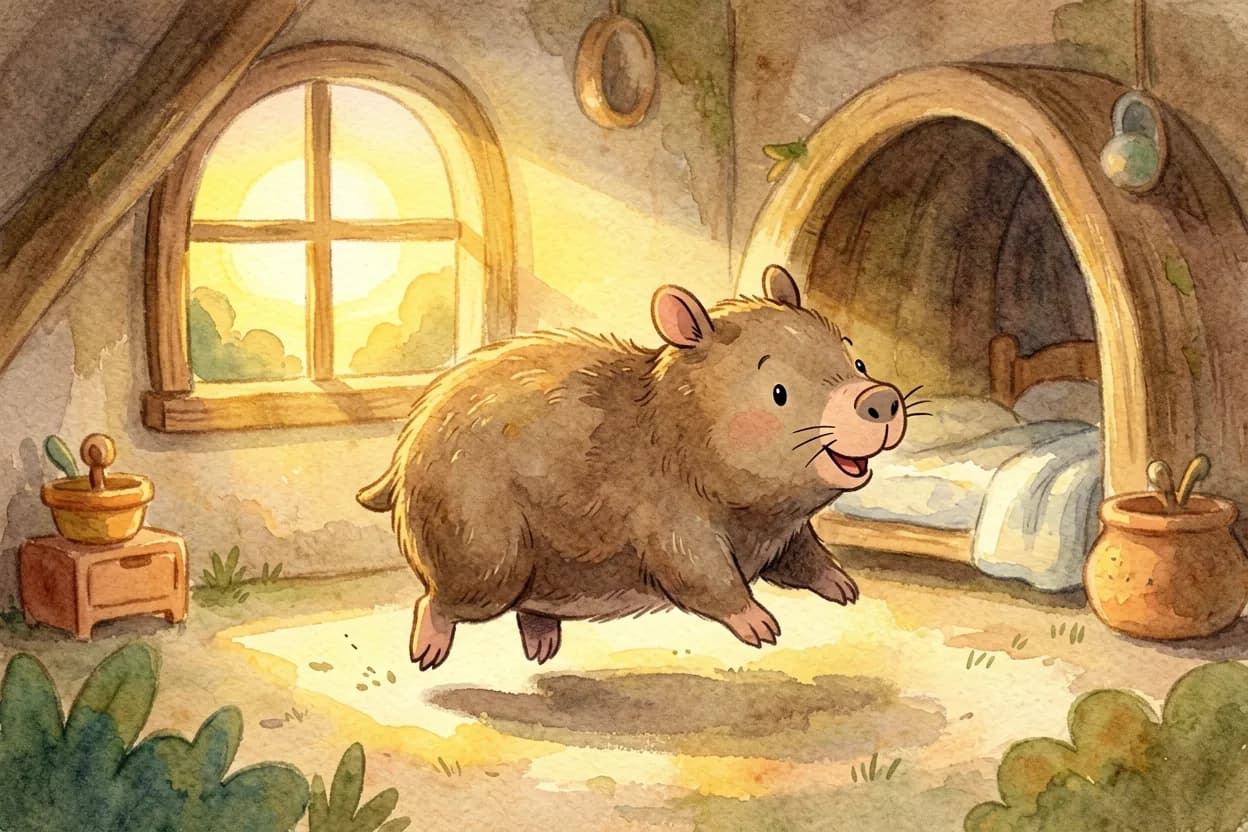
The sun was slipping low and golden over the hill, and in a cosy little burrow, Winnie the wombat did NOT want to go to bed. "I'm not sleepy!" she said, doing one more bouncy hop. "I want to keep playing!"
"That's alright," said Mama gently. "We don't have to sleep yet. But the day is getting sleepy, so let's get ready, slow and soft." Outside, the sky was turning from gold to deep, dreamy blue.
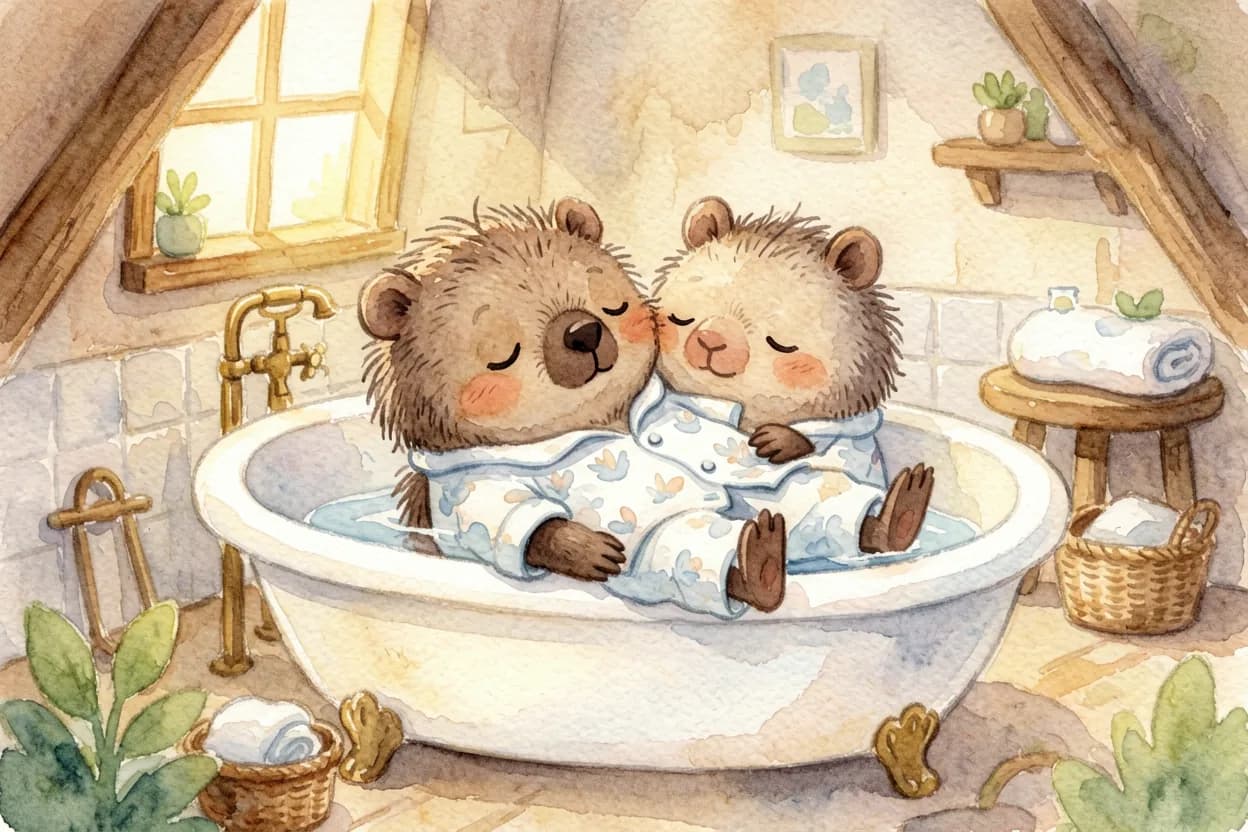
First came a warm little bath. Winnie splished the water slower and slower, watching the ripples. Then into her softest pyjamas, cosy and warm. Her bouncy hops grew smaller. Her eyes felt a little heavier.
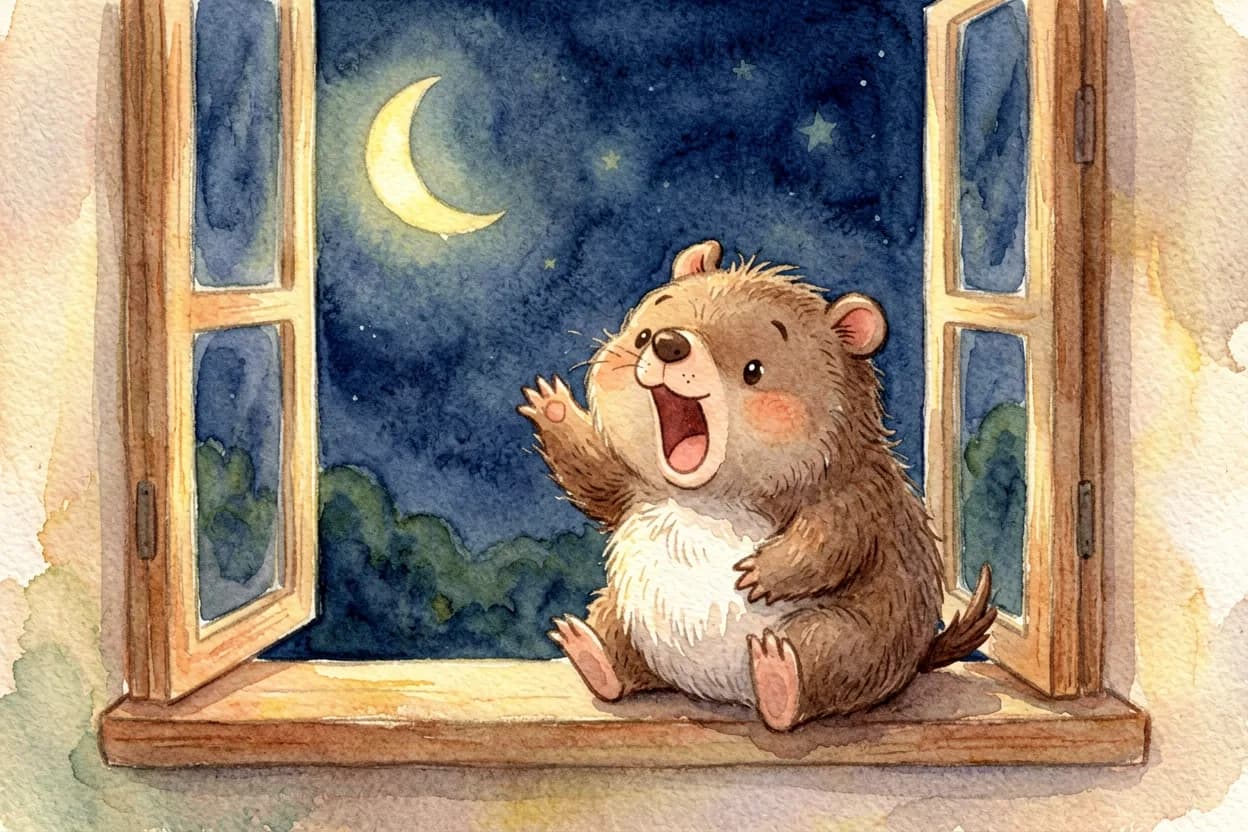
They brushed her teeth, and Winnie gave a great big yawn — aaah. "Time to say goodnight to the day," whispered Mama. So Winnie waved out the window. "Goodnight, hill. Goodnight, flowers. Goodnight, sleepy sun."
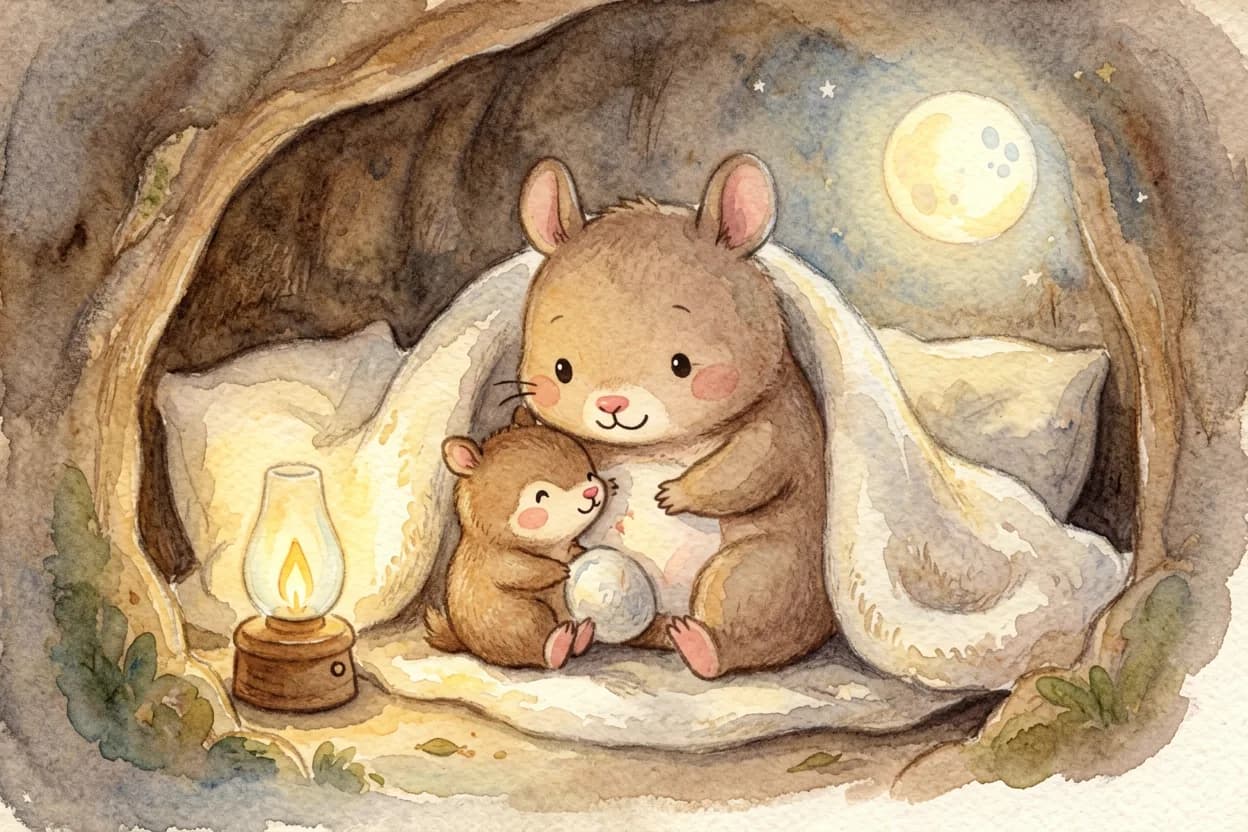
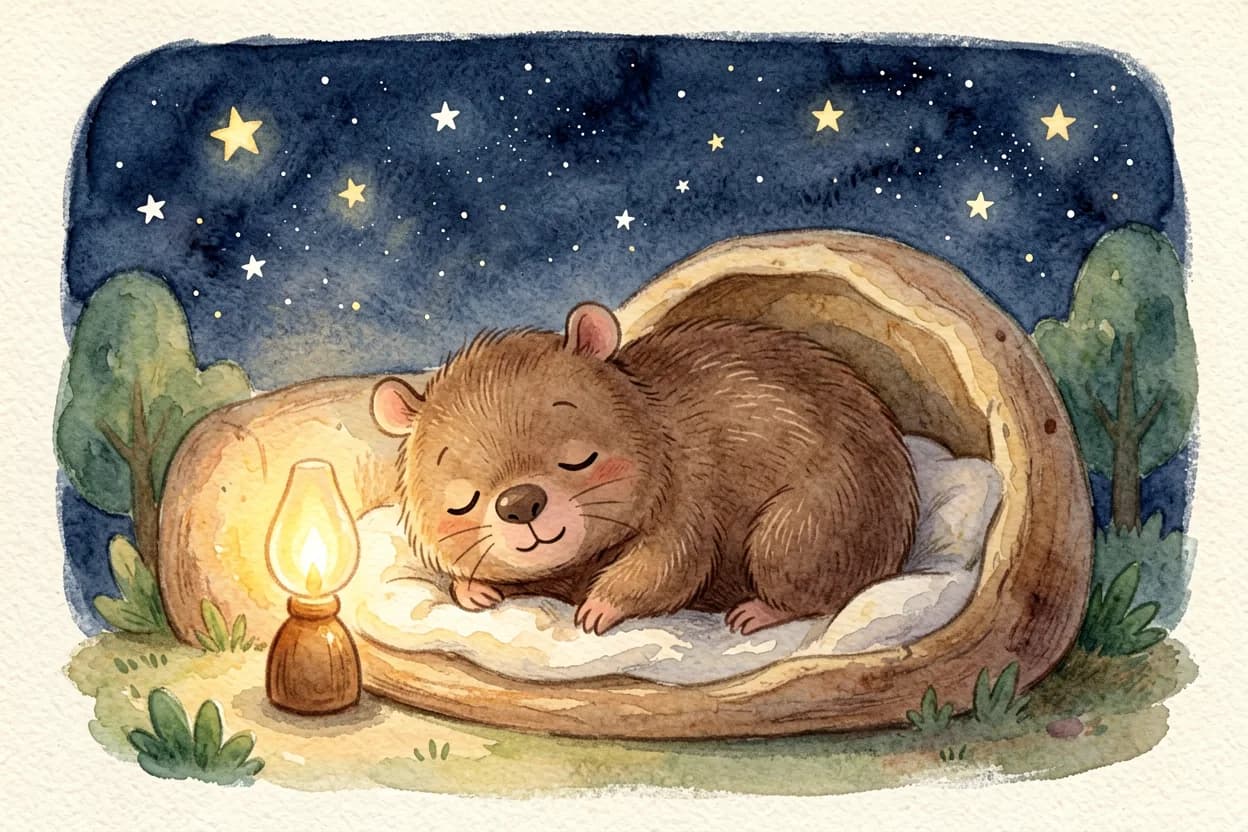
Mama tucked her under the softest blanket, right up to her chin. The burrow was warm and dark and safe. A little nightlight glowed like a tiny moon. Winnie snuggled down deep.
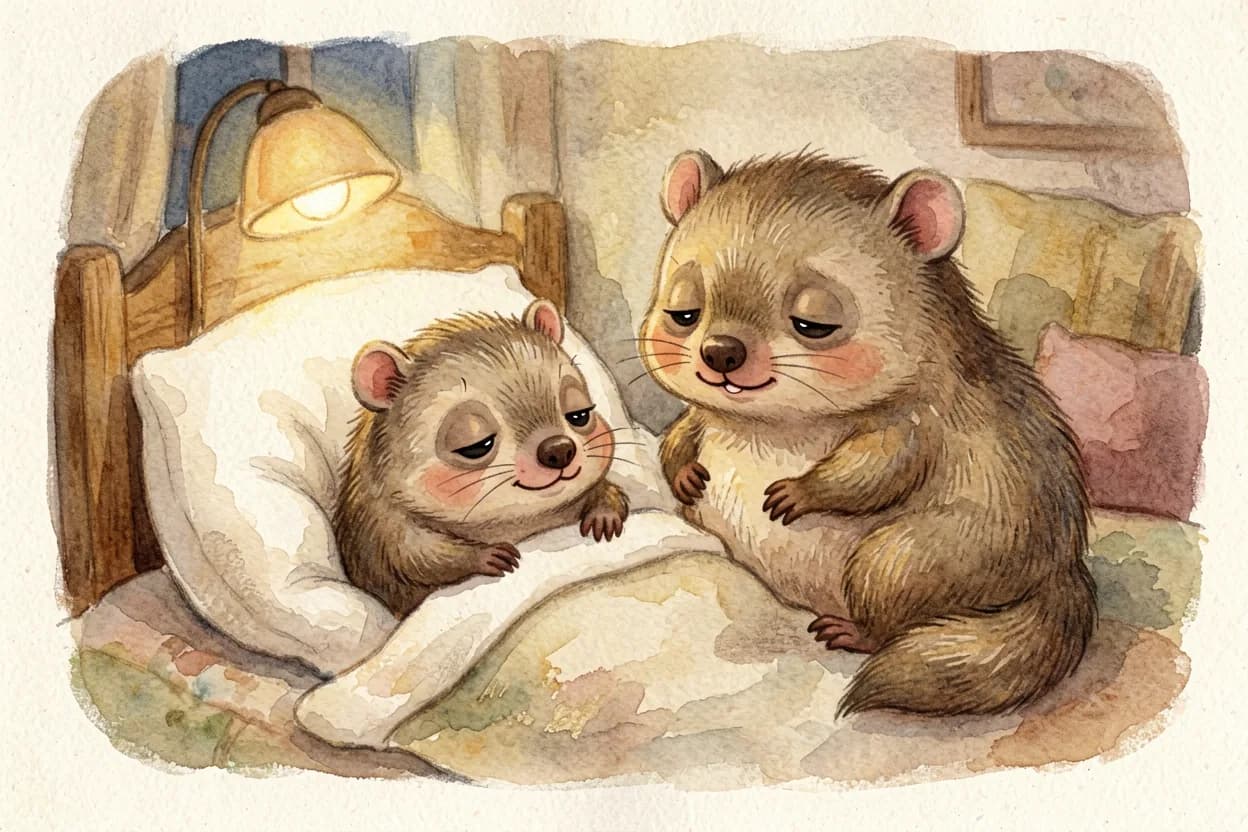
"Let's breathe slow, like sleepy waves," said Mama. In... and out. In... and out. Winnie's breaths grew long and quiet. Her eyelids drooped, up and down, up and down, heavier each time.
"Goodnight, my Winnie," whispered Mama, kissing her soft head. "I love you all the way to the stars." Winnie smiled, warm and safe and sleepy.
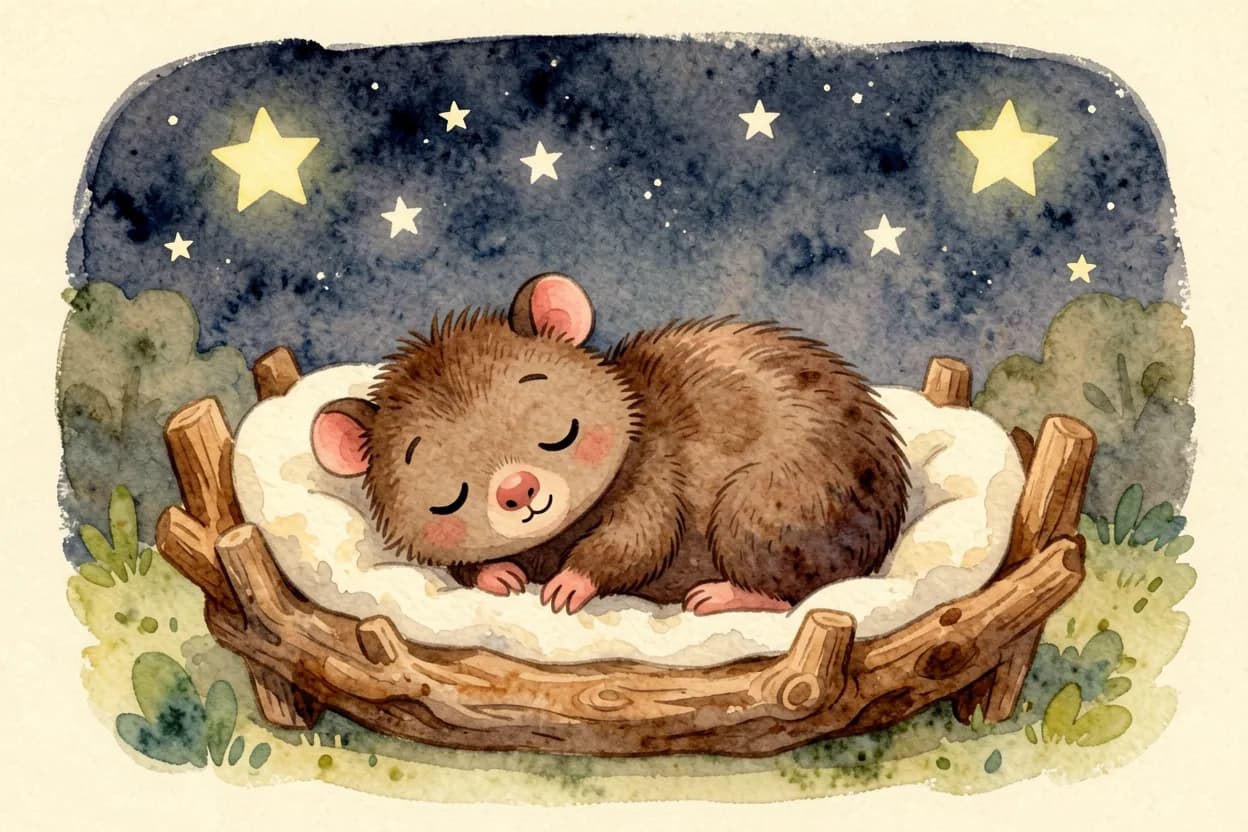
And as the stars twinkled over the quiet hill, Winnie the wombat closed her eyes... and drifted... all the way... to sleep.
When the day is done, the world grows quiet and soft — and it's time for sleepy eyes to rest.
Questions to ask after reading
- 1What did Winnie want to do instead of going to bed?
- 2What things did Winnie do to get ready for sleep?
- 3Who did Winnie say goodnight to out the window?
- 4How did Winnie's body feel as she got sleepier and sleepier?
- 5What do you like to do to get cosy and ready for sleep?
Build a calming bedtime routine
A predictable wind-down is the single best thing for peaceful nights. These steps, in the same order each evening, teach your child's body that sleep is coming.
- Dim the lights early. Lower the lights and the noise in the last hour before bed. A calmer, dimmer environment tells the body it's nearly time to sleep.
- Keep the same order every night. Bath, pyjamas, teeth, story, cuddle, lights out — the same steps in the same order. Predictability is deeply soothing and settles a child faster.
- Say goodnight to the day. Wave goodnight out the window like Winnie, or say goodnight to toys around the room. It marks a gentle, playful end to the day.
- Try slow 'sleepy waves' breathing. Breathe slowly together — in and out, like waves. Calming the body helps a wired child let go and drift off.
- End with the story and a kiss. Finish with a calm story and the same loving goodnight words each night. That closeness fills their cup so letting go into sleep feels safe.
How to use the story at each age
Toddlers (2-3)
Watch for the overtired trap — an earlier bedtime often means easier settling, not harder. Keep the routine short, warm, and identical every night, and hold gentle limits on stalling ('one story, then sleep'). A comfort object and a nightlight help them feel safe.
Preschoolers (3-5)
This is prime age for stalling and 'one more' requests. A visual routine chart and clear, kind limits work well. Talk about any bedtime worries in the daytime, keep the wind-down screen-free, and let the calming story do its work.
Older children (5-6)
Growing imaginations can bring bedtime fears; take them seriously and use a nightlight or a 'worry chat' before stories. Keep bedtime consistent even as they push for later, and protect the calm, connected wind-down — it matters as much now as ever.
Common mistakes (and what to do instead)
- Bedtime too late. Pushing bedtime later to 'tire them out' usually backfires — overtired children fight sleep harder. Aim for an earlier, consistent bedtime and watch settling get easier.
- Screens in the wind-down. Screen light and stimulation right before bed make settling harder. Swap the last hour for calm, screen-free routine and a story.
- Inconsistent routines. A different order or time each night gives the body no signal that sleep is coming. Same steps, same order, same time — predictability is everything.
- Giving in to endless 'one mores'. Each extra drink or story rewards the stalling. Decide the routine in advance and hold it kindly but firmly, so bedtime has a clear, calm end.
- A rushed, tense wind-down. Hurrying and frustration wind a child up. Slow yourself down; your calm sets the pace for theirs.
Making it work in everyday life
The story is the heart of the routine; the whole evening builds toward peaceful sleep. Here's where it shows up.
- The hour before bed. Lower lights, lower voices, tidy away the day. Calm inputs lead to a calm child — the wind-down starts well before the bedroom.
- At lights-out. The same loving goodnight words and a nightlight give a sense of safety. Consistency at the very end helps a child let go.
- For night wakings. Keep responses calm, brief, and boring — a quiet reassurance, not a party. This helps children learn to resettle themselves.
- On tricky nights. Travel, illness, and excitement disrupt sleep. Hold the routine as best you can; the familiar steps are anchoring when everything else is off.
A simple checklist to follow
- Keep the same calming routine, in the same order, every night
- Dim lights and go screen-free in the last hour
- Aim for an earlier, consistent bedtime to avoid overtiredness
- Read the calming story and end with the same loving goodnight
- Hold kind, clear limits on stalling and 'one mores'
- Address bedtime worries in the daytime, and use a nightlight
Make the story about your child
A wombat named Winnie is a sleepy, soothing guide. But children settle most deeply when the drifting-off hero is someone they know from the inside — themselves.
When your child is the one who yawns, says goodnight to the day, and snuggles down safe, the story stops being about a wombat and becomes a gentle mirror inviting their own eyes to close. Their name, their cosy bed, their peaceful goodnight — the perfect last page of the day.
A generic story
A little wombat winds down through a calm routine and drifts off to sleep.
Your child's story
Ella says goodnight to the day, snuggles into her own cosy bed, and drifts off to sleep — with Ella as the sleepy hero on every page.
Parents also ask
Why does my child fight bedtime so much?
Bedtime resistance is one of the most common early-childhood struggles. It often comes down to overtiredness (a wired, not sleepy, child), the separation that bedtime means, and a natural wish to keep playing and stay in control. A calm, predictable routine and an early-enough bedtime address most of it.
What's the best bedtime routine for a young child?
A short, consistent, calming sequence in the same order every night — for example bath, pyjamas, teeth, a quiet story, a cuddle, and lights out with the same loving goodnight. Keep the last hour dim and screen-free. Predictability teaches your child's body that sleep is coming, so they settle far more easily.
Should I make bedtime later so my child is more tired?
Usually not — this tends to backfire. Overtired children find it harder to settle and wake more, not less. An earlier, consistent bedtime often leads to easier settling and better sleep. Watch for sleepy cues and aim to start the wind-down before your child is overtired.
How do I stop the endless 'one more drink / one more story' stalling?
Decide the routine in advance and hold it kindly but firmly — for example, one story and one drink, then it's sleep. Each extra request you grant rewards the stalling, so a clear, calm, predictable end to bedtime (the same every night) is what stops the negotiations over time.
My child is scared at bedtime. What can I do?
Take the fear seriously rather than dismissing it. Use a nightlight, leave the door ajar, and address worries in the daytime or with a brief 'worry chat' before stories rather than at lights-out. A calming story and the same reassuring goodnight routine help a child feel safe enough to let go.
How should I handle night wakings?
Keep your response calm, brief, and low-key — a quiet reassurance rather than turning on lights or starting an activity. Boring, consistent responses help children learn to resettle themselves. If wakings are frequent and exhausting, it's worth reviewing the daytime and bedtime routine, and chatting to your health visitor or doctor.
Are personalized bedtime stories helpful?
For many children, yes. A calming story where they are the sleepy hero winding down and drifting off gently invites their own body to do the same, and the personal connection makes the wind-down feel especially cosy and safe. It's a lovely centrepiece for a consistent bedtime routine.
More free stories for kids
About the author
Andy — Andy is the founder of Doodara and builds the illustration pipeline behind it — the part that has to keep a child's character looking like the same child on every page of a book. Most of that work is character consistency, content safety for material aimed at young children, and the unglamorous business of making a generated book good enough that a family reads it twice.