Stories About Jealousy for Kids
A complete original picture book about jealousy you can read tonight — plus the discussion questions, activities, and age-by-age tips that help your child feel content with who they are.
ByAndyFounder of Doodara
Quick answer
The books that help a jealous child let the feeling be real and uncomfortable before resolving it, because a story that skips straight to "be happy for her" does not match what the child is feeling. This page has a complete original picture book, Juno's Shiny Feathers, free to read tonight, plus discussion questions and age-by-age guidance for ages 3-7. The practical move: after reading, name one thing your child can do that nobody else in the family can — jealousy shrinks fastest when a child feels distinctly seen.
"It's not fair — she got a bigger one!" "Why does HE get to go first?" Jealousy is one of the most uncomfortable feelings a child can have, and one of the most common. If your child seethes when a sibling gets attention, or wilts when a friend has something they don't, they're not being greedy or mean. They're feeling one of the trickiest emotions there is — and they need help handling it, not shame for having it.
Jealousy usually grows as children become more aware of others and of fairness — often blooming in the preschool and early-school years. A child who compares themselves to others, who wants what someone else has, or who fears losing your love to a sibling is doing something very human. The feeling is real and it hurts; it deserves to be taken seriously rather than brushed aside.
The aim isn't to banish jealousy — even adults feel it — but to help your child understand it and find their way back to feeling okay. When a child learns that jealousy is a normal feeling, that comparing rarely makes us happy, and that they have their own special worth, the sting fades faster. Stories help: they let a child watch a character wrestle with envy and rediscover their own value, all from the safe distance of the page.
Why stories help
Jealousy is a squirmy, hard-to-admit feeling, and a story makes it safe to look at. When a character envies someone else and then finds their way back to contentment, your child recognises their own feeling and sees that it can be handled, not just hidden.
Children learn from characters they love. A little bird who envies another's feathers and then rediscovers their own worth models exactly the shift you want — from 'I wish I were them' to 'I like being me' — far better than being told 'don't be jealous.'
And a story opens the gentlest conversation about a feeling children hate to confess. 'Do you ever feel like the little jay did?' lets your child admit to jealousy without shame — and a feeling that can be spoken is one that can be soothed.
How a story becomes a habit
Juno's Shiny Feathers
An original picture book about jealousy — free to read aloud tonight.
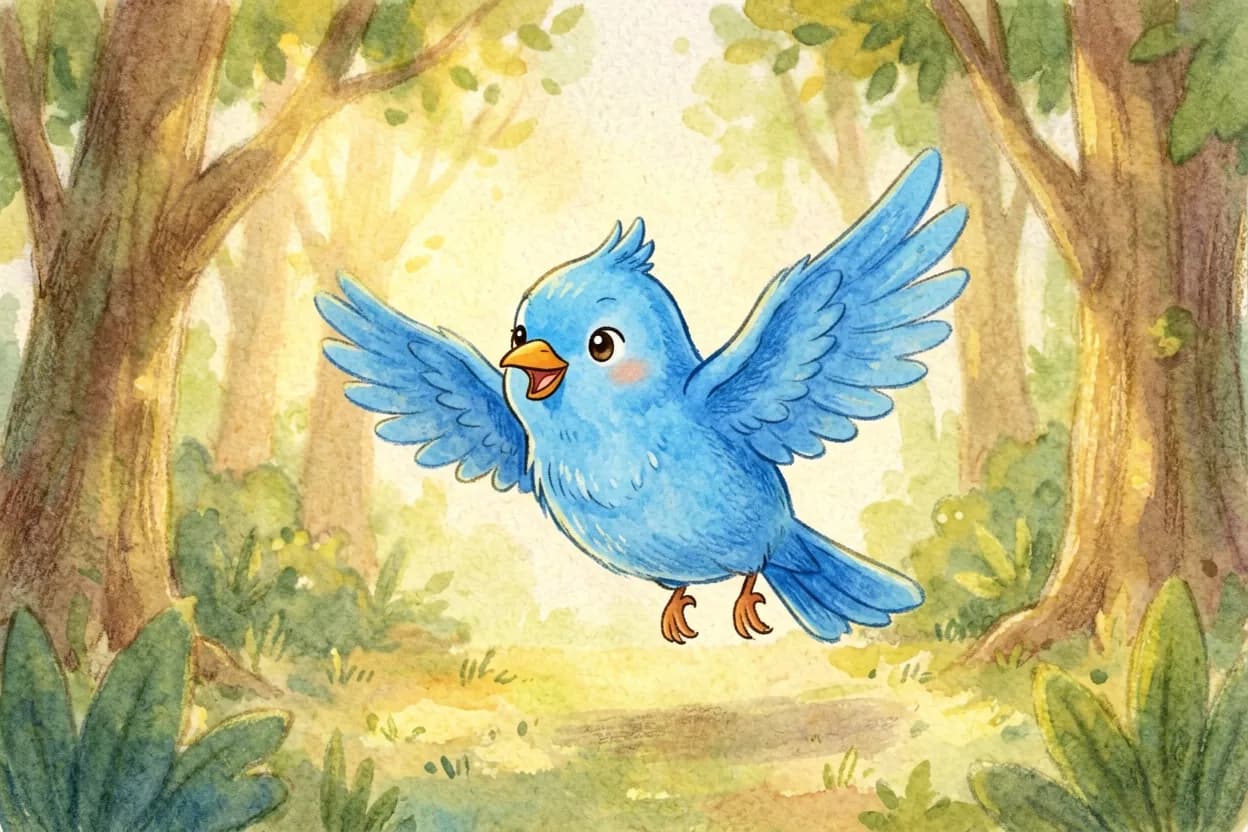
Juno the little blue jay had bright blue feathers and a cheeky crest. He loved to swoop and chatter through the trees. Everything was lovely — until the day a new bird arrived in the forest.
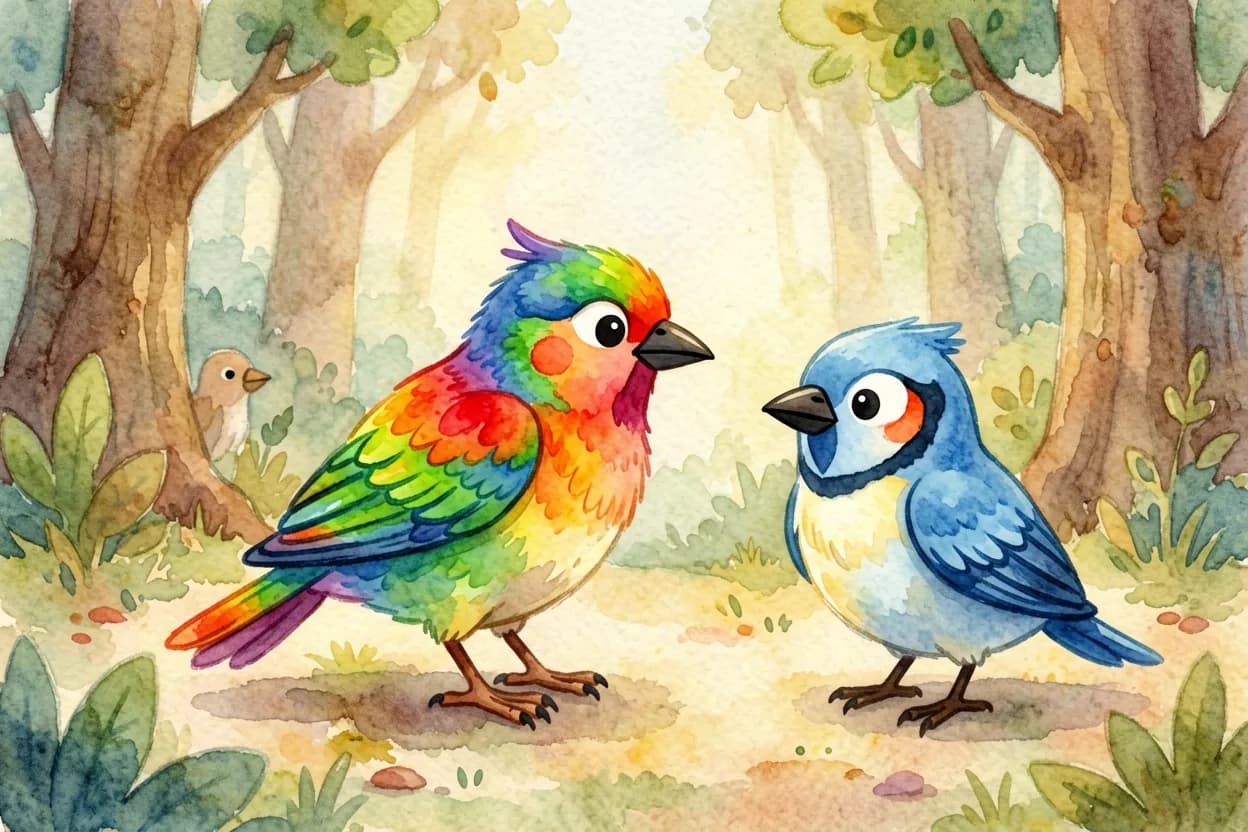
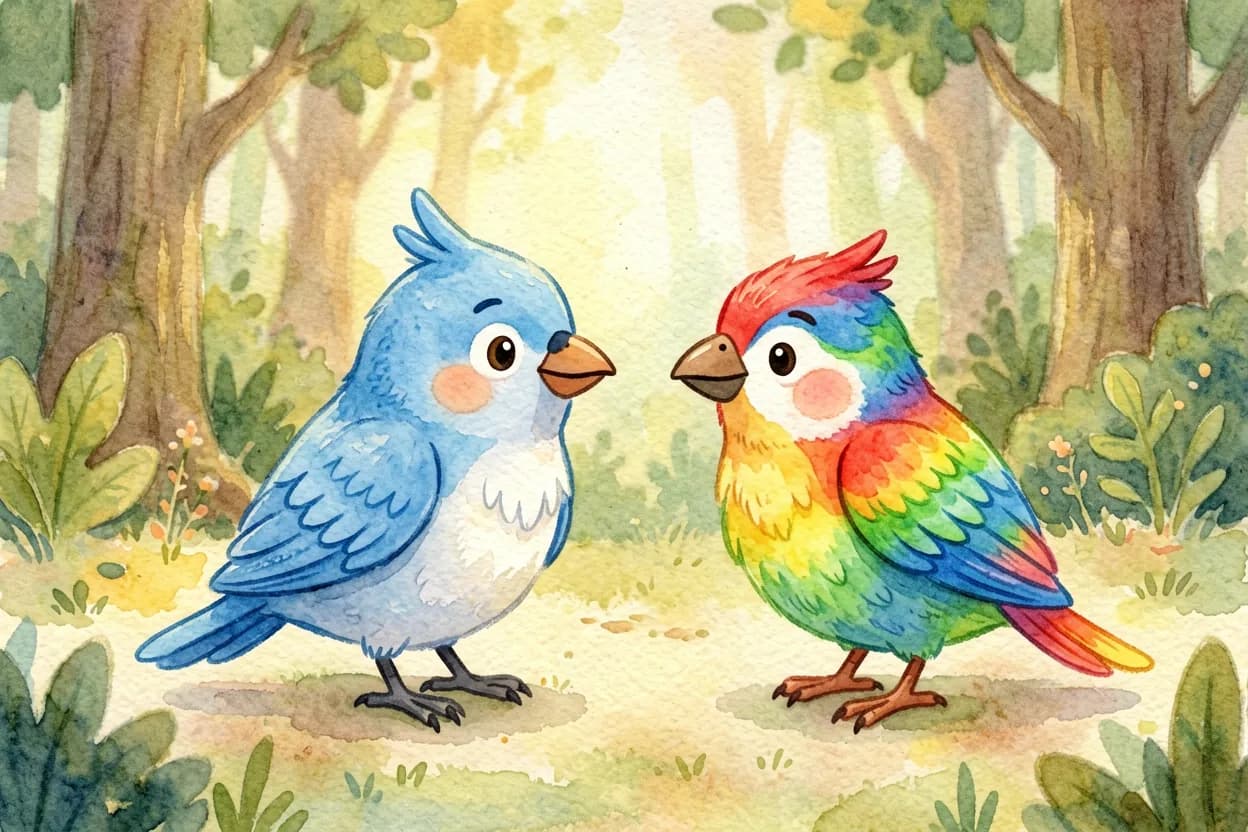
Her name was Ruby, and her feathers shimmered red and gold and green, like a rainbow caught in sunlight. Everyone gathered round. "How beautiful!" they sang. Juno looked down at his own blue feathers and felt something sour in his chest.
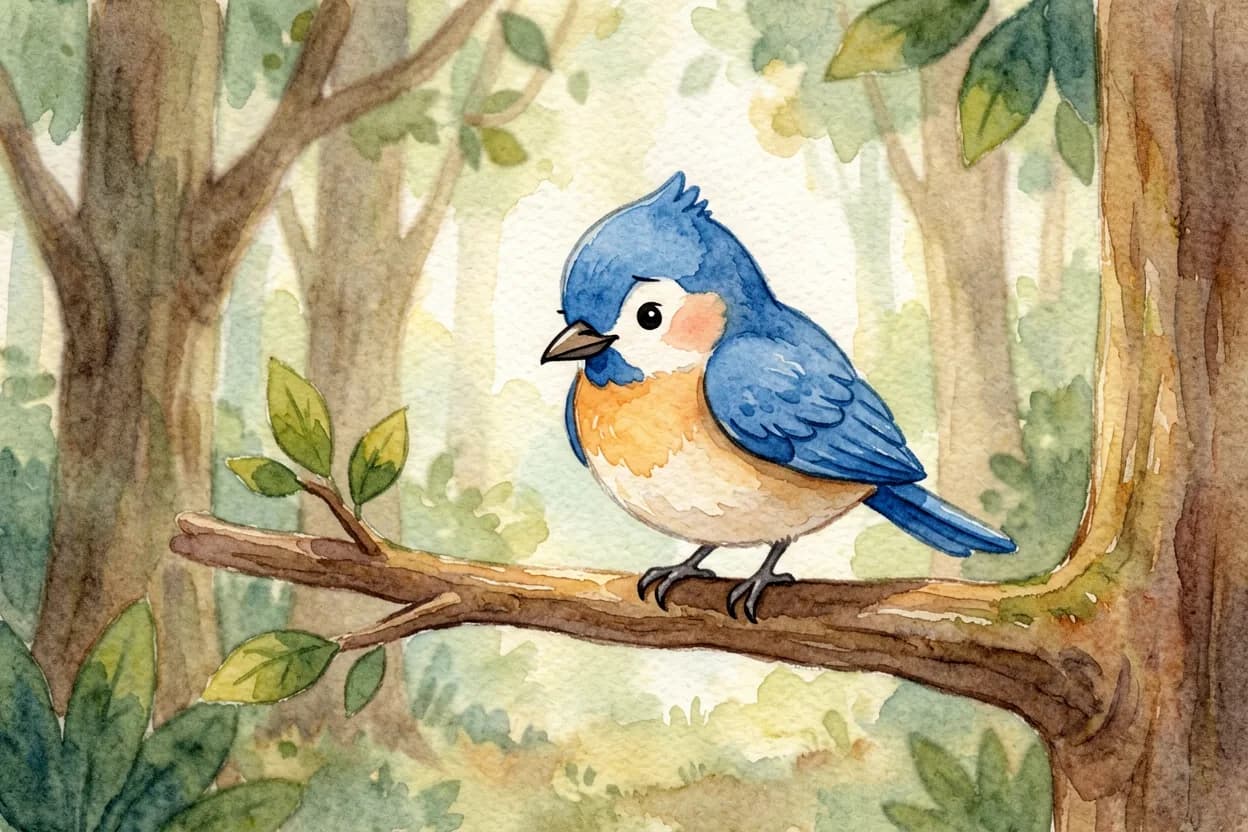
"My feathers are just... blue," Juno grumbled. "Nobody says MINE are beautiful." The more he looked at Ruby's rainbow colours, the more his own seemed dull. He didn't want to swoop or chatter anymore. He just felt cross and small.
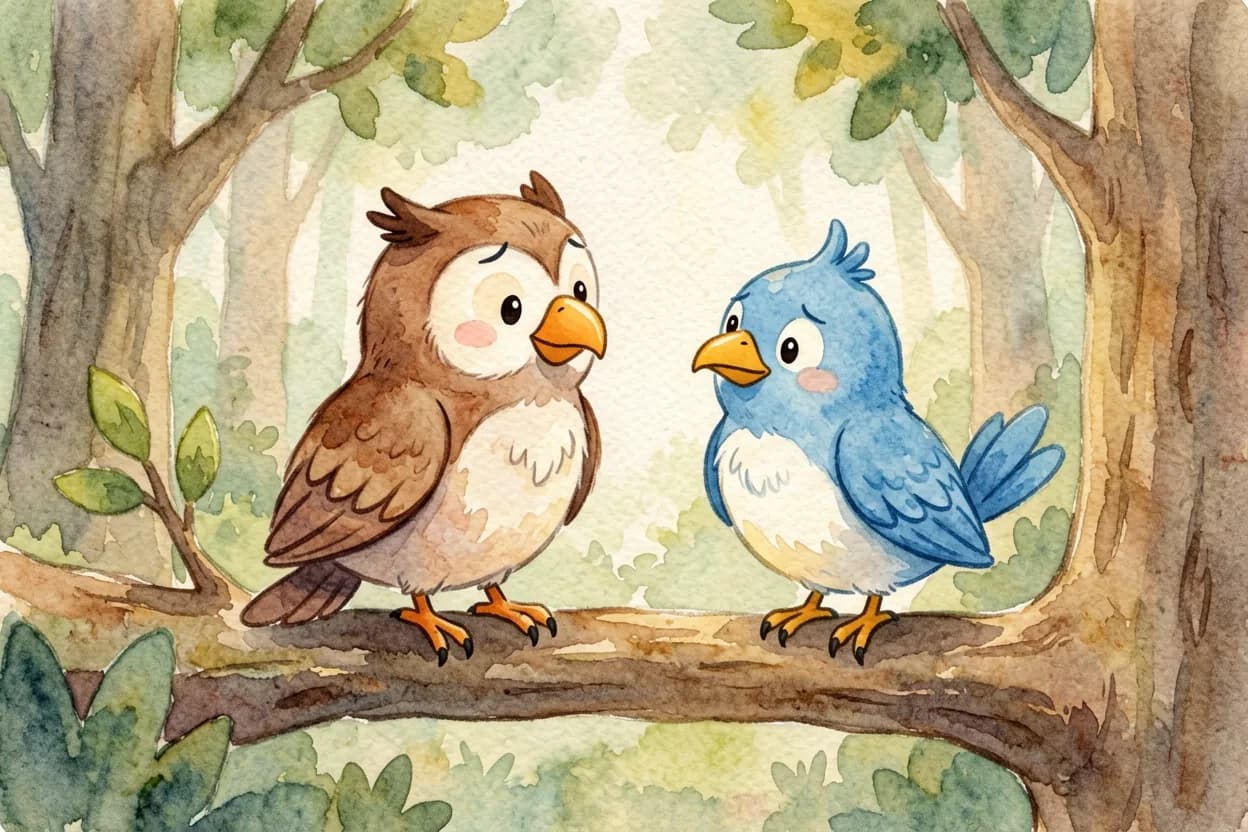
His wise friend, an old owl called Sage, noticed him moping. "What's the matter, Juno?" "I wish I had Ruby's feathers," Juno sighed. "Mine are boring." Sage nodded kindly. "Ah. The green-eyed feeling. It visits everyone. But let me show you something."
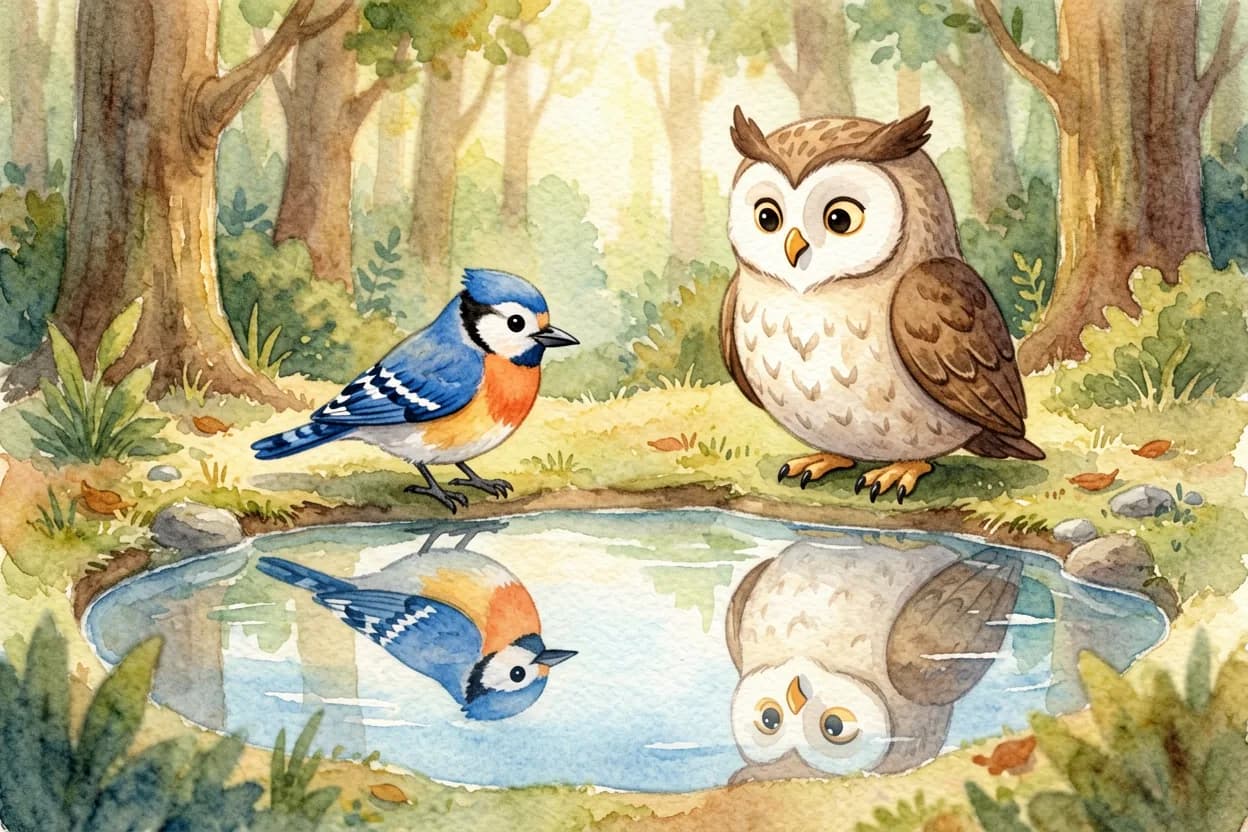
Sage led Juno to a still, clear pond. "Look," she said. In the water, Juno saw his own reflection — his bright, bold blue, his cheeky crest, his quick bright eyes. "When you're busy wishing you were Ruby," said Sage, "you forget how wonderful it is to be Juno."
Just then Ruby herself landed nearby. "Juno! I've been hoping to meet you," she chirped. "Everyone says you're the best swooper in the whole forest. Will you teach me?" Juno blinked in surprise. Ruby had been a little in awe of HIM.
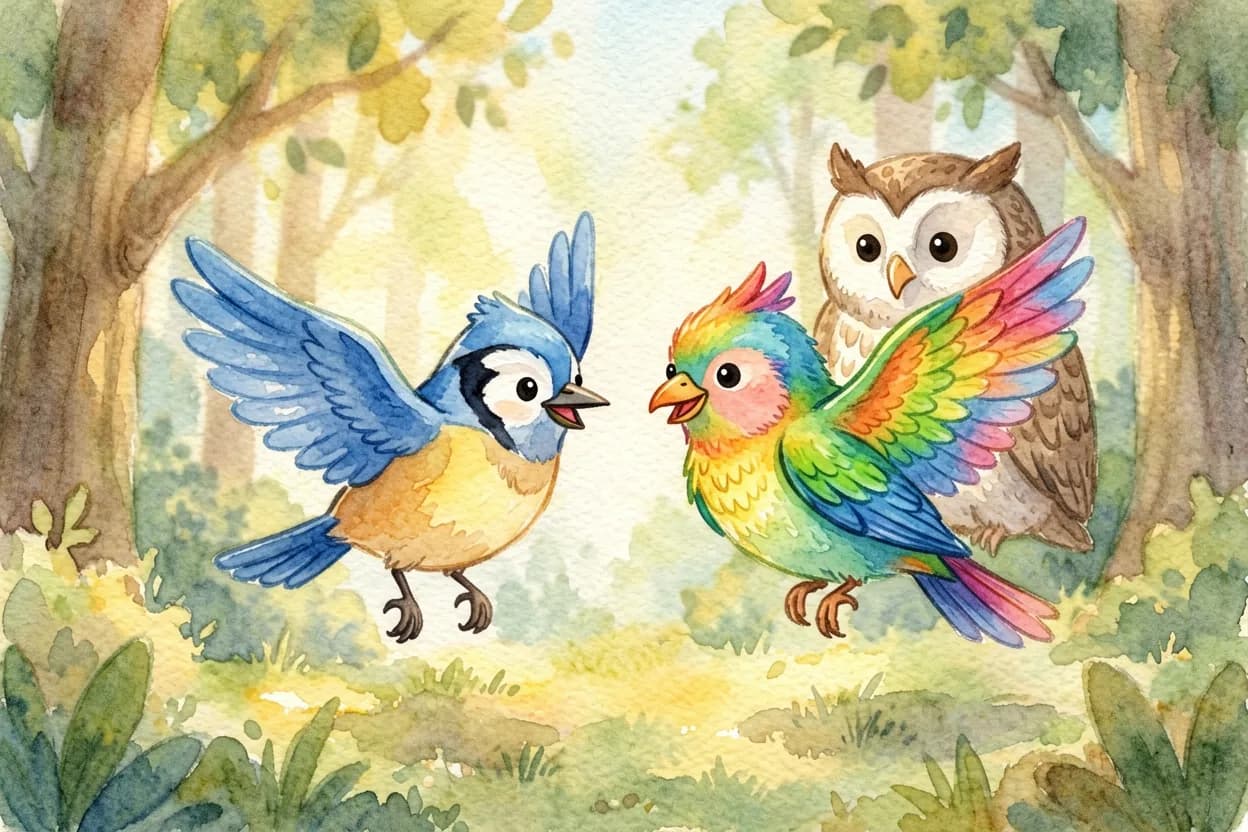
Juno grinned. It turned out Ruby wished she could swoop like him, just as he'd wished for her colours. "Everyone has their own something special," said Sage. "Yours is your wonderful blue — and the best swoop in the forest."
So Juno taught Ruby to swoop, and Ruby became his friend. And whenever the green-eyed feeling visited again, Juno remembered the pond — and how good it felt to be exactly himself.
Comparing ourselves to others rarely makes us happy. There is something wonderful about being exactly who you are.
Questions to ask after reading
- 1Why did Juno start to feel sad about his own feathers?
- 2What is the 'green-eyed feeling' Sage talked about?
- 3What did Juno see when he looked in the pond?
- 4What surprising thing did Ruby wish she could do?
- 5What is something special about YOU that makes you, you?
Try it together: easing jealousy
Jealousy softens when a child feels seen and secure in their own worth. These activities gently build that.
- Name your own 'special something'. Take turns naming what's special about each family member — kindness, a great laugh, being a good builder. Knowing their own worth makes children less pulled by comparison.
- A gratitude moment. Each day, share one thing you're each glad about. Noticing what we have quietly loosens the grip of wanting what others have.
- Talk about the 'green-eyed feeling'. Give jealousy a friendly name and admit you feel it too sometimes. Normalising it helps a child confess and let go of it rather than act it out.
- Everyone has a something. Point out, in books and life, that different people are good at different things — and that's what makes the world interesting. It reframes difference as richness, not ranking.
- Catch and cheer their strengths. Notice your child's own gifts out loud, often. A child who feels genuinely valued for who they are has far less to be jealous about.
How to use the story at each age
Toddlers (2-3)
Jealousy at this age is mostly about wanting what someone else has right now, especially your attention. Keep things fair and predictable, name the feeling simply ('you wish you had a turn too'), and reassure with closeness. Sharing and waiting are still developing, so expect grabbing.
Preschoolers (3-5)
Comparison and fairness loom large now. Pause at Juno's moping: 'Why is he sad? What could help?' Name the green-eyed feeling as normal, point out everyone's different strengths, and make sure your child feels valued for their own. Avoid comparing siblings.
Older children (5-7)
Children this age compare more consciously — looks, skills, possessions, friendships. Talk honestly that jealousy is normal, that comparing rarely makes us happy, and that everyone has their own gifts. Help them channel envy into inspiration ('you could learn that too') rather than resentment.
Common mistakes (and what to do instead)
- Shaming the feeling. 'Don't be jealous, that's ugly' teaches a child to hide it, not handle it. Name it as normal — 'the green-eyed feeling visits everyone' — so it can be talked through.
- Comparing your children. 'Why can't you be tidy like your sister?' breeds exactly the jealousy you want to avoid. Praise each child for their own strengths, never against each other.
- Rushing to fix it with stuff. Buying the thing they envy teaches that jealousy is solved by getting. Focus instead on feelings and on their own worth, which lasts far longer.
- Dismissing 'it's not fair'. Brushing off a child's sense of unfairness leaves the feeling to fester. Acknowledge it first — 'it feels unfair, doesn't it?' — before helping them see the bigger picture.
- Modelling comparison yourself. Children hear us envy others' homes, looks, or holidays. Modelling contentment and gratitude teaches it far better than words.
Using the lesson in everyday moments
The story plants the reframe; daily life is where jealousy shows up. Here's where it appears.
- Between siblings. Jealousy over attention and fairness is constant with siblings. Give each child their own special time and avoid comparisons, so love never feels like a competition.
- With friends. A friend's new toy or skill can sting. Acknowledge the feeling, then point to your child's own gifts and turn envy into 'you could learn that too.'
- On birthdays and parties. Watching someone else be the centre of attention is hard. Prepare children gently and celebrate that everyone gets their special day in turn.
- In everyday comparison. When 'she has more' pops up, use it as a chance to practise gratitude and to notice their own good things.
A simple checklist to follow
- Read the story together, unhurried, with time for the pictures
- Name jealousy as a normal feeling everyone gets
- Help your child name their own 'special something'
- Avoid comparing your child to siblings or friends
- Acknowledge 'it's not fair' before offering the bigger picture
- Model contentment and gratitude yourself
Make the story about your child
A jay named Juno is a bright, relatable guide. But children pay closest attention when the one wrestling with jealousy is someone they know from the inside — themselves.
When your child is the hero who envies another and then rediscovers their own worth, the story stops being about a bird and becomes a mirror of their own feeling finding its way back to okay. Their name, their gifts, their moment of feeling glad to be themselves — exactly the reassurance they need.
A generic story
A little jay envies another bird's feathers, then rediscovers his own worth.
Your child's story
Isla feels jealous when her friend gets a shiny new bike, then remembers all the wonderful things about being Isla — with Isla as the hero on every page.
Parents also ask
Is jealousy normal in young children?
Yes, very. Jealousy grows as children become more aware of others and of fairness, often blooming in the preschool and early-school years. Wanting what someone else has, or fearing the loss of your attention to a sibling, is a normal and human feeling — not greed or meanness. The goal is to help children handle it, not to shame them for having it.
How do I help my child deal with jealousy?
Name the feeling as normal ('everyone gets the green-eyed feeling sometimes'), help your child recognise their own worth and strengths, and gently point out that everyone has different gifts. Practise gratitude, avoid comparing your child to others, and model contentment yourself. A story about jealousy can open the conversation without shame.
My children are constantly jealous of each other. What can I do?
Sibling jealousy usually centres on attention and fairness. Give each child their own special one-on-one time, praise each for their individual strengths rather than against each other, and never compare them ('why can't you be like your brother?'). Keeping things predictable and fair, and reassuring each child of your love, gradually eases the rivalry.
Should I buy my child the thing they're jealous of?
It's best not to make that the reflex. Buying the envied item teaches that jealousy is solved by getting more, which never lasts. Instead, acknowledge the feeling, help your child appreciate what they have, and remind them of their own worth. Occasionally a desired item is fine, but the feeling deserves attention more than the object.
How should I respond to 'it's not fair'?
Acknowledge it first rather than dismissing it — 'it does feel unfair, doesn't it?' — so your child feels heard. Then, calmly, offer the bigger picture: fairness doesn't always mean everyone gets the same thing at the same time, and their turn or their own special thing will come.
Can jealousy ever be a good thing?
It can be, if channelled well. Jealousy points to something a child values, and it can become inspiration ('you admire that — maybe you could learn it too') rather than resentment. Helping children turn envy into motivation, while staying content with who they are, is a valuable life skill.
Are personalized stories helpful for jealousy?
For many children, yes. A story where they are the hero who feels jealous and then rediscovers their own worth makes the lesson vivid and personal, and reinforces a positive sense of self. It's a supportive tool alongside plenty of reassurance and praise for who your child is.
More free stories for kids
About the author
Andy — Andy is the founder of Doodara and builds the illustration pipeline behind it — the part that has to keep a child's character looking like the same child on every page of a book. Most of that work is character consistency, content safety for material aimed at young children, and the unglamorous business of making a generated book good enough that a family reads it twice.