
New Baby Sibling Stories for Kids
A complete original picture book about becoming a big brother or sister you can read together — plus the practical tips that ease jealousy and help your child feel special, not replaced.
ByAndyFounder of Doodara
Quick answer
The books that help a firstborn prepare for a new baby are honest that babies are loud, boring at first, and take up a parent's time — the cheerful ones that skip this leave a child feeling tricked. This page has a complete original picture book, Ravi and the New Baby, free to read tonight, plus discussion questions and age-by-age guidance for ages 3-7. The practical move: after reading, give your child one specific job for when the baby comes, so their new role is concrete rather than just being displaced.
A new baby is joyful news — and for your firstborn, it can be one of the most confusing changes of their little life. The child who was the whole centre of your world is suddenly asked to share you, and the big feelings that follow — clinginess, tantrums, baby talk, even 'send it back' — are not naughtiness. They're a small person grappling with a very grown-up emotion: jealousy, mixed up with love.
It helps to remember how enormous this is from your child's point of view. They didn't choose this, they can't yet fully understand it, and the new arrival takes exactly the thing they treasure most: your time and attention. A wobble is not a sign that they're a bad sibling or that you've done something wrong. It's a completely normal response that eases as your child finds their new place in the family.
What makes the difference is helping your child feel that they haven't been replaced — that there's more than enough love to go around, and that being a big brother or sister comes with its own special magic. Preparing them before the birth, giving them a real role, and sharing a story where a character meets a new baby and finds their place all help turn rivalry into pride.
Why stories help
A new sibling is a huge, abstract change, and stories make it concrete. When a character your child loves meets a new baby, feels wobbly about it, and then finds their special big-sibling role, your child gets a map for their own feelings and a picture of how it turns out okay.
Children learn from characters they care about. Watching a favourite hero be a bit jealous — and be loved just the same — reassures your child that their own mixed-up feelings are normal and allowed, not something to hide or be ashamed of.
And a story opens the gentlest door to talk about the hard bits. 'Do you ever feel like the little raccoon did?' lets your child admit to jealousy safely — and a feeling that can be spoken is a feeling that can be soothed.
How a story becomes a habit
Ravi and the New Baby
An original picture book about a new sibling — free to read aloud together.
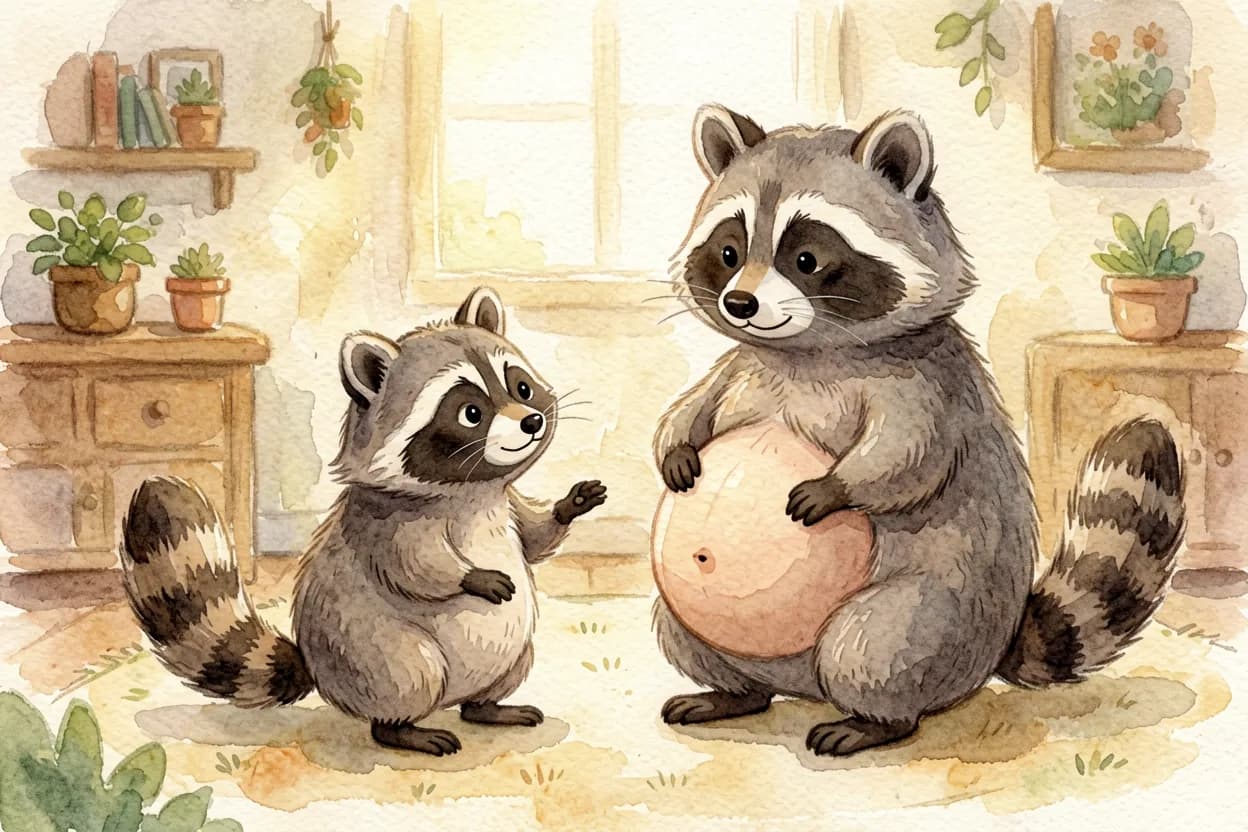
Ravi the little raccoon had always been the one. The one who got the cuddles, the stories, the whole of Mama and Papa. But now Mama's tummy was round and soft, and everyone kept saying the same thing: "A baby is coming!"
Ravi wasn't sure he wanted a baby. "Will you still have time for me?" he wondered quietly. But he didn't say it out loud.
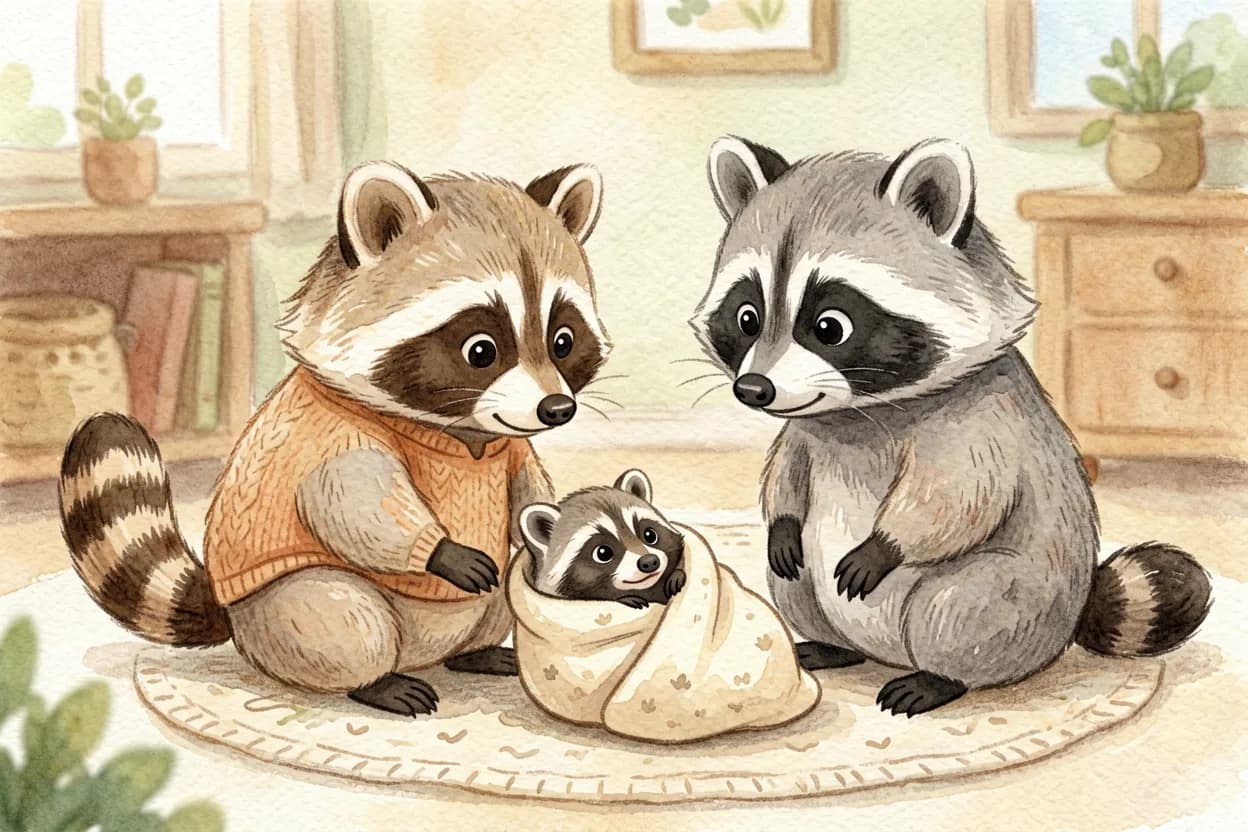
Then, one night, the baby came. She was tiny and pink and wrinkly, with the smallest paws Ravi had ever seen. Everyone crowded round her. "Isn't she perfect?" they cooed.
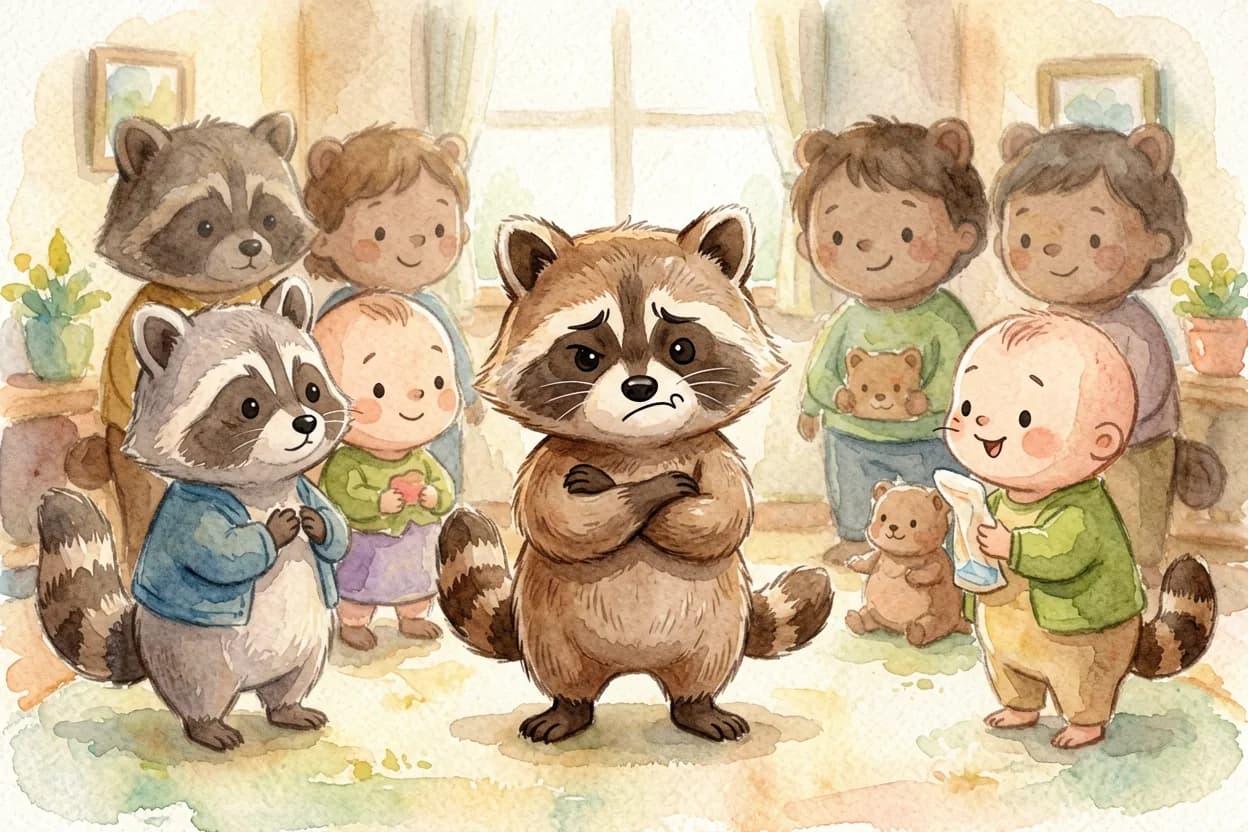
Ravi stood back. Nobody was looking at him now. A hot, prickly feeling bubbled up inside — a feeling he didn't like. "I want to go home," he mumbled. "I want it to be just us again."
Mama noticed. She patted the space beside her. "Come here, my big one," she said softly. "There's something only YOU can do." Ravi shuffled over, unsure.
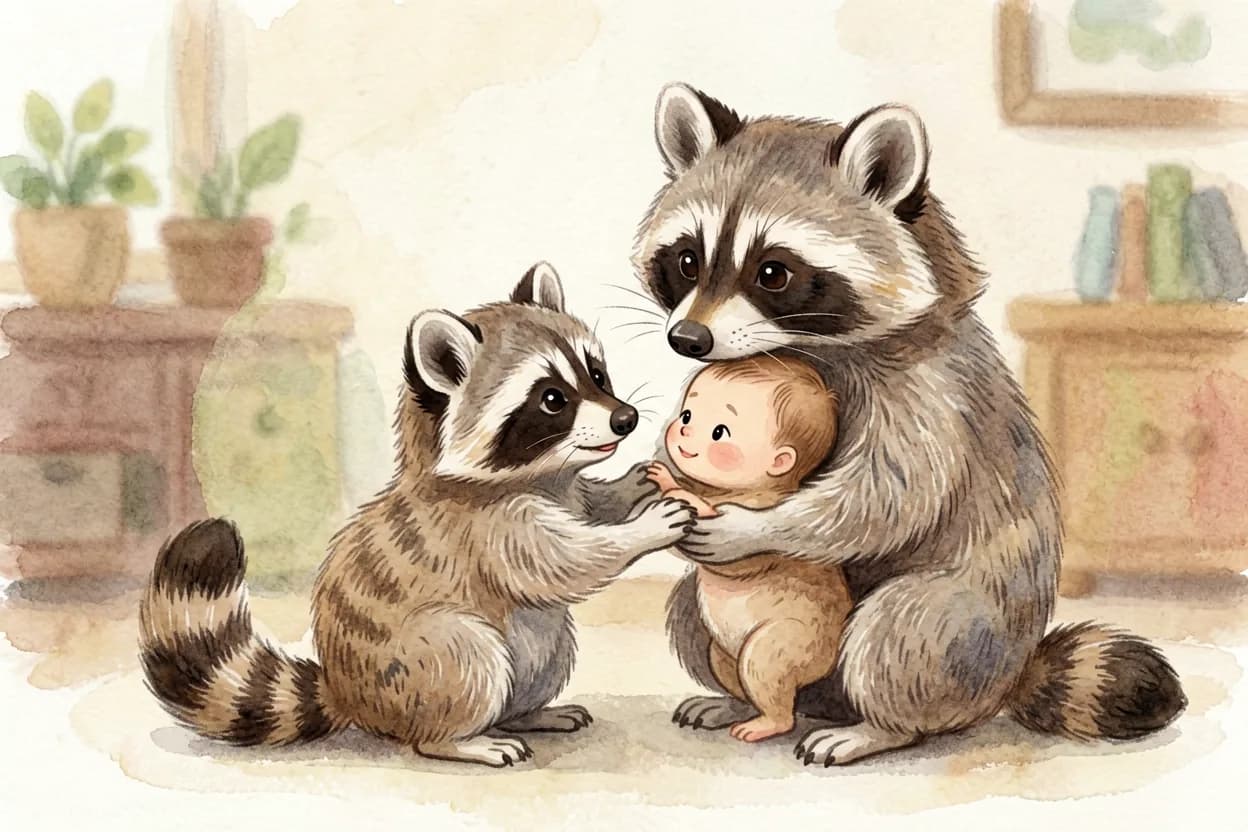
"The baby doesn't know anything yet," Mama whispered. "She doesn't know our songs, or our home, or how to play. She needs a big brother to show her. That's a very important job — and it's yours."
Ravi looked down at the tiny baby. Very gently, he let her hold his finger. Her little paw curled right around it — and she looked straight up at him, as if he were the most interesting thing in the whole world.
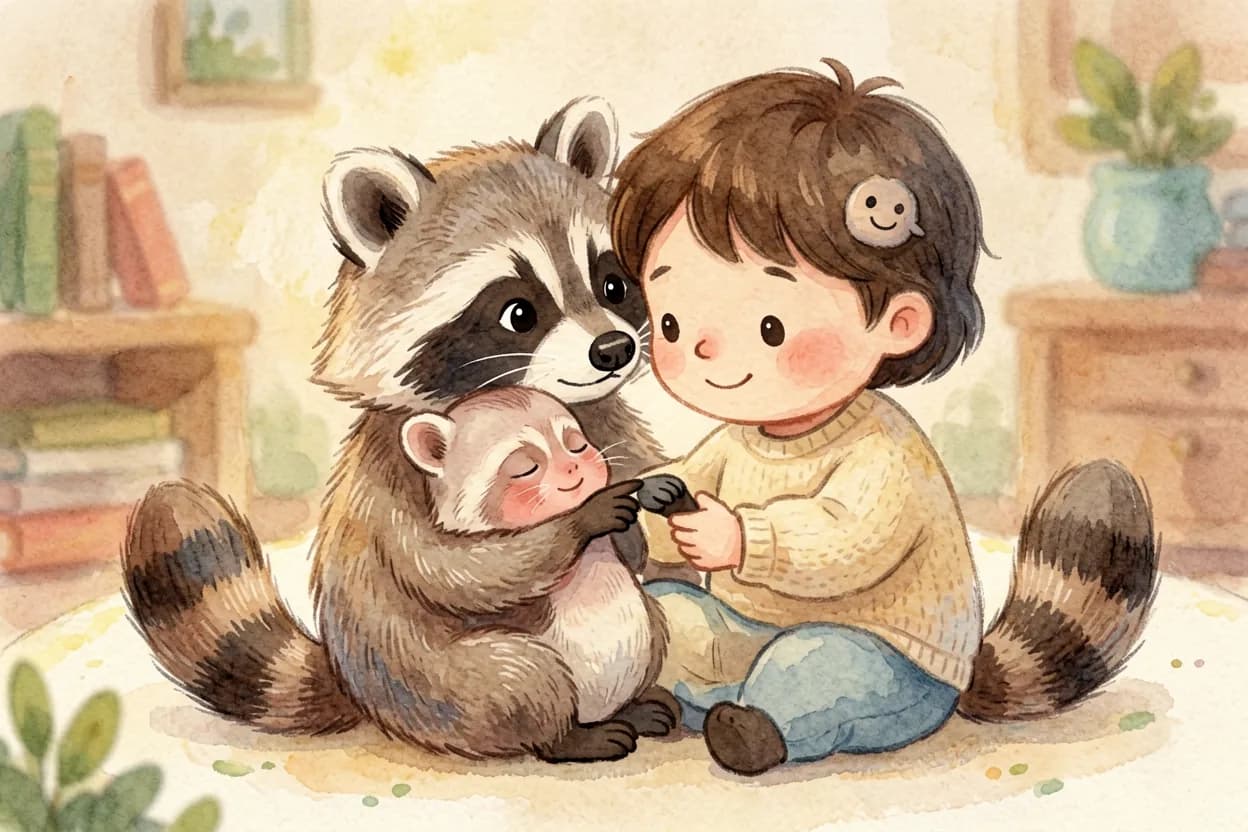
Something melted in Ravi's chest. "Hello," he whispered. "I'm your big brother. I'll show you everything." And he sang her his favourite song, very quietly.
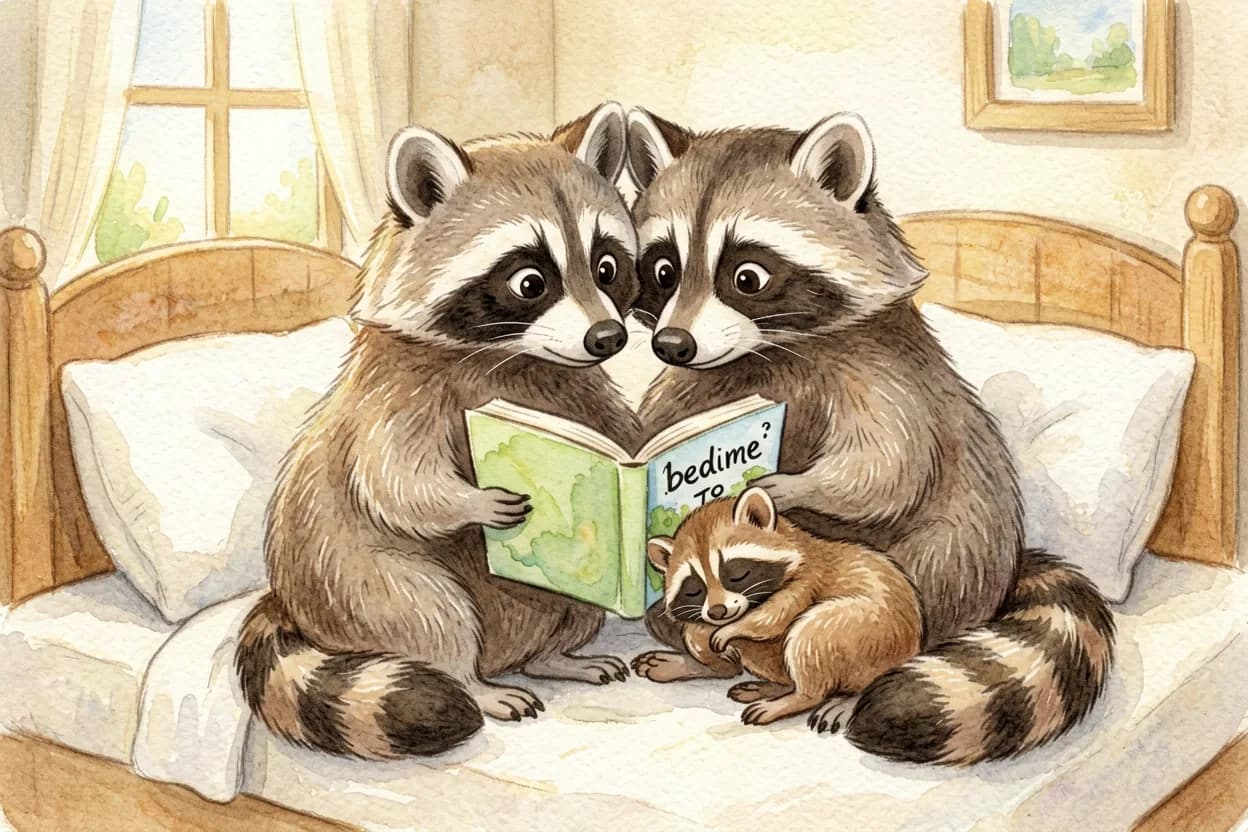
That night, Mama read Ravi his story, just like always. "See?" she said. "There's room for you AND the baby. My love didn't get smaller. It got bigger."
And Ravi, snuggled warm and safe, decided that being a big brother might just be the best job of all.
A new baby doesn't take your place in the family. It makes the family bigger — and gives you a brand-new, very important job.
Questions to ask after reading
- 1How did Ravi feel when he heard a baby was coming?
- 2What was the hot, prickly feeling Ravi felt when everyone looked at the baby?
- 3What special job did Mama say only Ravi could do?
- 4How did Ravi feel when the baby held his finger?
- 5What could you show a new baby if you were the big brother or big sister?
Try it together: welcoming a new sibling
Feeling included and important is what soothes sibling jealousy. These activities help your older child find their place.
- Give a real big-sibling job. Let your child fetch a nappy, pick the baby's outfit, or sing to them — just like Ravi. A genuine role turns 'left out' into 'needed and proud.'
- Make a 'me' book. Look through photos of when your older child was a baby. Seeing that they were cuddled just as much reassures them there's plenty of love to share.
- Special one-on-one time. Carve out small pockets of time that are just theirs — even ten minutes of undivided attention while the baby naps says 'you still matter to me' louder than anything.
- Name the feelings. Read Ravi's story and talk openly: 'It's okay to feel a bit jealous sometimes. You can always tell me.' Permission to feel it takes away its power.
- A gift 'from the baby'. A small present from the new baby to the big sibling can start the relationship on a warm note — and gives your child something that's just theirs.
How to use the story at each age
Before the birth
Prepare your child with simple, honest talk and a story about becoming a big sibling. Involve them in getting ready, and warn them gently that newborns mostly sleep, cry, and feed — they can't play yet. Try to make any big changes (a new bed, starting nursery) well before or after the birth, not right alongside it.
Toddlers (2-3)
Expect regression — clinginess, accidents, baby talk — as a normal bid for attention, and respond with warmth rather than telling them to 'be a big boy.' Keep their routines as steady as you can, and give lots of physical closeness. They can't yet understand the change, so feelings will come out through behaviour.
Preschoolers (4-6)
Older children understand more and can take on real helping roles, which builds pride. Talk openly about mixed feelings — loving the baby and finding it hard can both be true. Protect one-on-one time, and never make them feel their jealousy makes them 'bad.'
Common mistakes (and what to do instead)
- Telling them to 'be a big boy/girl'. This can make a child feel their needs no longer count. They're still little too. Meet the regression with reassurance, not pressure to grow up overnight.
- Dismissing the jealousy. 'Don't be silly, you love your sister' teaches a child to hide the feeling. Name it instead — 'it's hard to share Mummy, isn't it?' — so it can be soothed rather than buried.
- Blaming the baby out loud. 'We can't, because of the baby' makes the newborn the enemy. Frame things positively: 'Let's do this together while she sleeps.'
- Stacking big changes together. Potty training, a new bed, or starting nursery right at the birth overloads a child. Space major transitions out where you can.
- Never protecting one-on-one time. When every moment is shared, resentment grows. Even brief pockets of undivided attention refill your older child's cup.
Making it work in everyday life
The story prepares the heart; daily life is where a new sibling relationship is built. Here's where it shows up.
- During feeds. Feeds are long and can leave an older child feeling shut out. Keep a special basket of books or toys for feed times, or read to both at once.
- When visitors come. Guests naturally rush to the baby. A quiet word — 'ask Ravi to show you his big-brother job' — helps your older child feel seen too.
- At flashpoints. Tiredness and hunger fuel jealousy. Head off the hardest moments with snacks, rest, and closeness rather than correction.
- Every ordinary day. Small, steady reassurance — a wink, a shared joke, 'I love being your Mummy' — does more over weeks than any single grand gesture.
A simple checklist to follow
- Read the story together before and after the baby arrives
- Give your child a real, age-appropriate big-sibling job
- Let them know jealous feelings are normal and can be shared
- Protect small pockets of one-on-one time
- Keep their routines steady through the change
- Reassure often that your love grew bigger, not smaller
Make the story about your child
A raccoon named Ravi is a warm guide. But children pay closest attention when the new big sibling is someone they know from the inside — themselves.
When your child is the hero who feels a bit jealous, then discovers their special big-sibling job, the story stops being about a raccoon and becomes a picture of their own new place in the family. Their name, their baby brother or sister, their proud moment — exactly the reassurance they need right now.
A generic story
A little raccoon feels jealous of the new baby, then finds his special big-brother role.
Your child's story
Aarav feels jealous when baby sister Anya arrives, then learns he's the big brother who can sing to her and show her everything — with Aarav as the hero on every page.
Parents also ask
Why is my older child acting out since the new baby arrived?
Because a new sibling is one of the biggest emotional upheavals of early childhood. Your older child is grappling with jealousy and the loss of your undivided attention, and those feelings often come out as tantrums, clinginess, regression, or baby talk. It's a completely normal response, not naughtiness, and it eases as your child finds their new place in the family.
How do I prepare my child for a new sibling?
Talk simply and honestly before the birth, read a story about becoming a big sibling, and involve them in getting ready. Warn them gently that newborns mostly sleep, feed, and cry at first. Try to avoid stacking other big changes (a new bed, starting nursery) right at the birth, and reassure them often that your love is growing, not shrinking.
How should I handle jealousy of the baby?
Name it and allow it rather than dismissing it: 'It's hard to share Mummy, isn't it?' Give your older child a real big-sibling role so they feel important, protect small pockets of one-on-one time, and never make them feel their jealousy makes them bad. A feeling that can be spoken is one that can be soothed.
My potty-trained child is having accidents again since the baby came. Is that normal?
Yes, regression is very common after a new sibling — accidents, clinginess, and baby talk are all bids for reassurance. Respond with warmth rather than pressure, keep routines steady, and it usually passes as your child settles into the new normal.
How can I give attention to my older child with a newborn to care for?
It doesn't take much to make a difference. Even ten minutes of undivided attention while the baby naps, reading together during feeds, or a shared joke through the day refills your older child's cup. Small, frequent reassurance beats occasional grand gestures.
Should I get a gift 'from the baby' for my older child?
Many families find it a lovely touch. A small present from the new baby to the big sibling can start the relationship warmly and give your older child something that's just theirs amid all the attention on the newborn. It's optional, but it can help.
Are personalized stories helpful when a new sibling arrives?
For many children, yes. A story where they are the hero becoming a big brother or sister — feeling wobbly, then finding their special role — makes the change feel manageable and gives them a proud new identity. It's a gentle tool alongside plenty of reassurance and one-on-one time.
More free stories for kids
About the author
Andy — Andy is the founder of Doodara and builds the illustration pipeline behind it — the part that has to keep a child's character looking like the same child on every page of a book. Most of that work is character consistency, content safety for material aimed at young children, and the unglamorous business of making a generated book good enough that a family reads it twice.