
Dentist Stories for Kids
A complete original picture book about a first dental visit you can read before the appointment — plus the practical tips that turn dentist fear into a proud, sparkly smile.
ByAndyFounder of Doodara
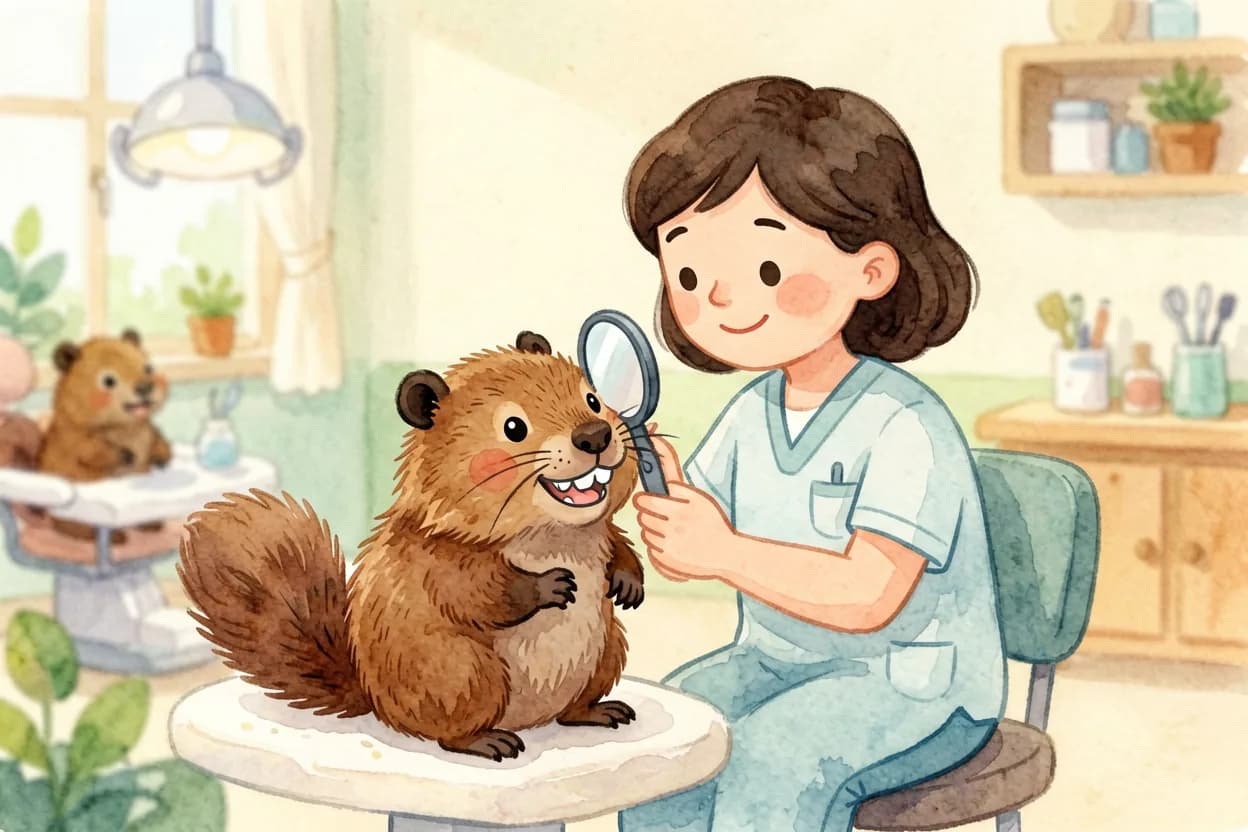
Quick answer
The books that make a first dental visit easier are the ones that walk through the whole appointment in order — the chair, the light, the noises — so nothing in the room is a surprise. This page has a complete original picture book, Dara's Sparkly Smile, free to read tonight, plus discussion questions and age-by-age guidance for ages 3-7. The practical move: read it two or three times in the week before the visit, then let your child play dentist on you, which puts them in charge of the scary part.
The dentist can be one of the scariest places for a young child: the big reclining chair, the bright light, the funny noises, and a stranger asking to look inside their mouth — one of the most personal, protected parts of their little body. If your child clamps their lips shut or bursts into tears at the door, they're not being naughty. They're facing a strange, unknown experience, and that's exactly what frightens children most.
A little fear of the dentist is normal and, happily, very preventable. Children who start dental visits early — around their first birthday, or when their first teeth come through — and who know what to expect tend to take it in their stride. The goal isn't to force a frightened child to be brave; it's to make the whole thing so familiar and friendly that there's not much to fear.
You have real power to shape how your child feels about the dentist for life. Keeping your own words positive, playing dentist at home, and sharing a story where a character has a happy first visit all set the tone. Get the early visits right and you give your child a lifetime of walking into the dentist without dread — and a healthy, sparkly smile to go with it.
Why stories help
Dentist fear is fear of the unknown, and a story lifts the mystery. When a character sits in the big chair, counts their teeth in the mirror, and gets a sparkly clean smile, your child learns exactly what happens — and knowing melts most of the worry.
Children copy characters they love. A little beaver who's nervous and then proud gives your child a brave model to follow, far more convincing than 'there's nothing to be scared of.'
And a story is the perfect calm moment to talk about the sounds, the light, and the funny wiggly chair before your child meets them for real — so nothing comes as a frightening surprise.
How a story becomes a habit
Dara's Sparkly Smile
An original picture book about the dentist — free to read aloud before the visit.
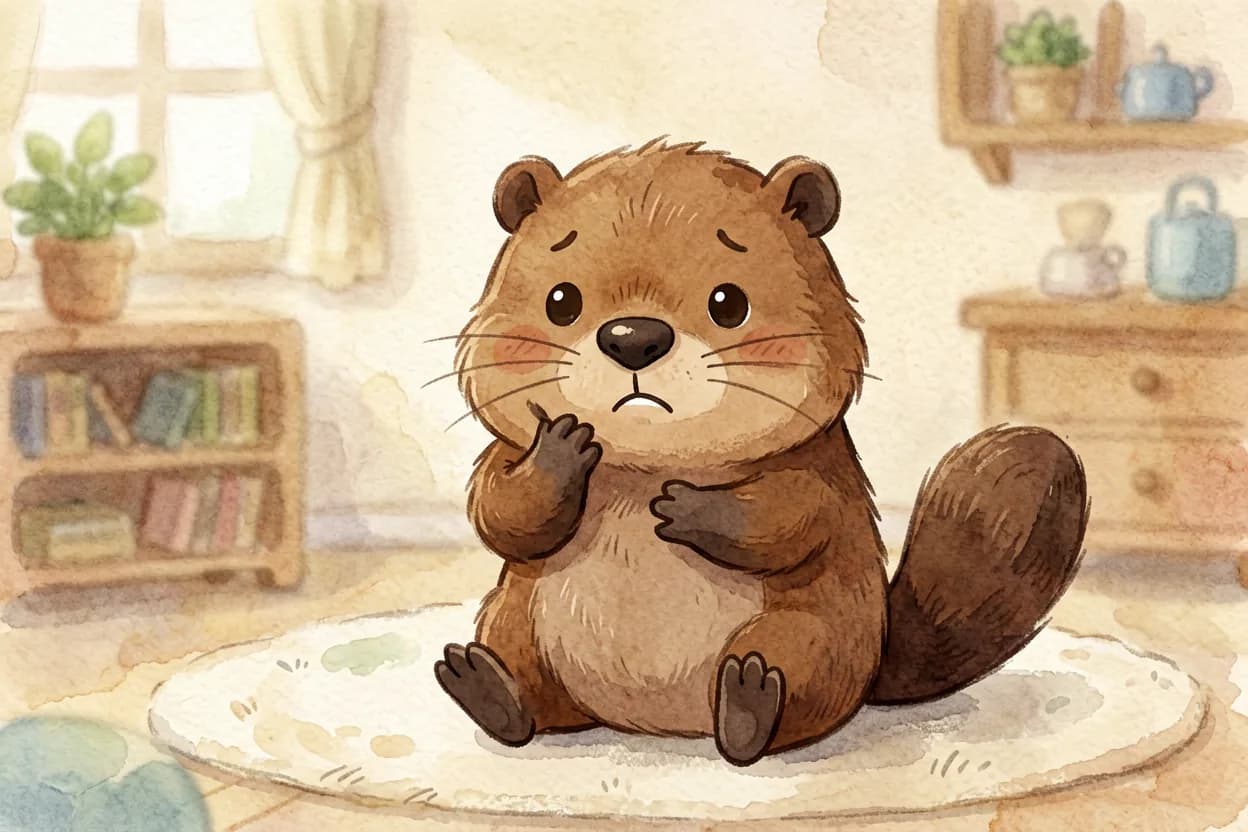
Dara the little beaver had strong, shiny teeth — perfect for nibbling. But today was her very first trip to the dentist, and her tummy felt all fluttery. "What if it hurts?" she whispered.
"The dentist is a tooth friend," said Papa. "She counts your teeth and helps keep them healthy. Shall I show you what happens?" Dara nodded, holding his paw a little tighter.
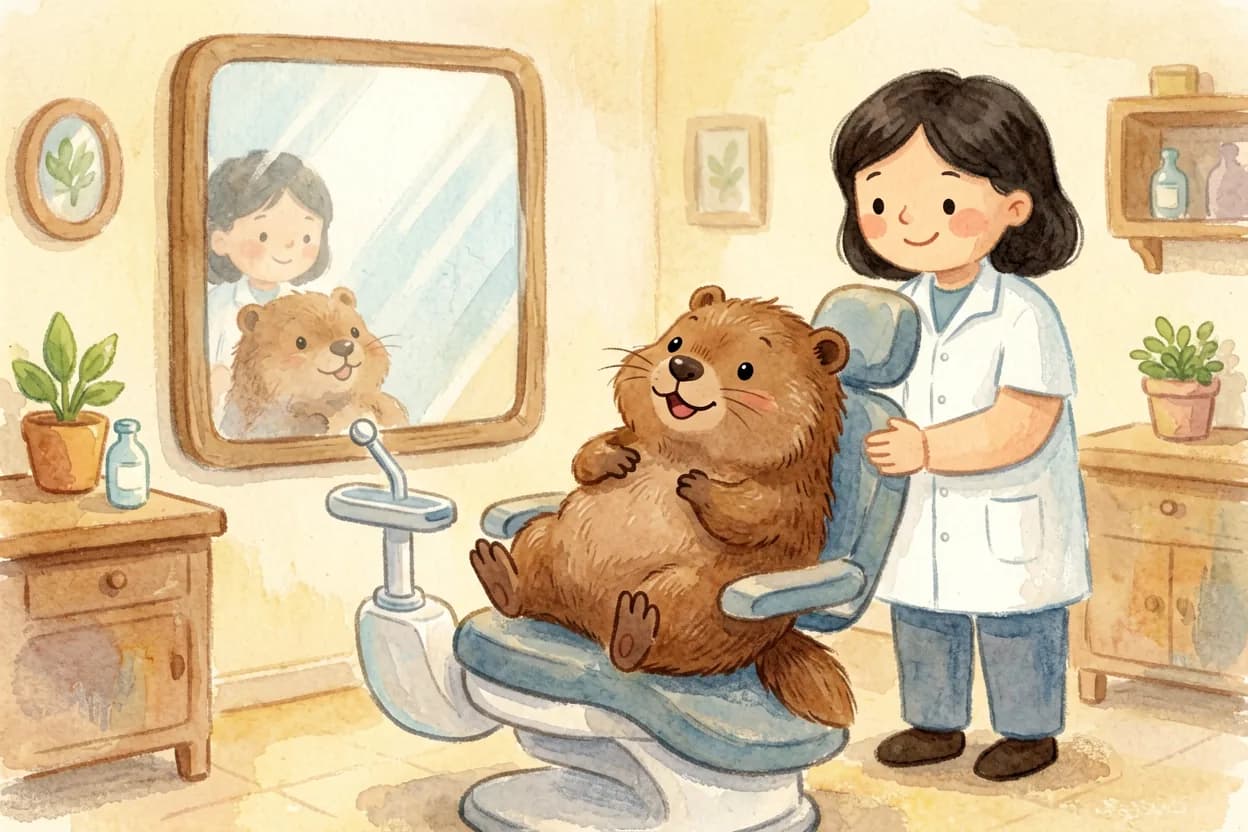
At the surgery, a cheerful dentist named Doctor Poppy waved. "Hello, Dara! What lovely teeth! Would you like a ride in my special wiggly chair?" The chair leaned back slowly — whee! — like a gentle rocket.
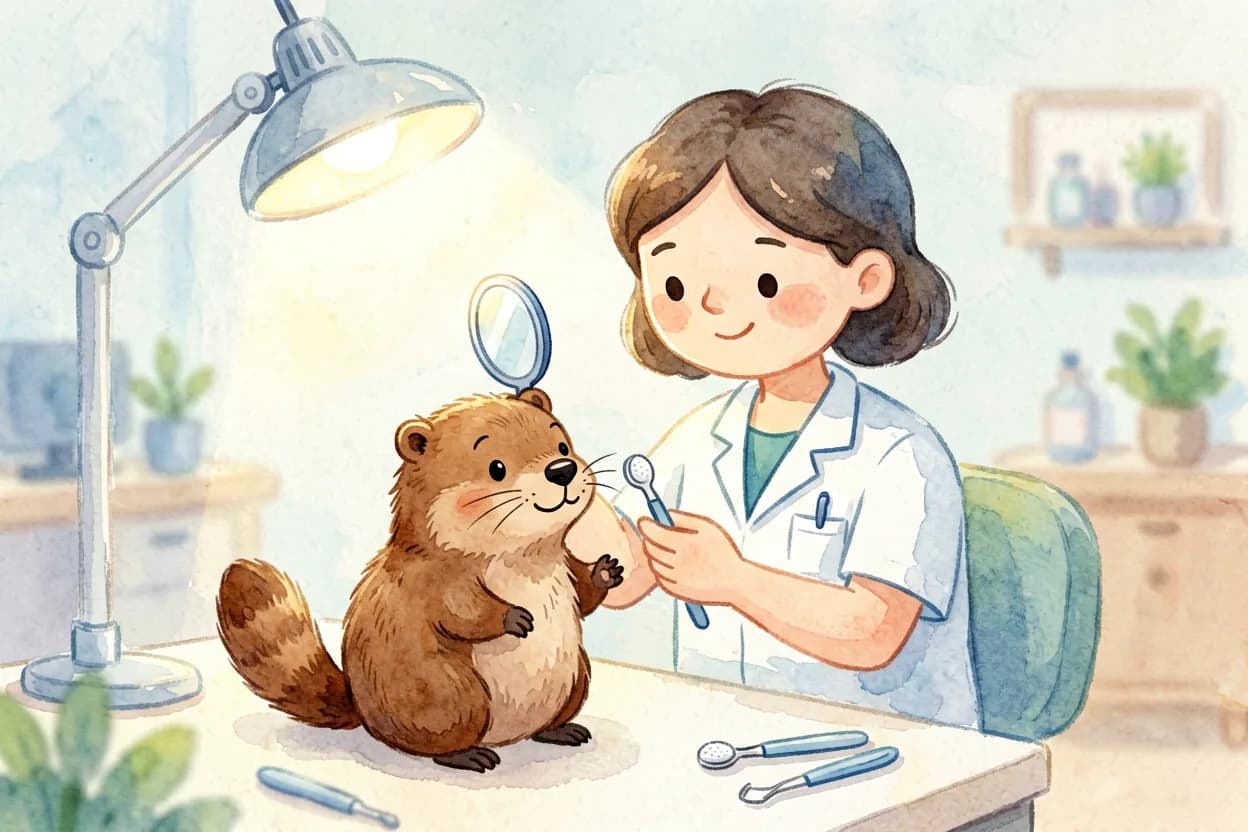
"This is my little mirror and my tooth-counter," said Doctor Poppy, showing Dara each tool. "And this bright light helps me see. Nothing here will hurt. Want to count your teeth with me?"
"One, two, three..." They counted together in the mirror. Dara's teeth were big and white and strong. "Wonderful!" said Doctor Poppy. "You've been brushing so well." Dara felt a little glow of pride.
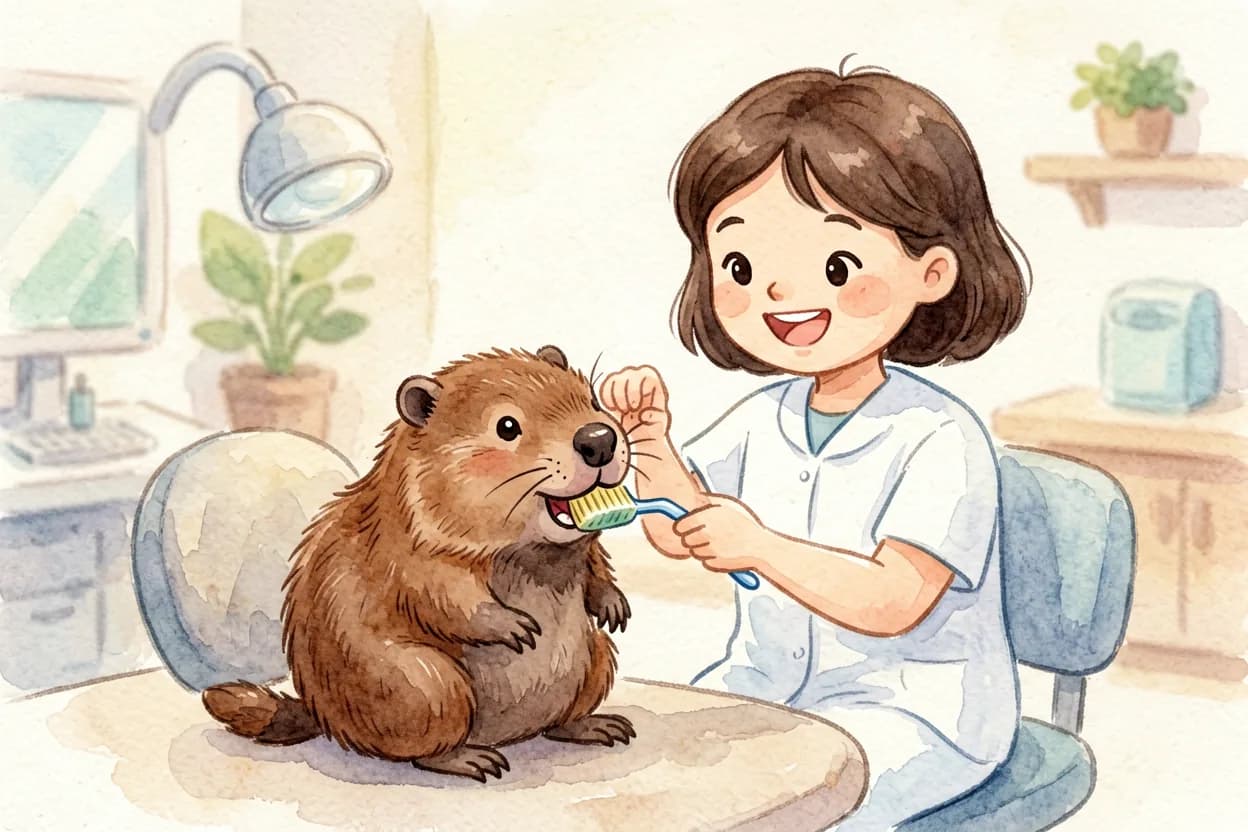
Then came a whirry little brush that tickled and buzzed. It polished each tooth until it sparkled. It felt funny and a bit ticklish — but it didn't hurt one tiny bit. Dara even giggled.
"All done!" said Doctor Poppy. "Your teeth are healthy and sparkly clean. Keep brushing morning and night, and I'll see you again to say hello." She gave Dara a brand-new toothbrush in her favourite colour.
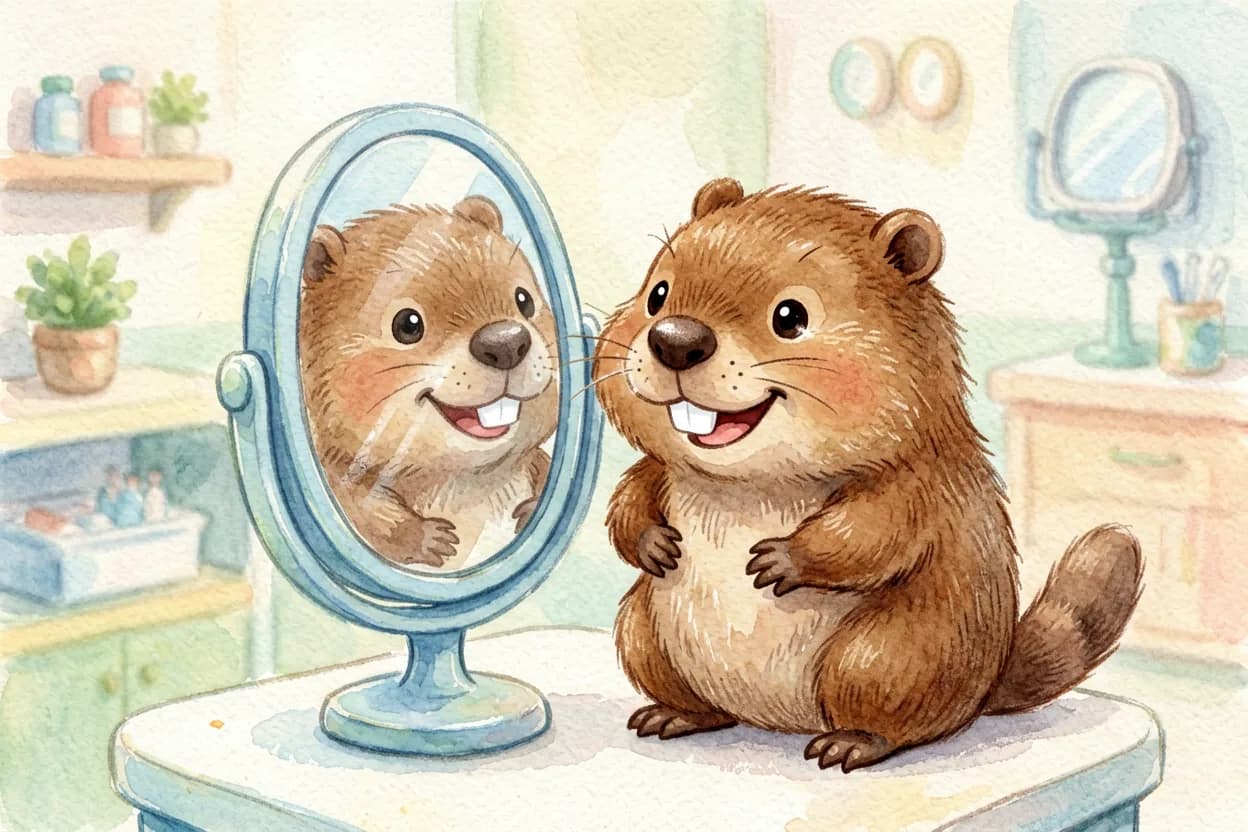
Dara ran her tongue over her smooth, clean teeth and beamed. "That wasn't scary at all," she said, surprised. "It was actually kind of fun!"
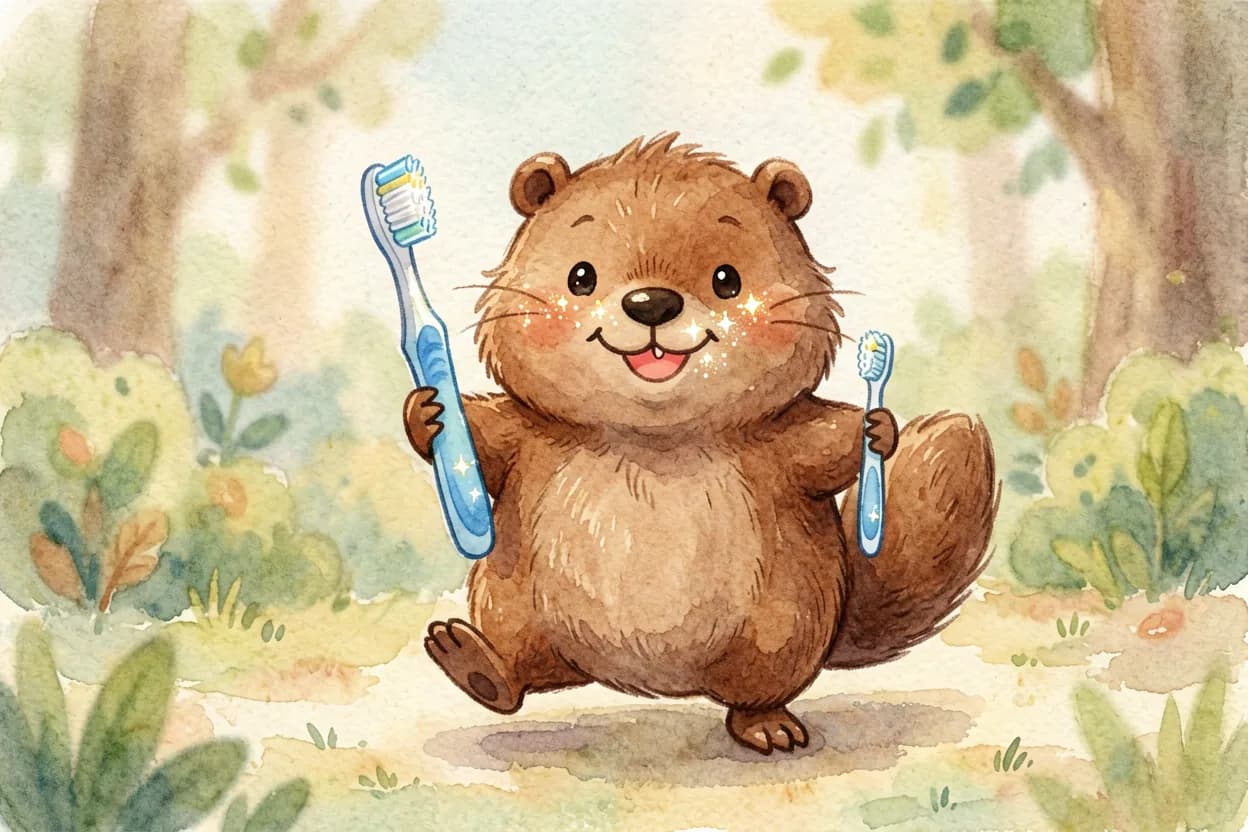
On the way home, Dara showed everyone her sparkly smile and her new toothbrush. "I can't wait to go back," she said — and she really meant it.
The dentist helps keep our smiles healthy and strong. And most scary-looking things turn out to be friendly once we say hello.
Questions to ask after reading
- 1Why was Dara nervous about the dentist?
- 2What did Doctor Poppy do to help Dara feel comfortable?
- 3What did the wiggly chair and the sparkly brush feel like?
- 4How did Dara feel about the dentist by the end?
- 5How do you look after your teeth at home every day?
Try it together: easing dentist fear
Familiarity and good habits make the dentist friendly. These activities prepare your child before the chair.
- Play dentist at home. Count teddy's teeth with a little mirror, then let your child count yours and you count theirs. Acting it out makes the real visit familiar.
- Practise 'open wide'. Make a game of opening wide and counting teeth in the mirror. A child used to showing their teeth finds the real check-up far easier.
- Make brushing fun. Brush together morning and night with a favourite song or a two-minute timer. Good habits mean happy check-ups — and less to fear.
- Read the story beforehand. Share Dara's story before the visit. Talk about the wiggly chair and the sparkly brush so the sounds and sights are known, not surprising.
- Keep your words positive. Never mention pain, drills, or your own dental dread. Describe it as counting and polishing teeth — because for most first visits, that's exactly what it is.
How to use the story at each age
First visits (around 1-3)
Start early — around the first birthday or when first teeth appear — so the dentist is familiar before any worry sets in. Keep early visits short and positive; often they're just a quick look and a count. Let your child sit on your lap if that helps.
Preschoolers (3-5)
Now you can play dentist at home and walk through the visit. Be honest and upbeat, praise their bravery, and let them bring a comfort toy. Avoid loading the visit with warnings or your own anxiety — keep it light and matter-of-fact.
Older children (5-6)
Explain the why: the dentist keeps teeth healthy so they can eat and smile. Let them ask questions and answer honestly, including about wobbly baby teeth falling out (a normal, exciting part of growing up). A little control — choosing the toothbrush colour — builds cooperation.
Common mistakes (and what to do instead)
- Sharing your own dental fear. If you dread the dentist, keep it to yourself. Children absorb our anxiety fast. Model calm, even if you have to fake it a little.
- Using scary words. 'Drill', 'needle', 'it might hurt' plant fear before you arrive. Stick to friendly language: counting teeth, a sparkly polish, a tooth friend.
- Waiting until there's a problem. First meeting the dentist during a painful emergency guarantees a scary association. Start early, routine visits so the dentist is a familiar friend.
- Using the dentist as a threat. 'If you eat sweets, the dentist will drill your teeth' makes visits frightening. Keep the dentist a helper, not a punishment.
- Promising 'nothing will happen'. If a filling or treatment is needed, be honest in simple terms. A surprise in the chair damages trust more than a gentle heads-up.
Making it work in everyday life
The story removes the mystery; daily habits keep the dentist friendly. Here's where it shows up.
- At brushing time. Twice-daily brushing with a song or timer builds the habit that keeps check-ups happy — and makes 'open wide' second nature.
- In the waiting room. Bring a favourite book and stay relaxed. A calm wait sets a calm tone for the whole visit.
- In the chair. Let them sit on your lap if allowed, hold their hand, and let the dentist lead with friendly words. Your calm presence is the anchor.
- When a tooth wobbles. Frame losing baby teeth as exciting growing-up, not something to fear — the tooth fairy helps here. It keeps their whole relationship with teeth positive.
A simple checklist to follow
- Read the story together before the visit
- Play dentist at home and practise 'open wide'
- Brush together morning and night, and make it fun
- Keep all your words about the dentist positive
- Start dental visits early and keep them routine
- Praise your child's sparkly smile and bravery afterwards
Make the story about your child
A beaver named Dara is a cheerful guide. But children pay closest attention when the brave patient in the chair is someone they know from the inside — themselves.
When your child is the hero who feels nervous, rides the wiggly chair, and shows off a sparkly clean smile, the story stops being about a beaver and becomes a picture of their own visit going well. Their name, their bravery, their brand-new toothbrush — exactly the reassurance they need beforehand.
A generic story
A little beaver is nervous about the dentist but discovers it's friendly and fun.
Your child's story
Theo is nervous about his first dentist visit, rides the wiggly chair, and shows off his sparkly smile — with Theo as the hero on every page.
Parents also ask
When should my child first go to the dentist?
Most guidance suggests a first dental visit around your child's first birthday or when their first teeth come through. Starting early keeps visits short, positive, and familiar before any fear can set in — and lets the dentist catch and prevent problems while building a friendly relationship.
How do I prepare my child for the dentist?
Take away the mystery. Play dentist at home with a mirror, practise 'open wide' and counting teeth, and read a story about a happy dental visit. Keep all your language positive — describe counting and polishing teeth rather than drills or pain — and bring a comfort toy.
My child is terrified of the dentist. What can I do?
Acknowledge the fear rather than dismissing it, keep your own manner calm and positive, and let them sit on your lap and hold your hand. Play dentist at home beforehand, choose a child-friendly dentist, and focus on genuine praise afterwards. Familiarity, built up over routine visits, is the surest cure.
Should I tell my child if they need a filling or treatment?
Yes, honestly but simply. A surprise in the chair damages trust and makes future visits harder. Explain in gentle, non-scary terms what will happen, and reassure them you'll be right there. Ask the dentist to talk your child through it too.
How can I stop passing on my own dental anxiety?
Be mindful of your words and tone — children read our anxiety quickly. Avoid scary terms and stories of your own bad experiences, model calm even if you have to fake it, and take a breath before you go in. Your relaxed manner does more than any reassurance.
What if my child won't open their mouth for the dentist?
This is common and dentists who see children are used to it. Don't force it — keep early visits short and pressure-free, let them warm up, and try again. Practising 'open wide' as a game at home, and reading a dentist story beforehand, both make it easier over time.
Are personalized stories helpful for dentist visits?
For many children, yes. A story where they are the brave patient with a happy, sparkly-smile visit makes the experience familiar and positive, and gives them a picture of themselves coping well. It's a supportive tool alongside early routine visits and upbeat, honest preparation.
More free stories for kids
About the author
Andy — Andy is the founder of Doodara and builds the illustration pipeline behind it — the part that has to keep a child's character looking like the same child on every page of a book. Most of that work is character consistency, content safety for material aimed at young children, and the unglamorous business of making a generated book good enough that a family reads it twice.