Doctor Visit Stories for Kids
A complete original picture book about a check-up you can read before the appointment — plus the practical tips that turn doctor-visit fear into calm curiosity.
ByAndyFounder of Doodara
Quick answer
The books that help before a doctor's appointment are the ones that explain what each piece of equipment does, because most of a young child's fear is of the unknown rather than of pain. This page has a complete original picture book, Momo Visits the Doctor, free to read tonight, plus discussion questions and age-by-age guidance for ages 3-7. The practical move: read it beforehand, and be honest about anything that will hurt — a child who learns you tell the truth about the small things will trust you about the big ones.
For many young children, a trip to the doctor is genuinely frightening. There are strange smells, unfamiliar equipment, a person in a white coat who wants to look in their ears — and, hovering behind it all, the memory or fear of a jab. If your child clings, cries, or refuses at the surgery door, they aren't being difficult. They're facing a big unknown, and the unknown is exactly what frightens children most.
A little fear of the doctor is completely normal, especially between the toddler and early-school years, when children understand enough to worry but not quite enough to reason it away. They can't yet grasp that the check-up keeps them healthy, or that most of it doesn't hurt at all. What they feel is a loss of control in a strange place — and that feeling deserves to be taken seriously, not brushed off.
The most powerful thing you can do is take away the mystery. When a child knows what will happen — the waiting room, the scales, the stethoscope, the light in the ears — the fear shrinks dramatically. Playing doctor at home, being honest and calm, and sharing a story where a character has a check-up and finds it's not so bad all help turn dread into something a child can handle, and sometimes even enjoy.
Why stories help
Doctor-visit fear is really fear of the unknown, and a story is the antidote. When a character walks through the whole appointment — the waiting, the listening to the heartbeat, the peek in the ears — your child learns exactly what to expect, and knowing shrinks the dread.
Watching a beloved character feel nervous and then be brave gives your child a model to copy. 'The little monkey was scared too, and he was so brave' is far more reassuring than 'there's nothing to be scared of' — which a frightened child rarely believes.
And a story lets you talk honestly about the harder parts, including jabs, in a calm moment beforehand rather than a panicked one at the surgery. A child who's been gently prepared copes far better than one taken by surprise.
How a story becomes a habit
Momo Visits the Doctor
An original picture book about a check-up — free to read aloud before the visit.
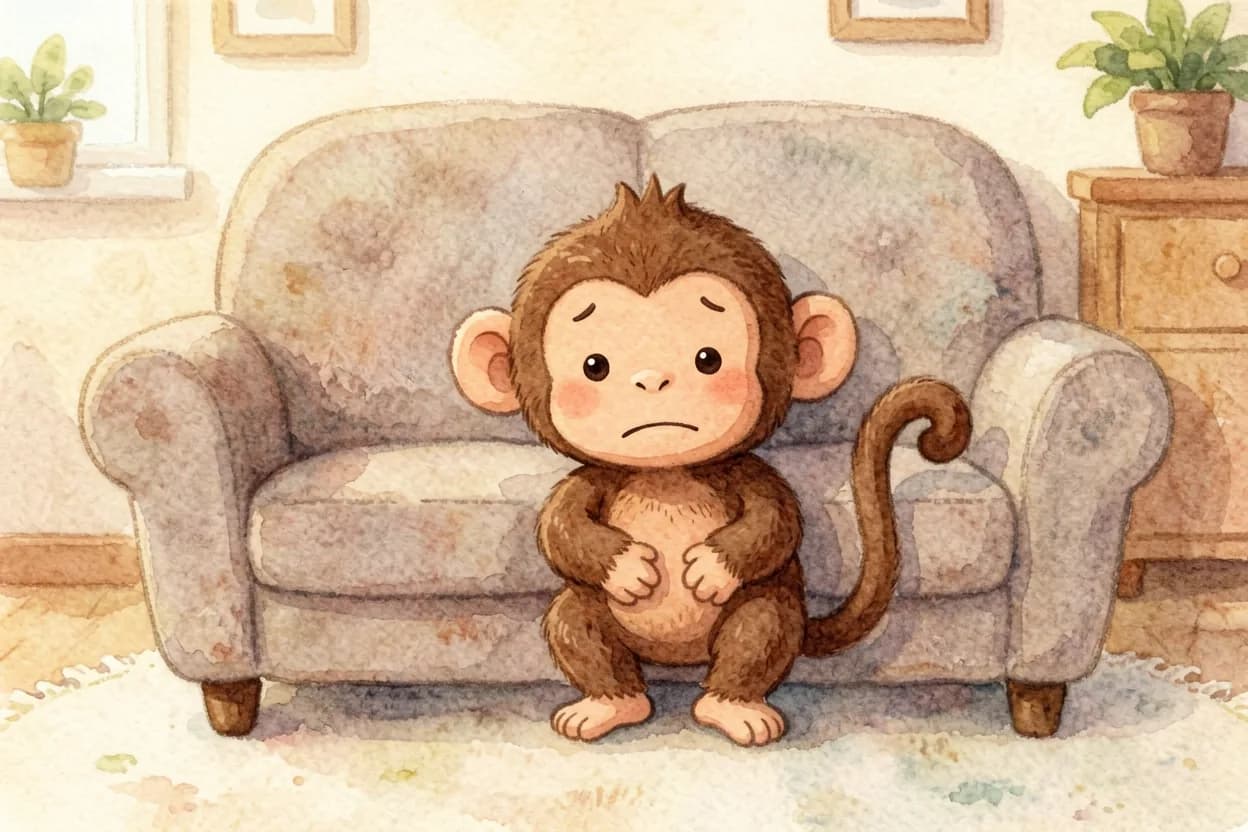
Momo the little monkey had a check-up today. When Mama told him, his tail curled up tight. "I don't want to go," he said, hiding behind the sofa. "The doctor is scary."
"I understand," said Mama, sitting down beside him. "New places can feel scary. But the doctor is a friend who helps us stay healthy. Shall I tell you exactly what will happen?" Momo nodded slowly.
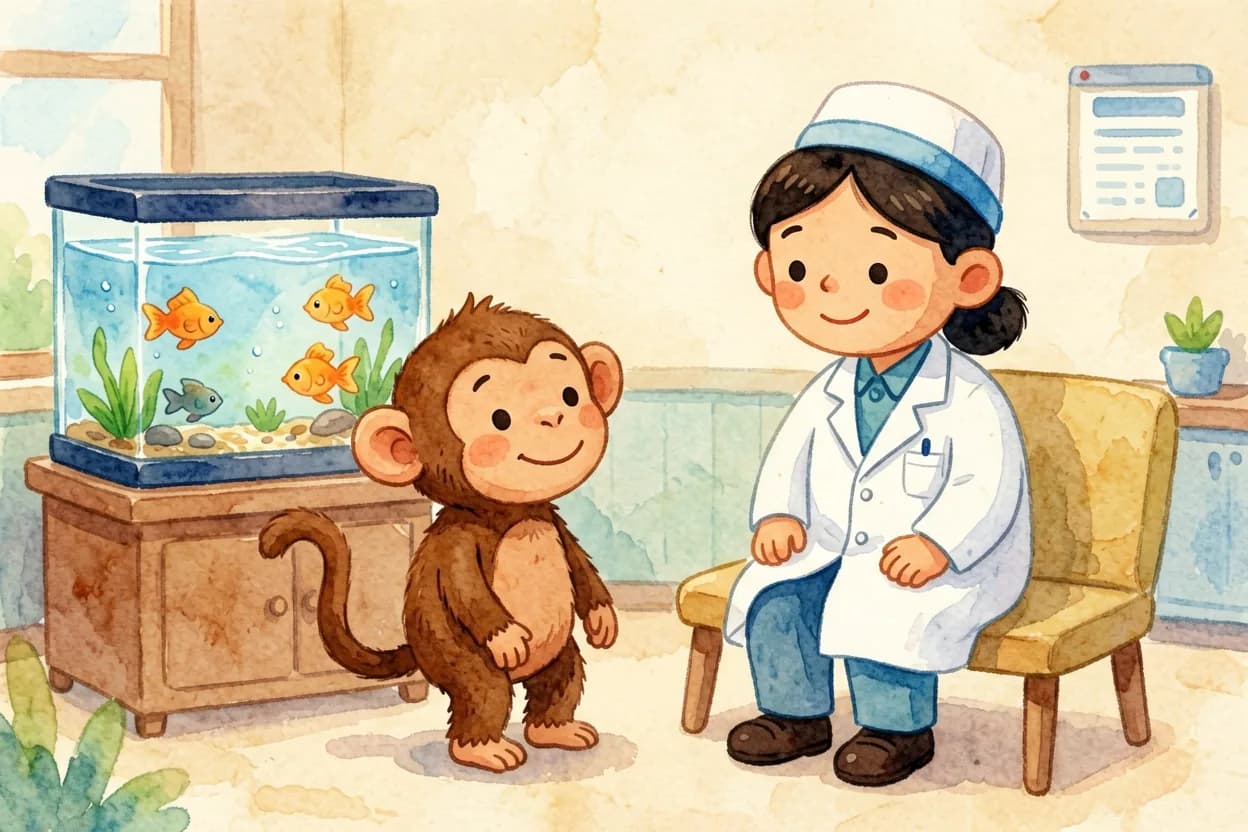
At the surgery, they sat in the waiting room with picture books and a fish tank. Then a smiling doctor called his name. "Hello, Momo! I'm Doctor Fern. I'm so glad you came. Would you like to see my special tools?"
First, Momo stood on the scales. "Look how you've grown!" said Doctor Fern. Then she measured how tall he was, and made a happy little mark on the wall. That part was fun.
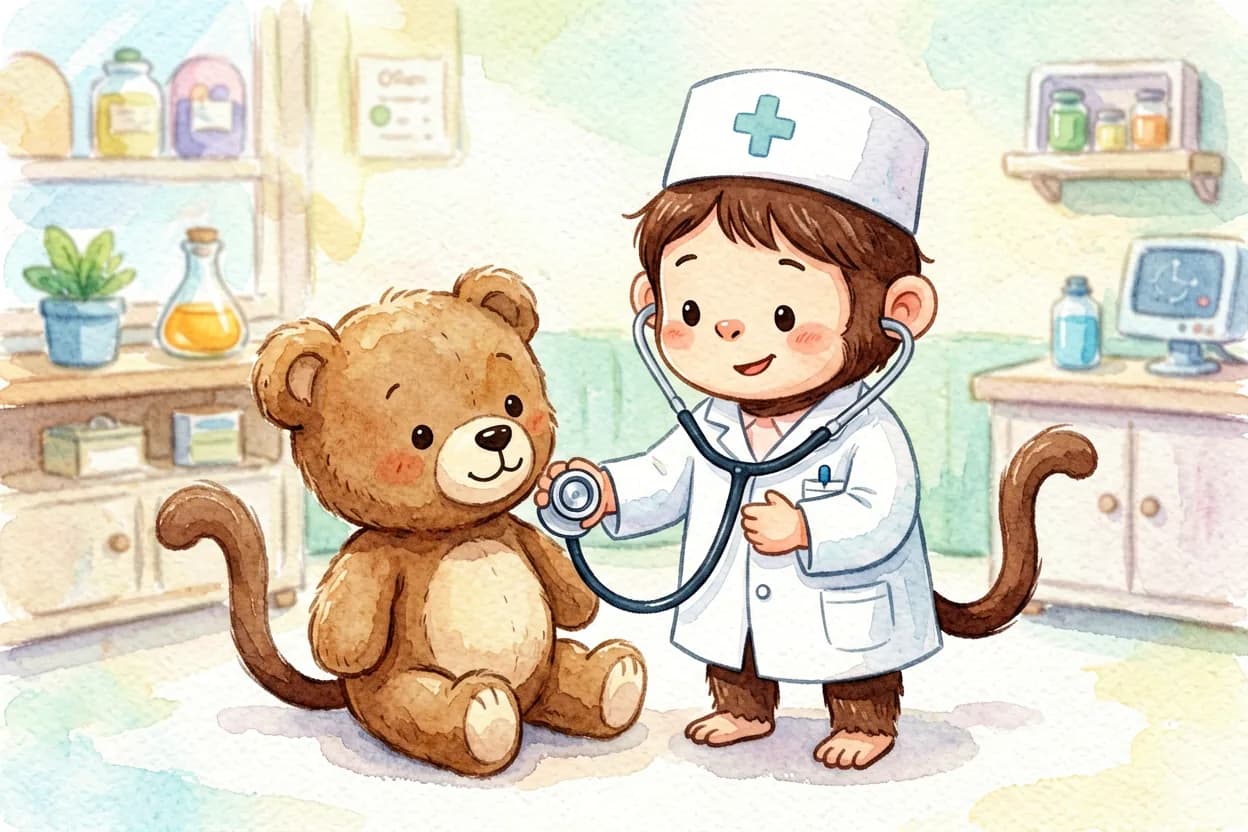
"Now," said the doctor, holding up a stethoscope, "this listens to your heart. It might feel a little cold — want to try it on your teddy first?" Momo pressed it to his teddy's chest. Then, bravely, to his own. Thump-thump, thump-thump.
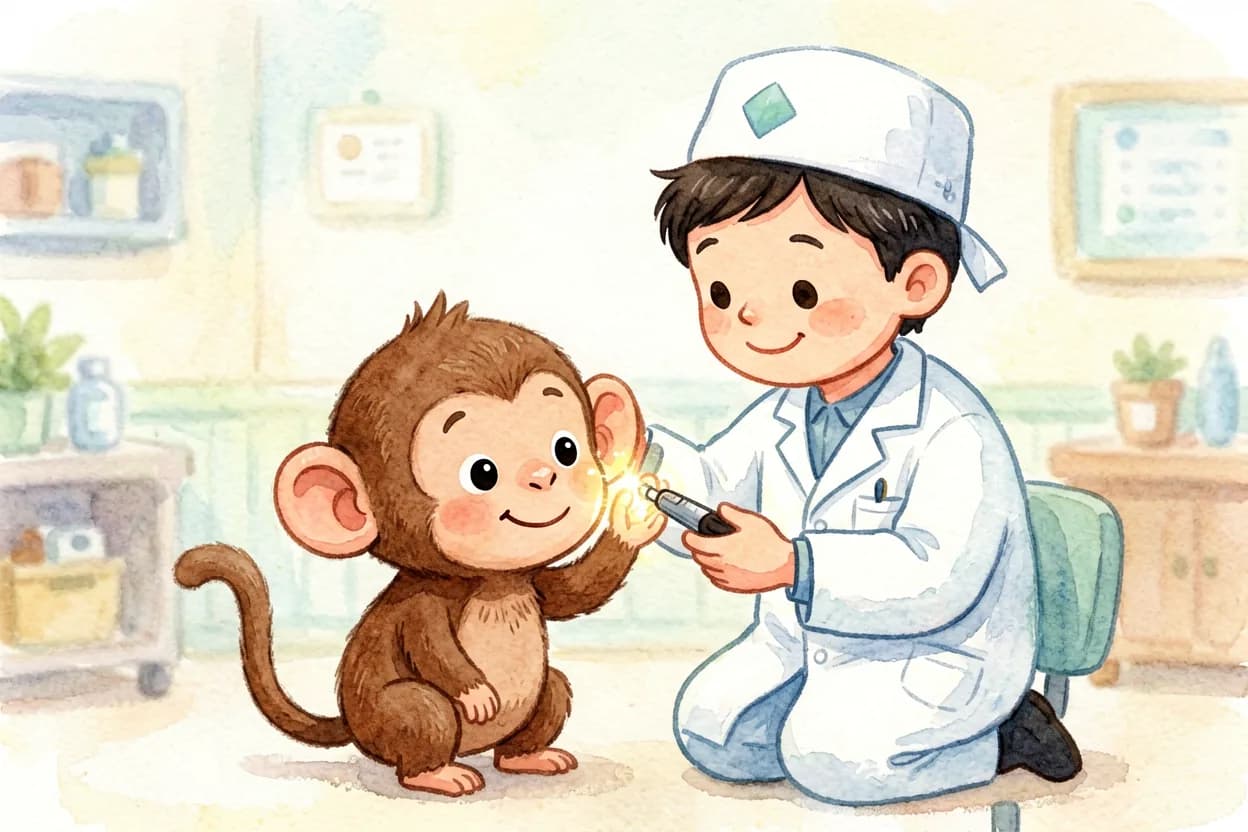
She peeked in his ears with a tiny light. "I can see all the way to your thoughts!" she joked, and Momo giggled. She looked at his throat when he roared like a lion. None of it hurt at all.
"You've been so brave," said Doctor Fern. "There's just one more thing — a tiny jab to keep you healthy and strong. It's a quick sharp pinch, like this—" and she pinched her own arm gently. "You can squeeze Mama's hand and look away."
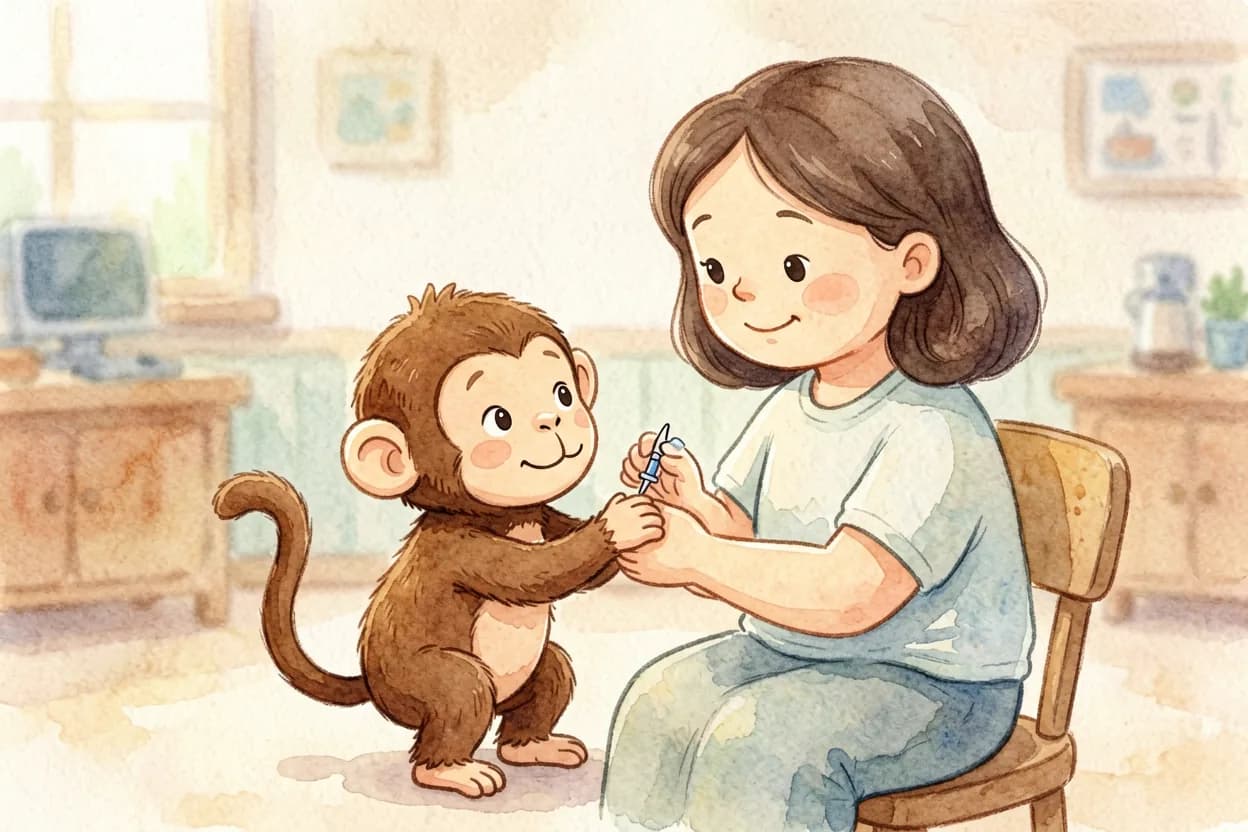
Momo held Mama tight and looked at the fish tank. There was a quick little sting — ow! — and then it was over. A single tear, and then a sparkly sticker for being so brave. "That's it?" said Momo, surprised.
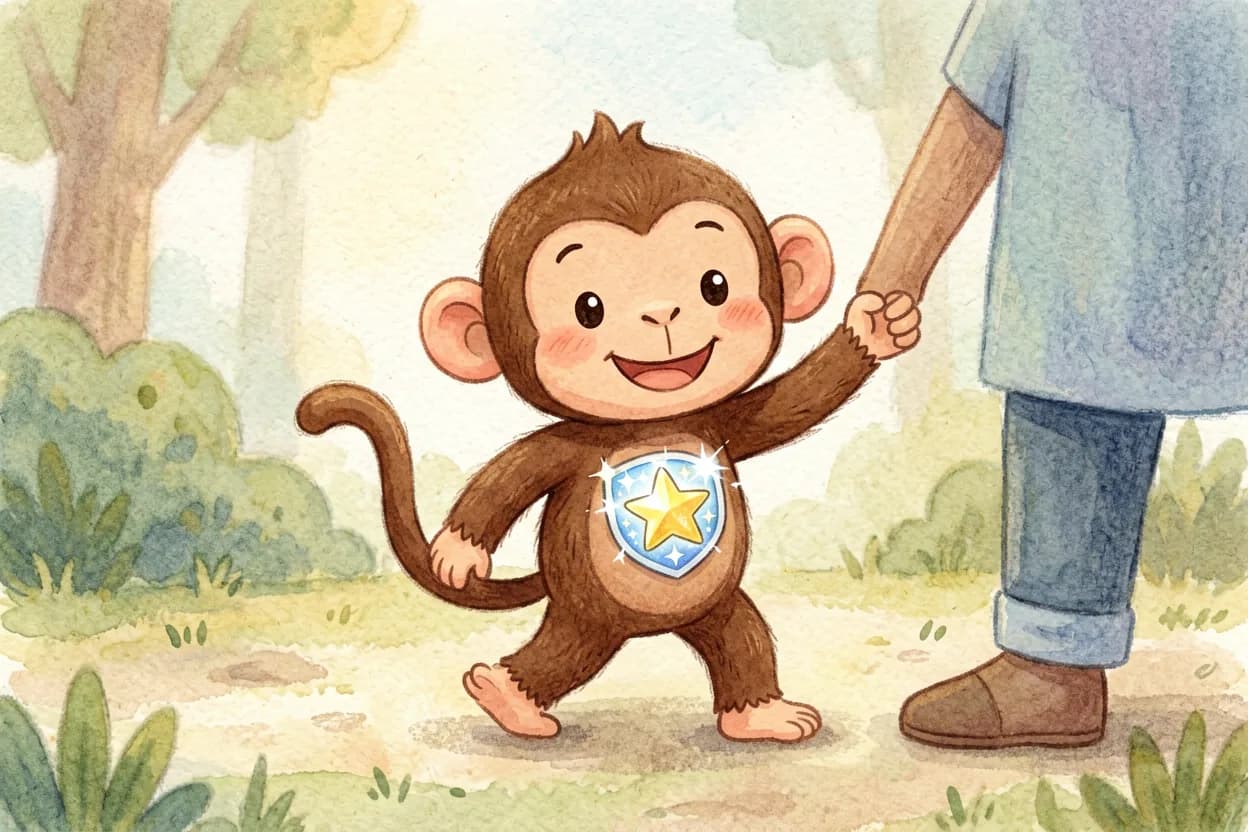
On the way home, Momo wore his sticker with pride. "The doctor wasn't scary," he decided. "She was kind. And I was SO brave." "You really were," said Mama, giving his paw a squeeze.
The doctor is a friend who helps us stay healthy. And the things that feel scary are often not scary at all once we understand them.
Questions to ask after reading
- 1Why was Momo scared to go to the doctor?
- 2What kind things did Doctor Fern do to help Momo feel comfortable?
- 3What did the stethoscope do? Did it hurt?
- 4How did Momo feel after the jab was over?
- 5What could you hold or look at to be brave, like Momo did?
Try it together: easing doctor-visit fear
Familiarity is the best cure for fear of the doctor. These activities take away the mystery before you ever reach the waiting room.
- Play doctor at home. Use a toy medical kit to check teddy's heart, ears, and throat, then swap roles. Acting out the visit makes the real equipment familiar and much less scary.
- Walk through the visit. Tell your child, step by step, what will happen — waiting room, scales, stethoscope, ears. A child who knows the plan feels far more in control.
- Practise 'brave tricks'. Rehearse squeezing your hand, looking away, and taking a big breath. Having a plan for the hard moment helps a child feel ready rather than ambushed.
- Read the story beforehand. Share Momo's story in the days before the appointment. Talk about how he felt scared and then brave — and how most of it didn't hurt at all.
- Be honest about jabs. If a jab is likely, don't promise there won't be one. A calm, honest 'it's a quick sharp pinch, then it's done' builds trust; a surprise erodes it.
How to use the story at each age
Toddlers (2-3)
Keep explanations very short and concrete, and do them close to the time — long warnings just build worry at this age. Bring a comfort object, stay physically close, and let your calm be their anchor. Expect tears; your steady presence matters more than any words.
Preschoolers (4-5)
Now you can walk through the visit step by step and play doctor beforehand. Be honest about what might happen, including jabs, and give them 'brave tricks' to use. Praise the effort of being brave, not just the outcome — 'you looked away and squeezed my hand, that was so brave.'
Older children (5-6)
Explain the why: check-ups and jabs keep us healthy and strong. Let them ask questions and answer honestly. Giving them a small sense of control — choosing which arm, holding the sticker — goes a long way. Never shame fear; acknowledge it and coach the courage.
Common mistakes (and what to do instead)
- Promising 'it won't hurt' when it might. A broken promise about a jab destroys trust and makes the next visit harder. Be honest: 'It's a quick pinch, then it's over, and I'll be right here.'
- Springing the visit as a surprise. Avoiding the topic to prevent worry backfires — a child ambushed at the surgery feels betrayed. Gentle, honest preparation helps them cope.
- Dismissing the fear. 'Don't be a baby, it's nothing' teaches a child to hide fear, not handle it. Acknowledge it — 'lots of people feel nervous' — then help them be brave.
- Using the doctor as a threat. 'If you don't behave, the doctor will give you a jab' makes medical visits frightening for years. Keep the doctor firmly a friendly helper.
- Passing on your own anxiety. If needles or clinics make you tense, your child will feel it. Project calm, and take a breath yourself before you go in.
Making it work in everyday life
The story removes the mystery; how you handle the day carries your child through it. Here's where it shows up.
- In the waiting room. Bring a favourite book or toy and stay close and calm. A relaxed wait sets the tone for the whole appointment.
- During the exam. Let your child sit on your lap if they can, and narrate gently what's happening. Familiar words in a strange place are deeply reassuring.
- For jabs. Hold them close, let them look away, and stay honest and steady. A cuddle and genuine praise afterwards matter more than any sticker.
- After the visit. Talk about how brave they were and play it back at home with the toy kit. Ending on pride helps the next visit go better.
A simple checklist to follow
- Read the story together in the days before the visit
- Walk through what will happen, step by step
- Play doctor at home with a toy medical kit
- Be honest about jabs — a quick pinch, then done
- Bring a comfort object and stay calm and close
- Praise the bravery warmly afterwards, hard parts and all
Make the story about your child
A monkey named Momo is a friendly guide. But children pay closest attention when the brave patient is someone they know from the inside — themselves.
When your child is the hero who feels scared, tries the stethoscope on their teddy, and gets through the jab, the story stops being about a monkey and becomes a picture of their own visit going well. Their name, their bravery, their sparkly sticker — exactly the reassurance they need before the appointment.
A generic story
A little monkey is scared of the doctor but discovers the check-up isn't so bad.
Your child's story
Maya is nervous about her check-up, tries the stethoscope on her teddy, and is so brave for her jab — with Maya as the hero on every page.
Parents also ask
Why is my child so scared of the doctor?
Fear of the doctor is very common in young children and almost always comes down to fear of the unknown: strange equipment, a loss of control, and the possibility of a jab. Children this age understand enough to worry but not enough to reason it away. It's a normal stage that eases with familiarity and gentle preparation.
How can I prepare my child for a doctor's visit?
Take away the mystery. Walk through what will happen step by step, play doctor at home with a toy kit, and read a story about a check-up. Be honest about any jabs, and give your child 'brave tricks' like squeezing your hand and looking away. A child who knows the plan feels far more in control.
Should I tell my child about a jab in advance?
Yes — honestly but calmly, and usually fairly close to the time for younger children. Never promise 'it won't hurt' if it might; a broken promise damages trust and makes future visits harder. 'It's a quick sharp pinch, then it's over, and I'll be right here' prepares them without frightening them.
What should I do if my child cries or refuses at the doctor?
Stay calm and close, acknowledge the fear rather than dismissing it, and let them sit on your lap if possible. Narrate gently what's happening, and use the brave tricks you practised. Afterwards, focus on genuine praise for how brave they were, which helps the next visit go more smoothly.
Should I use the doctor or a jab as a threat for bad behaviour?
No — this is worth avoiding entirely. Framing the doctor or an injection as a punishment makes medical visits frightening for years and undermines an important, health-protecting relationship. Keep the doctor firmly a kind, helpful friend.
My child is calm until the appointment and then panics. What can I do?
Bring a comfort object, keep your own manner relaxed (children read our anxiety), and give them a small sense of control — choosing which arm, holding the sticker. Practising at home beforehand and having a rehearsed 'brave plan' both help a child cope in the moment.
Are personalized stories helpful for doctor visits?
For many children, yes. A story where they are the brave patient getting through a check-up makes the experience feel familiar and manageable, and gives them a picture of themselves coping well. It's a supportive tool alongside honest preparation and a calm, close presence.
More free stories for kids
About the author
Andy — Andy is the founder of Doodara and builds the illustration pipeline behind it — the part that has to keep a child's character looking like the same child on every page of a book. Most of that work is character consistency, content safety for material aimed at young children, and the unglamorous business of making a generated book good enough that a family reads it twice.