First Haircut Stories for Kids
A complete original picture book about a first haircut you can read beforehand — plus the practical tips that calm the scissors and turn the barber's chair into an adventure.
ByAndyFounder of Doodara
Quick answer
Before a first haircut, the useful books are the ones that cover the strange details — the cape, the spray bottle, the buzzing, the hair falling — and make clear that none of it hurts and that hair grows back. This page has a complete original picture book, Coco's First Haircut, free to read tonight, plus discussion questions and age-by-age guidance for ages 3-7. The practical move: read it a few days ahead, then let your child cut a doll's hair first so the scissors stop being the frightening part.
A first haircut sounds like a small thing — until you're holding a wriggling, wailing child in a barber's chair, wondering how a pair of scissors became so terrifying. For a young child it can be genuinely frightening: strange snipping sounds close to their head, an unfamiliar person touching them, bits of their own hair falling away, and no clear idea of whether it will hurt. If your child panics, they're not being dramatic. They're facing a strange experience they don't yet understand.
It helps to see it from their side. Toddlers and preschoolers are still learning what belongs to their body and what happens to it, so watching their hair — a part of them — get cut off can feel alarming and even a little bit like losing something. Add the buzzing, the cape, and the sitting still, and it's easy to see why a first haircut can overwhelm a little one.
The good news is that a calm, well-prepared first haircut sets the tone for every one after. When a child knows haircuts don't hurt, that hair grows back, and that they'll look and feel great, the fear fades fast. Playing barber at home, keeping it low-key, and sharing a story where a character has a happy first haircut all help turn dread into a proud new-look adventure.
Why stories help
A first haircut is a mysterious, slightly alarming event, and a story makes it clear and friendly. When a character sits in the chair, hears the snip-snip, and ends up looking great, your child learns exactly what to expect — and that it doesn't hurt at all.
Children copy characters they love. A fluffy little alpaca who's nervous and then proud of their new look gives your child a brave model far more persuasive than 'don't be silly, it's just a haircut.'
And a story reassures on the two things children worry about most: that it won't hurt, and that hair always grows back. Hearing that in a calm moment beforehand makes the real chair far less scary.
How a story becomes a habit
Coco's First Haircut
An original picture book about a first haircut — free to read aloud beforehand.
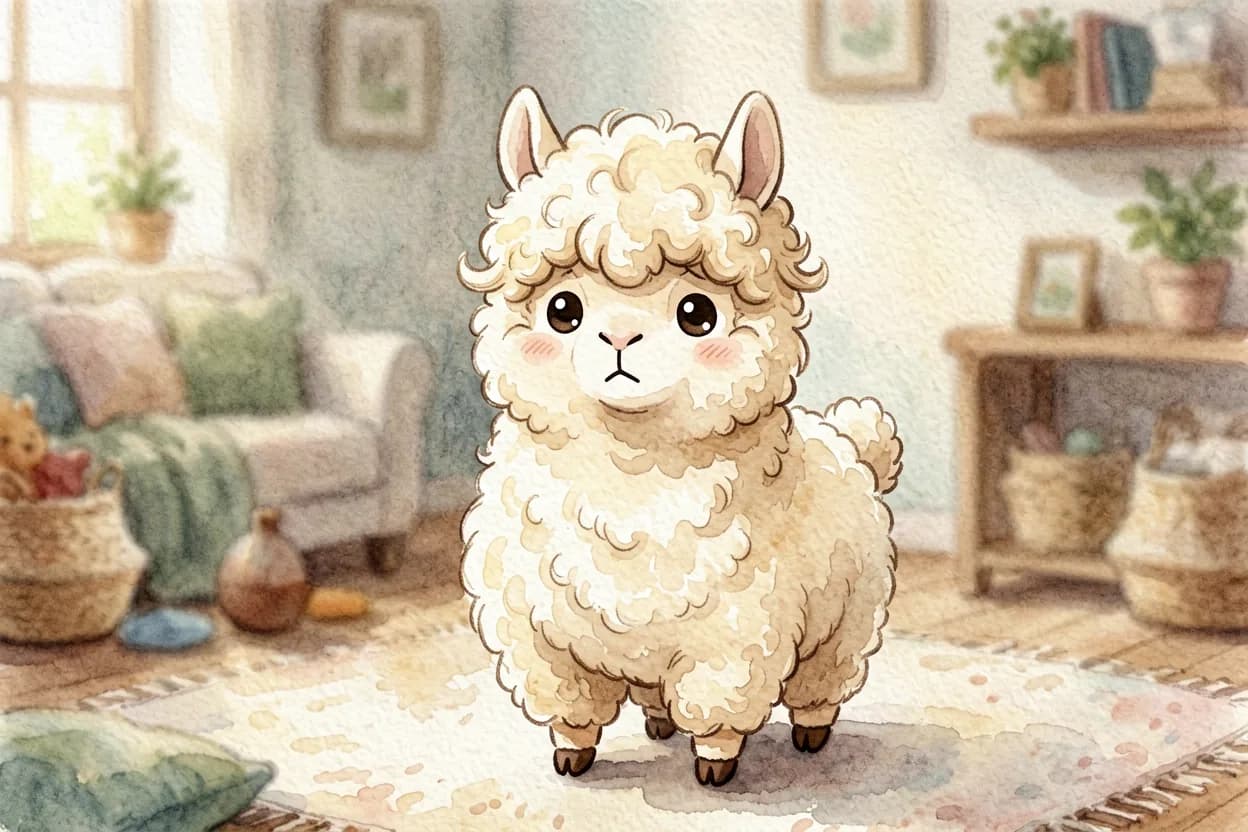
Coco the little alpaca had the fluffiest, curliest wool you ever saw. But lately it had grown so long it flopped right over her eyes. "Time for your first haircut," said Mama. Coco's heart went thumpity-thump.
"But what if it hurts?" Coco worried. "It won't hurt one bit," said Mama. "Hair has no feelings, like your fingernails. And guess what — it always grows back." Coco wasn't quite convinced.
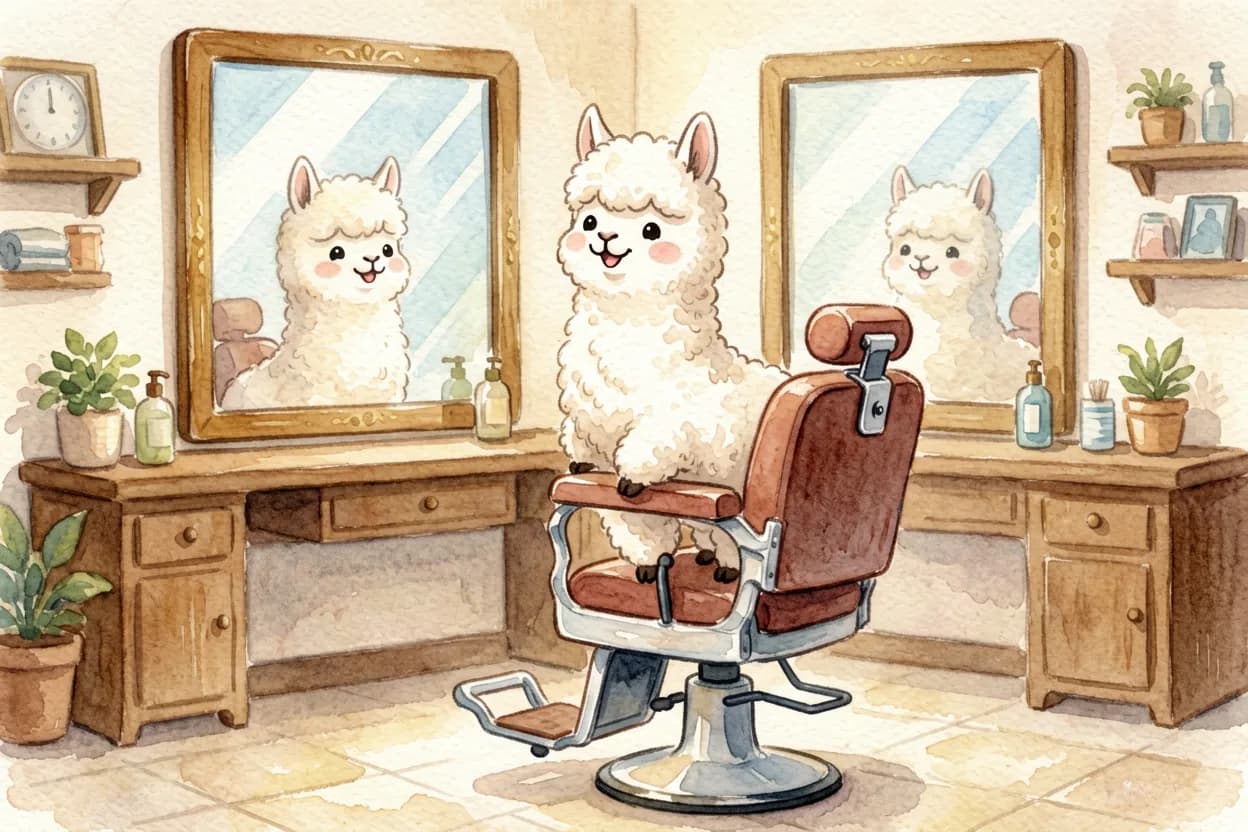
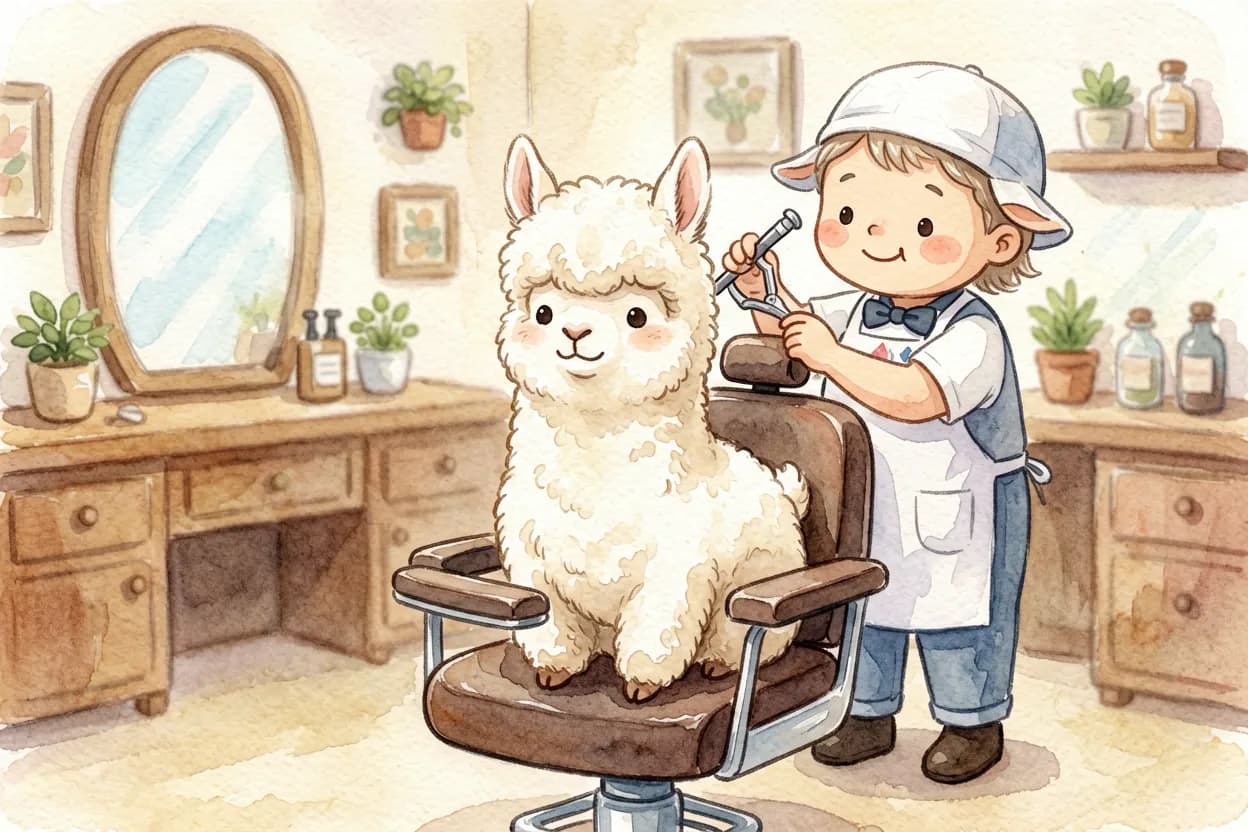
At the little salon, a friendly sheep named Snips was waiting. "Welcome, Coco! Hop up into my special spinny chair." It went up, up, up, and Coco could see herself in a big mirror. That part was fun.
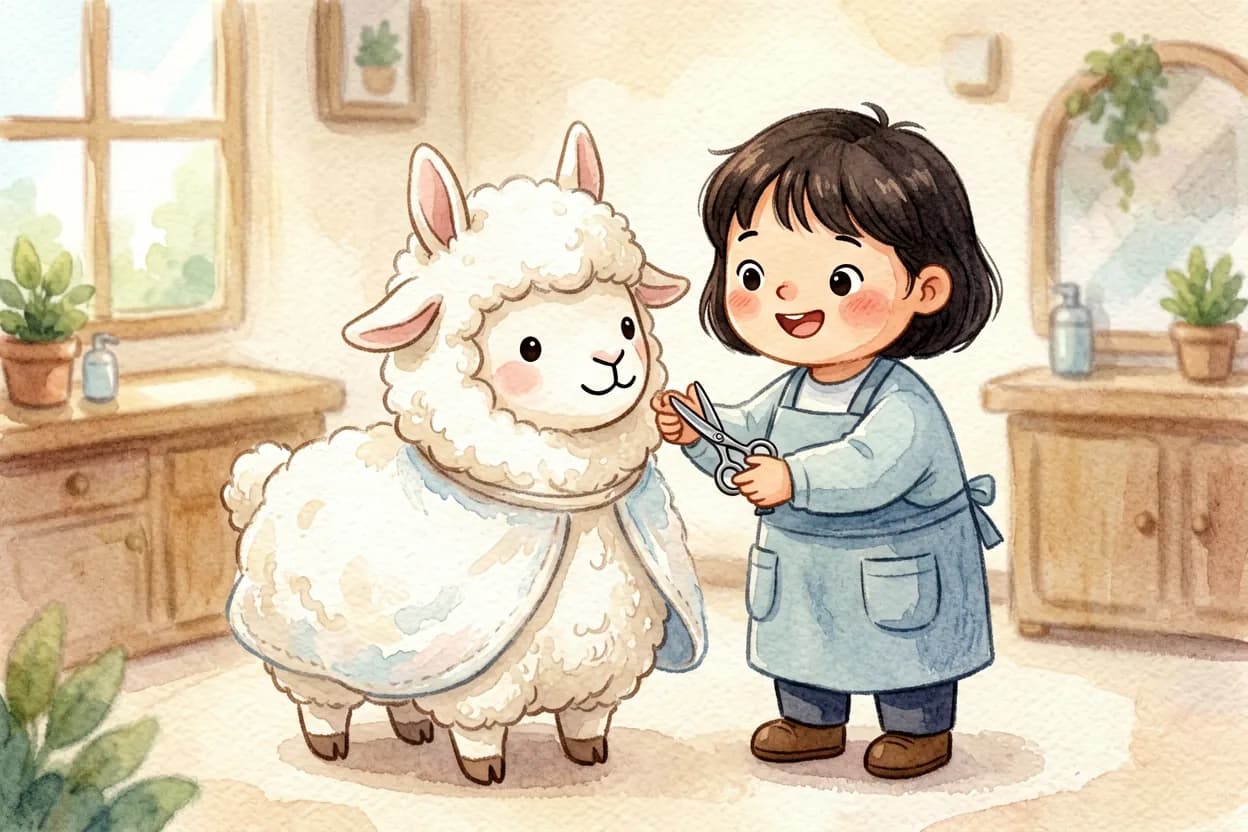
Snips wrapped a soft cape around her — swish! — like a superhero. "This keeps the wool off your clothes," he said. "Now, want to hear the little scissors say hello? Snip, snip!" He snipped in the air. It made a tiny, tickly sound.
Coco held her breath as the first curl fell — snip! — down onto the cape. She waited for it to hurt. But it didn't. It didn't hurt at all! "Oh!" she said. "I didn't even feel it!"
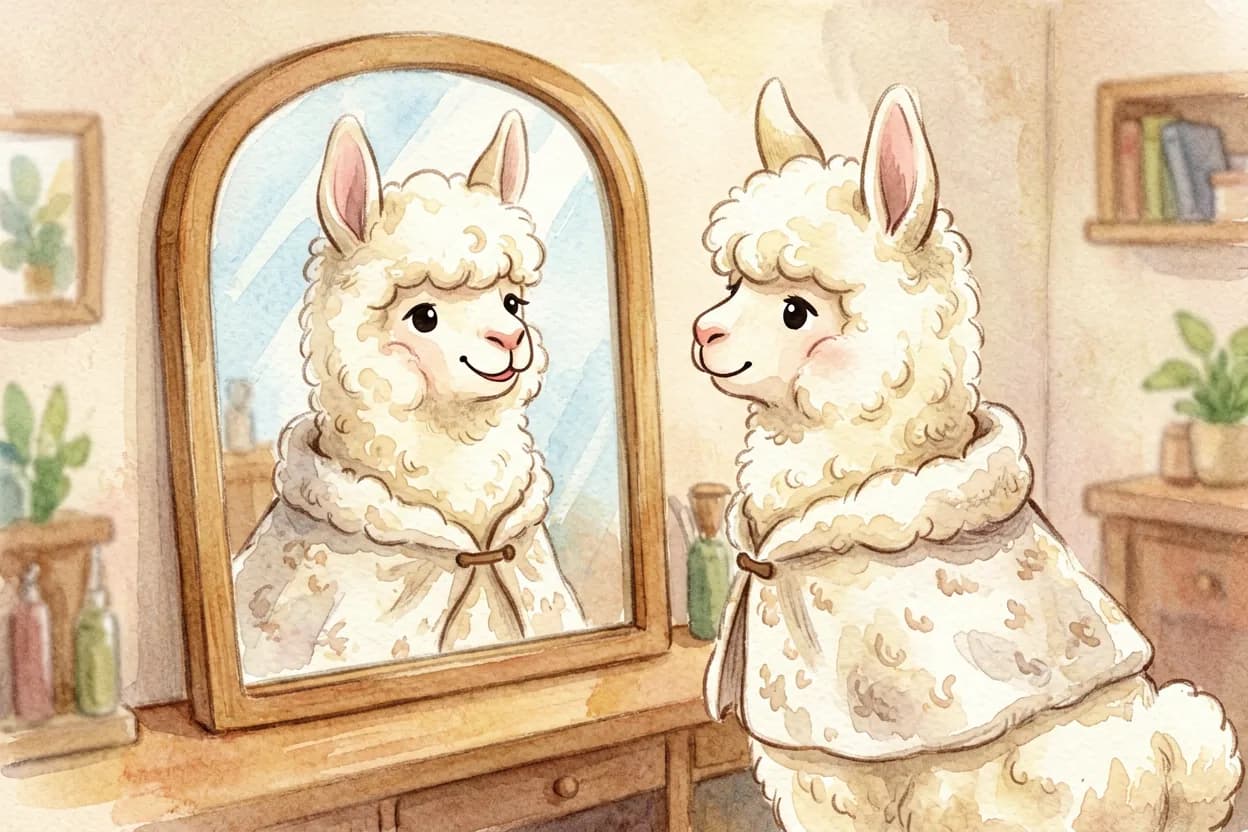
Snip, snip, snip. Little curls tumbled down like soft snow. Coco watched in the mirror as her eyes appeared, then her whole face. She started to smile. This wasn't scary — it was kind of exciting!
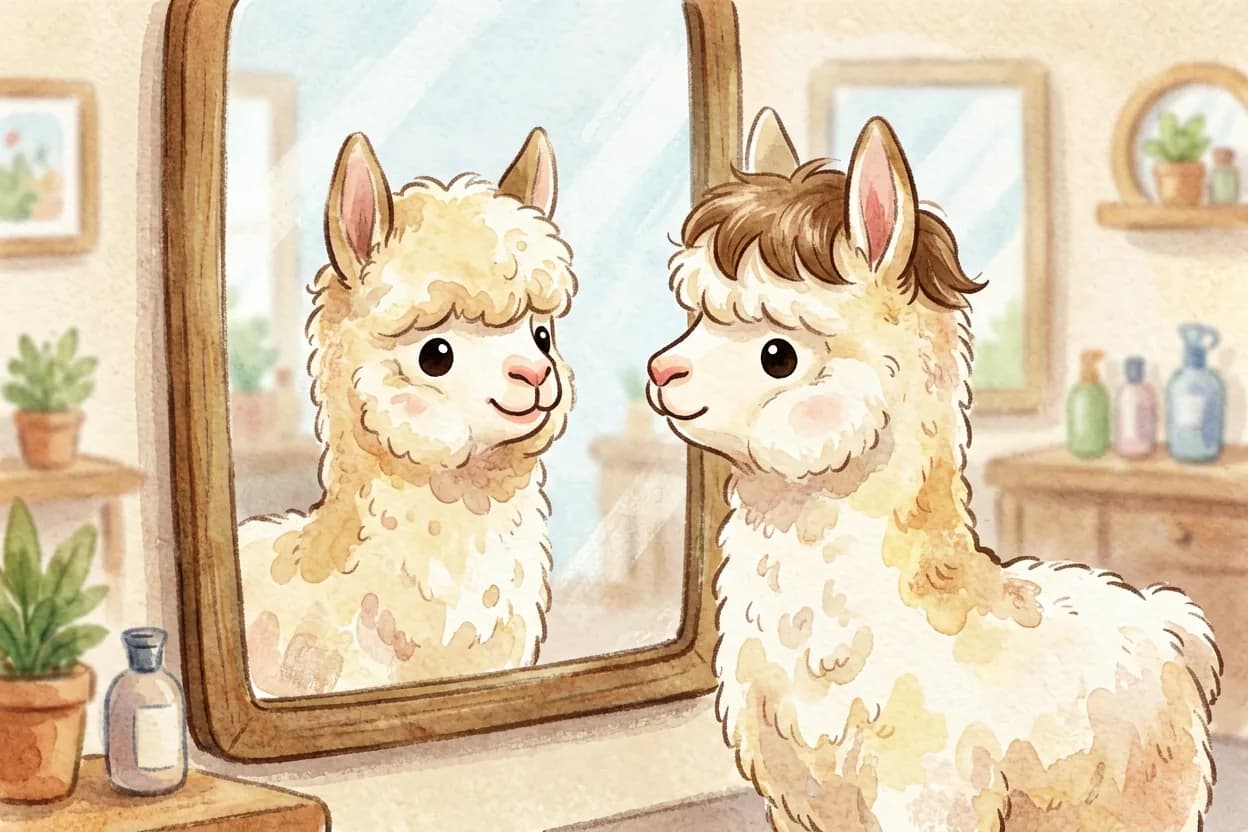
"All finished," said Snips, spinning the chair round to the mirror. "What do you think?" Coco stared. She looked so grown-up! So smart! She could see everything clearly now. "Is that... me?" she gasped.
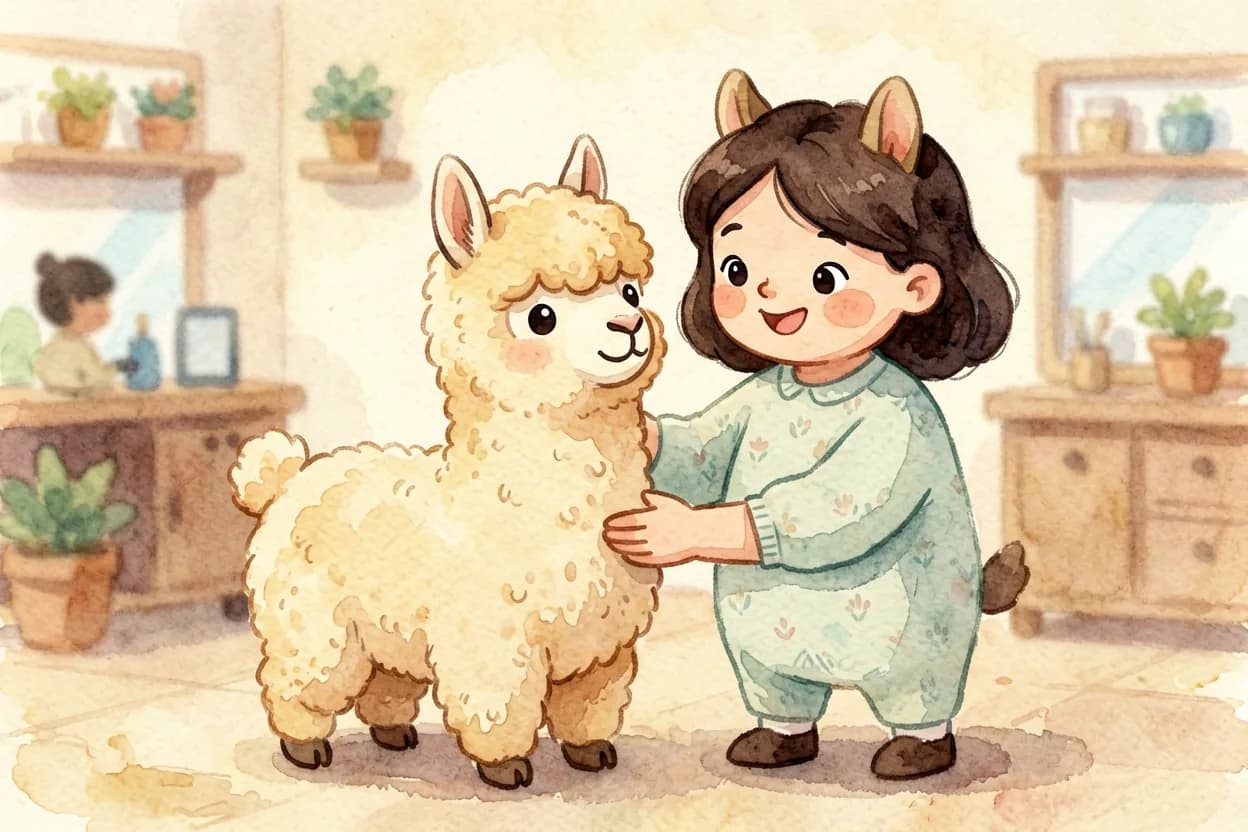
"You were so brave," said Mama, giving her a squeeze. Coco couldn't stop turning her head this way and that, admiring her new look. "That was fun!" she said. "Can I come back when it grows again?"
Haircuts don't hurt, and hair always grows back. Sometimes a little change makes us feel brand-new.
Questions to ask after reading
- 1Why was Coco worried about her first haircut?
- 2What did Mama say to help — does hair have feelings? Does it grow back?
- 3What did the scissors sound and feel like when they cut Coco's wool?
- 4How did Coco feel when she saw her new look in the mirror?
- 5How do you think you'd feel getting a haircut, like Coco?
Try it together: easing first-haircut fear
A first haircut goes best when it feels familiar and unhurried. These activities take the surprise out of the scissors.
- Play barber at home. Pretend to cut teddy's hair, wrap a tea-towel cape, and let your child 'cut' your hair with their fingers. Acting it out makes the real chair familiar.
- Watch a haircut first. Let your child watch you or an older sibling get a trim. Seeing that it's calm and painless is deeply reassuring.
- Snip a doll's or your own tips. Show that cutting hair doesn't hurt by trimming a lock of your own hair or a doll's while they watch. Proof beats promises.
- Read the story beforehand. Share Coco's story before the appointment. Talk about the cape, the snip-snip sound, and that it doesn't hurt and always grows back.
- Bring comforts and choose timing. Go when your child is rested and fed, bring a favourite toy or a snack, and let them sit on your lap if needed. A relaxed child is a still child.
How to use the story at each age
Babies and toddlers (under 3)
Keep it quick and let them sit on your lap. Bring a comfort object and a snack, and choose a well-rested moment. Don't expect them to understand explanations — your calm presence and a fast, gentle cut matter most. A distraction (a song, a video, a toy) works wonders.
Preschoolers (3-5)
Now you can prepare them: play barber, watch a haircut, and read the story. Reassure them it won't hurt and hair grows back. Let them choose something — a comb, the chair — for a sense of control, and praise their bravery warmly afterwards.
Older children (5-6)
They can understand the whole thing and even enjoy choosing a style. Involve them in the decision and let them talk to the barber. If a past haircut went badly, acknowledge it and rebuild trust with a gentle, low-pressure visit.
Common mistakes (and what to do instead)
- Springing it as a surprise. Whisking a child into the chair with no warning invites panic. A little preparation — a story, a chat, playing barber — helps them feel ready.
- Saying 'it won't hurt' without showing. Words alone rarely convince a worried child. Demonstrate by snipping your own hair or a doll's so they can see it's painless.
- Going when they're tired or hungry. A tired, hungry child has no patience for sitting still. Pick a well-rested, well-fed time and keep the visit short.
- Forcing a screaming child to continue. Pushing through a full meltdown can make every future haircut a battle. If it's not working, take a break, try distraction, or come back another day.
- Making a big anxious deal of it. Your worry becomes theirs. Keep it light and matter-of-fact — 'just a quick tidy-up' — and your child will follow your lead.
Making it work in everyday life
The story removes the surprise; how you handle the visit carries your child through. Here's where it shows up.
- Choosing the place. A child-friendly salon with fun chairs and patient staff makes an enormous difference. It's worth seeking one out for the first few cuts.
- During the cut. Distraction is your friend — a song, a snack, a favourite video, or chatting about the falling curls like Coco. A busy mind sits still.
- If it goes wrong. A bad haircut experience isn't permanent. Stay calm, keep the next one short and low-key, and rebuild trust gently over time.
- Afterwards. Make a happy fuss of the new look and let them show it off. Ending on pride sets up every future haircut to go well.
A simple checklist to follow
- Read the story together before the appointment
- Play barber at home and let them watch a haircut
- Show that cutting hair doesn't hurt — snip a lock to prove it
- Go when your child is rested and fed; bring comforts
- Keep your own manner calm and light
- Make a happy fuss of the new look afterwards
Make the story about your child
An alpaca named Coco is a fluffy, friendly guide. But children pay closest attention when the brave one in the chair is someone they know from the inside — themselves.
When your child is the hero who's nervous, hears the snip-snip, and beams at their smart new look, the story stops being about an alpaca and becomes a picture of their own first haircut going well. Their name, their bravery, their brand-new look — exactly the reassurance they need beforehand.
A generic story
A fluffy alpaca is nervous about her first haircut but ends up loving her new look.
Your child's story
Liam is nervous about his first haircut, discovers the scissors don't hurt, and loves his smart new look — with Liam as the hero on every page.
Parents also ask
Why is my child so scared of getting a haircut?
A haircut can be frightening because it's a strange, unfamiliar experience: snipping sounds near their head, a stranger touching them, and bits of their own hair falling away — which can feel alarming to a young child still learning about their body. It's a normal fear that fades once they understand haircuts don't hurt and hair grows back.
How do I prepare my child for a first haircut?
Take the surprise out of it. Play barber at home, let them watch you get a trim, and read a story about a happy first haircut. Reassure them (and show them) that cutting hair doesn't hurt and always grows back, and go when they're rested and fed with a comfort toy on hand.
How can I keep my child still during a haircut?
Distraction is the key — a favourite song, snack, video, or chatting about the falling hair keeps a busy mind occupied and the body still. Let them sit on your lap if needed, choose a child-friendly salon, and keep the cut short. A rested, unhurried child sits far more easily.
What if my child has a meltdown in the chair?
Don't force it — pushing through a full meltdown can turn every future haircut into a battle. Take a break, try distraction, or come back another day. Keeping the experience calm, even if it means a shorter or unfinished cut, protects the next one.
My child had a bad haircut experience. How do I rebuild trust?
Acknowledge it calmly, then rebuild gently: choose a patient, child-friendly barber, keep the next visit short and low-pressure, prepare with a story and role-play, and let your child have some control. A few good experiences will gradually replace the bad memory.
At what age should a child have their first haircut?
There's no fixed age — it depends entirely on how fast your child's hair grows and your family's preference. Whenever it happens, the key is a calm, well-prepared experience: familiarity and a relaxed atmosphere matter far more than timing.
Are personalized stories helpful for a first haircut?
For many children, yes. A story where they are the brave one in the chair, ending up proud of their new look, makes the experience familiar and positive, and gives them a picture of themselves coping well. It's a supportive tool alongside gentle preparation and a relaxed, distraction-filled visit.
More free stories for kids
About the author
Andy — Andy is the founder of Doodara and builds the illustration pipeline behind it — the part that has to keep a child's character looking like the same child on every page of a book. Most of that work is character consistency, content safety for material aimed at young children, and the unglamorous business of making a generated book good enough that a family reads it twice.