Stories About Listening for Kids
A complete original picture book about really listening you can read tonight — plus the games, discussion questions, and age-by-age tips that help your child become a wonderful listener.
ByAndyFounder of Doodara
Quick answer
The books that help with listening separate hearing from actually taking something in, and show the second one as an active thing a child does on purpose. This page has a complete original picture book, Rosa's Listening Ears, free to read tonight, plus discussion questions and age-by-age guidance for ages 3-7. The practical move: after reading, get down to your child's eye level before asking anything and have them say the instruction back once — the repeat-back is what turns hearing into listening.
"Are you even listening to me?" If you find yourself saying it several times a day, you're in good company. Getting a young child to truly listen — not just hear the sounds, but take in the meaning and act on it — can feel like one of the great parenting challenges. But before you despair, it helps to know that listening is a skill that develops with age and practice, and that a child who seems not to listen usually isn't being defiant. They're still learning how.
There's a real difference between hearing and listening. A young child's brain is easily pulled toward whatever is most interesting right now — a toy, a bird, their own big imagination — and tuning all that out to focus on someone else's words is genuinely hard. Add a still-growing attention span and a tendency to get lost in their own world, and it's no wonder instructions sometimes sail right past. Good listening — attentive, patient, considerate — is built gradually.
The encouraging part is that listening can be nurtured, and it's worth nurturing: it's the foundation of learning, friendship, and kindness. When children learn to stop, look, and really listen — to a parent, a teacher, a friend — everything from following instructions to making friends gets easier. Stories help beautifully: they let a child see what not listening costs and what good listening brings, through a character they love.
Why stories help
A story shows, through cause and effect, why listening matters. When a character rushes ahead without listening and things go wrong — then really listens and things go right — your child learns the value of listening far better than 'pay attention' ever teaches it.
Children copy characters they love. A little rabbit who learns to stop and truly listen models good listening in action, showing not just that it matters but how to do it.
And sharing a story is itself a lovely dose of listening practice — those focused, cosy minutes of attention are exactly the muscle you're helping your child build, in the gentlest possible way.
How a story becomes a habit
Rosa's Listening Ears
An original picture book about listening — free to read aloud tonight.
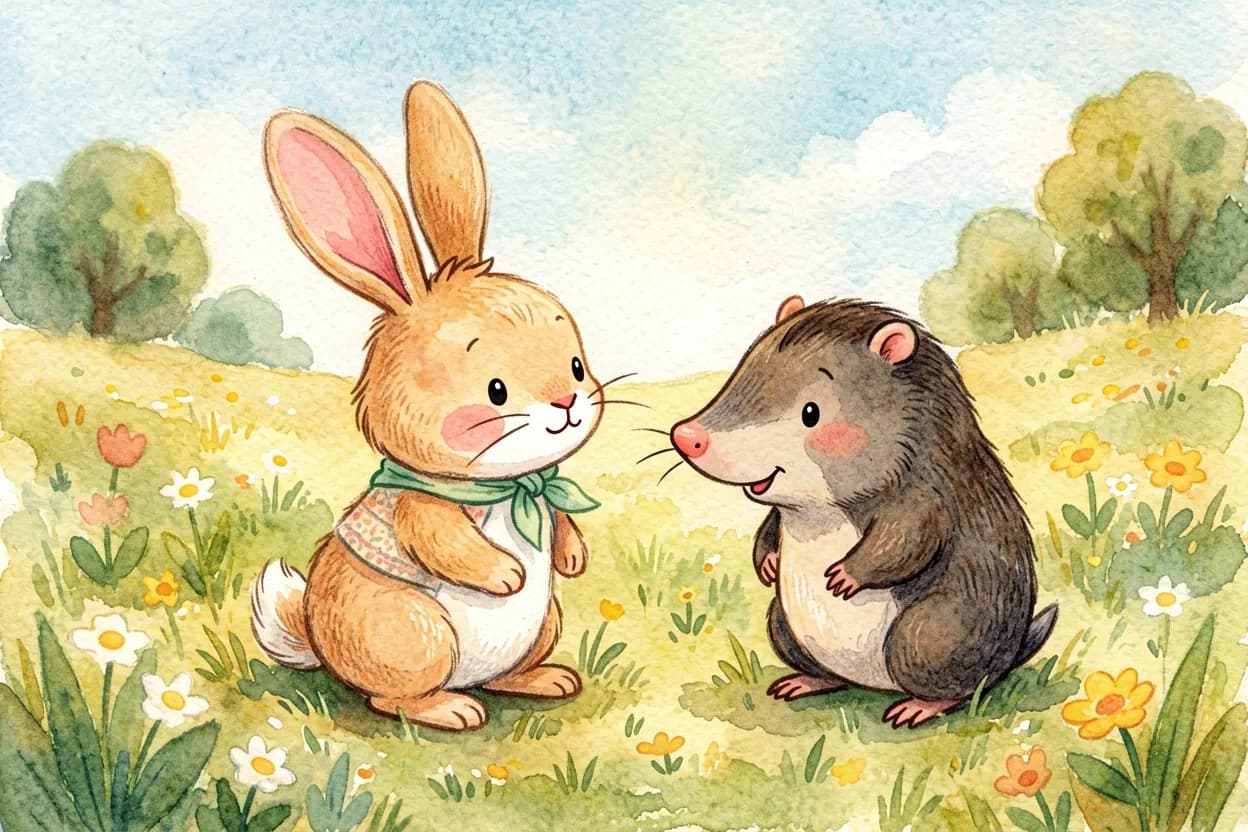
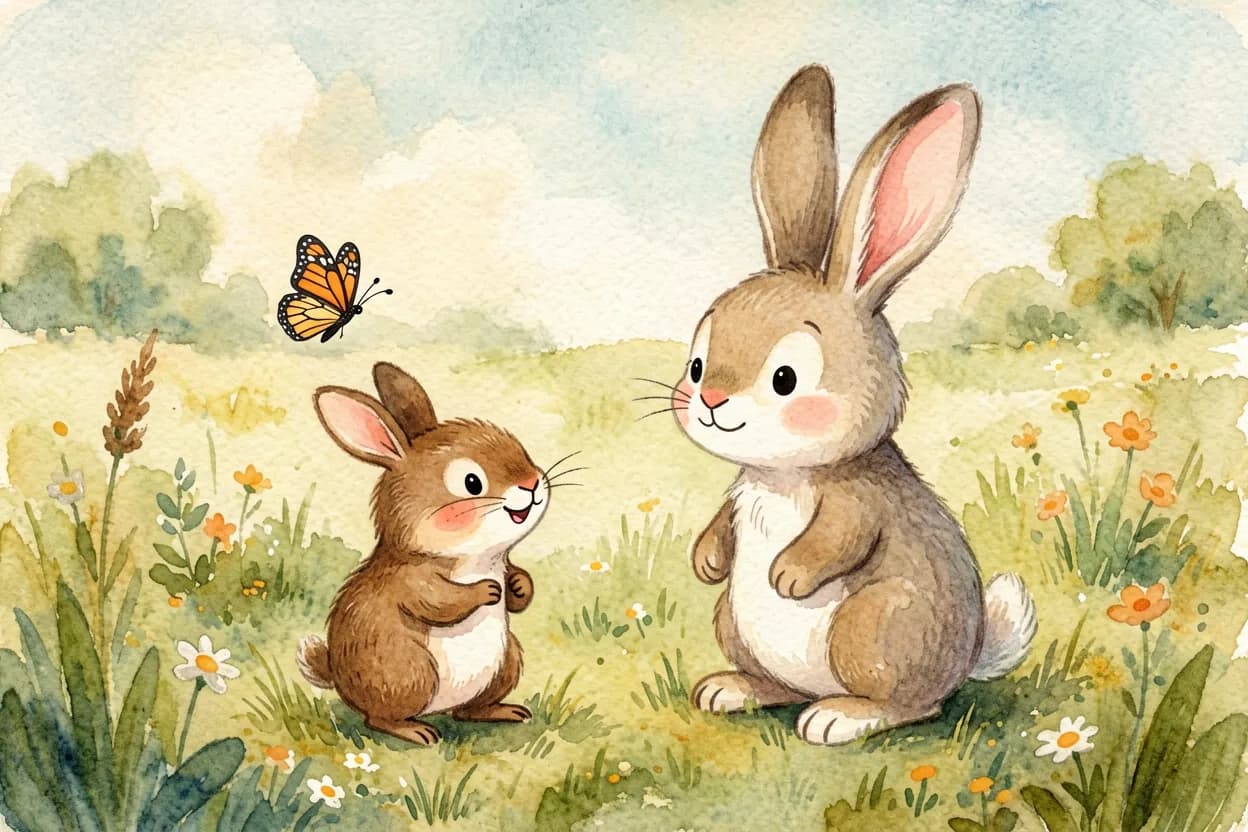
Rosa the little rabbit had the biggest, softest ears in the meadow. But funnily enough, Rosa wasn't a very good listener. Whenever someone spoke, she was usually too busy — hopping, dreaming, or thinking about carrots — to really take it in.
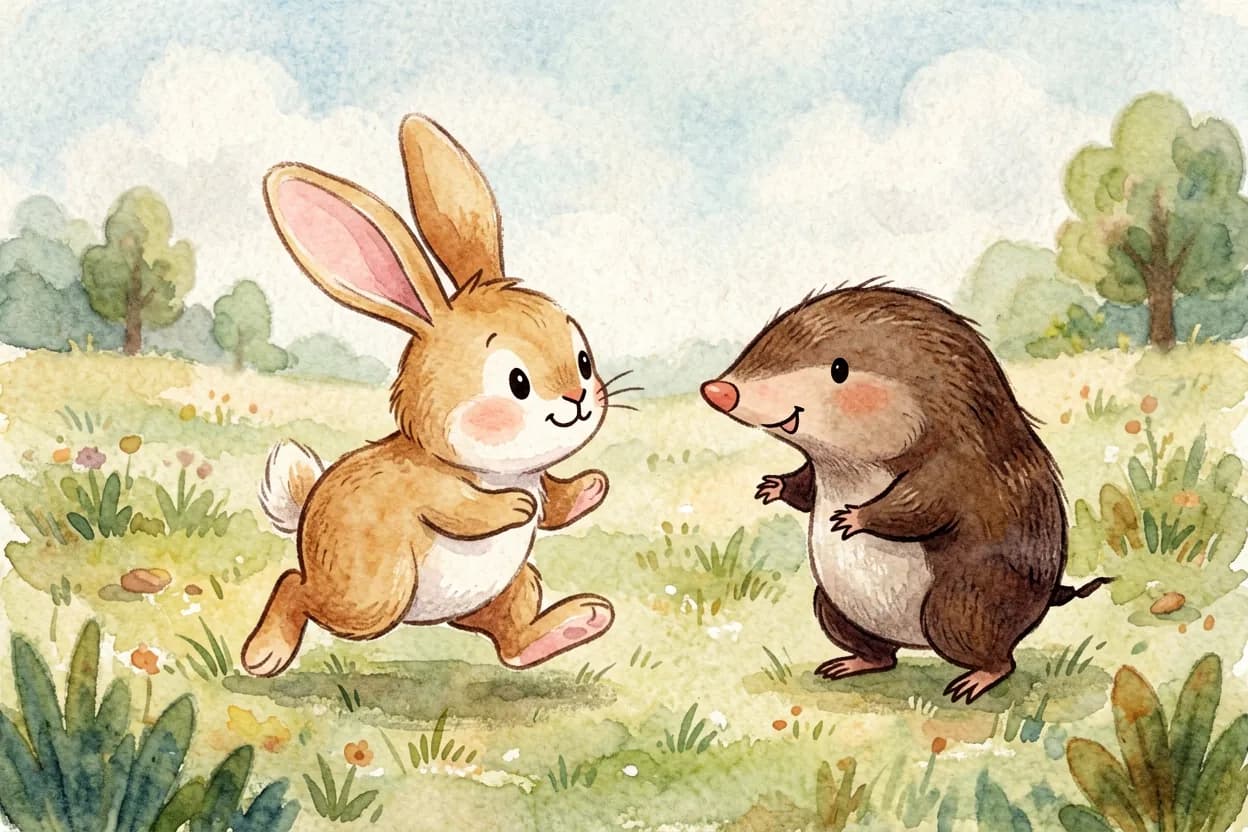
One morning, her friend Mo the mole was very excited. "Rosa! Meet me at the OLD OAK TREE at lunchtime — I've got a wonderful surprise!" But Rosa was watching a butterfly and only half-heard. "Mm-hmm," she said. "Tree. Surprise. Got it!"
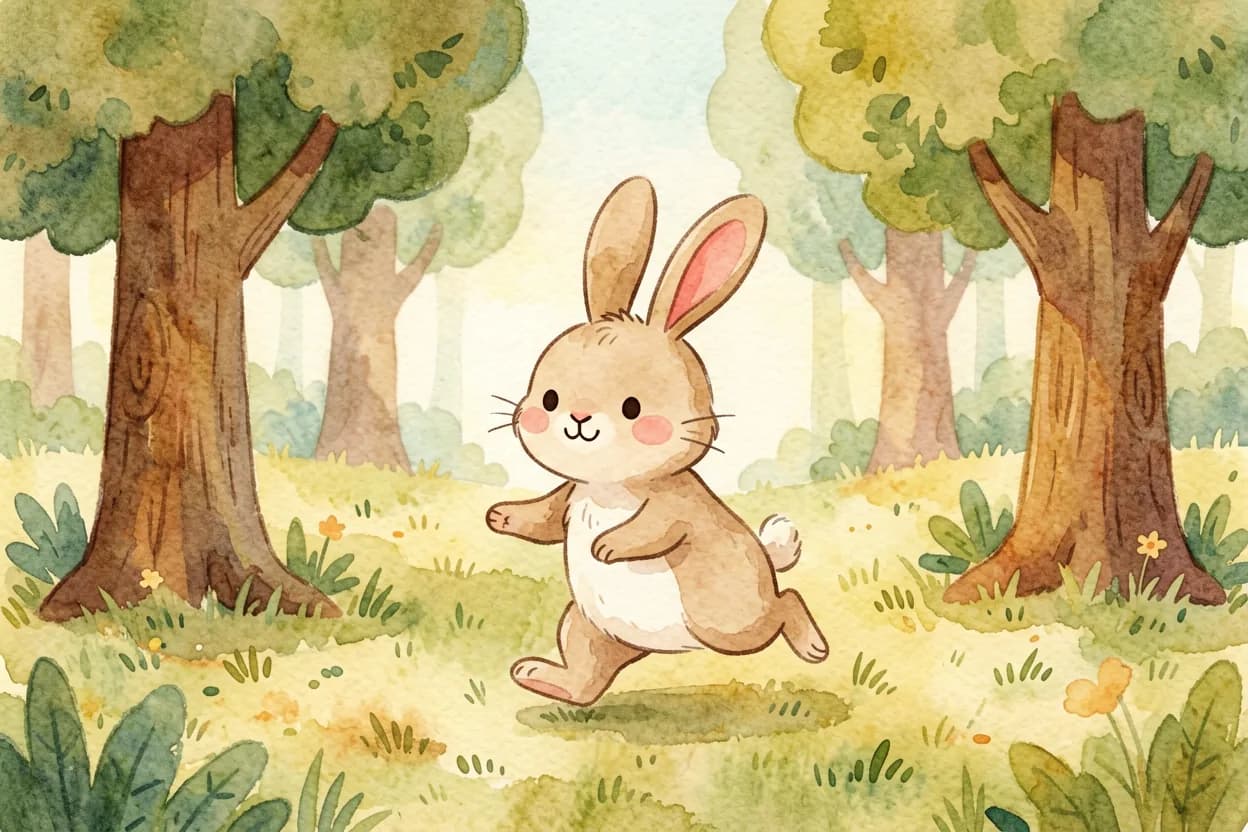
At lunchtime, Rosa hopped off to find Mo. But which tree had he said? She hadn't really listened. She tried the willow tree by the pond. No Mo. She tried the apple tree. No Mo. She hopped all over the meadow, getting more and more muddled and cross. "Where IS he?"
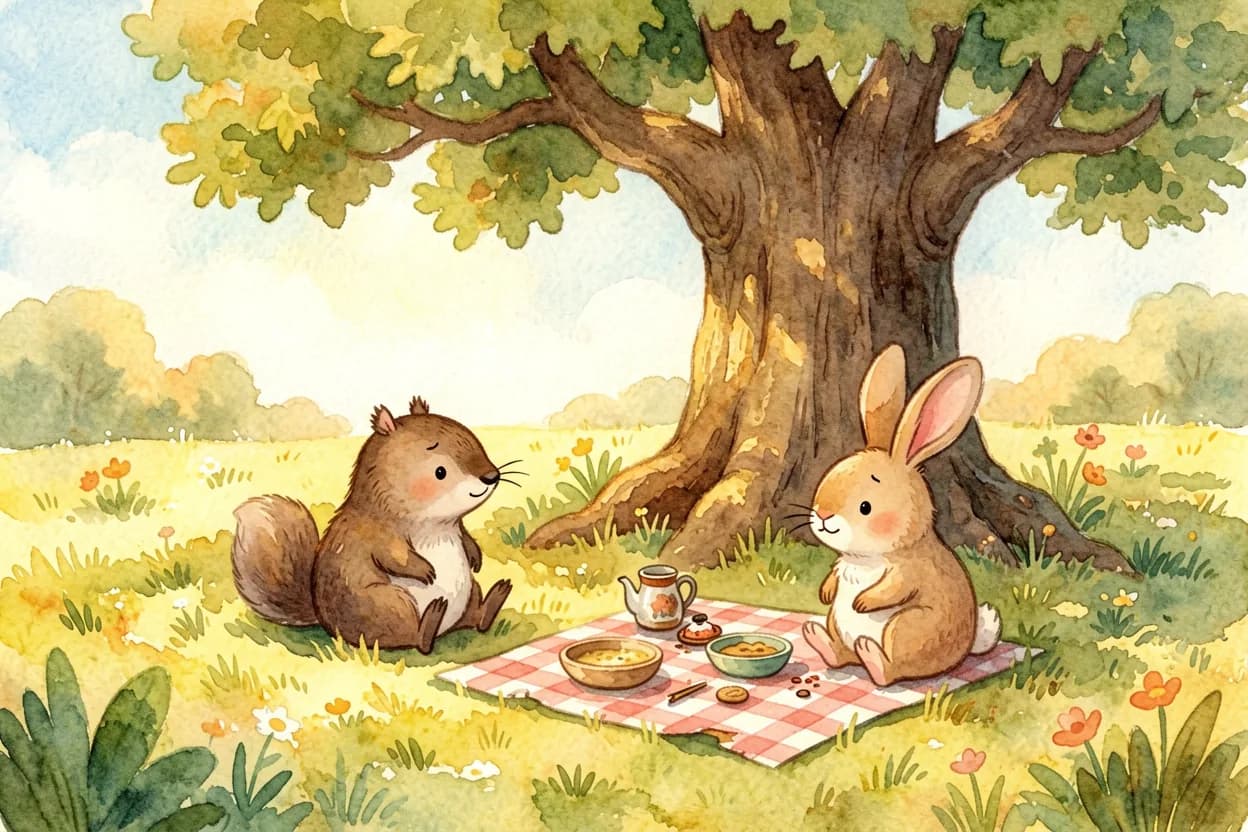
By the time Rosa finally found the old oak tree, poor Mo had been waiting for ages, and the surprise — a picnic of fresh berries — had been nibbled by ants. "I waited and waited," said Mo sadly. "I said the OLD OAK TREE." Rosa's ears drooped. "I'm sorry, Mo. I didn't really listen."
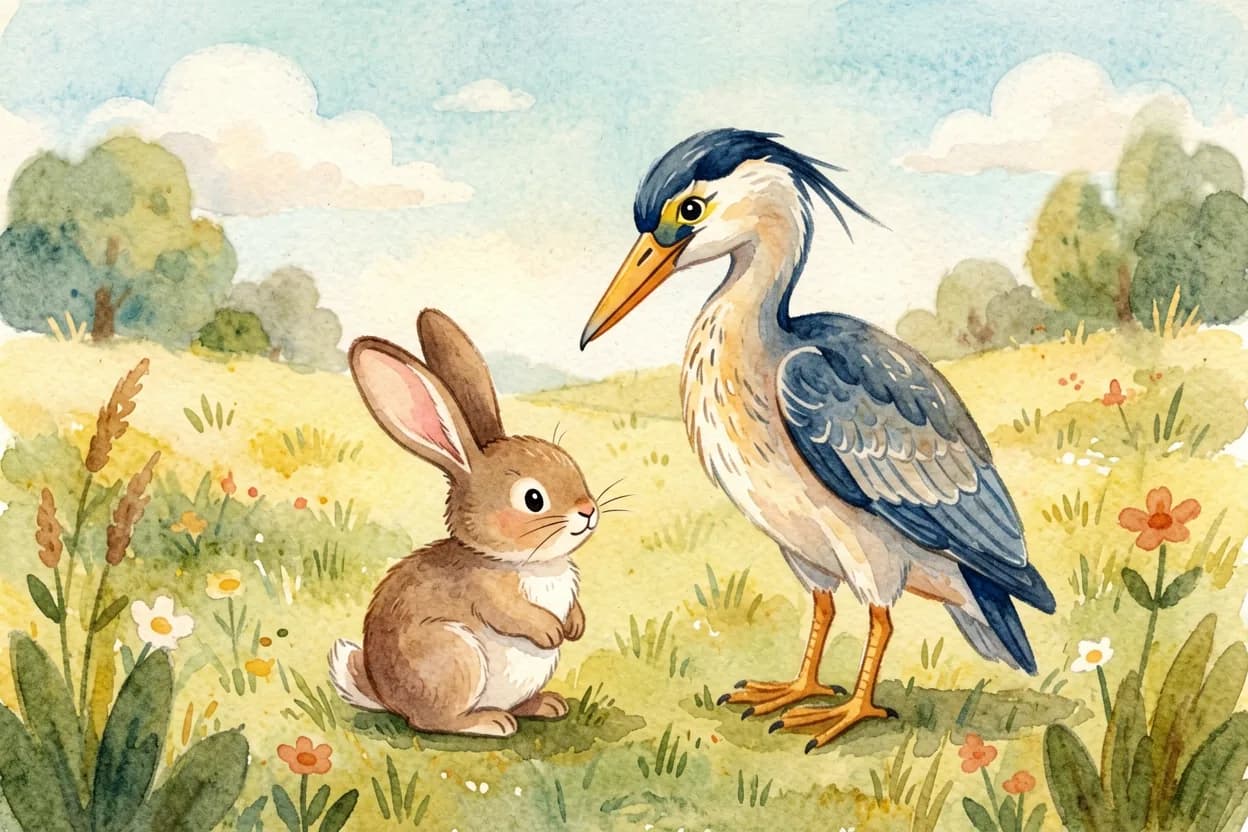
Wise old Heron was standing nearby. "Rosa," she said kindly, "you have wonderful big ears — but listening isn't just about ears. It's about stopping what you're doing, looking at your friend, and letting their words in. Shall I show you?"
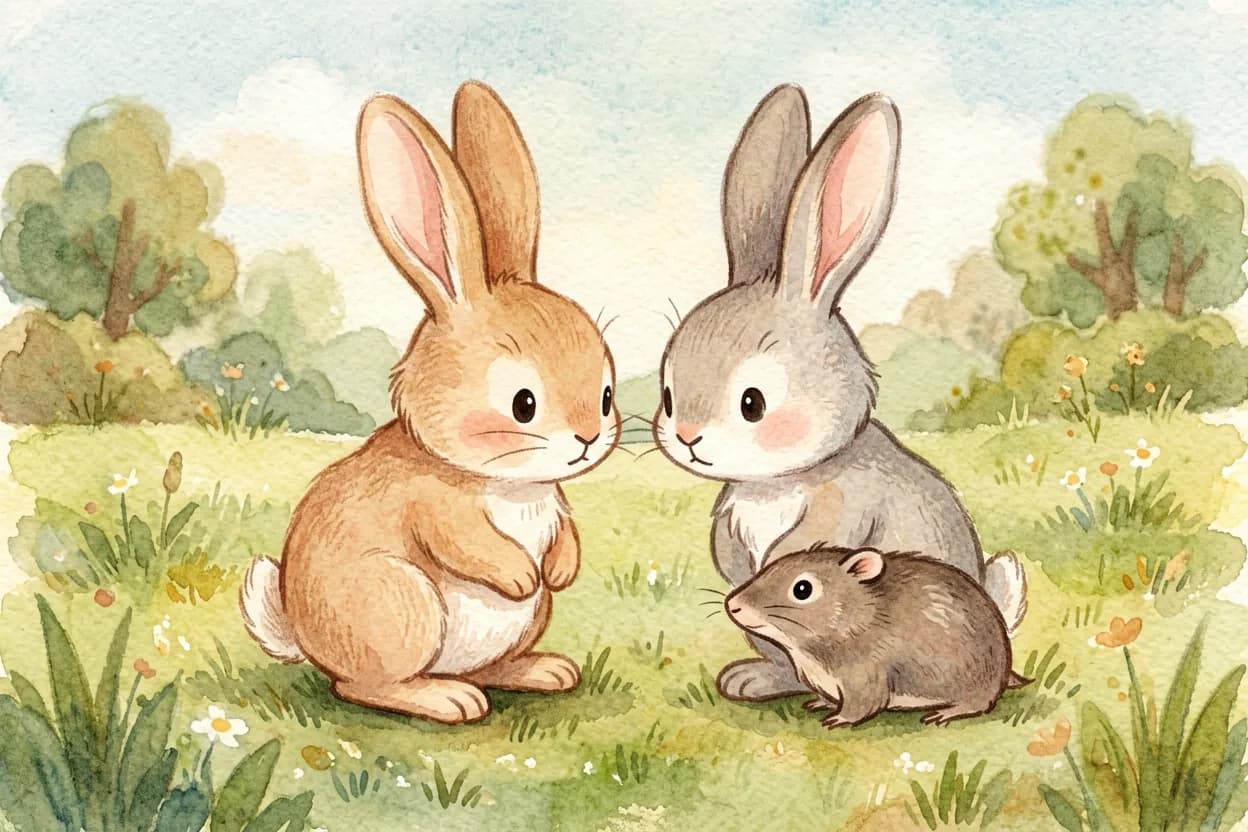
So Rosa practised. When Mo spoke again, she stopped hopping. She looked right at him. She let his words come all the way in. "Tomorrow," said Mo, "meet me by the BLUE STREAM, at SUNRISE." "By the blue stream, at sunrise," Rosa repeated. "I heard you — I really listened!"
The next morning, Rosa was waiting by the blue stream at sunrise — right on time. And Mo's surprise picnic was the best the meadow had ever seen. "Big ears are nice," said Rosa, munching a berry, "but really listening is even better."
Hearing is easy — but really listening, with our ears and our whole attention, is a gift we give to others.
Questions to ask after reading
- 1Why did Rosa go to the wrong trees looking for Mo?
- 2How did Mo feel when Rosa didn't come to the right place?
- 3What did Heron say good listening really means?
- 4What three things did Rosa do to listen properly?
- 5How can you show someone you're really listening to them?
Try it together: growing great listeners
Listening is a skill that grows with fun, low-pressure practice. These games help it along.
- Stop, look, listen. Teach Rosa's three steps: stop what you're doing, look at the speaker, let the words in. A simple routine gives a child a handle on how to listen.
- Play listening games. Simon Says, 'Whisper down the line', or following a silly sequence of instructions. Games make listening fun and build the attention it needs.
- Get down and connect first. Before giving your child an instruction, get close, at their level, and gain eye contact. A child who feels connected listens far better than one called across the room.
- Read together, then chat. After a story, ask what happened. Sharing a book is listening practice, and talking about it shows it's worth taking in.
- Model good listening. Put down your phone and really listen to your child. Feeling truly heard teaches them, better than anything, how good listening feels — and how to give it.
How to use the story at each age
Toddlers (2-3)
Attention spans are tiny, so keep instructions short, simple, and one at a time, and get eye contact first. Don't expect them to follow long or multi-step directions. Lots of playful listening games and your own attentive listening lay the earliest foundations.
Preschoolers (3-5)
Now you can teach 'stop, look, listen' and play more listening games. Read Rosa's story and talk about the difference between hearing and really listening. Get close and connected before giving instructions, keep them short, and praise good listening warmly when you see it.
Older children (5-7)
Children this age can listen for longer and understand listening as respect and friendship. Talk about listening to understand (not just to reply), taking turns in conversation, and how good listening helps at school and with friends. Keep modelling attentive, phone-down listening yourself.
Common mistakes (and what to do instead)
- Giving instructions from across the room. Words shouted from another room rarely land. Get close, at their level, with eye contact first — then your child can actually listen.
- Too many instructions at once. A string of directions overwhelms a young child's memory. Give one clear thing at a time, especially for little ones.
- Not listening to them. If we're distracted when they talk, children learn that half-listening is normal. Model full, phone-down attention and they'll copy it.
- Repeating and nagging. Saying it ten times teaches a child they needn't listen the first time. Connect, say it once clearly, and follow through calmly.
- Confusing not-listening with defiance. A distracted child often genuinely didn't take it in. Assume a gap in attention, not defiance, and help them tune in rather than punishing.
Using the lesson in everyday moments
The story shows why listening matters; daily life is where it's practised. Here's where it shows up.
- When giving instructions. Get close, gain eye contact, keep it short. 'Stop, look, listen' works for the grown-up too — set your child up to succeed.
- In conversations. Model and coach taking turns to speak and listen, without interrupting. It's the heart of good conversation and friendship.
- With friends and siblings. Listening to a friend's idea or a sibling's feelings prevents muddles and hurt, just like Rosa learned. Coach it in play.
- At storytime and beyond. Shared reading and 'tell me about your day' both build the listening muscle in a warm, connected way.
A simple checklist to follow
- Read the story together, unhurried, with time for the pictures
- Teach 'stop, look, listen' as a simple listening routine
- Get close and gain eye contact before giving instructions
- Keep instructions short and one at a time for little ones
- Play fun listening games together
- Model full, phone-down listening to your child
Make the story about your child
A rabbit named Rosa is a charming guide. But children pay closest attention when the one learning to really listen is someone they know from the inside — themselves.
When your child is the hero who misses out by not listening and then discovers the joy of truly hearing a friend, the story stops being about a rabbit and becomes a picture of the attentive, considerate listener you hope to nurture. Their name, their friend, their 'I really listened!' — a gentle model to carry into real life.
A generic story
A little rabbit learns that really listening is even better than just having big ears.
Your child's story
Chloe misses a fun surprise because she didn't listen, then learns to stop, look, and really listen to her friend — with Chloe as the hero on every page.
Parents also ask
Why doesn't my child listen to me?
Young children are easily pulled toward whatever is most interesting right now, and tuning that out to focus on someone else's words is genuinely hard for a still-developing attention span. A child who seems not to listen usually isn't being defiant — they simply didn't fully take it in. Getting close with eye contact, keeping instructions short, and building listening skills over time all help.
What's the difference between hearing and listening?
Hearing is simply registering sound; listening is paying attention, taking in the meaning, and responding. A child can hear you perfectly and still not 'listen' if their focus is elsewhere. Teaching listening — stop what you're doing, look at the speaker, let the words in — helps a child bridge that gap on purpose.
How can I help my child become a better listener?
Teach a simple routine like 'stop, look, listen', get close and gain eye contact before giving instructions, keep directions short and one at a time, and play fun listening games (Simon Says, whisper games). Most powerfully, model full, phone-down listening when your child talks — feeling truly heard teaches them how good listening feels and how to give it.
My child ignores instructions until I've repeated them many times. What can I do?
Repeating and nagging can accidentally teach a child they needn't listen the first time. Instead, get close and at their level, gain eye contact, give one clear instruction, and then follow through calmly and consistently. Setting your child up to actually hear you — rather than calling across a room — makes a big difference.
How long should a young child be able to listen for?
Attention spans are short in early childhood and grow gradually. Toddlers can manage only very brief, simple instructions; preschoolers a little more; and school-age children progressively longer. Matching your expectations to your child's stage — short and simple for the youngest — prevents a lot of frustration on both sides.
Is not listening the same as being disobedient?
Often not. A distracted young child frequently didn't genuinely take in what was said, rather than deliberately defying it. Assuming a gap in attention rather than defiance — and helping your child tune in with connection and clear, short instructions — is usually more effective and fairer than punishing what may simply be immaturity.
Are personalized stories helpful for teaching listening?
For many children, yes. A story where they are the hero who learns to really listen makes the lesson vivid and personal, and shows listening's value through their own eyes. Sharing the story is itself a dose of listening practice. It's a supportive tool alongside listening games and your own attentive modelling.
More free stories for kids
About the author
Andy — Andy is the founder of Doodara and builds the illustration pipeline behind it — the part that has to keep a child's character looking like the same child on every page of a book. Most of that work is character consistency, content safety for material aimed at young children, and the unglamorous business of making a generated book good enough that a family reads it twice.