
Potty Training Stories for Kids
A complete original picture book about using the big-kid potty you can read tonight — plus the practical, pressure-free tips that make potty training so much easier.
ByAndyFounder of Doodara

Quick answer
The books that help with potty training show the whole sequence including the accidents, because a story where the child gets it right immediately sets up a standard real toddlers cannot meet. This page has a complete original picture book, Percy Uses the Potty, free to read tonight, plus discussion questions and age-by-age guidance for ages 3-7. The practical move: read it on the potty itself during a calm moment with no expectation of performance — familiarity with the object does more than encouragement does.
Potty training is one of the biggest milestones of the toddler years — and one of the most stressful, precisely because it's the one thing you can't do for your child. You can offer, encourage, and cheer, but the deciding is theirs. If you're wading through accidents, refusals, and well-meaning advice from everyone you know, take a breath: this is normal, and it does not last forever.
Most children show signs of readiness somewhere between about two and three and a half — staying dry longer, noticing when they're wet, showing interest in the toilet. But readiness isn't a fixed date, and pushing before a child is ready usually backfires. A calm, patient approach almost always gets you there faster than a rushed, high-pressure one.
The single most helpful mindset is to treat potty training as something your child is learning, not something they're passing or failing. Accidents aren't naughtiness — they're practice. And one of the gentlest ways to introduce the whole idea, long before the pressure of the real moment, is through a story where a character your child loves learns to use the potty and feels proud. A good book turns a daunting change into an exciting one.
Why stories help
The potty is a strange, new, slightly scary idea for a toddler. A story makes it familiar and friendly — when a character your child loves sits on the potty and it goes just fine, the whole thing stops feeling like a big unknown.
Toddlers learn by copying characters they adore. A little piglet who's proud of using the big-kid potty is far more motivating than a parent's reminder, and gives your child a hero to imitate.
And because a story shows the accidents as no big deal and the successes as something to celebrate, it teaches the emotional lesson that matters most: that learning takes practice, that it's okay to get it wrong, and that they will get there — just like the character did.
How a story becomes a habit
Percy Uses the Potty
An original picture book about potty training — free to read aloud tonight.
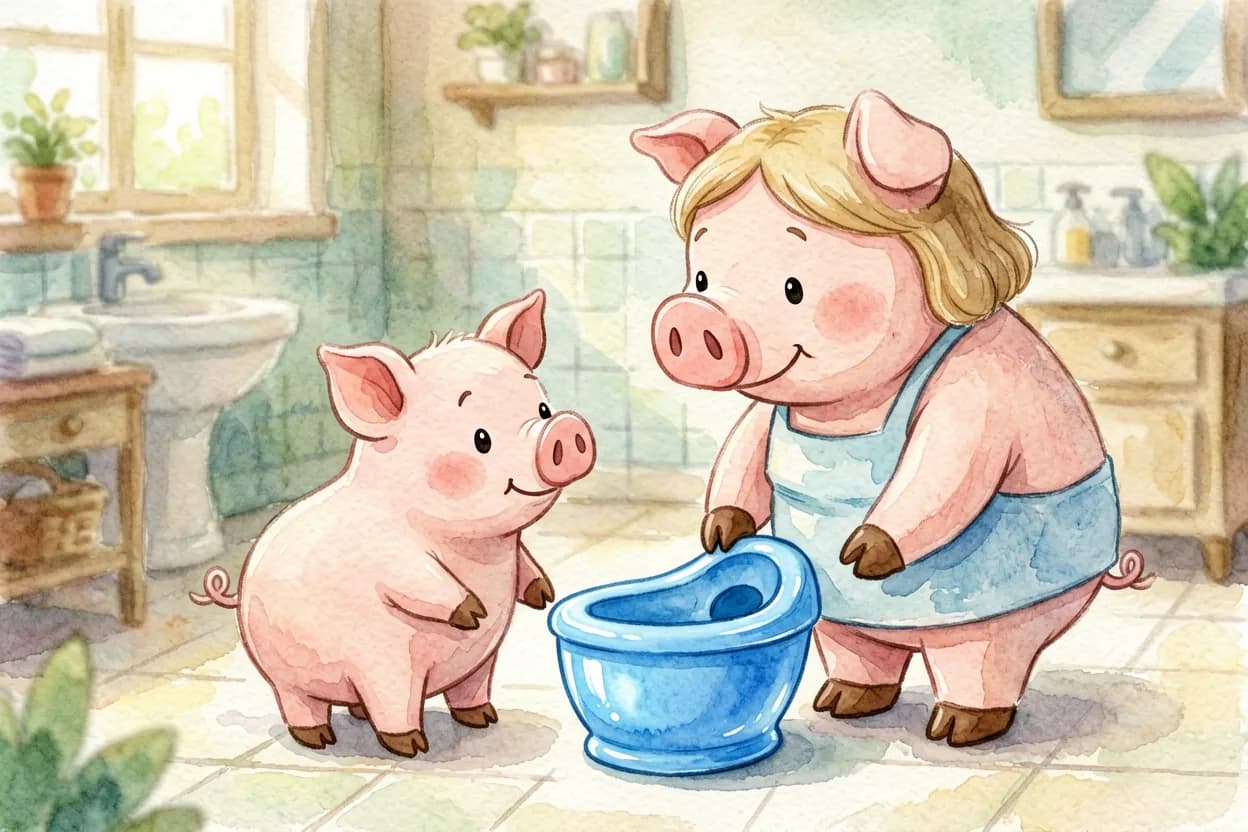
Percy the little piglet was growing bigger every day. His legs were longer. His words were clearer. And one morning, his mama showed him something brand new: a shiny little potty, just his size.
"This is your very own big-kid potty," said Mama. "When you feel a wee coming, you can sit right here." Percy looked at it carefully. It was small and blue and just for him.
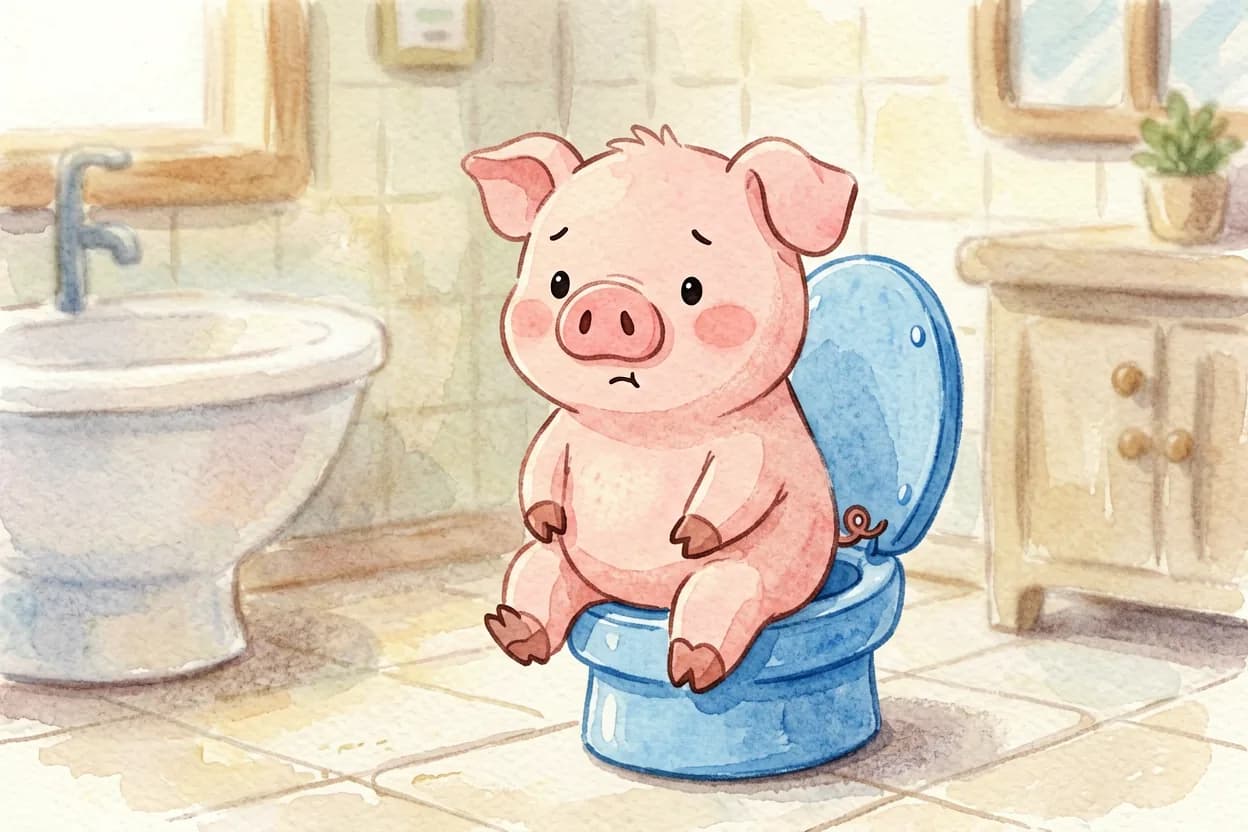
At first, Percy wasn't sure. Sitting on the potty felt funny and new. He sat for a moment, then hopped off. "Nothing happened!" he said. "That's okay," smiled Mama. "Trying is what matters."
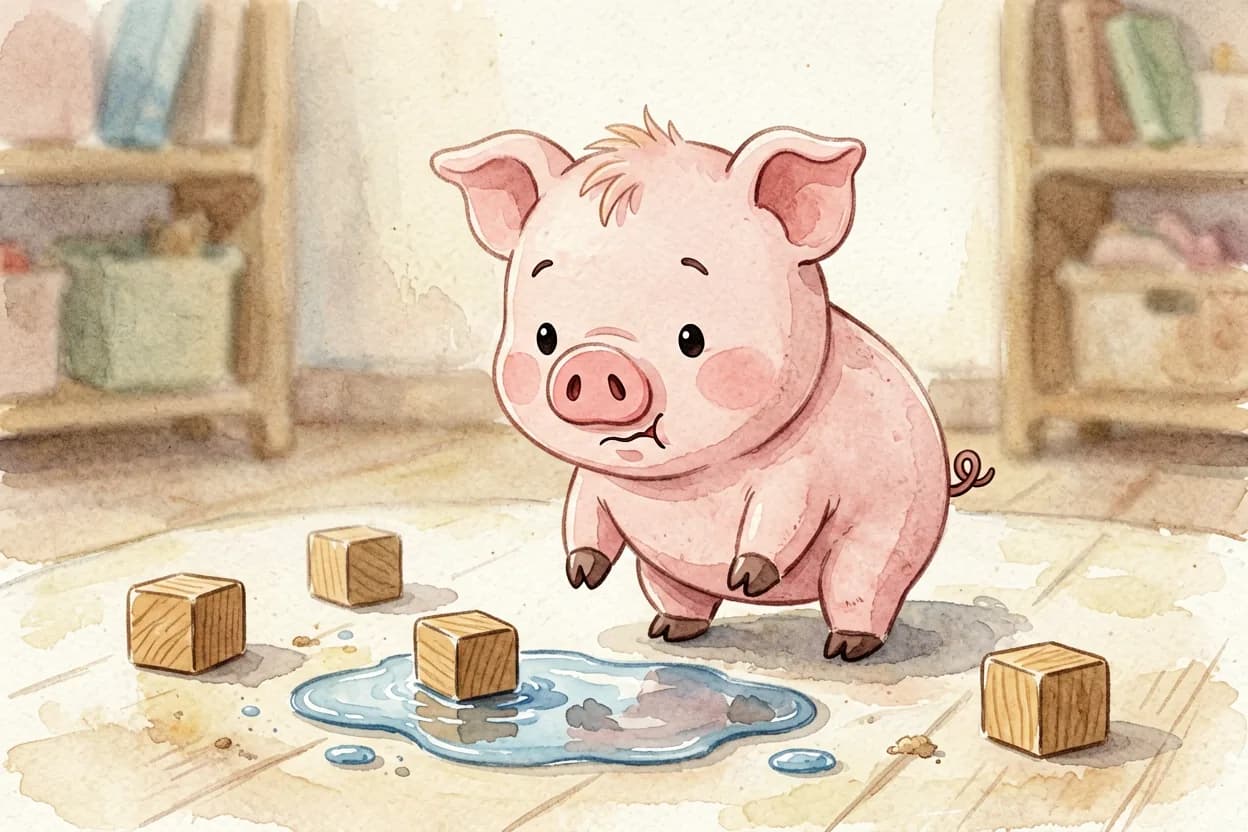
Later that day, Percy was busy building blocks when — uh oh — he felt warm and wet. An accident! His bottom lip wobbled.
But Mama didn't mind one bit. "Accidents happen when we're learning," she said gently, helping him into dry pants. "Next time, you'll feel it coming and run to your potty."
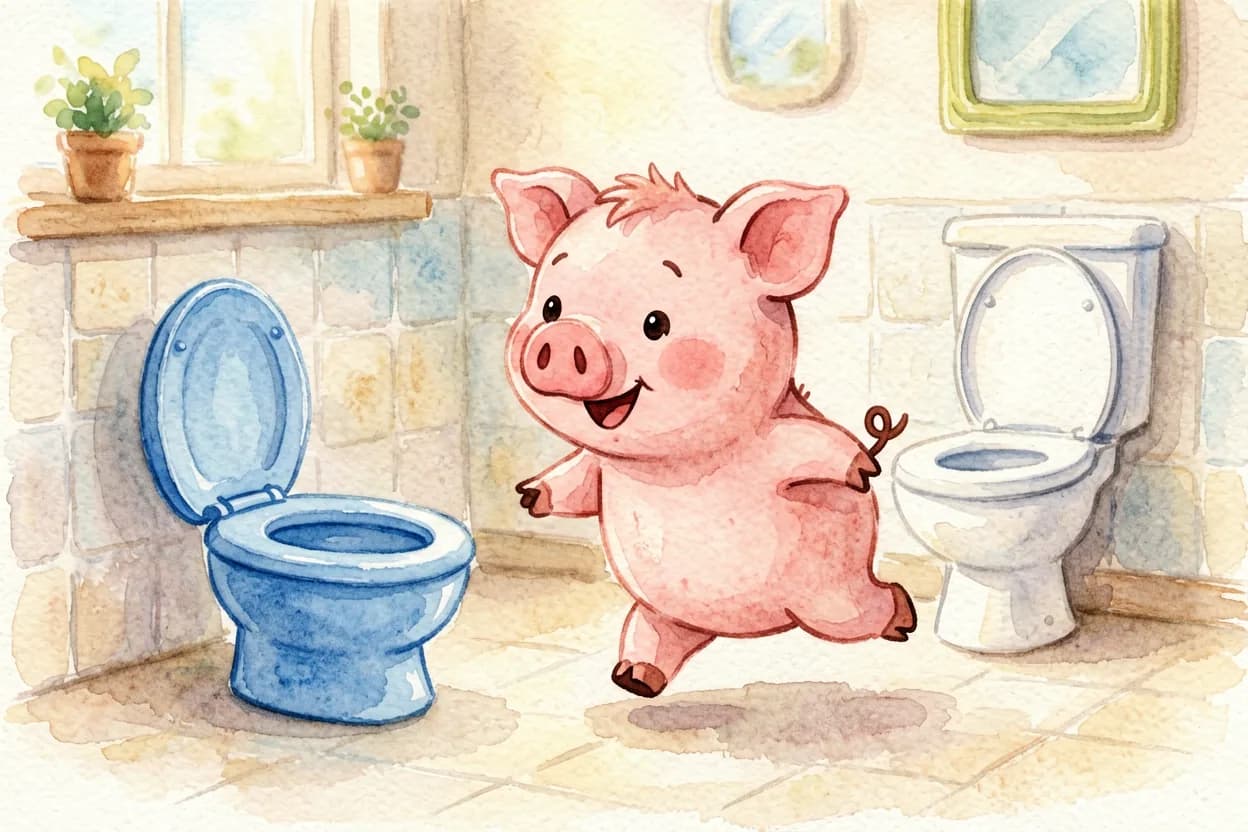
So Percy started to listen to his tummy. And the very next morning, he felt that funny feeling — the one that meant a wee was coming. "Potty!" he shouted, and toddled over as fast as his little legs could go.
He sat down. He waited. And then... tinkle, tinkle! Percy had done a wee in the potty — all by himself! His eyes went wide as saucers.

"I DID IT!" cheered Percy. Mama clapped and clapped. They did a happy potty dance, round and round the bathroom, giggling.
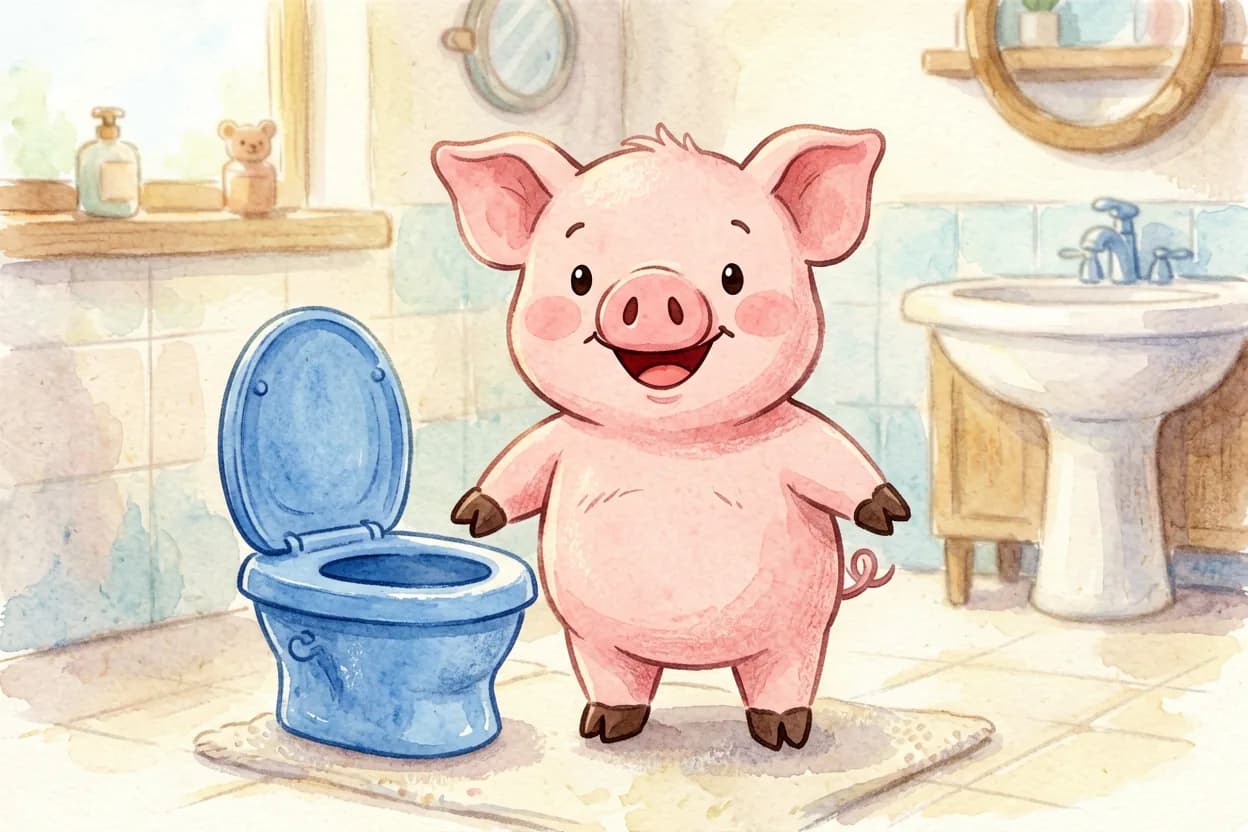
There were more accidents after that, of course. Learning takes practice. But every day Percy got a little bit better — until using the potty was just something big kids like him did.
"I'm a big kid now," Percy said proudly that night. And he was.
Learning something new takes lots of tries. Every big kid started small — and you can do it too.
Questions to ask after reading
- 1How did Percy feel when he first saw the potty?
- 2What did Mama say when Percy had an accident?
- 3What was the funny feeling that told Percy a wee was coming?
- 4How did Percy feel when he did a wee in the potty all by himself?
- 5Do you think you could try sitting on the potty, just like Percy?
Try it together: gentle potty-training activities
Potty training goes best when it feels like play, not pressure. These low-key activities build the skill and the confidence together.
- Let a toy 'go' first. Have teddy or a doll 'use' the potty, then cheer. Watching a favourite toy do it makes the whole idea friendly and takes the spotlight off your child.
- Practise sitting, no pressure. Offer a fully-clothed sit on the potty at relaxed times — after meals, before bath. Getting comfortable with the potty itself is half the battle; nothing needs to happen.
- Read potty books on the potty. Keep a couple of favourite books by the potty. A calm, familiar story helps a child relax and stay long enough for success.
- A potty-dance celebration. Make a silly happy dance for successes, just like Percy and Mama. Warm, genuine celebration is the best reward — far better than sweets or star charts for most toddlers.
- Dress for success. Easy-off trousers and undies your child chose themselves give them independence and a reason to keep them dry. Fewer buttons means fewer accidents on the way.
How to use the story at each age
Signs of readiness (around 2-3)
Look for readiness rather than a date: staying dry for longer stretches, noticing or telling you when they're wet or soiled, showing interest in the toilet, and being able to pull pants up and down. Starting when these signs appear — not before — makes the whole process far smoother.
Early training (2.5-3.5)
Keep it relaxed and consistent. Offer regular potty sits, expect frequent accidents (they're normal and not a setback), and celebrate every attempt. Read Percy's story often so your child has a friendly model. Avoid punishing or shaming accidents — it slows things down.
Building independence (3-4)
Once daytime is mostly there, work on your child recognising the urge in time and managing more themselves — pulling down pants, wiping, washing hands. Night dryness often comes later and on its own timeline, so treat it separately and without pressure.
Common mistakes (and what to do instead)
- Starting before your child is ready. Pushing potty training on a calendar rather than on readiness usually leads to more accidents and resistance. Wait for the signs — it's genuinely faster in the end.
- Reacting strongly to accidents. Frustration or shame around accidents teaches a child that the potty is stressful. Stay calm and matter-of-fact: 'Accidents happen when we're learning' — exactly as Percy's mama does.
- Turning it into a battle. Forcing a reluctant child onto the potty creates a power struggle nobody wins. Back off, keep it light, and try again in a week or two. Pressure is the enemy of progress.
- Over-relying on rewards. Sticker charts and treats can work short-term but often fizzle or become the focus. Genuine praise and a proud, capable feeling last longer and cost nothing.
- Comparing to other children. Every child trains on their own timeline; 'but their cousin was dry at two' helps no one. Follow your child, not the comparison.
Making it work in everyday life
The story warms your child up to the idea; daily routines are where potty training actually happens. Here's how to weave it in.
- Build in regular potty times. Offer the potty at natural moments — waking up, after meals, before leaving the house, before bath. Predictable sits catch a lot of wees without any nagging.
- Out and about. Bring a spare set of clothes and, if it helps, a portable potty or seat. Knowing where the toilet is takes the panic out of an urgent moment.
- At nursery or with grandparents. Share your approach so everyone responds the same calm way. Consistency across places helps the learning stick and avoids mixed messages.
- During regressions. New baby, illness, or a house move can bring accidents back. Treat it kindly as a normal blip, keep routines steady, and it usually passes.
A simple checklist to follow
- Read the story together, unhurried, with time for the pictures
- Introduce the potty calmly, with no pressure to perform
- Offer regular potty sits at natural times of day
- Stay calm and kind about accidents — they're practice
- Celebrate every success warmly, just like Percy's potty dance
- Follow your child's readiness, not a calendar or comparison
Make the story about your child
A piglet named Percy is a friendly guide. But toddlers pay closest attention when the big kid using the potty is someone they know from the inside — themselves.
When your child is the hero who feels the funny tummy feeling, runs to their own potty, and does the happy dance, the story stops being about a piglet and becomes a picture of what they can do. Their name, their bathroom, their proud moment — the version they'll ask for again and again, right when they need the encouragement.
A generic story
A little piglet learns to use the big-kid potty and feels proud.
Your child's story
Ben learns to use his own potty at home, does a happy potty dance with mum, and feels like a big kid — with Ben as the hero on every page.
Parents also ask
What age should I start potty training?
There's no single right age — readiness matters more than a number. Most children show signs somewhere between about two and three and a half: staying dry longer, noticing when they're wet, and showing interest in the toilet. Starting when those signs appear, rather than on a fixed date, usually makes the whole process smoother and faster.
How do I know if my child is ready?
Look for a cluster of signs: dry for longer stretches, telling you (or showing) when they need to go or have gone, interest in the toilet or in wearing pants, and being able to pull trousers up and down. You don't need every sign, but several appearing together is a good green light.
How should I handle accidents?
Calmly and without shame. Accidents are a normal, expected part of learning — not naughtiness or a setback. Keep it matter-of-fact ('accidents happen when we're learning'), help your child into dry clothes, and move on. Reacting with frustration tends to slow progress by making the potty feel stressful.
My child was doing well and suddenly started having accidents again. Why?
Regressions are common and usually temporary. A new sibling, illness, a house move, or any big change can bring accidents back. Treat it gently as a normal blip, keep your routines steady and low-pressure, and it typically passes on its own.
Should I use rewards like sticker charts?
They can help some children in the short term, but many parents find genuine praise and a proud, capable feeling work better and last longer. If you use rewards, keep them small and phase them out as the skill becomes routine, so the potty doesn't become all about the prize.
How long does potty training take?
It varies widely — some children get the hang of daytime in days, others over several months, and both are completely normal. Night dryness usually comes later and on its own timeline. Patience and consistency matter more than speed.
Are personalized stories helpful for potty training?
For many toddlers, yes. A story where they are the hero using the potty makes the milestone feel exciting and achievable, and gives them a model of themselves succeeding. It's one supportive tool alongside a calm, ready-when-they're-ready approach.
More free stories for kids
About the author
Andy — Andy is the founder of Doodara and builds the illustration pipeline behind it — the part that has to keep a child's character looking like the same child on every page of a book. Most of that work is character consistency, content safety for material aimed at young children, and the unglamorous business of making a generated book good enough that a family reads it twice.