
Stories About Responsibility for Kids
A complete original picture book about responsibility you can read tonight — plus the discussion questions, activities, and age-by-age tips that help your child learn to care and follow through.
ByAndyFounder of Doodara
Quick answer
Responsibility grows from sticking with something on the dull days, so the books that build it follow a job over time rather than showing one heroic act. This page has a complete original picture book, Daisy's Little Garden, free to read tonight, plus discussion questions and age-by-age guidance for ages 3-7. The practical move: after reading, give your child one small job that genuinely matters to the household and let them feel the consequence when it slips, rather than quietly doing it for them.
Responsibility — following through, caring for things, doing your bit — is one of those qualities every parent hopes to grow in their child, and one that can't be rushed. If your little one abandons a job halfway, forgets what they promised, or leaves a trail of unfinished tasks behind them, they're not lazy or careless. They're young, and the ability to remember, persist, and take ownership is a skill that develops slowly, with plenty of guidance and practice.
Young children live in the moment and are still building the mental muscles that responsibility relies on — remembering a task, resisting the pull of something more fun, and understanding that their actions have effects on others. Expecting a preschooler to reliably tidy up or care for a pet without reminders is asking a lot of a still-developing brain. But given small, real responsibilities and warm support, children rise to them — and glow with the pride of being trusted.
The secret is to start small and make responsibility feel good, not like a chore or a punishment. When children are given a real job they can manage, helped to follow through, and genuinely trusted, they discover the deep satisfaction of being capable and needed. Stories help beautifully: they let a child watch a character take on a responsibility, stick with it through the hard bits, and feel the pride of a job well done.
Why stories help
Responsibility is abstract, and a story makes it real. When a character takes on a job, is tempted to give up, and sticks with it to see something flourish, your child feels the whole arc — including the pride at the end — from the safety of the page.
Children copy characters they love. A little duckling who cares for a plant, even when it's hard, models follow-through and ownership far better than 'you need to be more responsible.'
And a story shows the reward that makes responsibility worthwhile: the pride of being capable and the joy of seeing your care make a difference. That feeling, experienced through a beloved hero, motivates a child far more than any reminder.
How a story becomes a habit
Daisy's Little Garden
An original picture book about responsibility — free to read aloud tonight.
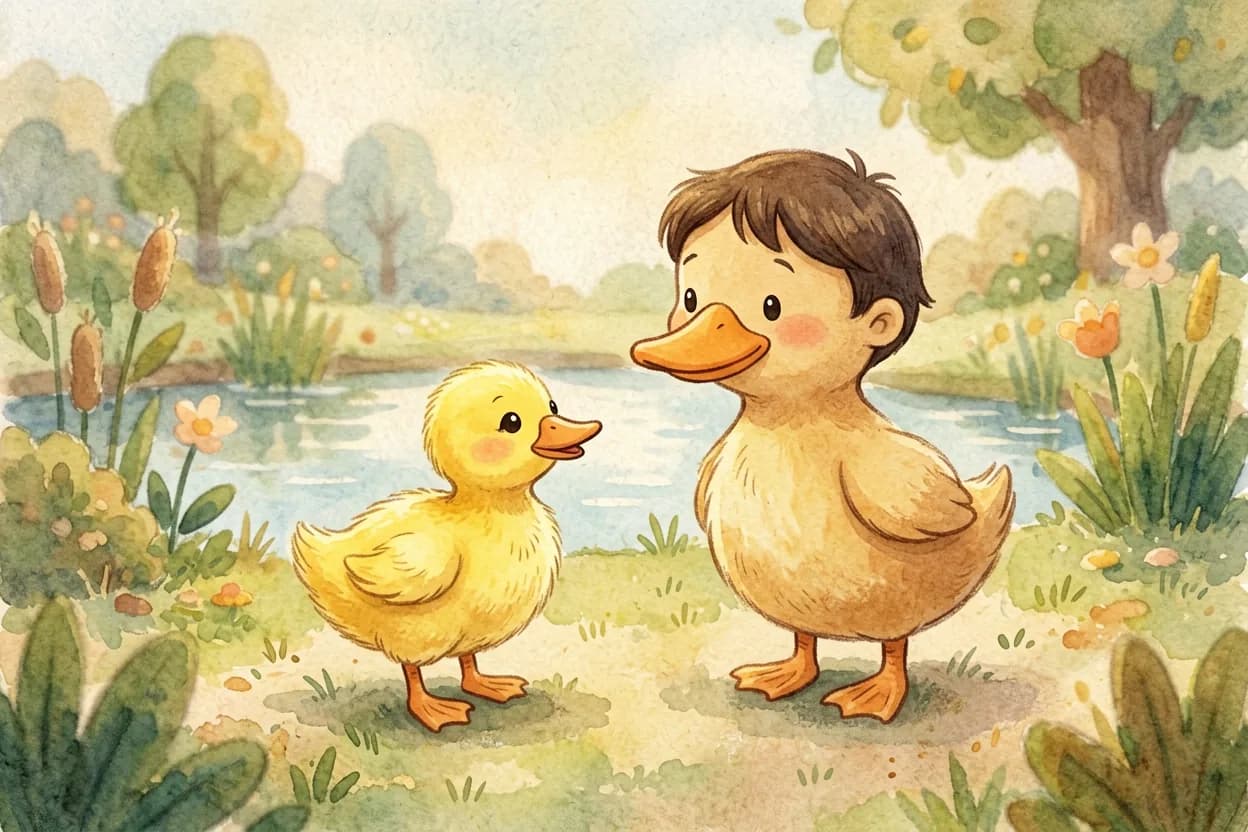
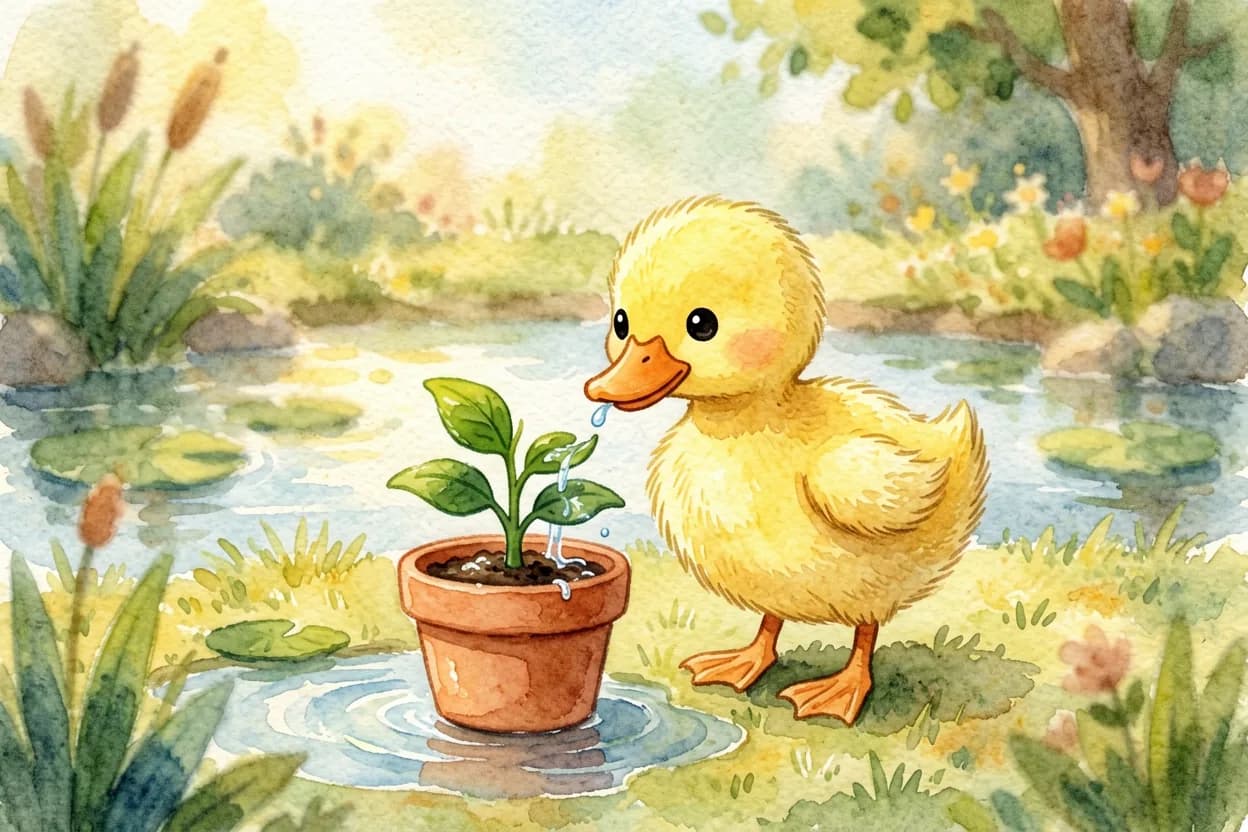
Daisy the little duckling wanted a garden of her very own, more than anything. "Please, please, PLEASE?" she begged. "A garden is a big responsibility," said Papa. "It needs looking after every single day. Do you think you can do that?" "Oh yes!" said Daisy. "I promise!"
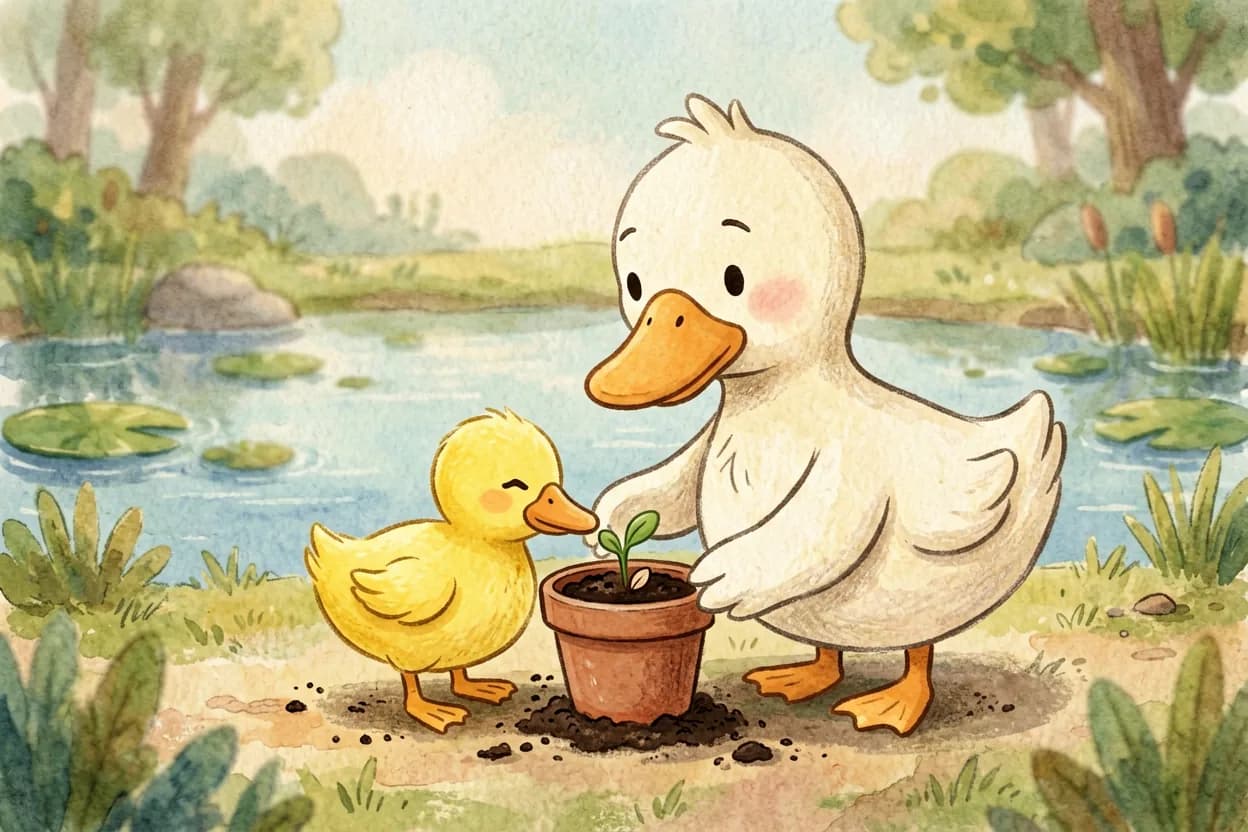
So Papa gave her a small pot, some soil, and one tiny seed. "This is now your job," he said. "Water it a little each day, give it sunshine, and pull out the weeds. Look after it, and watch what happens." Daisy planted her seed with great care.
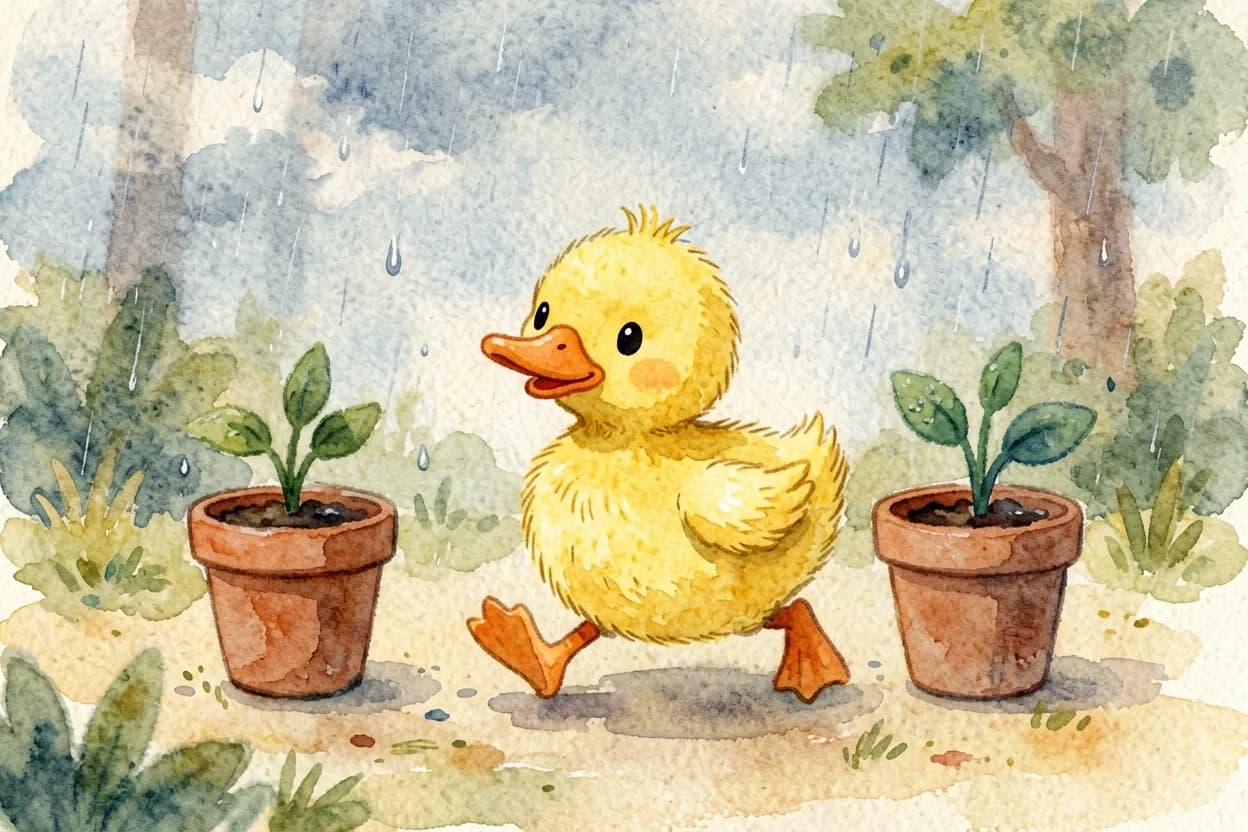
The first days were easy and exciting. Daisy watered her pot each morning and checked it eagerly. But the seed didn't seem to do anything, and soon other things felt more fun. One rainy morning, Daisy didn't feel like it at all. "I'll do it later," she said, and ran off to play.
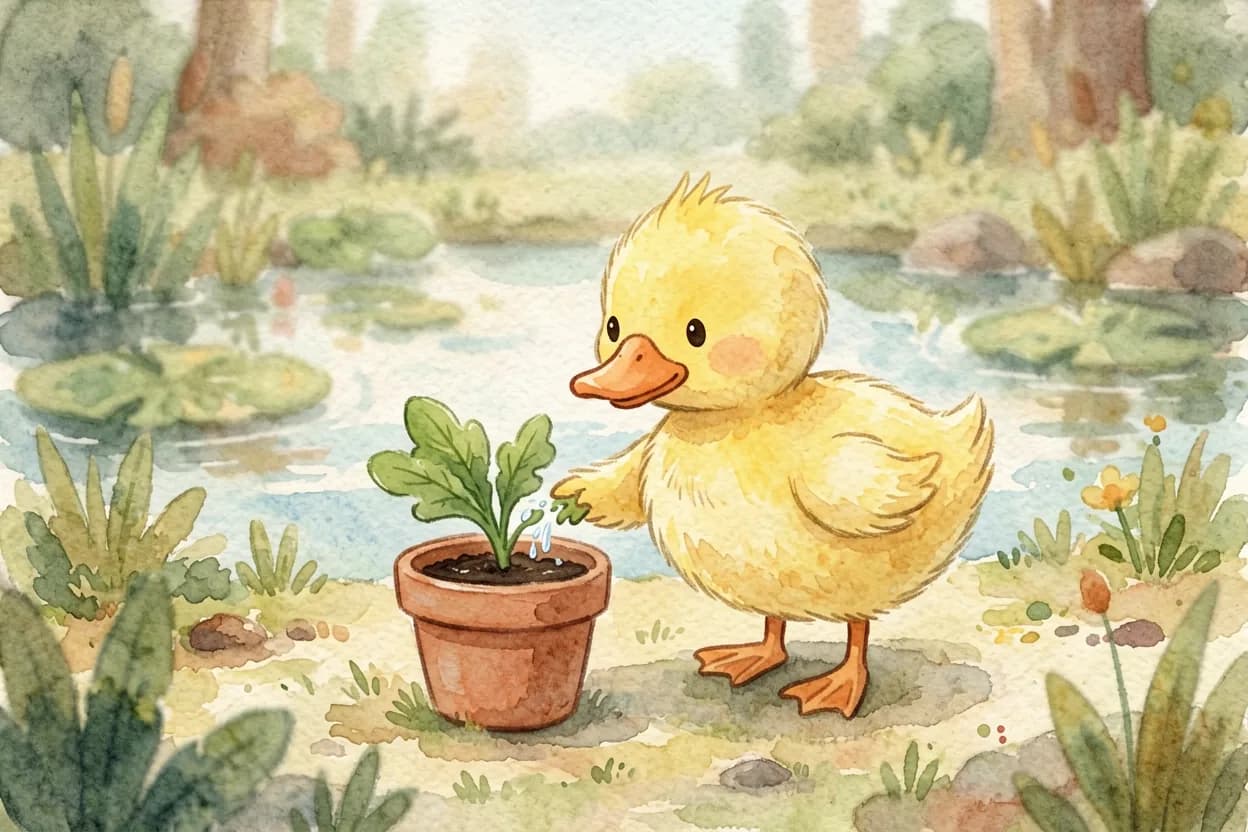
By the next day, the soil was dry and cracked, and a little weed had crept in. Daisy felt a pang. "I made a promise," she remembered. "My little plant is counting on me." So even though she'd rather play, she watered it, and gently pulled the weed, and gave it a sunny spot.
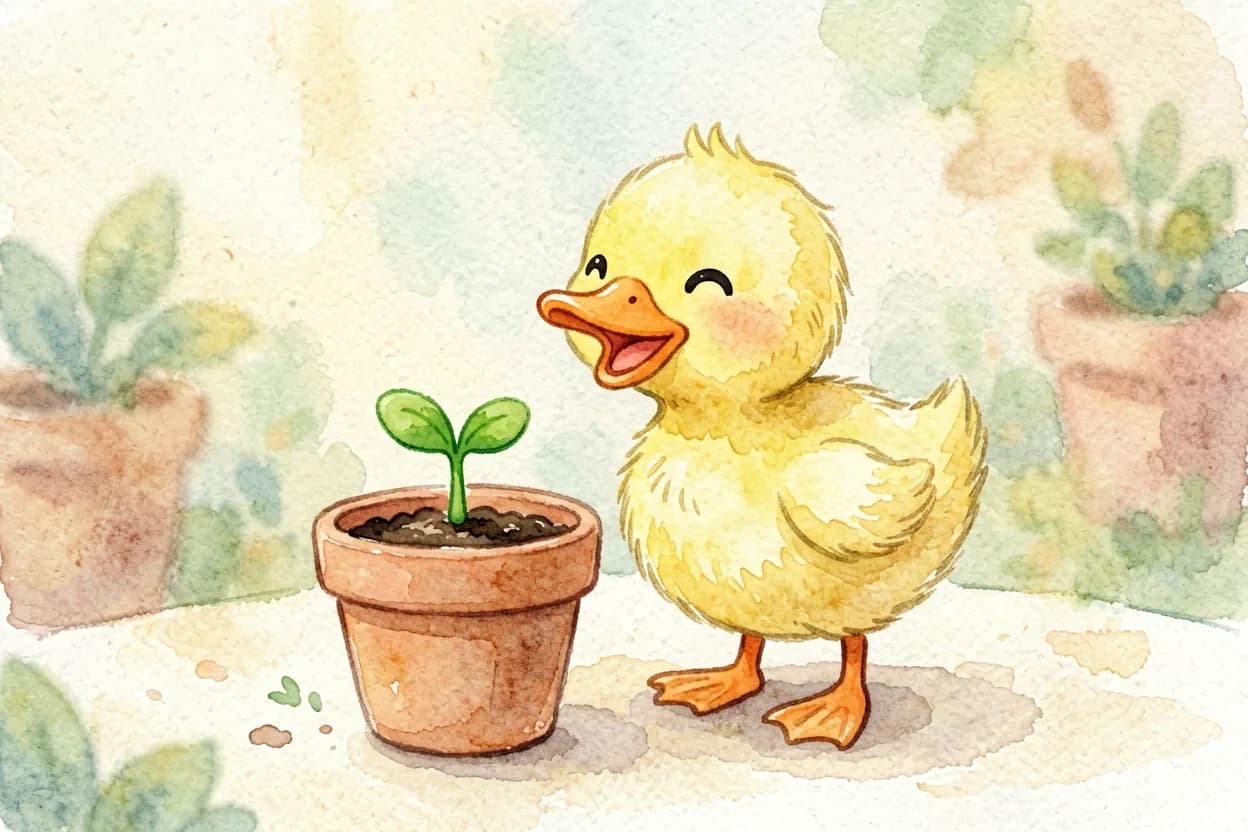
After that, Daisy tended her garden every single day — rain or shine, fun or not. Water. Sunshine. Weeds. And then, one bright morning, she gasped: a tiny green shoot had poked up through the soil! Her care had made it grow.
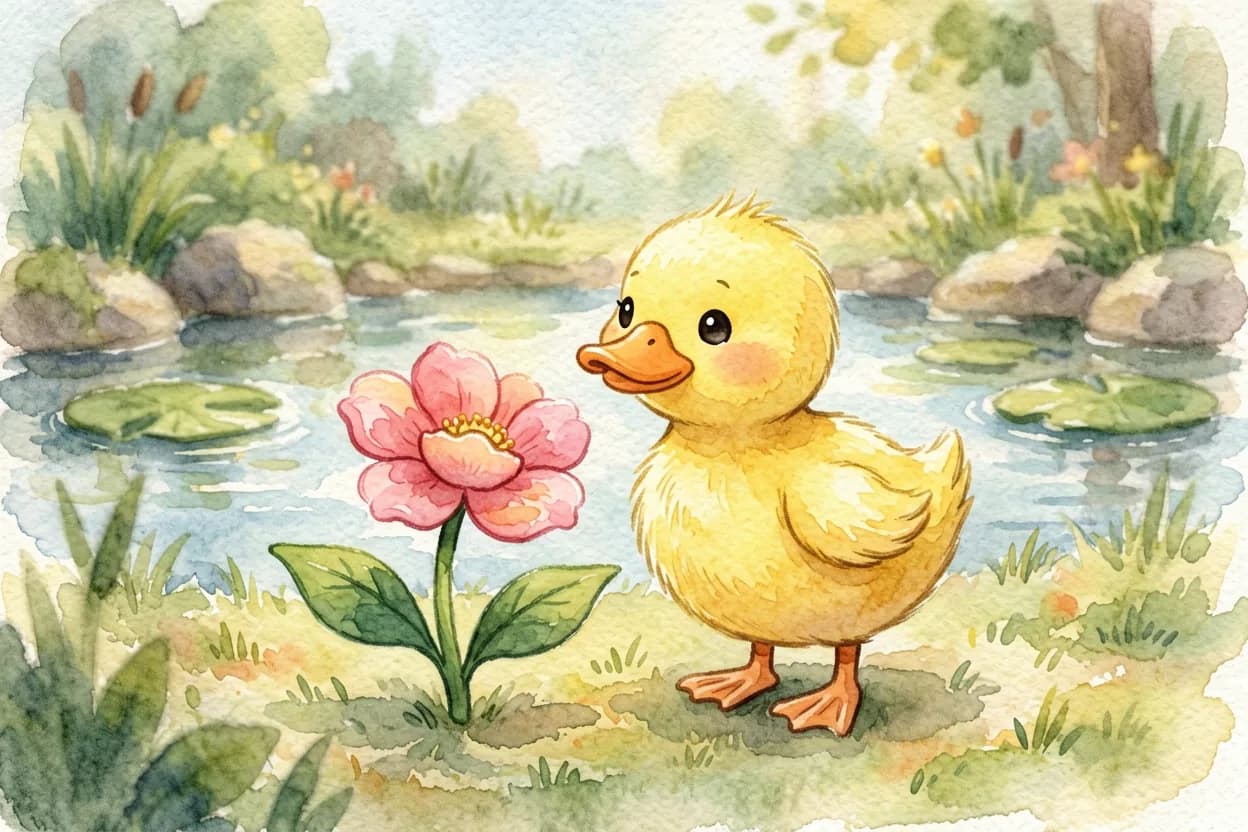
Day by day, Daisy looked after it, and day by day it grew — until it burst into a bright, beautiful flower, the loveliest in the whole pond. Daisy was bursting with pride. "I grew this," she said. "Because I looked after it, even on the hard days."
"You certainly did," said Papa, beaming. "You kept your promise and took care of something all on your own. That's what being responsible means." And Daisy stood a little taller, proud to be trusted — and ready for her next big job.
When we take care of something and stick with it, even on the hard days, we grow something wonderful — and we grow, too.
Questions to ask after reading
- 1What job did Papa give Daisy, and what did it need every day?
- 2What happened when Daisy skipped a day and went off to play?
- 3What made Daisy decide to keep looking after her plant?
- 4How did Daisy feel when the flower finally bloomed?
- 5What is a job you could take care of, all by yourself?
Try it together: growing responsibility
Responsibility grows when a child is given a real, manageable job and feels the pride of doing it. These activities help.
- Give one real job. Choose a small, genuine responsibility your child can manage — feeding a pet, watering a plant, setting out cups. A real job they own builds ownership like nothing else.
- Grow something together. Plant a fast-sprouting seed and let your child care for it daily, like Daisy. Watching their care make something grow is responsibility with a visible reward.
- Make a simple job chart. A picture chart of daily jobs helps a child remember and feel proud ticking them off. Visual reminders support a still-developing memory.
- Let them feel the effect. When possible, let natural results show — an unwatered plant droops, a tidied room is nicer to play in. Feeling the effect teaches responsibility better than nagging.
- Praise the follow-through. Notice when your child sticks with something, especially on a hard day: 'You didn't feel like it, but you did it anyway — that's being responsible.'
How to use the story at each age
Toddlers (2-3)
Start with tiny helping jobs done alongside you — putting toys in a basket, carrying their plate. Toddlers love to 'help', so lean into it, keep it simple, and pile on the appreciation. Don't expect independence or memory yet; the goal is the joy of contributing.
Preschoolers (3-5)
Now you can give one real, ownable job (like Daisy's plant) and support the follow-through with reminders and a job chart. Talk about promises and being counted on, let natural results teach where safe, and praise sticking with it. Expect wobbles — persistence is still developing.
Older children (5-7)
Children this age can handle regular chores, remember more independently, and understand that their actions affect the family. Give meaningful responsibilities, involve them in what's fair, and let consequences (natural or logical) do some teaching. Frame responsibility as being trusted and grown-up, which they take pride in.
Common mistakes (and what to do instead)
- Doing it because it's quicker. Stepping in to finish the job faster robs a child of the practice. Let them do it themselves, imperfectly, and build the skill and the pride.
- Expecting too much too soon. Handing a preschooler grown-up responsibilities sets them up to fail. Match the job to their stage, and add more as they're ready.
- Using chores as punishment. 'Tidy your room as a punishment' makes responsibility feel like a penalty. Frame jobs as being trusted and helpful, part of belonging to a family.
- Nagging instead of letting results teach. Endless reminders put you in charge of the job, not them. Where safe, let natural results (a droopy plant, a messy room) do the teaching.
- Forgetting to notice the effort. Responsibility that goes unnoticed fades. Genuinely appreciate follow-through, especially on the hard days, and it grows.
Using the lesson in everyday moments
The story shows the pride of follow-through; daily life offers endless chances to practise. Here's where it shows up.
- Caring for a pet or plant. A living thing that depends on them teaches daily responsibility with a clear, meaningful reason to follow through.
- Tidying up. Putting toys away, clearing their plate — everyday care of their space. Do it together at first, then let them own it.
- Keeping promises. When your child says they'll do something, gently help them follow through. Learning that promises are kept is responsibility in miniature.
- Family jobs. A small regular role — feeding the cat, watering herbs, laying the table — helps a child feel needed and trusted as part of the family team.
A simple checklist to follow
- Read the story together, unhurried, with time for the pictures
- Give your child one small, real, manageable job to own
- Support follow-through with reminders or a simple job chart
- Let natural results teach where it's safe
- Praise sticking with it, especially on hard days
- Match responsibilities to your child's stage, adding more as they grow
Make the story about your child
A duckling named Daisy is an endearing guide. But children pay closest attention when the one learning responsibility is someone they know from the inside — themselves.
When your child is the hero who takes on a job, is tempted to give up, and sticks with it to grow something wonderful, the story stops being about a duckling and becomes a picture of the follow-through and pride you hope to nurture. Their name, their job, their moment of 'I did this!' — a gentle model to carry into real life.
A generic story
A little duckling learns responsibility by caring for a plant, even on the hard days.
Your child's story
Jonah takes on the job of caring for a plant, keeps his promise even when he'd rather play, and grows a beautiful flower — with Jonah as the hero on every page.
Parents also ask
How do I teach my child responsibility?
Start small and make it feel good rather than like a chore. Give your child one real, manageable job to own (like caring for a plant or pet), support the follow-through with reminders or a picture chart, let natural results teach where it's safe, and warmly praise sticking with it. Being trusted with a genuine responsibility, and feeling the pride of doing it, is what grows the quality.
At what age can children start having responsibilities?
Even toddlers can help with tiny jobs alongside you — putting toys away, carrying a plate — and love to 'help.' Preschoolers can own one small real job with support, and by five to seven children can handle regular chores and remember more independently. Match the responsibility to your child's stage, and add more as they're ready.
My child starts jobs but never finishes them. Is that normal?
Completely normal. Young children live in the moment and are still building the mental muscles responsibility needs — remembering, resisting distraction, and persisting. Rather than seeing it as laziness, support the follow-through with reminders and encouragement, keep jobs small and achievable, and praise sticking with it. Persistence grows with practice.
Should I use chores as a punishment?
It's best not to. Using chores as a penalty makes responsibility feel like something bad, rather than a valued part of belonging to a family. Instead, frame jobs as being trusted, helpful, and grown-up — something children can take pride in. Responsibility flourishes when it feels good, not like a sentence.
Is it better to just do things myself since it's faster?
It's often quicker in the moment, but doing everything for your child robs them of the practice and pride that build responsibility. Let them do age-appropriate jobs themselves, even imperfectly and slowly. The short-term inconvenience pays off in a capable, confident child who has learned to follow through.
How do natural consequences teach responsibility?
Where it's safe, letting a child feel the result of their actions teaches more than nagging — an unwatered plant droops, an untidy room is harder to play in. These gentle, natural consequences help a child connect their choices to outcomes and take ownership, without you having to be the constant reminder or enforcer.
Are personalized stories helpful for teaching responsibility?
For many children, yes. A story where they are the hero who takes on a job and follows through makes the lesson vivid and personal, and lets them feel the pride of being capable and trusted. It's a supportive tool alongside giving your child real, manageable responsibilities in everyday life.
More free stories for kids
About the author
Andy — Andy is the founder of Doodara and builds the illustration pipeline behind it — the part that has to keep a child's character looking like the same child on every page of a book. Most of that work is character consistency, content safety for material aimed at young children, and the unglamorous business of making a generated book good enough that a family reads it twice.