
Stories About Teamwork for Kids
A complete original picture book about working together you can read tonight — plus the activities, discussion questions, and age-by-age tips that help your child learn to cooperate.
ByAndyFounder of Doodara
Quick answer
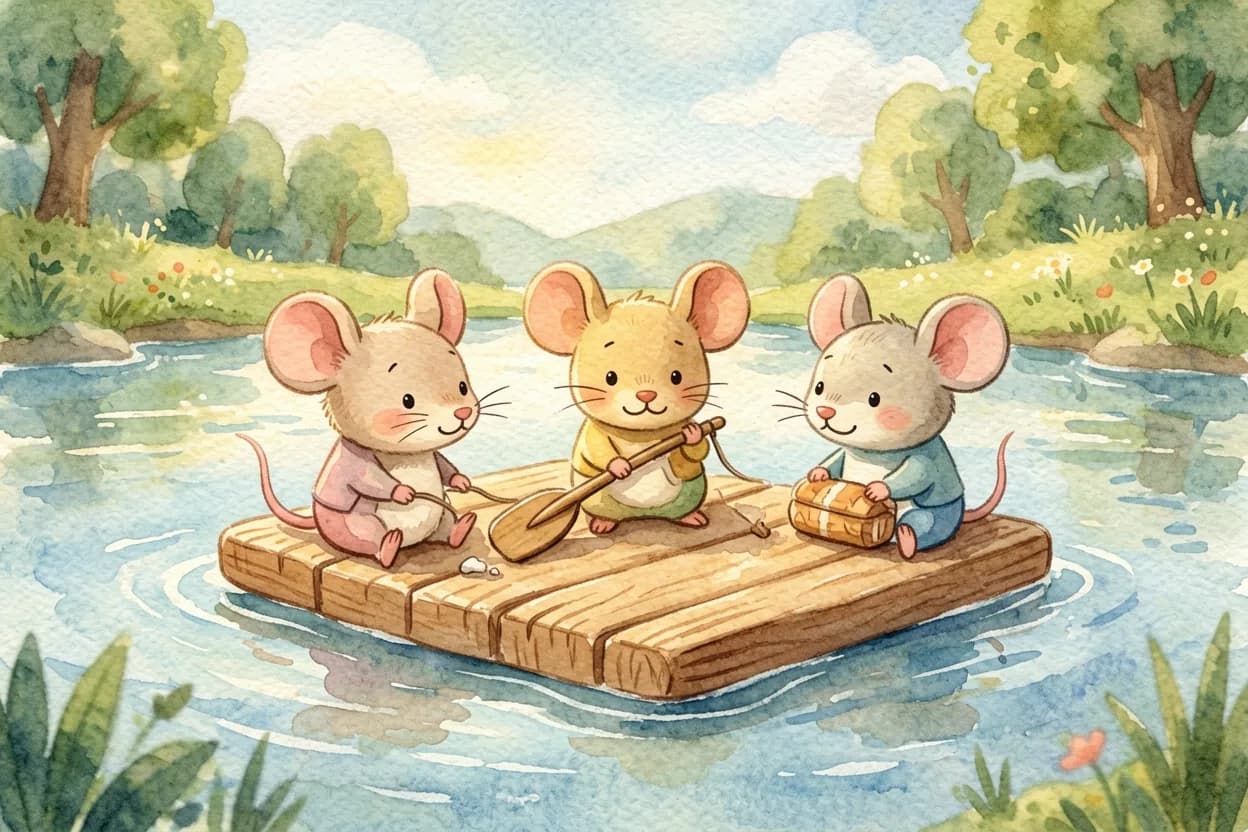
The books that teach teamwork show a job that genuinely cannot be done alone, because a task one child could finish by themselves teaches nothing about needing other people. This page has a complete original picture book, The Three Little Mice and the River, free to read tonight, plus discussion questions and age-by-age guidance for ages 3-7. The practical move: after reading, set up one task at home that needs two pairs of hands and stay out of it, letting them negotiate the roles themselves.
Working together doesn't always come easily to young children. One wants to be the boss, another wants to do it their own way, a third gives up when it gets tricky — and a lovely group project dissolves into squabbles. If your child finds cooperating hard, they're not being difficult. Teamwork asks a child to blend their wishes with others', share the effort and the glory, and stick with something together — all genuinely advanced social skills that take years to grow.
It makes sense that cooperation is a stretch for little ones. Young children are naturally focused on their own ideas and wants, and the give-and-take of teamwork — listening to others, compromising, taking turns to lead, doing your part — depends on skills like empathy, patience, and communication that are still developing. A child who struggles to share a task or insists on their own way isn't failing; they're right on the learning curve.
And teamwork is well worth nurturing, because so much of life — friendships, school, families, work — runs on it. When children discover that some wonderful things can only be built together, and that cooperating means everyone shares the fun and the success, they learn one of life's most valuable lessons. Stories help beautifully: they let a child see teamwork's magic — that together, we can do what none of us could do alone — through characters they love.
Why stories help
A story shows teamwork's payoff in a way a child can feel. When characters fail alone and then succeed together, your child experiences the core lesson — that some things can only be built as a team — far more vividly than being told to 'cooperate.'
Children copy characters they love. Little heroes who combine their different strengths to reach a shared goal model cooperation, compromise, and doing your part — showing not just that teamwork matters but how it works.
And a story celebrates the joy of shared success — everyone cheering a goal they reached together. That warm feeling, experienced through beloved characters, makes a child want to be a good teammate.
How a story becomes a habit
The Three Little Mice and the River
An original picture book about teamwork — free to read aloud tonight.
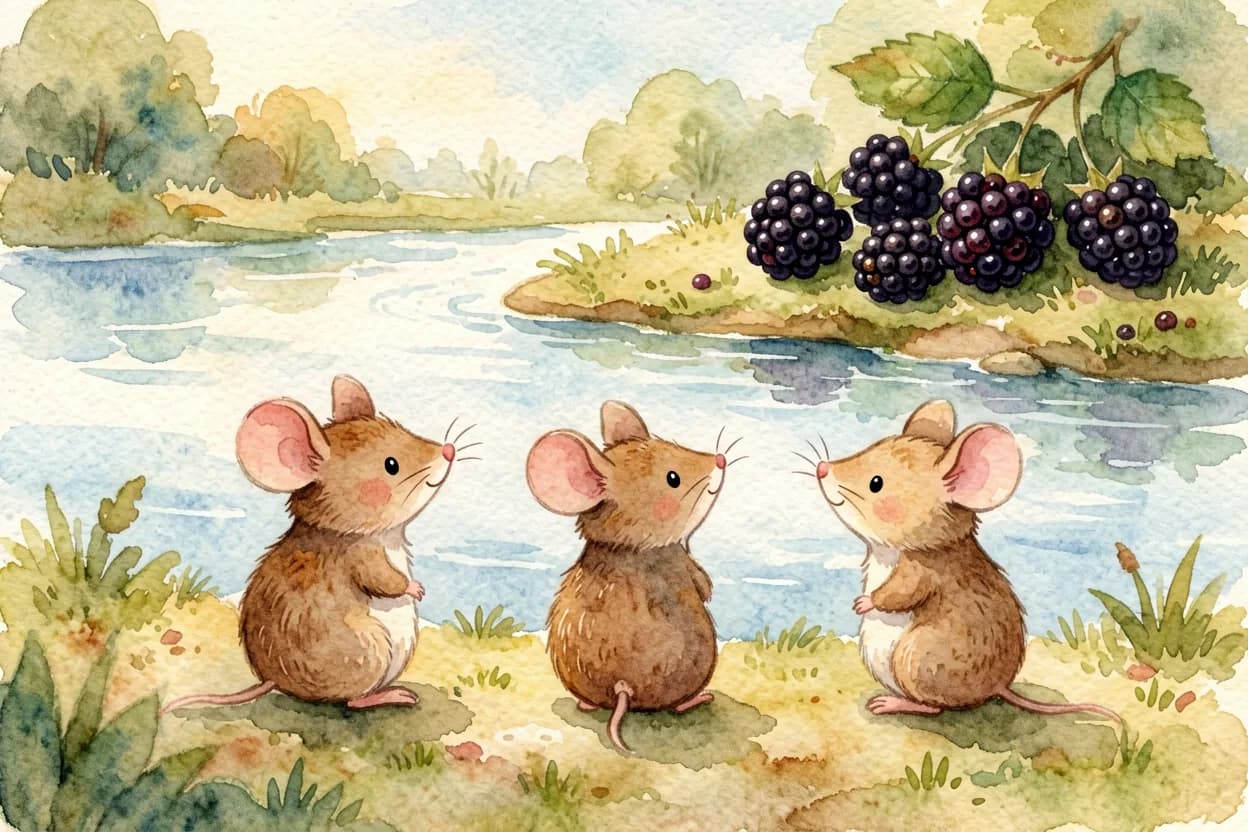
Three little mice — Pip, Poppy, and Pod — lived on one side of a wide, rushing river. On the OTHER side grew the plumpest, juiciest blackberries they had ever seen. "If only we could get across!" they sighed. But the river was far too wide and fast to swim.
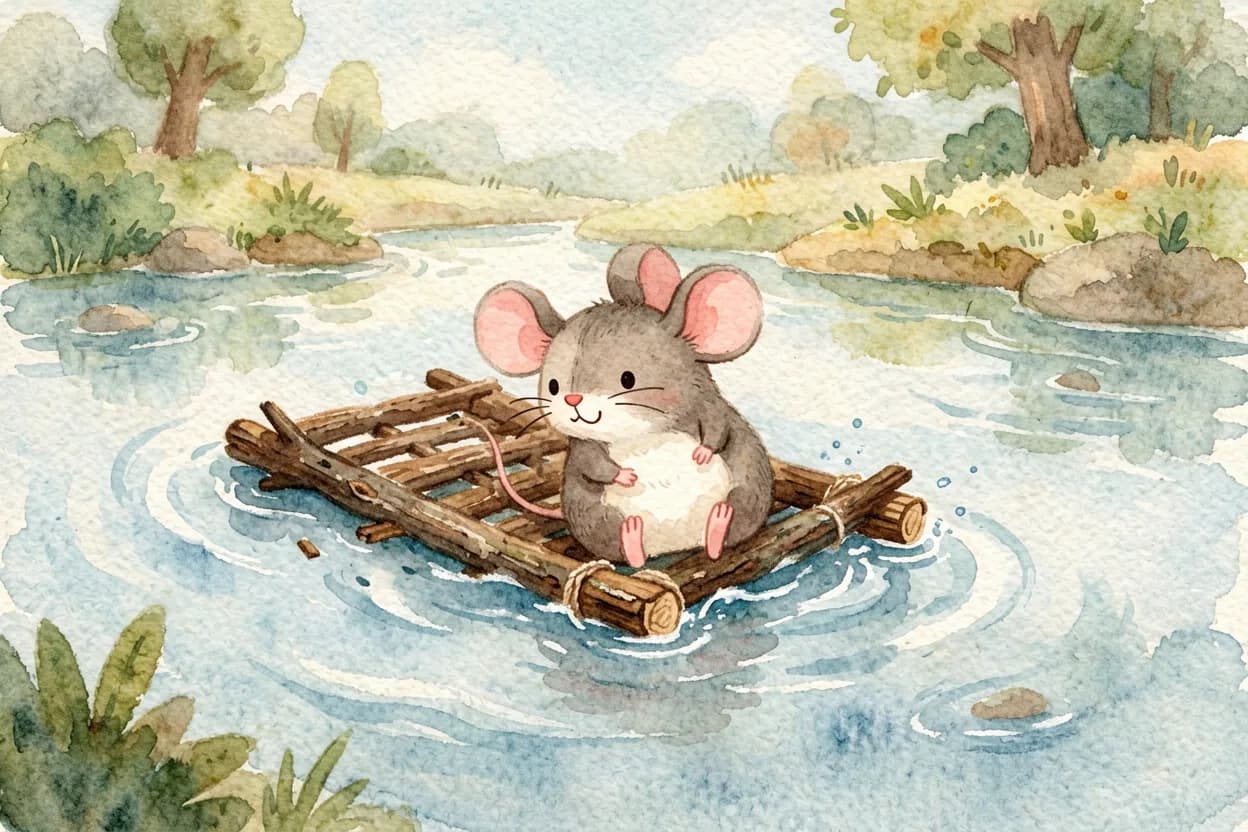
"I'll build a raft by MYSELF," declared Pip, the bossiest mouse. He gathered a few twigs, lashed them together in a hurry, and pushed off. But one little mouse couldn't hold it steady — and SPLASH, it fell apart at once. Pip scrambled back, soggy and cross.
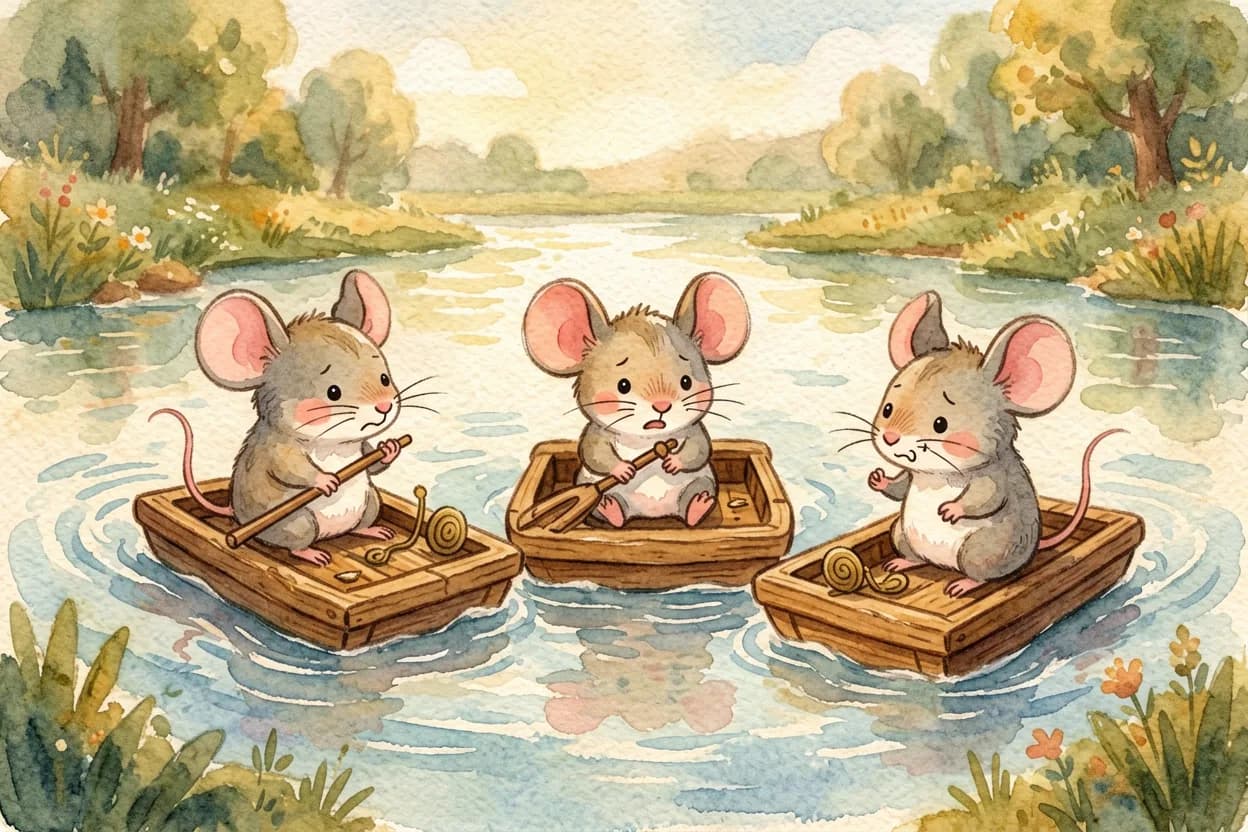
"Move over, I'll do it MY way," said Poppy. But her raft, built all alone, was too small and tippy, and it spun in circles. And Pod's raft, built all alone, simply floated away without him. One by one, working alone, each little mouse failed.
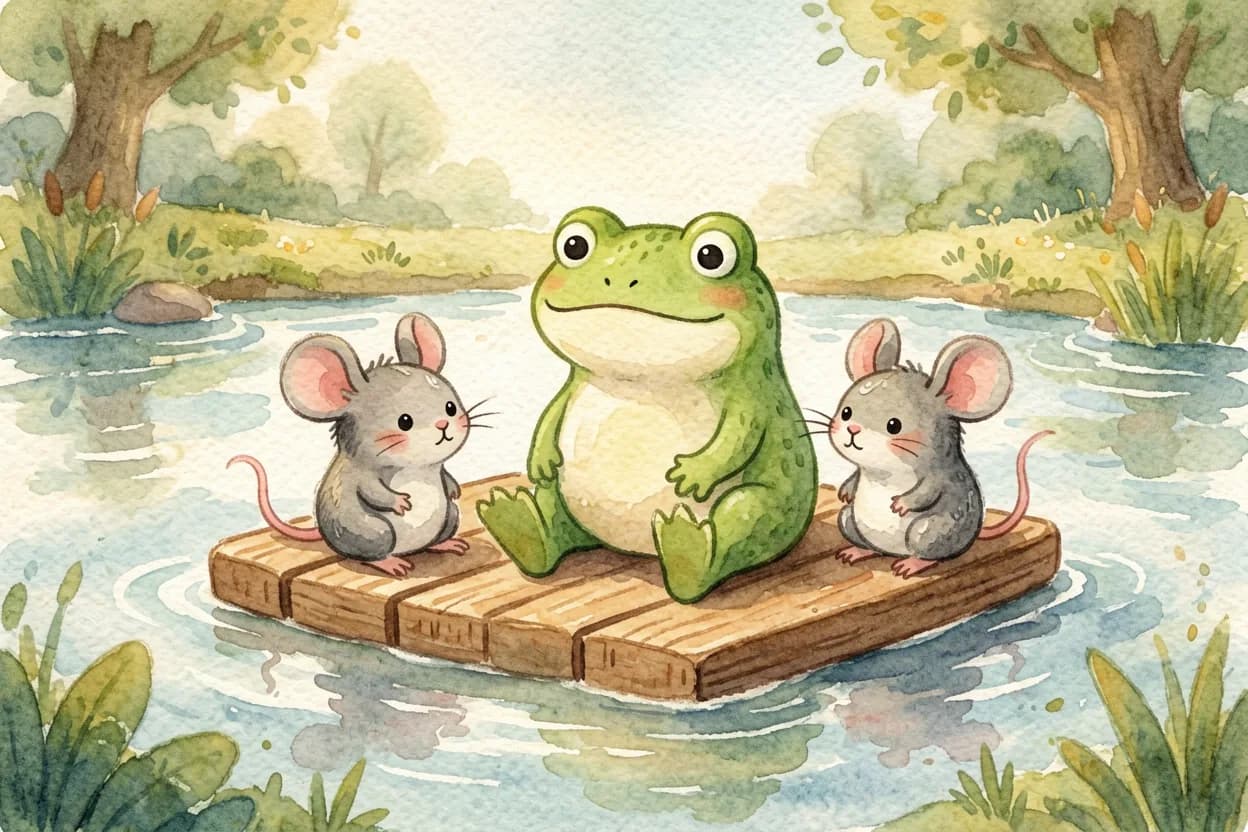
The three mice sat on the bank, wet and grumpy and no closer to the blackberries. Then wise old Frog hopped by. "I've been watching," he said. "You each keep trying alone. But that river is too big for one small mouse. What if you built ONE raft — together?"
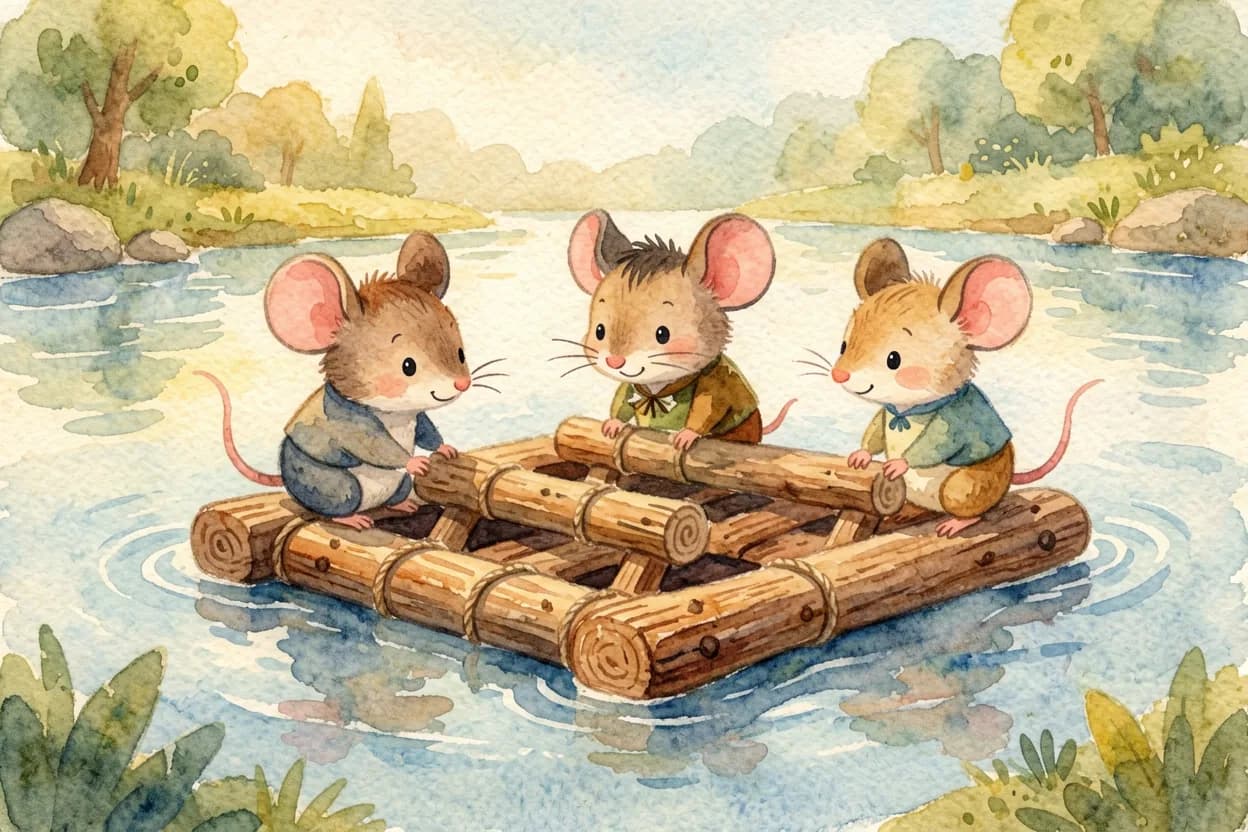
So they tried it a new way. Pip, who was strong, gathered the biggest logs. Poppy, who was clever, worked out how to tie them tight. Pod, who was careful, checked every knot. Each mouse did the part they were best at — and slowly, a big, sturdy raft took shape.
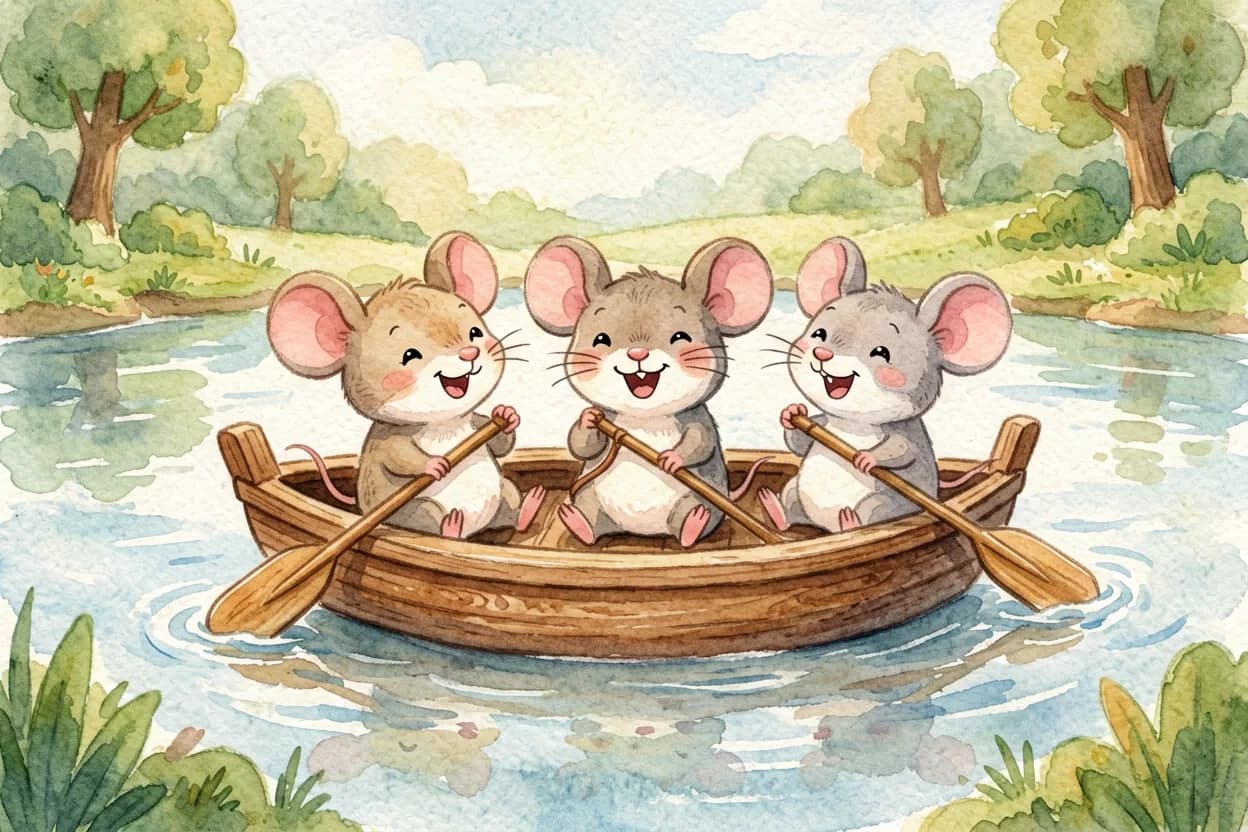
Together they pushed the raft into the water. Together they paddled, all three in time — heave, heave, heave! The raft held steady and strong, and carried them safely all the way across to the other side. "We did it!" they cheered. "TOGETHER!"
And there, on the far bank, they feasted on the plumpest, juiciest blackberries — sharing every single one. "Alone, we all fell in," laughed Pip. "But together," said Poppy, "we can do anything." And from then on, the three little mice did everything as a team.
Some wonderful things can't be done alone. But together — sharing our strengths and our effort — we can do almost anything.
Questions to ask after reading
- 1Why couldn't the mice get across the river on their own?
- 2What happened when each mouse tried to build a raft alone?
- 3What did Frog suggest they do instead?
- 4How did each mouse help build the raft together?
- 5What is something that's easier or more fun to do with other people?
Try it together: building teamwork
Cooperation grows through shared goals and practice. These activities make teamwork fun.
- Build something together. Make a den, a big tower, or a puzzle as a team, where everyone has a part. A shared project that needs cooperation teaches teamwork in action.
- Play cooperative games. Choose games where you win or lose together rather than against each other — carrying something as a pair, a group challenge. Winning together builds team spirit.
- Celebrate everyone's part. Point out how each person's contribution helped: 'You held it steady while she tied it — great teamwork!' Valuing every role motivates cooperation.
- Family jobs as a team. Tidy up or cook together with everyone doing a bit. Shared effort at home shows that teamwork gets big jobs done and can be fun.
- Take turns to lead. In group play, practise everyone getting a turn to have their idea followed. Learning to lead and to follow are both parts of good teamwork.
How to use the story at each age
Toddlers (2-3)
True cooperation is still emerging — toddlers mostly play alongside rather than with each other. Encourage simple shared moments (rolling a ball, tidying together) and celebrate them, but expect lots of 'me do it.' The foundations of turn-taking and sharing come first.
Preschoolers (3-5)
Now real cooperative play blooms — and so do squabbles over whose way wins. Read the mice's story and talk about combining strengths and sharing the success. Offer cooperative games and group builds, coach compromise and turn-taking to lead, and praise good teamwork warmly.
Older children (5-7)
Children this age can handle genuine group projects, shared goals, and dividing tasks. Talk about listening to others' ideas, compromising, doing your fair share, and being a good sport whether you win or lose. Team sports, group games, and family projects all offer rich practice.
Common mistakes (and what to do instead)
- Only ever competing. A steady diet of 'who's first/best' pits children against each other. Balance it with cooperative games where everyone wins or loses together.
- Letting one child dominate. If the bossiest always leads, others give up. Gently ensure everyone gets a turn to lead and to have their idea tried.
- Solving every squabble for them. Jumping in to fix each disagreement robs children of learning to compromise. Coach them to find a solution together where you can.
- Praising only the winner or the result. Celebrate the cooperation, not just the outcome: 'You worked so well together.' Valuing the teamwork itself encourages more of it.
- Expecting cooperation too early. Toddlers largely play in parallel, and that's normal. Match your expectations to your child's stage and build the skills step by step.
Using the lesson in everyday moments
The story shows teamwork's magic; daily life offers endless chances to practise. Here's where it shows up.
- In group play. Building, pretend games, and projects with friends or siblings are live teamwork practice. Coach sharing ideas, taking turns to lead, and doing a part.
- With family jobs. Tidying, cooking, or gardening together shows that shared effort gets things done — and that being on a team feels good.
- During disagreements. When children clash over how to do something, help them find a way that uses everyone's ideas, rather than one winner and one loser.
- In games and sport. Team games teach cooperation and being a good sport. Praise the working-together and the good spirit, win or lose.
A simple checklist to follow
- Read the story together, unhurried, with time for the pictures
- Build or make something together as a team
- Play cooperative games where everyone wins or loses together
- Celebrate each person's part, not just the result
- Make sure everyone gets a turn to lead
- Coach compromise instead of solving every squabble for them
Make the story about your child
Three little mice make a spirited guide. But children pay closest attention when one of the teammates is someone they know from the inside — themselves.
When your child is the hero who tries alone, struggles, and then triumphs by working together, the story stops being about mice and becomes a picture of the cooperation and shared joy you hope to nurture. Their name, their team, their 'we did it together!' — a gentle model to carry into real life.
A generic story
Three little mice discover they can only cross the river by building a raft together.
Your child's story
Ravi and his friends can't reach the treat alone, but by working together — each doing their part — they succeed, with Ravi as a hero on every page.
Parents also ask
Why does my child find it hard to work with others?
Teamwork asks a lot of a young child: blending their wishes with others', listening, compromising, taking turns to lead, and doing their part — all advanced social skills built on empathy, patience, and communication that are still developing. A child who insists on their own way or struggles to share a task isn't being difficult; they're right on the normal learning curve, and cooperation grows with age and practice.
How can I teach my child to be a good team player?
Give them shared goals to work toward — build something together, play cooperative games where everyone wins or loses as one, do family jobs as a team. Celebrate each person's contribution, make sure everyone gets a turn to lead, and coach compromise rather than solving every squabble for them. Stories about teamwork help by showing that together we can do what none of us could alone.
At what age do children start to cooperate?
Toddlers mostly play alongside each other rather than truly together, which is completely normal. Real cooperative play usually blooms in the preschool years (and comes with plenty of squabbles over whose way wins), and by five to seven children can manage genuine group projects, shared goals, and dividing up tasks. Match your expectations to your child's stage.
Should I let my children work out their teamwork squabbles themselves?
Where it's safe and not escalating, yes — stepping back lets children practise the vital skills of compromising and problem-solving together. Rather than imposing a solution, coach them: 'How could you use both your ideas?' Jumping in to fix every disagreement robs them of the chance to learn. Step in for fairness or safety, but let them try first.
Is competition bad for teaching cooperation?
Not bad, but balance matters. A steady diet of competitive 'who's first/best' can pit children against each other, while cooperative games — where everyone wins or loses together — build team spirit and the joy of shared success. A mix of both, with plenty of cooperative play and praise for working together, nurtures a good team player.
How do I stop one child always taking over in group play?
Gently ensure leadership rotates: 'Let's try Poppy's idea this time, then it's Pod's turn.' If the bossiest child always leads, the others disengage. Coaching everyone to both lead and follow, and valuing each contribution, helps the group cooperate more happily and teaches the dominant child that teamwork means sharing the wheel.
Are personalized stories helpful for teaching teamwork?
For many children, yes. A story where they are one of the heroes who succeeds by working together makes the lesson vivid and personal, and lets them feel the joy of shared success. It's a supportive tool alongside cooperative games, group projects, and gentle coaching of compromise and turn-taking in everyday play.
More free stories for kids
About the author
Andy — Andy is the founder of Doodara and builds the illustration pipeline behind it — the part that has to keep a child's character looking like the same child on every page of a book. Most of that work is character consistency, content safety for material aimed at young children, and the unglamorous business of making a generated book good enough that a family reads it twice.